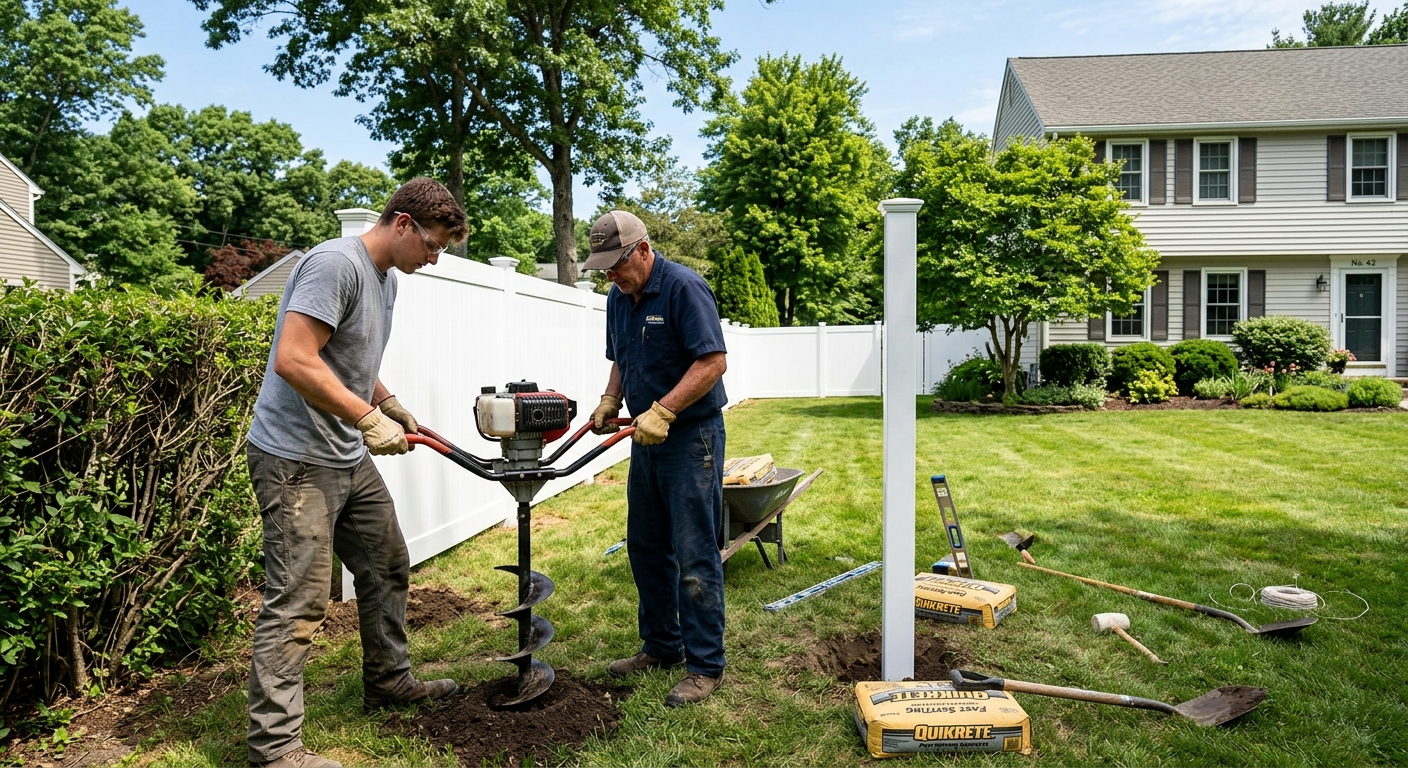
Fencing options and costs in Discovery Ridge
Discovery Ridge, Alberta is a fast-growing, family-focused community where homeowners typically plan upgrades that last through our Prairie freeze–thaw winters. With a 2021 population of 4,330 in the area (Statistics Canada, 2021 Census), most fencing work is tied to ongoing yard improvements, infill development, and re-fencing of older boundaries. The neighbourhood’s mix of detached properties also means fences are more than “curb appeal” here—they’re part of daily wind protection, pet containment, and privacy for backyards. In practical terms, each fence quote is shaped by Alberta frost depth and wind loading: Calgary’s long winter cycles drive requirements for deeper post setting (often around 120 cm) and more robust panel construction, especially for 6 ft privacy fences and gate posts. That structural reality tends to push wood and vinyl higher than lighter, open options.
In Discovery Ridge and the surrounding Calgary region, you’ll often see the strongest demand for backyard privacy fencing and gated entrances in the more exposed lots near higher-grade edges of the community—where gusts push harder against solid panels. If you’re building a fence that must resist racking and handle snow drifts, your labour and concrete costs go up versus chain-link. Next, compare typical material options and realistic installed ranges per linear foot.
| Material |
Lifespan |
Maintenance |
Privacy Rating |
Price per Linear Foot |
| Pressure-treated pine (standard wood) |
10–15 years |
Stain/seal every 2–3 years to slow grey weathering |
High (solid panels) |
$40 – $80 |
| Cedar (natural rot resistance) |
15–25 years |
Light staining as needed; inspect annually after freeze–thaw |
High (solid panels) |
$55 – $95 |
| Vinyl / PVC (no-maintenance) |
20–30 years |
Minimal cleaning; replace damaged rails if impacted |
High (solid or lattice styles) |
$45 – $90 |
| Chain-link (galvanized steel) |
20–35 years |
Occasional washing; tension checks after settling |
Low to Medium (open airflow) |
$25 – $55 |
| Aluminum ornamental |
25–40 years |
Wash 1–2 times per year; touch up if scratched |
Low (mostly decorative) |
$70 – $120 |
| Composite / recycled material |
20–30 years |
Little to none; inspect for warping after extreme cold snaps |
High (solid styles) |
$60 – $105 |
Prices are estimates only and vary by project scope, site access and material selection.
What affects the price of fencing in Discovery Ridge
In Discovery Ridge and the broader Calgary region, two homeowners can receive quotes for “the same fence” that differ by 30–50% because the price isn’t just the material—it’s the structural requirements of Prairie weather, plus how difficult the install is at your exact yard line. Calgary-area labour and access conditions can also vary meaningfully between crews, especially for projects that need extra excavation, concrete footings, and careful grading around existing landscaping.
Frost depth is the biggest cost driver. In colder Alberta regions, fence posts are commonly set about 4–6 inches below the design frost depth to prevent heaving, which often translates to roughly 1.5–2.0 m into the ground. That depth affects labour time (more dig work), required post length (often longer treated lumber or steel posts), and concrete volume—especially where we need fully concreted footings for stability on privacy fences and gate posts.
Wind exposure on the Prairies is another major driver. Solid wood or vinyl panels need tighter post spacing and sturdier framing to prevent racking, while chain-link allows airflow and typically needs less heavy bracing. By contrast, in milder and wetter climates (like coastal BC), wood can deteriorate faster without proper treatment, but the installation footprint is often less impacted by frost-heave requirements.
For Discovery Ridge specifically, costs usually rise when (1) you have exposed lots that catch strong gusts, requiring heavier rails and added corner bracing; (2) you’re installing a 6 ft privacy fence with multiple gates, which adds post-set complexity; or (3) there’s a slope where panels must be stepped or raked, increasing material waste. Costs can also be lower when you choose chain-link (often closer to the lower–mid range of the local band of $25–$55 per linear foot) or when your fence line is flat with easy access.
| Price Factor |
Why It Matters |
Cost Impact |
| Fence length in linear feet |
The primary cost driver—posts, rails, and labour scale directly with length |
$1,000 – $15,000+ |
| Post depth required |
Frost line determines post length and hole depth to prevent heaving |
$300 – $3,500 |
| Post setting method |
Concrete vs. gravel pack vs. driven posts affects materials, labour and stability |
$200 – $4,000 |
| Material choice |
Vinyl/cedar privacy is typically pricier than chain-link; aluminum sits at the upper tier |
$500 – $10,000 |
| Gate count and type |
Drive-through double gates need stronger hardware and posts |
$800 – $6,500 |
| Grade and terrain |
Slopes require stepped/raked panels and extra framing; can increase labour time |
$300 – $2,500 |
| Old fence removal and disposal |
Salvageable material vs. full disposal changes dump fees and crew time |
$200 – $3,000 |
| Permit fees and survey / property line locate |
Any required locate or survey work affects schedule and administrative cost |
$150 – $2,500 |
Permits & regulations in Alberta
In Alberta, fence requirements are tied to both height thresholds and local municipal bylaws. As a rule of thumb for many Alberta communities, fences above about 2.0 m (6.5 ft) in the rear and around 1.0–1.2 m (3–4 ft) in the front or at corner sides may require a building permit. Even when a permit isn’t required, you still must respect property lines and municipal setbacks, and you may need a property line locate if there’s any uncertainty.
Before digging any post hole, you should call for utility locates through Alberta One-Call. That locate step is essential before excavation, regardless of fence type. If your fence line is close to buried services or you’re replacing an older fence, locates help avoid costly damage and delays.
To reduce neighbour disputes, verify your layout using a survey (or a locate of your property pins) before installation. Boundary fences are also governed by provincial line-fences legislation, so if you’re building or maintaining a shared boundary fence, it helps to document what’s agreed in writing.
Contractor due diligence: ask for the contractor’s Alberta licence information (if applicable to their business activity), request proof of liability insurance, and confirm WSIB/WCB coverage. You can check the licence details through the appropriate online registry for the contractor’s business activity, then review the certificate of insurance for current coverage and match the insured name to the quote. Finally, request clearance letters or proof documents directly—reputable contractors can provide these quickly.
Choosing the right fence material for Discovery Ridge
The right fence material in Discovery Ridge should match both how you use your yard and how Prairie winters stress the system. For privacy and wind protection, solid panel fencing (wood, cedar, vinyl, or composite) is popular, but it demands robust construction because Calgary-area wind can push hard on unsupported sections. For that reason, post depth and bracing matter just as much as the face material.
Pressure-treated pine is the budget-friendly option. It looks good at install, but it typically needs staining every 2–3 years to reduce grey weathering and keep boards uniform through freeze–thaw cycles. Cedar offers better natural rot resistance and usually ages more gracefully, though it still benefits from periodic maintenance. Vinyl/PVC is the low-maintenance choice: you’ll clean it occasionally, but in extreme cold snaps it can become more brittle than wood if struck—so it’s best when you keep good rail alignment and avoid impacts. Chain-link is the lowest cost and longest-life option in practice, but it provides little privacy. Aluminum is attractive and rust-resistant, but it’s generally mid- to high-cost and more decorative than private. Composite/recycled boards can deliver privacy with low maintenance, but you still need careful installation and proper bracing for wind.
On post depth: in Calgary’s freeze–thaw conditions, plan for posts set below frost protection, often around 120 cm, frequently with concrete footings for privacy fences and gate posts. Whether concrete is “necessary” depends on your fence type and local soil conditions, but for 6 ft privacy systems and gates, concreted posts are commonly the safest, least-frustrating path against heaving and racking.
Dollar reality: if your choice is between chain-link at roughly $25 – $55 per linear foot and vinyl privacy near $45 – $90, the premium is justified when you need privacy and wind buffering—especially on exposed lots—rather than just boundary marking.
| Material |
Cold Tolerance |
Lifespan |
Annual Maintenance |
Best For |
Price Band |
| Pressure-treated pine |
Good in freeze–thaw with proper sealing |
10–15 years |
Low-to-medium (inspection + 1–3 year staining cycle) |
Budget privacy where you’ll maintain |
$40 – $80 |
| Cedar |
Good; performs well with regular upkeep |
15–25 years |
Low-to-medium (annual inspection; stain as needed) |
Premium look with better rot resistance |
$55 – $95 |
| Vinyl / PVC |
Good to very good; avoid impacts in deep cold |
20–30 years |
Very low (wash/rinse as needed) |
Low-maintenance privacy |
$45 – $90 |
| Chain-link |
Excellent; galvanized steel resists weathering |
20–35 years |
Very low (tension and occasional cleaning) |
Security with airflow (pets/containment) |
$25 – $55 |
| Aluminum ornamental |
Excellent; no rust in typical conditions |
25–40 years |
Low (wash; inspect for bent sections) |
Decorative boundaries with durability |
$70 – $120 |
| Composite / recycled |
Good; can be affected by warping if poorly braced |
20–30 years |
Low (spot checks for movement) |
Privacy with less upkeep |
$60 – $105 |
How to choose a fencing contractor in Discovery Ridge
Choosing the right fencing contractor in Discovery Ridge comes down to three things: proof, clarity, and workmanship. Start by verifying Alberta coverage. Ask for (1) liability insurance—review the certificate of insurance to confirm the policy is current and the insured entity matches the contractor on your quote; (2) WSIB/WCB coverage—confirm they’re properly registered for their work activities and that coverage is active for the crew assigned to your job; and (3) any applicable business licence details or trade registration for the contractor’s fencing operations (where required). Most reputable firms can provide these documents immediately by email or through a customer portal.
Next, get 2–3 itemised written quotes. The best quotes break down labour and materials separately, list the fence length in linear feet, show post spacing, and specify whether posts are concrete-set or installed with a gravel pack method. Ensure the scope spells out what’s included: permit pull (if required), utility locate responsibilities, removal/disposal of the old fence, and restoration of disturbed ground or turf. Avoid lump-sum-only quotes that don’t define grading on slopes or how they’ll handle step-downs.
Warranty matters in Alberta’s freeze–thaw environment. Ask for the workmanship warranty length, the manufacturer warranty terms, whether the warranty transfers to you if you sell the home, and how defects are handled (replacement vs. repair). On payment, never pay more than 10–15% upfront; hold back the remainder until the job is complete and you’ve inspected the alignment and hardware. Finally, get a written start date and a completion estimate so you understand schedule risk—particularly if weather delays affect excavation.
- They provide liability insurance with matching contractor name and policy dates.
- They confirm active WSIB/WCB coverage for fencing labour.
- Quotes include fence length in linear feet and number of posts/gates.
- Scope clearly states post depth and whether concrete footings are used.
- They outline how they’ll handle sloped yards (raked vs. stepped panels).
- They list hardware quality (hinges, latches, tensioning method) for gates.
- Removal and disposal is specifically stated (dump fees included or not).
- Utility locate responsibility is clear (usually contractor schedules, but confirm).
- Permit pull responsibility is stated if your height/location triggers it.
- They provide manufacturer and workmanship warranty terms in writing.
- They don’t request more than 10–15% upfront payment.
- They give a realistic start/completion timeline in writing.
Red flags I commonly see with fencing contractors in Discovery Ridge include: refusing to provide insurance/WSIB proof, vague scope language that doesn’t specify post depth or setting method, quotes that exclude disposal yet assume removal anyway, “cheap” gate hardware that fails quickly in winter, and pressure tactics to sign before you receive itemised details.
Frequently asked questions — fencing in Discovery Ridge
What is the cost per linear foot for fencing in Discovery Ridge?
In Discovery Ridge and the Calgary economic region, installed fencing costs generally land within the local band of about $25 – $100 per linear foot depending on material, height, gate count, and site conditions. Chain-link typically sits in the lower–mid range (around $25 – $55), while wood and vinyl privacy usually fall mid to upper ranges (often $40 – $80 for wood and $45 – $90 for vinyl). The big variable is frost-protected post installation: deeper post setting (around 120 cm) with concrete footings for privacy sections can add labour and materials even when the fence line is the same length. (Statistics Canada, 2021 Census)
Should I repair or replace my old fence in Discovery Ridge?
Repair is usually worth it when the fence posts are still solid (not leaning after freeze–thaw) and the rails/hardware can be replaced without redoing footings. If multiple posts have shifted, bottoms are rotten, or the fence has significant racking from wind exposure, replacement often becomes the more cost-effective long-term choice—because fixing over-and-over usually costs more than installing a new, properly set post system. In Calgary-area conditions, we often see old fences fail where concrete wasn’t used or where post depth didn’t account for frost heave. If you’re currently around the mid-range privacy styles, a new installation in the wood/vinyl band (for example, $40 – $80 or $45 – $90) can prevent repeat labour and alignment issues.
How do I handle a fence dispute with a neighbour in Alberta?
Start with documentation and a calm conversation. In Discovery Ridge, boundary issues can happen when property lines aren’t clearly marked or when an older fence was installed without a formal locate. First, confirm the exact line using your survey or by locating property pins before you make any changes. Keep photos and measurements, and share your contractor’s layout plan so you’re discussing the same points. Alberta’s line-fences rules govern shared fence responsibilities, so if it’s a common boundary, discuss who pays what for repair/replacement and put agreements in writing. Avoid unilateral demolition until you know the boundary—otherwise you can complicate cost-sharing and repairs. If needed, consider mediation or legal advice, but the best early step is accurate locating and written communication.
What fence style offers the best wind resistance in Discovery Ridge?
For wind resistance in Discovery Ridge (Prairie continental climate with frequent gusts and heavy snow), the best results usually come from correctly engineered privacy panels: solid wood, cedar, or vinyl with reinforced rails, correct post spacing, and properly set posts below frost protection. Open styles like chain-link handle wind loads differently because airflow passes through, which reduces racking, but they won’t provide the same privacy screening. If your goal is both privacy and wind buffering, choose a privacy style that uses sturdier corner bracing and concrete-set posts for the most stressed sections—especially around gates. In practice, we see the most durability when your fence is built to the installed requirements rather than just the face material.
How much does a fence cost in Discovery Ridge?
The total cost depends on how many linear feet you need, fence height, and how many gates (and whether it’s a single swing or double drive-through). As a practical guide, local pricing commonly falls into material bands: chain-link around $25 – $55 per linear foot, wood around $40 – $80 per linear foot, vinyl around $45 – $90 per linear foot, and aluminum often above that around $70 – $120 per linear foot. For Alberta conditions, deeper post setting and concrete footings for privacy sections can raise the quote even if the fence line is short, because labour and excavation time increase. A properly itemised quote will show you exactly where the cost is coming from—posts, rails, concrete, gates, and any removal/disposal.
How deep should fence posts be for Discovery Ridge's frost?
For Discovery Ridge and the Calgary region, plan for frost-protected post setting. As a general industry approach used in our area, posts are commonly set about 4–6 inches below the design frost depth, which often works out to roughly 1.5–2.0 m into the ground. That depth is used to reduce the risk of heaving during freeze–thaw cycles, which is a common cause of leaning posts. For privacy fences and gate posts, we often recommend concreted footings so the fence stays aligned under wind and snow loading. Exact depth should be confirmed based on local frost depth assumptions and soil conditions, but if a contractor proposes shallow posts in Alberta’s climate, treat it as a major concern.