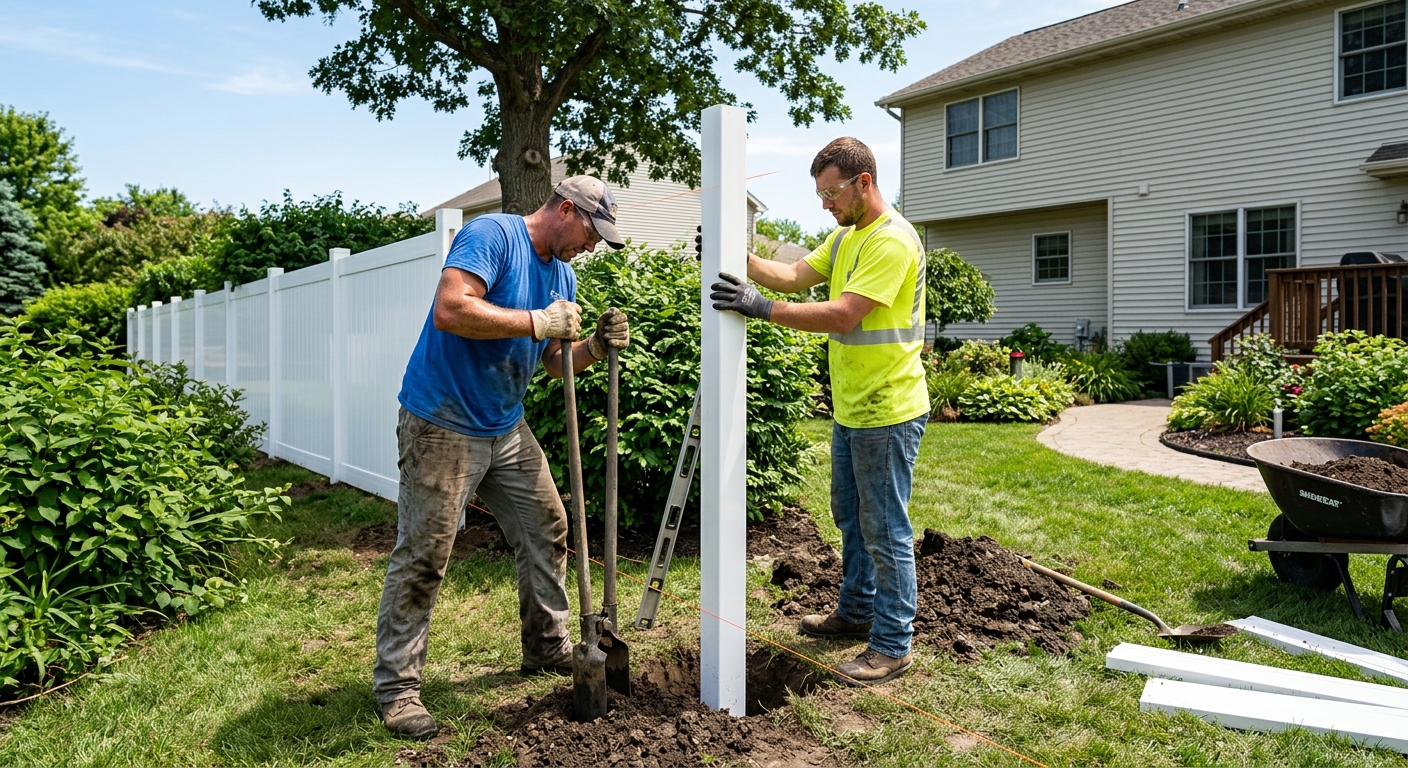
Fencing options and costs in Mount Lehman
Mount Lehman is a growing community in the Lower Mainland–Southwest, and that growth shows up quickly in backyard projects like fencing. With a population of 1,558 (Statistics Canada, 2021 Census), most neighbourhoods here are made up of detached properties where fences are a practical upgrade for privacy, pets, and boundary clarity. The Lower Mainland–Southwest market is also shaped by mild but not trivial frost and regular moisture, so contractors plan for wetter soil, deeper post holes, and stronger anchoring where required.
In this part of B.C., wood does not “dry out” the way it can in drier climates, so proper treatment and correct post embedment matter more than it might elsewhere. Even though frost levels are generally shallower than much of Ontario or Alberta, crews still often set posts below the local frost depth to limit heaving, especially when soils hold water. That typically means deeper holes and more concrete for privacy panels, corner posts, and gate posts—especially in areas around Abbotsford-like soil conditions, which are common across the region.
Contractor availability can also affect pricing: during peak season, crews in and around the Mount Lehman corridor often book faster for higher-demand finishes like cedar privacy, vinyl privacy, and reinforced gate systems. If you’re targeting a cleaner look for spring and summer events, it’s smart to compare options now—then match your priorities using the table below.
| Material |
Lifespan |
Maintenance |
Privacy Rating |
Price per Linear Foot |
| Pressure-treated pine (standard wood) |
10–15 years |
Stain/seal every 2–3 years |
Good (solid privacy) |
$55–$95 |
| Cedar (natural rot resistance) |
15–25 years |
Light staining every 2–3 years |
Very good (solid privacy) |
$65–$110 |
| Vinyl / PVC (no-maintenance) |
20–30 years |
Minimal (rinse as needed) |
Very good (solid styles) |
$75–$130 |
| Chain-link (galvanized steel) |
20–40 years |
Occasional rinse/touch-ups |
Low (not for privacy) |
$30–$55 |
| Aluminum ornamental |
30–50 years |
Occasional wash |
Low to medium |
$90–$170 |
| Composite / recycled material |
20–30 years |
Minimal (rinse, no staining) |
Good (solid boards) |
$85–$150 |
Prices are estimates only and vary by project scope, site access and material selection.
What affects the price of fencing in Mount Lehman
In Mount Lehman and across the Lower Mainland–Southwest, two quotes for what looks like the “same fence” can differ by 30–50% because the big drivers are rarely identical: how many linear feet you need, how deep posts must be set, soil conditions, gate hardware, and whether the job includes removals and property line locating. Labour rates and hauling time also change with access (tight side yards, landscaping, and driveway crossings) and with how busy crews are during the season. That’s why a budget chain-link run can land near the lower end of the $30–$55 band, while upgraded privacy styles often push into the $75–$130 vinyl/PVC range once proper posts and reinforcement are included.
Lower Mainland–Southwest frost and moisture combine into a practical rule: posts still need to be set below the design frost depth to limit heaving. In many B.C. installs, that means deeper holes than homeowners expect—often with concrete setting for corner posts, line posts supporting heavier panels, and gate posts. Contractors sometimes target embedment roughly 4–6 inches below the design frost depth, and crews may use deeper embedment in wetter, clay-rich or water-retentive soil to keep the fence stable year-round.
Concrete setting can change the bill quickly. Example 1: a privacy panel section with concrete-set corners and gate posts costs more than a chain-link run on gravel pack. Example 2: if your yard is wetter, it can add labour for excavation and disposal and increase concrete consumption. Example 3: if you have a slope, stepped construction adds extra materials and labour, even if the total linear footage looks similar to a flat yard.
| Price Factor |
Why It Matters |
Cost Impact |
| Fence length in linear feet |
Most materials and labour scale directly with length. |
High (major driver) |
| Post depth required |
Frost conditions dictate embedment depth to prevent heaving. |
Medium to High |
| Post setting method |
Concrete vs. gravel pack changes labour and material volume. |
Medium |
| Material choice |
Vinyl, cedar, and chain-link differ in structural demands and cost. |
High |
| Gate count and type |
Drive-through gates need stronger frames, more hardware, and alignment time. |
High |
| Grade and terrain |
Slope requires stepped or raked panels and extra measuring. |
Medium |
| Old fence removal and disposal |
Hauling and disposal add time and may require additional labour. |
Medium |
| Permit fees and survey / property line locate |
Locates prevent encroachment and protect your investment. |
Low to Medium |
Permits & regulations in British Columbia
In British Columbia, fences above a height threshold—typically around 2.0 m (6.5 ft) for rear yards and about 1.0–1.2 m (3–4 ft) for front yards or corner lots—often require a building permit. Regardless of height, you must respect property lines and municipal setback requirements (your local bylaws for the area where the fence sits). For fencing accuracy, the key step before any digging is calling for utility locates so contractors don’t strike buried services.
In Mount Lehman, a practical process is: (1) confirm your property line location with a survey or an approved property line locate, (2) check your intended fence height and position relative to front/corner boundaries, and (3) plan your post holes with utility locates completed first. If the fence is a shared boundary fence, line-fence rules apply through provincial legislation governing shared fencing responsibilities and cost sharing.
When it comes to what typically does NOT need a permit: lower-height fences and most typical backyard replacement projects under the threshold often proceed without a permit, but they still must meet setback and property line rules. What DOES require a permit is usually any fence exceeding the height thresholds noted above or any project that triggers review due to location and height.
To verify your contractor in B.C., confirm they can produce (a) their licence/registration credentials for the work they’re performing, (b) liability insurance (ask for a current certificate of insurance), and (c) their workplace coverage status. Request a clearance letter or confirmation document where applicable, and keep copies in your project file.
Choosing the right fence material for Mount Lehman
Picking the right fencing material in Mount Lehman is mostly about matching the material to your priorities—privacy, low maintenance, lifespan, and budget—while respecting the Lower Mainland–Southwest climate: mild winter temperatures, recurring moisture, and wind variability. Pressure-treated pine is the entry point. It’s typically the most budget-friendly wood choice, but it needs staining or sealing roughly every 2–3 years to slow weathering and graying and to reduce surface damage in wet cycles. Cedar looks better and resists rot more naturally, but it still benefits from periodic maintenance to keep it looking sharp and to extend its lifespan.
Vinyl/PVC is popular because it’s close to “install and forget.” In this region, it’s not maintenance-heavy, but it can become brittle if exposed to extreme cold repeatedly; good-quality profiles and proper installation matter. Chain-link is usually the lowest cost and longest-lasting option for security, but it offers limited privacy unless you add screening. Aluminum is durable and won’t rust, though it’s more ornamental than private. For privacy, cedar or vinyl privacy styles are typically the best match when you also account for post embedment and reinforcement.
Local frost embedment requirements mean your post hardware choice matters. Even for wood, many crews set corner and gate posts with concrete and place line posts deep enough to reduce heaving risk in wetter soil. Whether concrete-set posts are necessary: for corner posts, gates, and privacy panel sections, it’s commonly recommended in Mount Lehman due to stability in moist ground.
Dollar example: if you have a 40 linear foot privacy run, upgrading from pressure-treated pine to vinyl may shift the project from about $55–$95 per linear foot toward the $75–$130 band once you include reinforced posts and gate hardware. The price difference is usually justified if you want long-term low maintenance and consistent appearance.
| Material |
Cold Tolerance |
Lifespan |
Annual Maintenance |
Best For |
Price Band |
| Pressure-treated pine |
Good (stains protect surfaces) |
10–15 years |
1–2 hours spot checks; plan stain every 2–3 years |
Budget privacy with maintenance |
$55–$95 |
| Cedar |
Good (natural rot resistance) |
15–25 years |
1–2 hours wash/inspection; stain every 2–3 years |
Premium look and good privacy |
$65–$110 |
| Vinyl / PVC |
Very good with quality install |
20–30 years |
Minimal (rinse as needed) |
Low maintenance privacy |
$75–$130 |
| Chain-link |
Excellent |
20–40 years |
Minimal (rinse; check tension) |
Security on a budget |
$30–$55 |
| Aluminum ornamental |
Excellent (won’t rust) |
30–50 years |
Minimal wash |
Durable curb appeal |
$90–$170 |
| Composite / recycled |
Good (depends on product) |
20–30 years |
Minimal (rinse; inspect fasteners) |
Privacy with low upkeep |
$85–$150 |
How to choose a fencing contractor in Mount Lehman
Start by verifying the contractor’s coverage and standing in British Columbia. Ask for (1) their licence/registration credentials for the scope they’re offering, (2) liability insurance—request a current certificate of insurance showing effective dates and the jobsite name/address where possible, and (3) their workplace coverage. In practice, many established fencing firms can provide a clearance letter or confirmation of coverage upon request. If a contractor can’t produce these documents quickly, that’s a warning sign.
Next, get 2–3 itemised written quotes. You want a breakdown that separates labour from materials and shows post quantity, post depth approach, concrete vs. gravel pack, gate framing, hardware type, and disposal/removal scope. Avoid lump-sum quotes without clear inclusions. Make sure the quote states what’s excluded: permit pull (if needed), utility locate coordination, survey or property line locate, and whether they handle old fence removal and hauling.
Warranty matters for both workmanship and products. Ask for the workmanship warranty length and whether it’s transferable if you sell your home. Confirm the manufacturer warranty for materials like vinyl profiles, rails, and fasteners, since product coverage differs from install coverage. Payment schedules should protect you: never pay more than 10–15% upfront; use a holdback until the work is complete and measured/approved. Finally, insist on a written start date and an estimated completion timeline so weather delays and material lead times don’t turn into open-ended schedules.
- Request proof of liability insurance (certificate of insurance) before signing.
- Ask for workplace coverage confirmation/clearance letter where applicable.
- Confirm licence/registration credentials relevant to the fence scope.
- Get 2–3 itemised quotes (labour, posts, panels, gates, concrete, removal).
- Ensure the quote states post depth approach and how it addresses frost/heaving risk.
- Check whether the quote includes utility locates and responsibility for damages coverage.
- Verify who pulls permits (if your fence exceeds height thresholds) and whether it’s included.
- Confirm property line approach: survey/locate included or client-provided.
- Ask about reinforcement at corners, line posts, and gate posts (not “generic” framing).
- Review disposal/haul-away inclusion for old fence materials.
- Confirm warranty: workmanship term, product warranty term, and transferability.
- Use a payment schedule with 10–15% max upfront and holdback until completion.
Concrete red flags: they won’t provide insurance or coverage documents; they quote without measuring linear footage and gate hardware; they suggest shallow post holes “for speed” without addressing frost/heaving in wetter soil; they use vague language like “standard materials” with no model or grade listed; or they ask for a large deposit before they’ve started locates, layout, and material ordering.
Frequently asked questions — fencing in Mount Lehman
What is the cost per linear foot for fencing in Mount Lehman?
In Mount Lehman, fencing costs are typically estimated using installed price bands. Chain-link is usually the lowest at about $30–$55 per linear foot for an ordinary residential run. Wood commonly falls in the mid-range around $55–$95 per linear foot, while vinyl/PVC is often higher at $75–$130 per linear foot due to material and structural requirements. Your exact number depends on length, gate count, whether old fence removal and disposal are included, and whether posts are set with concrete in wetter soil. Lower Mainland–Southwest weather also encourages deeper, more stable installs, which can raise labour and material costs compared with dry-site jobs.
Should I repair or replace my old fence in Mount Lehman?
Most fences can be repaired when the framing is still solid and the damage is local—like one or two rotted sections, bent pickets, or loose rails. In Mount Lehman, because the Lower Mainland–Southwest climate stays moist, wood posts that have softened at the base often indicate deeper structural issues, and repairs can become a recurring cost. A full replacement is usually the better value if multiple posts are failing, the fence is leaning significantly, or gates no longer align due to sagging. If your fence is near the end of its typical lifespan (for wood, often 10–15 years), it’s worth pricing a full replacement alongside repairs so you can compare the long-term outcome.
How do I handle a fence dispute with a neighbour in British Columbia?
In British Columbia, try to solve fence issues early and calmly: confirm the exact property line and fence height/location in writing, and avoid informal “moving boundaries” on your own. If you suspect an encroachment, request a property line locate or survey rather than relying on rough measurements. Document everything—photos, dates, and copies of any communications. If the fence is a shared boundary, the provincial line-fence legislation governs responsibility and cost sharing, so it’s smart to discuss who pays for what scope (posts, rails, removal, and re-build). Also keep utilities and set-back rules in mind before any digging. A clear, written agreement and a single jointly approved contractor can prevent the dispute from escalating.
What fence style offers the best wind resistance in Mount Lehman?
For Mount Lehman and the Lower Mainland–Southwest, wind resistance is less about making fences perfectly solid and more about ensuring posts, spacing, and reinforcement are properly engineered for local conditions. In open, gusty stretches, a high “sail” surface can catch wind if it’s not framed correctly. Privacy fences should use properly installed corner and line posts (often concrete-set where needed) and sturdy rails with tighter framing to reduce flex. Chain-link typically performs well under wind load because it “lets wind pass,” but it won’t provide privacy. If you want privacy, consider designs that limit excessive sail area (solid with good framing, or engineered composite/vinyl options) rather than flimsy boards with wide gaps and light hardware.
How much does a fence cost in Mount Lehman?
The total cost depends on linear footage, fence height, material choice, gates, and site complexity. As a simple guide, chain-link often starts around $30–$55 per linear foot installed, while wood fencing commonly lands around $55–$95. Vinyl/PVC typically ranges from $75–$130 per linear foot in this region. If you add driveway-width drive-through gates, slope adjustments, old fence removal/disposal, or permit/survey work, the total increases. Wet soil conditions in the Fraser Valley-like install environments also encourage deeper holes and more concrete for stability, which adds labour and materials even when the fence “footage” looks similar. For an accurate number, use an itemised quote that lists post quantity and setting method.
How deep should fence posts be for Mount Lehman's frost?
For Mount Lehman in the Lower Mainland–Southwest, posts are generally installed deeper than homeowners expect to limit frost heaving in wetter ground. Contractors commonly set posts roughly 4–6 inches below the design frost depth, and they may use deeper embedment where soil holds water. While BC’s coastal conditions are typically shallower than many inland provinces, the practical expectation is that you still need solid embedment for corner posts, gate posts, and sections under higher loads (privacy panels and reinforced areas). Many installations also use concrete for key posts to improve stability and reduce movement over wet winter cycles. If a contractor proposes only shallow, no-concrete installs “to save money,” ask how they’re addressing heaving risk and whether their approach matches the local frost design and soil conditions.