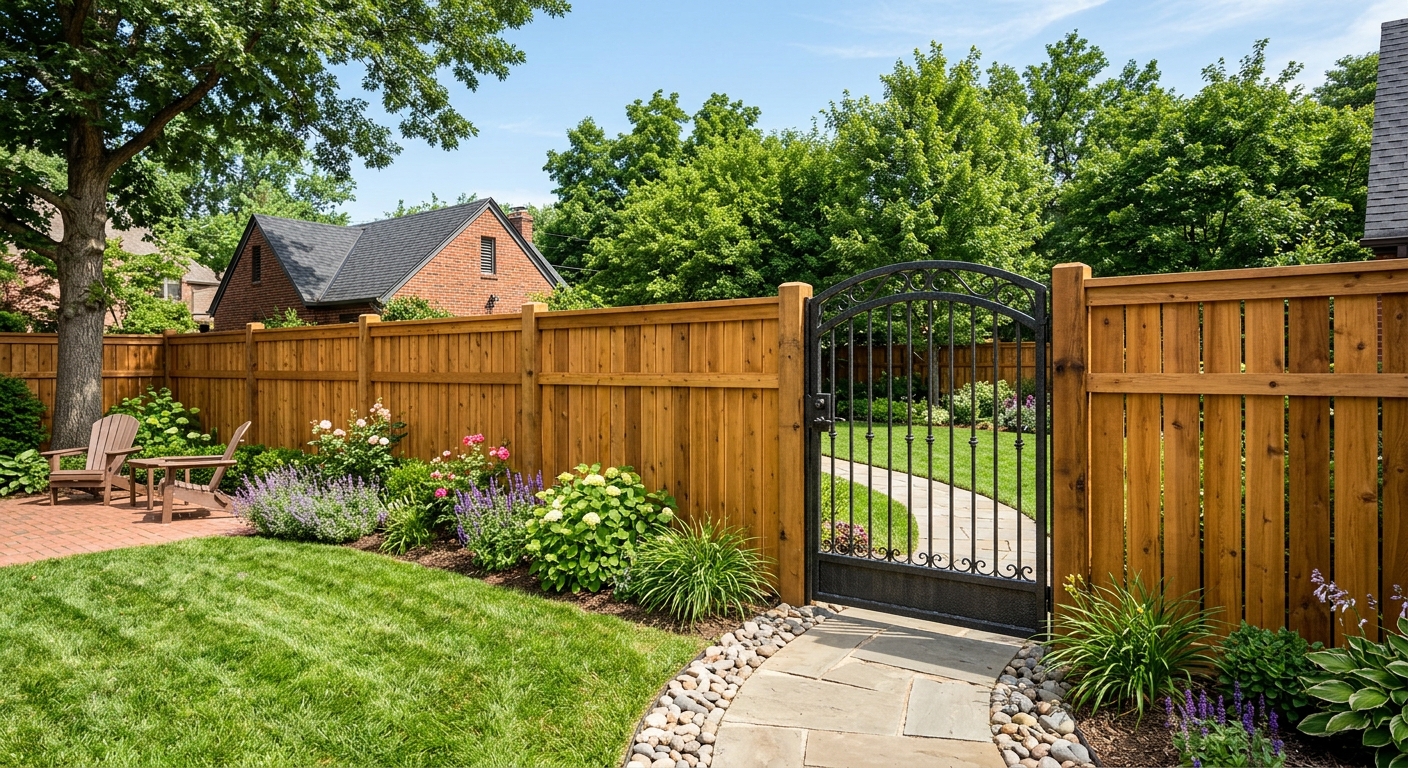
Fencing options and costs in Hastings-Sunrise
In Hastings-Sunrise, choosing a fence starts with understanding the local demand: with a population of 34,575 (Statistics Canada, 2021 Census), the Lower Mainland–Southwest is full of growing and maintained residential lots, and nearly every detached property needs some form of fencing at some point—whether it’s privacy, dog control, or simply defining boundaries. The trade is especially busy around popular residential pockets such as the Hastings Street corridor and the surrounding back-lane lots, where backyards tend to be well-used and fence lines are often updated as neighbourhood homes change over time.
Pricing in this part of B.C. is shaped by mild but not trivial frost and frequent wind-driven weather. Even though winters are softer than Ontario and Alberta, frost still affects how deep posts must go to reduce heaving, especially in wetter Fraser Valley–type soils. That typically means deeper holes than people expect, more concrete setting for corner and gate posts, and more labour than a quick “drive and go” install. Access and yard conditions also matter: sloped properties common to parts of the region often require stepped rails or raked panels, which adds time.
Contractors here also see strong variability in availability and scheduling, so the same fence style can land differently depending on material lead times, crew size, and whether demolition/disposal is part of the scope. Use the comparison below as a baseline—then we can tighten the numbers once we confirm height, linear footage, post depth, and finish grade.
| Material |
Lifespan |
Maintenance |
Privacy Rating |
Price per Linear Foot |
| Pressure-treated pine (standard wood) |
10–15 years |
Stain/seal every 2–3 years |
High (solid or close-board) |
$55 – $95
|
| Cedar (natural rot resistance) |
15–25 years |
Re-stain as needed (typically every 2–4 years) |
High (solid or close-board) |
$70 – $110
|
| Vinyl / PVC (no-maintenance) |
20–30 years |
Rinse/wash periodically; no staining |
High (solid panels) |
$75 – $130
|
| Chain-link (galvanized steel) |
20–40 years |
Minimal; occasional tension/repairs |
Low to medium (not a true privacy fence) |
$30 – $55
|
| Aluminum ornamental |
25–45 years |
Minimal; wash and check hardware |
Low (open pickets) |
$90 – $170
|
| Composite / recycled material |
20–35 years |
Low; wash, no painting |
High (solid or slat systems) |
$95 – $165
|
Prices are estimates only and vary by project scope, site access and material selection.
What affects the price of fencing in Hastings-Sunrise
In Hastings-Sunrise and across the Lower Mainland–Southwest, fence quotes for what looks like the “same” job can vary by 30–50% because the hidden drivers are rarely the visible parts. A crew may price a faster, low-disruption install at one end of the range, then add cost for post depth, concrete setting, slope adjustments, gate hardware, and demolition/disposal at the other. Material pricing and lead time also swing the final number, especially for vinyl/PVC systems and custom aluminum sections that require fabrication.
Frost line depth sets how deep posts must be set. Even in coastal B.C., frost can still heave unsuitably shallow posts, so installers commonly go about 4–6 inches below the design frost depth (contractor-specific depth plans vary by soil and exposure). In colder Ontario and Alberta regions, contractors often bury posts 1.5–2.0 m and use more concrete; in the Lower Mainland–Southwest, we typically don’t need the full Ontario/Alberta depth, but we still frequently set deeper than “minimum,” particularly for corner posts, privacy-heavy panels, and any gate frame subject to repeated loading.
Wind exposure matters too. While the Prairies are harsher for wind-driven panel loads, Lower Mainland–Southwest storms still push crews toward stiffer framing, tighter picket/slat spacing, and stronger posts. Wet soils in many areas mean deeper holes and more concrete consistency. As an example, a chain-link line fence may fit the lower band of $30 – $55 per linear foot, while adding a vinyl/PVC privacy system often moves the project into $75 – $130 per linear foot once gates, heavier posts, and stronger supports are included.
Concrete examples: if your soil is soft and holds water, we usually need more excavation time and more concrete to stabilize posts; if your yard is sloped, stepping panels can add labour and extra rails; and if you’re replacing an old fence on a tricky boundary line, property line verification and disposal can meaningfully lift cost. In older Hastings-Sunrise housing-stock pockets, we also often see aged fence remnants and buried footings that require extra removal time—sometimes turning a “straight replacement” into a more labour-intensive install.
| Price Factor |
Why It Matters |
Cost Impact |
| Fence length in linear feet |
Most expenses scale directly with total run length. |
Often the largest driver; small length changes add up quickly. |
| Post depth required |
Frost management and soil stability depend on embedment. |
Deeper holes increase materials (posts), concrete, and labour time. |
| Post setting method |
Concrete vs. gravel pack affects stability and lifespan. |
Concrete setting typically adds cost but reduces long-term movement. |
| Material choice |
Different materials have different structural requirements and costs. |
Vinyl/PVC and aluminum generally cost more than wood or chain-link. |
| Gate count and type |
Gates require stronger frames, hinges, and often thicker hardware. |
Every gate can add a noticeable premium; double-drive gates are higher. |
| Grade and terrain |
Slopes require stepped, raked, or custom panel solutions. |
Adds labour, extra rails, and more fitting time. |
| Old fence removal and disposal |
Hauling and demolition are labour-and-equipment tasks. |
Can add a significant line item, especially if concrete footings exist. |
| Permit fees and survey / property line locate |
Accuracy prevents disputes and rework. |
Varies by municipality and job; survey can be a meaningful add-on. |
Permits & regulations in British Columbia
In British Columbia, fences can fall under permit requirements when they exceed common height thresholds—often around 2.0 m (6.5 ft) for rear yards and 1.0–1.2 m (3–4 ft) near the front or corners. Exact rules can vary by municipality and lot characteristics, so treat thresholds as guidance and confirm with your local permitting office before you dig. All fences must also respect property lines and municipal setback bylaws, including corner visibility requirements where applicable.
Before digging any post hole, call for utility locates—use BC 1 Call to request underground service marking. Even if you’ve “never had issues,” utility positions can change around older streets or in-lane installations. Next, obtain a survey or locate your property pins before installing fencing so the posts land on your side of the line. This helps you avoid the most common ownership disputes on back-lane edges and shared boundary segments.
Shared fence ownership rules are typically handled under provincial line-fences legislation, which focuses on who may build, repair, and how costs are treated where boundaries are shared.
Step-by-step for Hastings-Sunrise homeowners: (1) ask the contractor for a clear fence scope and any permit responsibility in writing; (2) verify their British Columbia licence (when applicable) via the provincial online contractor registry; (3) request a certificate of insurance showing liability coverage naming you as additional insured; and (4) confirm workplace coverage—builders typically show WSBC/WCB documentation (clearance letter or account documentation) before starting. If a contractor can’t provide these, slow down and ask questions.
Choosing the right fence material for Hastings-Sunrise
For Hastings-Sunrise, the “best” material is the one that matches your priorities while handling Lower Mainland–Southwest weather: mild winters, wet periods, and enough frost to make proper post embedment important. Pressure-treated pine is usually the budget-friendly pick, but it needs staining or sealing every 2–3 years to avoid grey weathering and premature surface wear. Cedar offers a nicer look and better natural rot resistance, yet it’s still a wood system—expect maintenance such as re-staining every few years to keep it looking sharp.
Vinyl/PVC is the low-maintenance choice for many homeowners because you typically rinse it and move on. That said, extreme cold snaps can stress some cheaper vinyl systems, so good-quality products and properly set posts matter. Chain-link is the most economical for long runs and has excellent service life with minimal upkeep, but it won’t deliver true privacy unless you add slats or a privacy screen. Aluminum ornamental fencing is rust-resistant and durable, but it’s usually designed for curb appeal and security rather than privacy.
Post-depth considerations: in the Lower Mainland–Southwest, posts still need to be set below the frost-affected zone—commonly guided by plans that place embedment about 4–6 inches beneath design frost depth—to prevent heaving. Concrete-set posts are often used for privacy panels, corner posts, and gates because those areas take repeated loads and lateral forces.
As a practical dollar example, many homeowners compare standard pressure-treated wood in the $55 – $95 per linear foot band against vinyl/PVC in the $75 – $130 band. If you want year-after-year looks without annual staining, the extra upfront cost can be justified—especially for fences exposed to persistent moisture or heavy yard use.
| Material |
Cold Tolerance |
Lifespan |
Annual Maintenance |
Best For |
Price Band |
| Pressure-treated pine |
Good with proper post embedment and good hardware |
10–15 years |
Low to moderate (inspect; stain/seal every 2–3 years) |
Budget-conscious privacy or boundary fencing |
$55 – $95
|
| Cedar |
Very good when well ventilated and sealed |
15–25 years |
Moderate (re-stain as needed every 2–4 years) |
Natural look with rot resistance |
$70 – $110
|
| Vinyl / PVC |
Good; choose quality boards and rated systems |
20–30 years |
Very low (wash/rinse periodically) |
Low-maintenance privacy and clean appearance |
$75 – $130
|
| Chain-link |
Excellent; galvanized steel resists corrosion |
20–40 years |
Low (check tension and localized repairs) |
Security and containment where privacy isn’t required |
$30 – $55
|
| Aluminum ornamental |
Excellent; non-rusting finish |
25–45 years |
Very low (occasional wash) |
Attractive security with an open look |
$90 – $170
|
| Composite / recycled |
Good; installation quality affects performance |
20–35 years |
Low (wash and inspect for fastener integrity) |
Long-life privacy with less upkeep |
$95 – $165
|
How to choose a fencing contractor in Hastings-Sunrise
Choosing the right fencing contractor in Hastings-Sunrise is mostly about proof: licensing/registration where required, insurance that protects you, and proper documentation for the crew. In British Columbia, start by verifying the contractor’s status through the provincial online registry (when applicable). Next, request a certificate of insurance that includes liability coverage. If you see “no insurance” or only a private policy with no ability to add you, that’s a stop-sign. Finally, confirm workplace coverage: ask for WSBC/WCB clearance documentation (or account evidence) before work starts—this helps ensure your project isn’t exposed if someone is injured on-site.
Get 2–3 itemised written quotes rather than lump sums. A good quote breaks out labour and materials, and it clearly lists what’s included: post embedment depth approach, panel type, gate hardware, rail count, fasteners, and whether concrete setting is included at corners and gates. Make sure the scope clarifies exclusions like fence removal, disposal/hauling, permit pulls (if applicable), and damage to existing landscaping or paving (and whether reinstatement is included).
Warranty matters. Ask for the workmanship warranty length (how long they stand behind the install) and the manufacturer warranty (what covers the material). Also confirm whether warranties are transferable to future owners—this can matter if you sell your home. For payment, never pay more than 10–15% upfront; hold back the remainder until the fence is complete and cleaned. Get a written start date and a completion estimate that reflects typical Lower Mainland–Southwest scheduling realities.
- Ask for an itemised quote (labour + materials), not a one-line total.
- Confirm post embedment method and depth plan based on site conditions.
- Check that corner posts and gate frames are treated as load-bearing points.
- Verify whether concrete setting is included where required (often corners/gates).
- Clarify whether old fence removal and disposal are included.
- Ask who pulls any permit and what the timeline impact is.
- Ensure gate hardware and latches are specified (brand/model if possible).
- Request a workmanship warranty in writing (duration and what it covers).
- Confirm product/manufacturer warranty terms and whether they’re transfer-friendly.
- Require proof of liability insurance (certificate of insurance) before starting.
- Confirm WSBC/WCB coverage (clearance letter/account documentation).
- Use a payment schedule: max 10–15% upfront; hold back until completion.
Red flags in Hastings-Sunrise include: vague scopes that don’t state post depth or concrete setting, quotes that rely on “minimum embedment” without soil discussion, contractors who won’t provide insurance/WSBC documentation, payment requests for most of the total upfront, and schedules that don’t provide a start date/completion estimate in writing.
Frequently asked questions — fencing in Hastings-Sunrise
What's the most low-maintenance fence?
In Hastings-Sunrise, the most low-maintenance option is usually a vinyl/PVC fence. It’s designed to handle moisture and wet-season conditions without the staining cycle wood requires, and homeowners typically only need to rinse it occasionally. In many Lower Mainland–Southwest projects, vinyl/PVC lands around $75 – $130 per linear foot, especially when privacy panels and proper post reinforcement are included. Chain-link can also be low-maintenance (often in the $30 – $55 band) but it won’t provide true privacy unless you add slats or a separate privacy screen. The key is that even “no-maintenance” systems perform best when posts are set correctly below frost-affected soil depth and gate/corner loading is handled with stronger framing.
How tall can my fence be in Hastings-Sunrise?
Fence height rules in British Columbia typically depend on whether the fence is in the front, rear, or a corner side yard, and whether it triggers a building permit. A common guidance point is that fences above about 2.0 m (6.5 ft) in the rear and roughly 1.0–1.2 m (3–4 ft) near the front or corners often require a building permit. In practice, you’ll want to confirm the exact allowance with your municipal bylaw and lot setbacks, especially for corner visibility areas. If you’re planning a solid privacy fence near a boundary line, don’t guess—have your contractor confirm height, location, and permit responsibility before ordering materials, so you don’t end up paying to adjust the build later.
Should fence posts be set in concrete here?
Often, yes—at least for the critical points. In Hastings-Sunrise, even with coastal B.C. conditions, frost heave is a real concern, so posts should be set below the frost-affected zone (commonly guided by embedment plans that place posts about 4–6 inches beneath design frost depth). Concrete setting is especially common for privacy fencing and for structural locations: corner posts, terminal posts, and gate frames take repeated loads and benefit from stable anchoring. For homeowners, this means your quote may be higher than the “quick install” approach, but it reduces long-term leaning and movement. If your fence is chain-link, some systems use different methods, yet deep, stable embedment still matters. The best answer comes from soil conditions and how your lot handles moisture.
What's the best fence for privacy?
The best privacy fence in British Columbia is usually one that uses close spacing or solid panels—most commonly cedar, pressure-treated pine, or vinyl/PVC privacy systems. In Hastings-Sunrise, wet-season exposure and wind make proper framing and post support important, not just the material choice. If you want maximum privacy with lower ongoing effort, vinyl/PVC privacy fencing is often the go-to, and it commonly prices around $75 – $130 per linear foot depending on height, gates, and installation requirements. Cedar and pressure-treated wood privacy fences can look great too, with wood often in the $55 – $95 per linear foot band for standard pressure-treated installs. Wood will require staining/sealing to stay looking its best, while vinyl typically stays clean with basic washing.
How do I compare fencing quotes?
Compare quotes like-for-like. Ask each contractor to itemise labour and materials and to specify: post embedment depth approach, whether they use concrete for corner posts and gates, the number and type of rails, fastener quality, gate hardware, and whether removal/disposal is included. Also confirm how they handle slope (stepped vs. raked panels), and whether utility locates/permit items are part of the scope or the homeowner’s responsibility. A low number can be misleading if it omits concrete setting where it’s needed or uses minimal embedment that ignores frost-affected soils. For reference, if one quote lands closer to $30 – $55 per linear foot, it’s likely chain-link, while a privacy-focused vinyl/PVC quote often lands nearer $75 – $130 per linear foot. Finally, check documentation: liability insurance and WSBC/WCB coverage should be provided before scheduling.
How long does fence installation take in Hastings-Sunrise?
Install time depends mainly on linear footage, access, slope, gate count, and whether old fence removal is included. For a typical residential run, a straightforward chain-link line can be faster than solid privacy fencing because there are fewer panel components to fit and align. However, in Hastings-Sunrise the timeline also depends on post-hole excavation and how the site sets up for deeper frost-managed embedment. A privacy fence with multiple gates and slope adjustments often takes longer than a similar-length open fence. If demolition/disposal is required, that can add extra time. Expect scheduling to be reasonable but not instant—Lower Mainland–Southwest crews commonly work through material lead times, and wetter soil days can slow excavation. Your contractor should provide a written start date and completion estimate after a site walk.