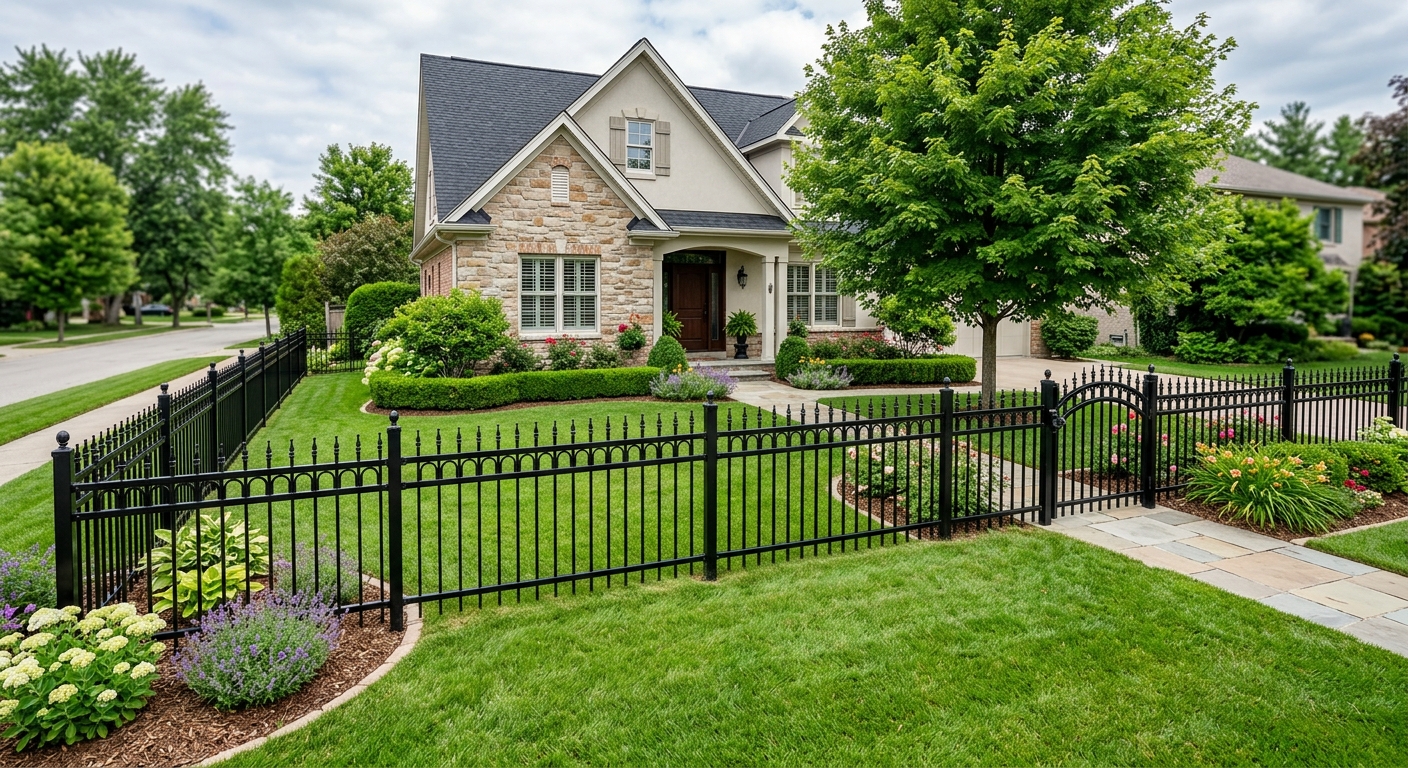
Fencing options and costs in Burns Lake
Burns Lake has a mix of lake-adjacent lots and older residential neighbourhoods, and that matters for fencing because frost depth, soil type, and wind exposure directly affect how deep posts must go and what bracing is required. With 64.2% of local dwellings being single-detached homes (Statistics Canada, 2021 Census), there are a lot of boundary fences around driveways, backyards, and side yards—so demand stays steady year-round, even when crews book out during shorter winter-access windows. The Nechako region also has many homes built before 1981, which often means older fence lines, shifting posts, and more frequent replacements as grading changes and wooden rails deteriorate. (Statistics Canada, 2021 Census.)
In practice, Nechako frost can be significant, so contractors commonly set posts about 3–5 feet deep with concrete footings to stabilize in mixed clay and rocky ground and reduce frost heave risk. Wind is another cost driver: open pockets near the valley edge can act like a sail, so privacy panels may need tighter spacing and sturdier posts. Over time, that’s why chain-link can remain one of the best “value-per-year” choices in exposed locations, while solid privacy fences typically cost more upfront due to heavier posts, closer spacing, and added concrete time.
In Burns Lake, the trade often feels especially busy around town lots off Highway 16 and on newer infill pockets where homeowners upgrade their perimeter and add gates. Below is a quick comparison to help you budget before we move into what drives pricing—then you can use your site conditions to tighten the estimate in your quotes.
| Material |
Lifespan |
Maintenance |
Privacy Rating |
Price per Linear Foot |
| Pressure-treated pine (standard wood) |
10–15 years |
Stain/seal every 2–3 years |
High (solid pickets/rails) |
$25–$38 |
| Cedar (natural rot resistance) |
15–25 years |
Light staining every 2–4 years |
High (solid pickets) |
$32–$52 |
| Vinyl / PVC (no-maintenance) |
20–30 years |
Wash only; avoid impacts |
High (solid panels) |
$38–$62 |
| Chain-link (galvanized steel) |
25–35 years |
Rinse as needed; tension check |
Low to medium (add privacy slats if desired) |
$20–$32 |
| Aluminum ornamental |
25–40 years |
Wash; occasional paint touch-ups only (if required) |
Low (semi-privacy) |
$42–$70 |
| Composite / recycled material |
25–35 years |
Low; periodic cleaning |
High (solid boards) |
$48–$78 |
Prices are estimates only and vary by project scope, site access and material selection.
What affects the price of fencing in Burns Lake
Even for the “same” fence length and height, quotes in Burns Lake and across the wider Nechako region can swing by about 30–50% because frost-setting requirements, equipment time, and material handling differ from one site to the next. In British Columbia, crews also have to plan for shorter practical construction windows around freeze-thaw cycles and limited access—especially where rock or uneven grades slow augering and where debris removal is required. On exposed sites near valley edges, you may see heavier posts and reduced spacing, which pushes labour and concrete up.
Frost depth is the biggest driver locally. To prevent heaving, post holes are usually set about 4–6 inches below the design frost depth. In colder interior BC areas like those around Smithers and the Bulkley–Nechako belt, contractors typically plan posts 3–5 feet deep with concrete footings; that means longer posts, deeper augering, and more bags of concrete—so material cost and labour time both rise. On the Prairies this becomes even more about wind: tighter post spacing and stronger bracing. Coastal-style wood approaches can be more affordable in milder areas, but in Burns Lake the wet-cold combination makes proper treatment and maintenance non-negotiable; wood without the right prep tends to grey early and deteriorate faster.
Two concrete examples from Burns Lake: (1) If your yard has mixed clay over gravel and you need deeper holes for stability, auger time increases and most crews will recommend concrete-set posts rather than gravel pack alone; that can shift you from the lower end of the wood band to the higher end. (2) If you’re adding a solid privacy fence with gates on a slightly sloped lot, racking panels and reinforcing hinge points increases labour; that’s often where vinyl/PVC pricing becomes easier to justify versus pressure-treated pine—especially when you’re budgeting for ongoing staining every 2–3 years.
To anchor expectations: chain-link installs often land closer to the $35–$60 per linear foot band in this tier, while privacy-focused vinyl/wood options commonly move toward $55–$85 (wood) and $70–$110 (vinyl) once concrete setting, gate hardware, and site prep are included.
| Price Factor |
Why It Matters |
Cost Impact |
| Fence length in linear feet |
Every additional foot adds posts, rails, and hardware |
Largest overall driver; small unit-cost changes multiply |
| Post depth required |
Frost line determines post length and hole depth |
Deeper posts increase materials, auger time, and concrete |
| Post setting method |
Concrete vs. gravel pack vs. driven posts changes stability |
Concrete-set systems usually cost more but reduce heave risk |
| Material choice |
Vinyl vs. cedar vs. chain-link affects both labour and longevity |
Higher-material options raise upfront but can lower long-term upkeep |
| Gate count and type |
Drive-through double gates require stronger frames and bracing |
Gates add significant labour, hinges, latches, and often upgraded posts |
| Grade and terrain |
Sloped yards require stepped or raked panels |
More layout time and custom cuts/adjustments |
| Old fence removal and disposal |
Hauling and disposal depends on condition and accessibility |
Can add labour and dump fees; sometimes required before new installs |
| Permit fees and survey / property line locate |
Locates prevent boundary disputes and avoid rework |
Small to moderate add-on, but avoids costly redo later |
Permits & regulations in British Columbia
In British Columbia, fences can trigger permit requirements based on height and location. As a rule of thumb, fences above a threshold—commonly around 2.0 m (6.5 ft) at the rear and about 1.0–1.2 m (3–4 ft) at the front or corner—often require a building permit. Regardless of whether a permit is required, all fences must stay within property lines and follow municipal setback rules, especially near intersections and corner lots.
Before you dig a single post hole, you should complete utility locates. In B.C., use BC 1 Call so underground services can be marked—this is essential in older Burns Lake neighbourhoods where service routes may not be where you expect. Also consider getting a survey or a property pin locate before installation. That’s the safest way to avoid encroachment disputes with neighbours, particularly where existing fences were built informally.
Shared fence responsibilities are typically handled under provincial line-fences legislation principles (your exact obligations can depend on whether it’s a shared boundary and the circumstances). Where a permit is not required, you may still be responsible for compliance with local bylaws.
To verify a contractor in Burns Lake, ask for (1) their B.C. business details and trade authorizations as applicable, (2) a current certificate of liability insurance naming you as an additional insured if the contract requires it, and (3) proof of coverage for workplace risks—commonly via Workers’ compensation account clearance/coverage documents where applicable. Get these items in writing before work starts, not after the first post is set.
Choosing the right fence material for Burns Lake
Choosing a fence in Burns Lake is about matching the material to your priorities: privacy, low maintenance, budget, and how long you want it to last through Nechako freeze-thaw. With many homes around town built earlier (and upgraded repeatedly over the years), I see homeowners want a fence that won’t turn into a “stain-and-repair” cycle. Pressure-treated pine is the budget-friendly option, but it typically needs staining or sealing every 2–3 years to prevent grey weathering and early wear. Cedar looks better longer and has natural rot resistance, yet it still benefits from periodic staining to protect finish quality. Vinyl/PVC costs more up front, but it’s popular here because it’s essentially no-maintenance; the key caveat is that it still needs proper post depth and careful installation so it won’t rack or crack from impacts or cold-stress movement.
Chain-link is often the longest-lasting low-cost choice because it tolerates weather well and avoids wood rot. The trade-off is privacy: you either accept the open look or add privacy slats (which can slightly increase sail effect in wind). Aluminum ornamental is attractive and won’t rust, but it’s usually mid-range on cost and less ideal if you need full privacy.
Because Nechako frost can be substantial, post depth planning matters as much as material. Many year-round fence builds use concrete-set posts to keep them stable in mixed clay/rock and reduce frost heave risk. That’s one reason “cheap” per-foot quotes can change quickly once you factor in deeper holes and concrete time.
Example: if pressure-treated pine lands near the lower end of the wood band (often $55–$85 installed per linear foot in this tier) but cedar is closer to the higher end (commonly $70–$110 depending on design and hardware), the price gap can be justified if you want fewer maintenance cycles and a longer-looking finish—especially when you’re budgeting for several years of staining labour.
| Material |
Cold Tolerance |
Lifespan |
Annual Maintenance |
Best For |
Price Band |
| Pressure-treated pine |
Good with proper treatment and dry installation details |
10–15 years |
2–3 year cycle for staining/updated sealing |
Budget privacy where you’re okay maintaining finishes |
$55–$85 |
| Cedar |
Good; performs well in damp-cold climates with finish care |
15–25 years |
Light staining every 2–4 years |
Natural look with improved rot resistance |
$65–$95 |
| Vinyl / PVC |
Very good; can be impacted if not protected |
20–30 years |
Wash as needed; inspect for impact points |
Low-maintenance privacy |
$70–$110 |
| Chain-link |
Excellent; handles freeze-thaw well |
25–35 years |
Minimal; occasional tension checks |
Security and long service life |
$35–$60 |
| Aluminum ornamental |
Excellent; no rust in wet-cold |
25–40 years |
Wash; touch-ups only if required |
Decorative front yard boundaries |
$80–$140 |
| Composite / recycled |
Good; stable with proper post anchoring |
25–35 years |
Low; periodic cleaning |
Modern solid privacy with reduced upkeep |
$85–$135 |
How to choose a fencing contractor in Burns Lake
For fencing in British Columbia, the best protection is choosing a contractor who can show coverage and a clear process. Start with licence/registration (where applicable) and verify their current business information. Next, request a certificate of liability insurance and confirm the coverage is active for the project period. If the contractor will have workers on site, ask for proof of Workers’ compensation coverage/clearance documentation. In Burns Lake, also ask how they handle jobsite safety around augers, rock removal, and winter access. If any of these items can’t be provided in advance, treat it as a high-risk sign.
Get 2–3 itemised written quotes rather than a lump sum. The quote should break out labour vs. materials, show post quantity and spacing, include the post-depth approach (especially how deep they’ll set posts), and list gates separately with hardware details. Ask whether permit pulling is included (if required), and whether disposal of the old fence is part of the price or an extra line item. Make sure the contract states workmanship warranty length and whether manufacturer warranties (for vinyl or gates) apply to the installed system and are transferable if you sell the home.
Payment scheduling matters. Never pay more than 10–15% upfront; hold back a portion until the fence is complete and any punch-list items are addressed. Ask for a start date and a realistic completion estimate in writing, with allowances for frost/soil conditions that can affect post-setting timelines in the Nechako region.
- Verify business details and any applicable B.C. registrations before signing.
- Ask for certificate of liability insurance and review the active dates.
- Confirm Workers’ compensation coverage/clearance documentation is current.
- Use itemised quotes: post depth, materials, and labour separated.
- Require clear post spacing and whether concrete footings are included.
- Check gate hardware type, frame reinforcement, and latch quality.
- Confirm disposal/hauling of old fence materials is included or priced.
- Ask about utility locates responsibility and how they handle marked services.
- Review warranty wording for workmanship and product components.
- Ensure permits (if needed) and property line locate responsibilities are stated.
- Use a staged payment plan (10–15% max upfront) with a holdback.
- Get start date, weather contingency approach, and completion window in writing.
Red flags I commonly see in Burns Lake include contractors who won’t show insurance or coverage documents, quotes that omit post depth and concrete setting details, no written warranty terms, vague scope wording like “materials as available,” and overly low prices that don’t include disposal or required layout verification (survey/locate).
Frequently asked questions — fencing in Burns Lake
What is the cost per linear foot for fencing in Burns Lake?
In Burns Lake, typical installed pricing depends on material and how much site prep is required. In this Nechako pricing tier, chain-link often comes in around $35–$60 per linear foot, while wood privacy fences commonly fall around $55–$85. Vinyl/PVC privacy is usually higher at about $70–$110, and aluminum ornamental tends to be the most expensive, commonly $80–$140. Final costs can change when crews need deeper augering and concrete footings to stabilize posts against frost heave, or when you add gates, remove an old fence, or build on a slope.
Should I repair or replace my old fence in Burns Lake?
It’s usually worth repairing if the posts are solid, the fence line hasn’t shifted, and the damage is limited to a few boards/rails. In older Burns Lake properties—especially where fencing was built before recent frost-depth best practices—common issues include loose posts, rotted bottom rails, and uneven spacing caused by heaving. If multiple posts wobble or the line has pulled out of alignment, replacement is often more cost-effective than repeated patching. For reference, if you’re comparing options within wood (often $55–$85) versus vinyl (often $70–$110), replacement can make sense when you factor in recurring staining and labour every few years. A contractor should assess post stability after marks and utility locates are completed.
How do I handle a fence dispute with a neighbour in British Columbia?
Start by reviewing your property line information (pins or survey) and take time-stamped photos of the fence condition and any encroachments. In British Columbia, fences still must respect property boundaries and local setback rules; if there’s uncertainty, a professional property pin locate or survey is the cleanest way to avoid guessing. Then communicate in writing: share what you believe the boundary is and propose a practical solution (repair on your side, shared work if it’s a shared boundary, or replacement with agreed height/style). If you share a boundary, line-fence rules in B.C. guide responsibilities, but the exact outcome depends on your situation. Keep the conversation factual—wind damage, frost movement, and older installation methods are common reasons fences drift over time.
What fence style offers the best wind resistance in Burns Lake?
For Burns Lake’s Nechako conditions—where wind can load solid panels like a sail—the most wind-tolerant options are typically the ones that allow controlled airflow. Chain-link with proper tensioning and well-set corner/line posts performs well because it doesn’t create as much “catch” as fully solid privacy boards. Solid privacy fences can still be very durable, but they usually require closer post spacing, stronger bracing, and concrete-set posts for stability. Aluminum ornamental and vinyl privacy both do well when installed to spec, but on exposed sites you’ll still want the heavier post configuration and correct spacing to reduce racking. If you want privacy without excessive wind load, consider privacy slats designed for your chain-link system rather than making a completely solid wall.
How much does a fence cost in Burns Lake?
Most fence projects are easiest to price by length (linear feet) and number of gates. As a guide for Burns Lake, chain-link is often around $35–$60 per linear foot installed. Pressure-treated wood privacy is commonly $55–$85, while vinyl/PVC privacy is often $70–$110. Your total can rise if you add gates (especially drive-through double gates), require fence removal and disposal, build on a slope, or need deeper post holes and concrete footings to prevent frost heave. In the Nechako region, post depth planning is a big reason two homeowners can receive quotes that differ noticeably on the “same” fence plan—always confirm post depth and setting method in the written quote.
How deep should fence posts be for Burns Lake's frost?
Burns Lake’s frost conditions mean posts must be set below the effective frost action zone to reduce heaving. In the Nechako region, contractors commonly set posts about 3–5 feet deep in year-round fencing, often with concrete footings—particularly in mixed clay and rocky soils. The practical target is to place posts roughly 4–6 inches below the design frost depth, then use an installation method that holds position through freeze-thaw cycles. The depth and exact approach should be confirmed for your specific location and soil conditions, but if a contractor proposes shallow holes or relies only on gravel pack on exposed ground, it’s a red flag. Ask to see how they’ll measure/set depth and whether concrete setting is included in their quote.