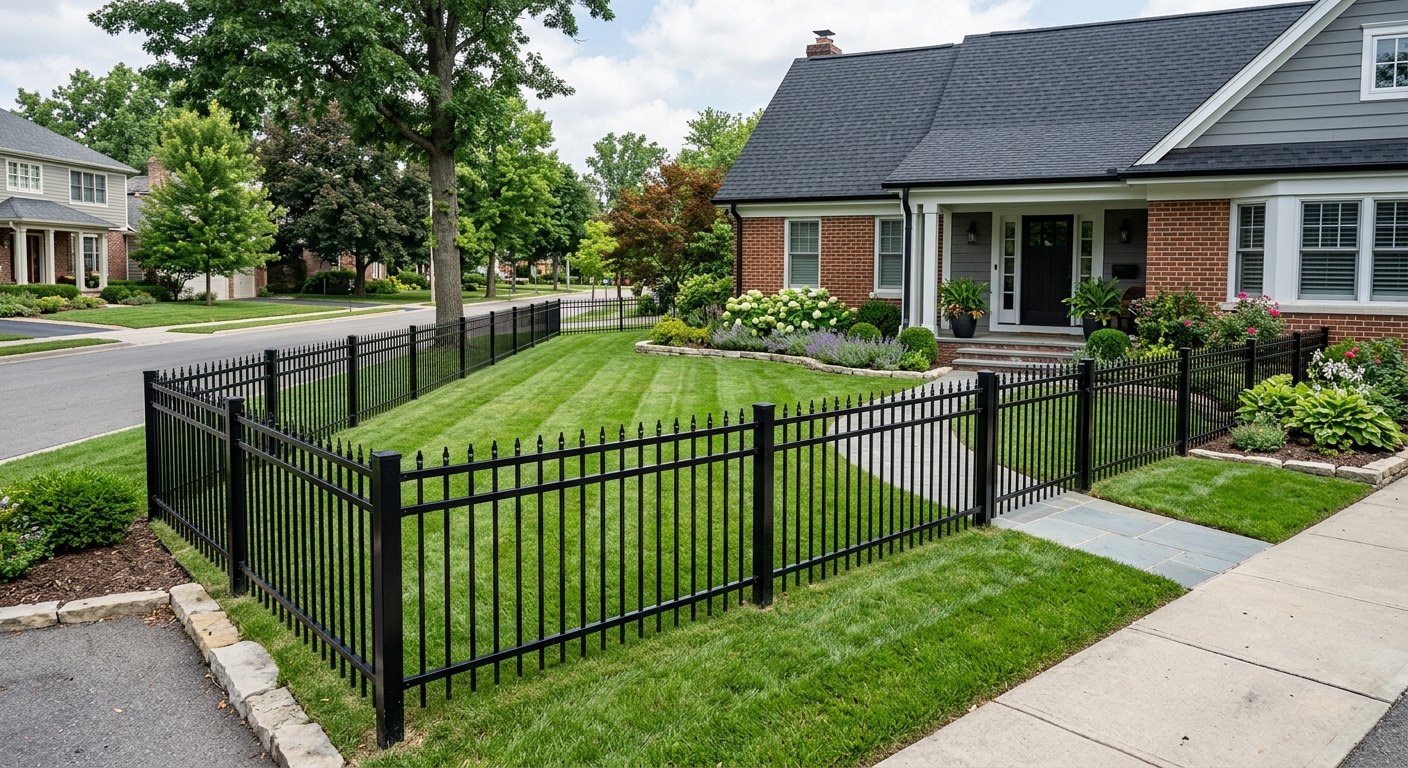
Fencing options and costs in Marlborough
Marlborough, British Columbia is a practical place to upgrade your boundary fencing—especially for homeowners in the large share of detached housing stock that makes yard projects a common weekend plan (Statistics Canada, 2021 Census). With a local population of 14,169, you’ll also find more consistent contractor availability than in smaller communities, but pricing still tracks the broader Lower Mainland–Southwest market.
In Lower Mainland–Southwest, costs are shaped by “mild but not trivial” frost and wind. Even though conditions are generally less severe than Ontario or the Prairies, posts still must be set below the design frost depth to limit heaving. Wet Fraser Valley–type soils often mean deeper holes and more concrete for corner posts, privacy panels, and gates. That labour and material intensity is one reason fencing quotes can swing even when fence length and height look similar.
Demand is particularly strong around newer infill pockets near the Marlborough Avenue area and adjacent residential streets, where homeowners frequently replace older rails with privacy panels. If you’re comparing options, the easiest way to see what you’re paying for is to look at lifespan, upkeep, and typical installed price bands for this region—then sanity-check against your site access, slope, and finish grade.
Use the table below as a quick benchmark before you request an itemised quote.
| Material |
Lifespan |
Maintenance |
Privacy Rating |
Price per Linear Foot |
Price Range |
| Pressure-treated pine (standard wood) |
10–15 years |
Stain/seal every 2–3 years |
Medium–High |
$55–$95 |
$55–$95 |
| Cedar (natural rot resistance) |
15–25 years |
Light stain/cleaning every 2–4 years |
High |
$75–$120 |
$75–$120 |
| Vinyl / PVC (no-maintenance) |
25–35 years |
Rinse as needed (no painting) |
High (solid/board-on-board styles) |
$75–$130 |
$75–$130 |
| Chain-link (galvanized steel) |
20–40 years |
Occasional wash; check tension posts |
Low |
$30–$55 |
$30–$55 |
| Aluminum ornamental |
25–40 years |
Wash 1–2 times per year |
Low–Medium |
$90–$170 |
$90–$170 |
| Composite / recycled material |
20–30 years |
Rinse; minor repairs if impacted |
High (solid infill styles) |
$85–$145 |
$85–$145 |
Prices are estimates only and vary by project scope, site access and material selection.
What affects the price of fencing in Marlborough
In Marlborough and across the Lower Mainland–Southwest, two “similar” fences can still land 30–50% apart in cost. The main reasons are how deep crews must set posts for frost performance in wet soils, how much wind-loading the style needs, and how difficult access is for digging and materials handling. Contractor availability also matters: when multiple trades are working nearby (or when long materials lead times hit), labour schedules tighten and pricing firms up.
Post depth is the first big driver. Even in coastal British Columbia, published guidance typically targets minimum embedment around 3 feet in much of Canada, but crews often go deeper than bare minimum to reduce frost heaving—commonly translating to additional 4–6 inches below the design frost depth. In harsher regions like Ontario and Alberta, posts are often set roughly 1.5–2.0 m into the ground, which is why those markets frequently require more concrete and longer posts; the same “physics” applies here, just less extreme, and wetter Fraser Valley soils can still push hole depths and concrete volumes.
Wind exposure influences spacing and reinforcement. Open styles can be cheaper than solid boards, while privacy designs may need stronger posts, hardware, and tighter rail bracing. Coastal BC’s mild but wet climate also accelerates surface decay on improperly prepared wood—so treated lumber, better fasteners, and correct panel design directly affect how long a fence stays attractive, which you pay for up front.
Concrete examples from Marlborough projects: (1) a 20 ft run with standard pickets may fall near $55–$95 per linear foot for pressure-treated wood, while (2) the same length upgraded to cedar privacy with extra bracing and a more involved post layout can push toward higher wood pricing; on the other hand, (3) a chain-link enclosure can stay closer to the $30–$55 band because it uses lighter panels and generally simpler reinforcement. Finally, yards with older removal and regrading can add disposal and labour that raises the effective cost even if fence height stays unchanged.
| Price Factor |
Why It Matters |
Cost Impact |
| Fence length in linear feet |
Labour, posts, rails, and materials scale directly with total length. |
Largest driver—often the main reason bids differ. |
| Post depth required |
Frost heaving risk depends on embedment below design frost depth. |
Longer posts and deeper holes increase material + labour. |
| Post setting method |
Concrete vs. gravel pack vs. driven posts changes stability and curing time. |
Concrete setting typically costs more but improves longevity. |
| Material choice |
Different materials have different panel weights, framing requirements, and hardware. |
Vinyl/PVC and cedar usually cost more than chain-link. |
| Gate count and type |
Gates require heavier posts, hinges, latches, and tighter alignment. |
Additional gates can add significant labour and reinforcement. |
| Grade and terrain |
Slope requires stepping, raking panels, or custom rail heights. |
More cutting and layout time increases cost. |
| Old fence removal and disposal |
Haul-off, dump fees, and disposal labour vary with debris condition. |
Can add a noticeable line-item even for modest-length fences. |
| Permit fees and survey / property line locate |
Some projects require a permit and/or a locate to avoid encroachment. |
Adds administrative cost and may affect scheduling. |
Permits & regulations in British Columbia
In British Columbia, fence permitting is often tied to height and location. As a homeowner in Marlborough, you should assume that fences above the common threshold—typically around 2.0 m (6.5 ft) at the rear and roughly 1.0–1.2 m (3–4 ft) along the front or corners—may require a building permit, depending on the municipality and lot context. Regardless of permit requirements, all fences must respect property lines and any municipal setback bylaws that apply to your address.
Before any post-hole digging, call for utility locates. In BC this is commonly done through BC 1 Call. You should also verify where your property pins are or obtain a survey/locate so you’re not inadvertently building over a side yard easement or encroaching on a neighbour’s lot. This is especially important in older neighbourhoods where fences may not align with current property lines.
Shared fence ownership and responsibilities are generally governed by provincial line-fences legislation, which covers how costs and maintenance are handled when neighbours share a boundary fence.
What typically DOES require a permit: a fence exceeding the height threshold, building a new fence where height/placement triggers municipal requirements, or any project that the municipality flags for review. What typically does NOT: replacing like-for-like sections at the same height and footprint where the fence remains within ordinary height limits and does not change location or boundary coverage.
To verify a contractor in BC, ask for: (1) a valid licence/registration if applicable to their business type, (2) proof of liability insurance, and (3) confirmation of coverage under provincial workers’ compensation (WSIB/WCB equivalents). Where to look: the contractor’s own certificate of insurance for policy details (including limits and effective dates), and any online business registry listing/clearance information they can provide as documentation.
Choosing the right fence material for Marlborough
The right fence for Marlborough comes down to how you balance privacy, low maintenance, and budget against local wet-weather realities. Pressure-treated pine is usually the most budget-friendly route, but it’s the one material that most often needs planning for aesthetics: in our coastal-mild, damp conditions, you’ll typically stain or seal every 2–3 years to prevent grey weathering and early surface breakdown. Cedar looks excellent and naturally resists rot better than standard pine, yet it still benefits from maintenance to keep it looking uniform and to extend the service life.
Vinyl/PVC is a strong choice if you want low hassle. It’s engineered for years of performance and generally doesn’t need painting, but extreme cold snaps and poor post installation (especially flexing at corners) can lead to cracking—so you still want correct post depth and bracing. Chain-link is the lowest upfront cost and commonly lasts a long time, but it provides limited privacy unless you add a top rail privacy screen, lattice, or plantings. Aluminum ornamental fences add curb appeal, resist rust, and suit windy sites, but they won’t give the same privacy as solid panel styles.
For Lower Mainland–Southwest frost performance, ask your contractor about embedment depth and concrete setting. Even though coastal frost is typically shallower than the Prairies, posts are often set deeper than bare minimum and corner/gate posts are commonly concrete-set for stability, particularly in wetter soils. Wind and snow load matter most for taller solid designs and for styles with larger open area—so reinforcement and rail spacing should be appropriate, not “builder’s choice.”
A common dollar example: if you’re deciding between wood around the $55–$95 range and vinyl around the $75–$130 band, the extra upfront cost can be justified when you value 0-stain upkeep and want to avoid repeating painting cycles in damp weather. If you’re comfortable maintaining wood every few years and your site is straightforward, pressure-treated pine can make more sense.
| Material |
Cold Tolerance |
Lifespan |
Annual Maintenance |
Best For |
Price Band |
| Pressure-treated pine |
Good (with proper hardware and sealing) |
10–15 years |
1–2 days of prep/annual inspection; stain every 2–3 years |
Budget privacy with planned maintenance |
$55–$95 |
| Cedar |
Good (but treat fasteners to prevent staining) |
15–25 years |
Light cleaning/spot touch-ups; stain every 2–4 years |
Attractive privacy in damp coastal conditions |
$75–$120 |
| Vinyl / PVC |
Very good (avoid flex and ensure solid post setting) |
25–35 years |
Rinse/wash as needed (typically seasonally) |
Low maintenance and consistent appearance |
$75–$130 |
| Chain-link |
Good (galvanized steel resists winter corrosion) |
20–40 years |
Occasional wash; check tension over time |
Security and pets at lowest cost |
$30–$55 |
| Aluminum ornamental |
Good (coatings resist freeze-thaw cycles) |
25–40 years |
Rinse/inspect 1–2 times per year |
Decorative front boundaries with easy upkeep |
$90–$170 |
| Composite / recycled |
Good (designed for freeze-thaw durability) |
20–30 years |
Rinse and inspect for impact damage |
Solid privacy without wood staining |
$85–$145 |
How to choose a fencing contractor in Marlborough
To choose a fencing contractor in Marlborough, start by verifying their British Columbia compliance in three areas: business authorization/licensing (where applicable to fencing contracting in their business type), liability insurance, and workers’ compensation coverage. Ask for a certificate of insurance showing general liability limits and effective dates—confirm the named insured matches the business you’re hiring. For workers’ coverage, request proof of provincial workers’ compensation coverage and clearance information; the contractor should be able to provide documentation quickly, not after you sign. If anything feels unclear, request written confirmation before work begins.
Next, get 2–3 itemised written quotes. A proper quote separates labour and materials (posts, rails, panels, gates, fasteners, hardware, and disposal), and it notes installation details like post setting depth, concrete vs. gravel pack, and how they handle slopes. Insist the scope includes what’s excluded: permit pull, utility locate, survey/locate, old fence removal, and haul-away. If disposal isn’t included, you could see an “unplanned” cost later.
Warranty matters in BC’s wet climate. Ask for: (1) a workmanship warranty length, (2) product/manufacturer warranty for materials like vinyl or aluminum, and (3) whether the warranty is transferable to a new owner. Finally, payment schedules should be conservative—never more than about 10–15% upfront. Use a holdback until completion and final cleanup, especially for fence line straightness and gate alignment.
Require a start date and completion estimate in writing so you have a clear timeline for post curing and any permit lead times.
- Provide proof of liability insurance (certificate of insurance) and confirm effective dates.
- Provide provincial workers’ compensation coverage documentation/clearance letter (as applicable).
- Use itemised quotes: labour + materials (not a single lump-sum only).
- Specify post depth and setting method (concrete-set at corners/gates, etc.).
- State what’s included for disposal/haul-away if removing an old fence.
- Confirm whether utility locates and any survey/property pin locate are included or excluded.
- List gate hardware (hinge type, latch type) and confirm swing direction.
- Include slope/grade handling (stepped vs. raked panels) in the written scope.
- State warranty terms for workmanship and product/manufacturer coverage separately.
- Ensure the quote includes a cleanup plan and a final inspection step.
- Confirm payment schedule (max 10–15% upfront; holdback until completion).
- Get a signed timeline: start date, milestones, and estimated completion.
In Marlborough, common red flags include contractors who won’t show concrete-setting/post depth details, quotes that omit disposal or utility locate responsibilities, vague warranties (“standard” only) with no written terms, no proof of insurance/coverage documentation, and payment demands that exceed a modest upfront deposit before any work starts.
Frequently asked questions — fencing in Marlborough
How deep should fence posts be for Marlborough's frost?
For Marlborough and the Lower Mainland–Southwest, post depth is about reducing heaving and keeping gates aligned through freeze–thaw cycles. A practical rule crews follow is embedding posts around the typical minimum guidance used in much of Canada (often cited as roughly 3 feet), but local installations usually go deeper than that in wet soil or where frost movement is more likely. In practice, that often means setting posts a bit below the design frost depth—commonly achieved by adding extra inches to the hole depth—and using concrete for corner and gate posts for stability.
Ask your contractor to state the exact post embedment they will use and whether corners and gates are concrete-set. If they can’t answer that clearly, you risk shifting fence lines and misaligned latches after a heavy wet winter.
Wood vs vinyl vs aluminum fence — which is best?
“Best” depends on what you value most. Wood (pressure-treated or cedar) is usually mid-range in cost and offers solid privacy when built with solid panel designs; in this region, wood installation commonly falls around the $55–$95 band for standard projects, with cedar and more involved privacy layouts typically costing more. Vinyl/PVC costs more up front but is popular in British Columbia for low maintenance—often aligning with the $75–$130 band—and it keeps a consistent finish in damp weather. Aluminum is typically the highest-cost option in many residential installs (often $90–$170), and it’s best for decorative boundaries where you want durability without solid privacy.
If you’re dealing with wet soils and want minimal upkeep, vinyl can be worth the difference. If you’re comfortable maintaining wood every few years, wood privacy can be a strong value.
Do I need a permit to build a fence in British Columbia?
In British Columbia, permits can be required when a fence exceeds typical height thresholds and/or when placement triggers municipal rules. A common baseline people plan around is about 2.0 m (6.5 ft) for rear fencing and around 1.0–1.2 m (3–4 ft) for front or corner areas—though the exact requirement depends on your municipality, lot characteristics, and local bylaws. For your Marlborough project, you should assume you may need a permit if you’re building a tall privacy fence or changing fence location/footprint rather than replacing like-for-like.
Before digging, ensure utility locates are done and confirm property line placement (survey or locate pins) so the fence doesn’t cross setbacks or encroach on boundary areas. A reputable contractor should tell you whether your specific height/style likely triggers a permit before work starts.
How long does a wood fence last in Marlborough?
Wood fence lifespan in Marlborough usually depends on wood type, how it’s built, and whether it’s maintained. Pressure-treated pine often lasts about 10–15 years for typical residential installs when the fence is installed correctly and sealed/stained periodically. Cedar can last longer—often 15–25 years—because it’s naturally more resistant to rot and moisture-related decay. In Lower Mainland–Southwest conditions, wet winters and frequent dampness mean proper fasteners, good drainage considerations, and keeping the wood protected are what separate “average” performance from a long-lasting fence.
If you want the most reliable longevity, choose correct post depth and concrete setting at high-stress points (corners/gates) and plan for maintenance on a schedule. Skipping staining can shorten life even if the initial installation looks great.
Who owns and maintains a shared fence?
Shared fences along a boundary in British Columbia are typically handled under provincial line-fences rules, which address how responsibility and costs are apportioned between neighbours. Practically, ownership and maintenance can vary based on the history of how the fence was built and whether neighbours agreed to share it. If you’re installing a new boundary fence in Marlborough, clarify—ideally in writing—whether it’s shared, who pays for materials, and who maintains it going forward.
Even when neighbours share a fence, you’ll want to keep documents: the quote scope, which posts are on which side, and any plan for repairs after storms or impacts. If there’s ever a dispute about placement, verifying the property line with a locate or survey helps resolve issues before work starts.
How do I find my property line before fencing?
Start by locating your property pins (or equivalent markers) and confirming boundary locations through a survey/locate if you’re unsure. In Marlborough, fences sometimes don’t match older boundary assumptions, so don’t rely only on an existing fence line as “proof” of the property line. Use a professional locate/survey when there’s any doubt, particularly if you’re installing a new fence, changing height, or building close to setbacks.
Also, before you dig post holes, ensure you call for utility locates through the appropriate service in British Columbia so you avoid damage to buried services. When you’re comparing quotes, ask contractors how they confirm alignment with property lines—an experienced crew should build that verification step into the project planning, not after holes are already dug.