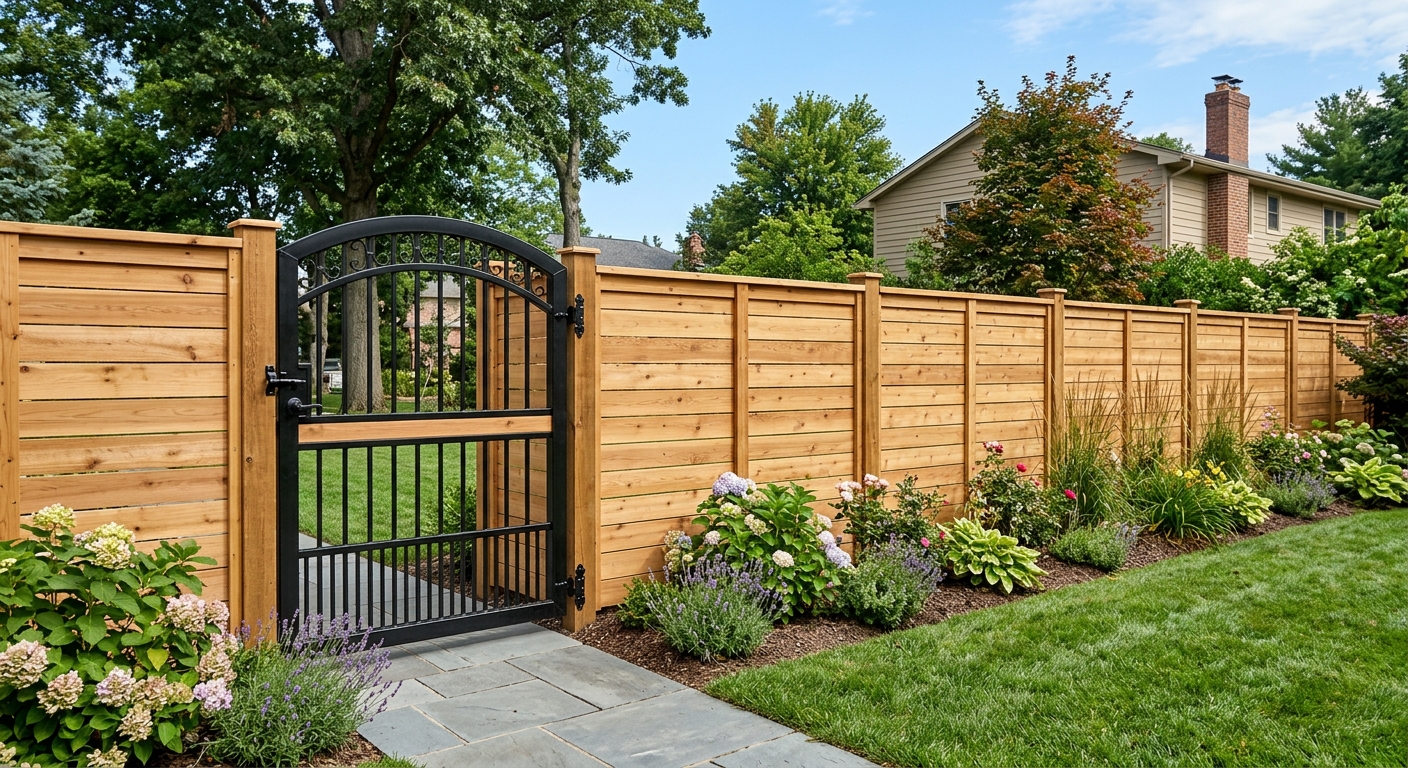
Fencing options and costs in Newton
In Newton, homeowners choose fencing to define property edges, add privacy, and manage pets and kids in a dense suburban neighbourhood. With a population of 159,390 (Statistics Canada, 2021 Census) and a housing mix dominated by single-detached and family properties, demand for residential fencing tends to be steady year-round—especially in areas where lots back onto green space or main roads. Lower Mainland–Southwest pricing is also shaped by a “mild but not trivial” frost-and-wind reality: posts still need to be set below frost to limit heaving, and wetter soils around the Fraser Valley often mean deeper holes, more concrete, and more labour time than you’d expect from a coastal climate. That’s why fence projects can land in a wide band even when the fence is the “same” height.
Access and finish grade matter a lot in Newton. Sloped backyards in the north and east parts of the city (and near busier corridors where driveways and landscaping are tighter) can increase material waste and require stepped panel layouts. If you’re in the Newton area near Surrey’s boundary and the higher-wind pockets toward major routes, many crews recommend sturdier posts and tighter spacing for solid privacy styles.
Below is a practical side-by-side comparison of common materials, expected performance, and what most homeowners budget for an installed fence in Newton—then you can use the price bands in the next section to sanity-check any quote you receive.
| Material |
Lifespan |
Maintenance |
Privacy Rating |
Price per Linear Foot |
Price Range |
| Pressure-treated pine (standard wood) |
10–15 years |
Stain/seal every 2–3 years |
High (solid pickets/boards) |
$55–$95 |
$55 – $95 |
| Cedar (natural rot resistance) |
15–25 years |
Light staining as needed (typically every 3–4 years) |
High (solid panels) |
$70–$110 |
$70 – $110 |
| Vinyl / PVC (no-maintenance) |
20–30 years |
Rinse only; occasional panel/trim replacement if impacted |
High (privacy styles) |
$75–$130 |
$75 – $130 |
| Chain-link (galvanized steel) |
25–40 years |
Rinse; check tension at gate posts |
Low–Medium (visibility) |
$30–$55 |
$30 – $55 |
| Aluminum ornamental |
25–50 years |
Wash annually; inspect hardware |
Low–Medium (decorative infill) |
$90–$170 |
$90 – $170 |
| Composite / recycled material |
20–35 years |
Minimal cleaning; avoid harsh impact |
High (solid styles) |
$85–$140 |
$85 – $140 |
Prices are estimates only and vary by project scope, site access and material selection.
What affects the price of fencing in Newton
In Newton and across the Lower Mainland–Southwest, two quotes for what looks like the “same” fence can differ by 30–50% once you account for post depth, soil conditions, gate hardware, and how the crew handles slope and access. That gap is especially noticeable compared with other parts of British Columbia because Lower Mainland yards are often tighter (more landscaping, fencing corners, and retaining edges), while crews still have to manage frost heave risk. The result is that labour planning and foundation work can dominate cost even when materials seem comparable.
Frost line depth drives how deep posts must be set—typically about 4–6 inches below the design frost depth—so the bottom of the post stays stable and doesn’t lift with freeze-thaw cycles. In colder regions like Ontario and Alberta, crews often need posts set about 1.5–2.0 m into the ground, which means more concrete and longer lumber. While Lower Mainland coastal BC conditions are milder than those provinces, Newton crews commonly go deeper than bare minimum and use concrete for privacy panels, corner posts, and gate posts, because those are the elements that take the most load.
Wind exposure also matters. It’s not prairie-level, but coastal BC’s mix of rain and wind can stress panels, so stronger posts and tighter spacing are common for solid wood and vinyl privacy fences. In wetter Fraser Valley soils, deeper holes and more concrete are frequent examples that raise costs. On the other hand, a flat yard with easy vehicle access can lower labour time. If you’re replacing an old fence, disposal and removal can add cost, but it can also prevent rework later.
To ground it in the regional price bands: a typical wood install often lands in the $55–$95 range, while vinyl/PVC commonly sits around $75–$130. If your project includes two gates and heavier post anchoring (corner + gate + privacy), the price difference is usually justified because material rigidity and foundation time both increase.
| Price Factor |
Why It Matters |
Cost Impact |
| Fence length in linear feet — the primary cost driver |
More run = more posts, rails, fasteners, and material wastage |
High (often the largest line item) |
| Post depth required — frost line determines post length and hole depth |
Deeper embedment stabilizes against heaving and wind loads |
Medium–High |
| Post setting method — concrete vs. gravel pack vs. driven posts |
Concrete adds cost but improves stability for privacy corners and gates |
Medium–High |
| Material choice — vinyl vs. cedar vs. chain-link |
Materials vary in cost and structural requirements |
Medium |
| Gate count and type — walk-through vs. drive-through (double) |
Gates require stronger frames, additional hardware, and often more concrete |
High |
| Grade and terrain — sloped yards require stepped or raked panels |
Slopes increase cutting, alignment time, and material waste |
Medium–High |
| Old fence removal and disposal |
Hauling and disposal are labour-heavy; hidden fasteners can slow removal |
Medium |
| Permit fees and survey / property line locate |
Some jobs need paperwork and locating to avoid encroachment disputes |
Low–Medium (project dependent) |
Permits & regulations in British Columbia
In British Columbia, fences above a height threshold—often about 2.0 m (6.5 ft) at the rear and around 1.0–1.2 m (3–4 ft) at the front or corner—may require a building permit. Even when a permit is not triggered, the fence must still comply with property-line rules and municipal setback bylaws. Before you dig any post holes, you must arrange utility locates so you don’t hit power, gas, or telecom lines. In practice, Newton homeowners typically do this through the applicable one-call process (BC 1 Call, and other regional equivalents). If you want to avoid boundary disputes, obtain a survey or at least confirm property pins and the exact line you’re fencing to before installation.
Shared fence responsibilities are commonly handled under line-fences principles in provincial legislation, but the real-world outcome is often governed by who maintains which side and whether neighbors agree on repairs and replacement. If you’re replacing an existing boundary fence, ask your contractor to document the existing fence location and how it aligns with the survey or locate.
Licence and insurance checks matter for your peace of mind: verify your contractor’s British Columbia business licence (where applicable), then request a clearance letter for outstanding work coverage and confirm liability insurance is current. For workers on site, coverage should be clearly stated on the insurance documents and any WSIB/WCB-equivalent proof provided. Step-by-step, you can (1) check the contractor’s licence/registry listing online, (2) review the certificate of insurance for liability limits and expiry dates, and (3) confirm proof of workers’ compensation coverage with the certificate or clearance letter your contractor supplies.
Choosing the right fence material for Newton
Choosing a fence in Newton is really about matching material performance to your priorities: privacy, low maintenance, lifespan, and your tolerance for periodic upkeep in a wet coastal climate. Pressure-treated pine is the budget-friendly starting point, but it needs staining or sealing every 2–3 years to limit grey weathering and keep boards from drying unevenly. Cedar typically looks better and offers natural rot resistance, so many homeowners stretch maintenance intervals (often 3–4 years), though it still benefits from protection in heavy rain and wind-exposed yards.
Vinyl/PVC offers the “set it and forget it” approach, with rinsing as the main task. However, vinyl can crack from impact (like a mower strike or a hard hit during windstorms), so it isn’t magic protection—just low routine maintenance. Chain-link is the lowest installed cost and very durable, but it won’t give you privacy unless you add slats or privacy mesh. Aluminum ornamental fencing gives a clean look and resists rust, but it’s typically a privacy-light option.
Post setting is where Newton’s local frost-and-soil reality shows up. Even with coastal BC conditions, posts should be set below frost depth to reduce heaving risk, and many crews still use concrete for corner posts, gate posts, and privacy panels. If your yard is wet or you’ve got soft soil, expect deeper holes and more concrete—so vinyl and cedar can cost more than the headline material price suggests. As a concrete example: if a standard wood privacy fence is priced around $55–$95 per linear foot, upgrading to vinyl/PVC at roughly $75–$130 per linear foot can be justified when you want long maintenance-free years and you’re willing to pay for stronger structural rails and fittings to handle wind loading and gate operation.
| Material |
Cold Tolerance |
Lifespan |
Annual Maintenance |
Best For |
Price Band |
| Pressure-treated pine |
Good (with proper embedment and staining) |
10–15 years |
Light: inspect annually; stain every 2–3 years |
Budget privacy with acceptable upkeep |
$55–$95 |
| Cedar |
Good (rot resistance helps in wet climates) |
15–25 years |
Light: rinse/spot-clean; stain as needed |
Better appearance and longer wood life |
$70–$110 |
| Vinyl / PVC |
Very good (but can fracture from hard impact) |
20–30 years |
Minimal: rinse and check for loosened hardware |
Low maintenance privacy |
$75–$130 |
| Chain-link |
Excellent |
25–40 years |
Minimal: rinse; check tension at gates |
Security with budget control |
$30–$55 |
| Aluminum ornamental |
Excellent |
25–50 years |
Minimal: wash and inspect fasteners |
Attractive curb-line definition |
$90–$170 |
| Composite / recycled |
Good (designed for moisture and temperature swings) |
20–35 years |
Minimal: rinse; avoid impacts |
Privacy with low upkeep |
$85–$140 |
How to choose a fencing contractor in Newton
Start by confirming your Newton contractor’s ability to build legally and safely in British Columbia. Ask for (1) proof of current business registration/licensing information, (2) liability insurance certificate showing adequate coverage for a fencing project, and (3) workers’ compensation coverage proof (WSIB/WCB-equivalent documentation), ideally through a clearance letter and/or current coverage certificate. In real jobs, certificates should show the correct named insured, effective dates, and that coverage is active for work performed in the Lower Mainland–Southwest.
Next, get 2–3 itemised written quotes—not just a lump sum. You want line items for labour, materials, post excavation, post setting method (concrete vs. gravel pack), rails, hardware, gate framing, and disposal. Good quotes also clearly list what’s excluded: permit pulling, property-line locating, tree removal, rock breaking, and any regrading. Don’t assume “removal included”—ask. Warranty matters too: require a workmanship warranty length (for posts, alignment, and fastening failures) and separate the product/manufacturer warranty. Also confirm whether the warranty is transferable if you sell your home.
For payment schedule, never pay more than about 10–15% upfront. Hold back a portion until the job is complete and inspected. Finally, require a start date and completion estimate in writing so schedule slip doesn’t become a cost increase.
- Verify BC licence/registration details are current before signing.
- Request a liability insurance certificate and check expiry dates.
- Confirm workers’ compensation proof (clearance letter and/or certificate).
- Ask whether posts are concrete-set for corner and gate locations.
- Confirm frost-depth embedment approach for stable installation.
- Ensure quotes are itemised (labour + materials + excavation + hardware).
- Check whether slope will be handled with stepped panels or raked rails.
- Confirm gate type, size, and hardware (self-close? latch type? hinges?).
- Ask if old fence removal and disposal are included (dump fees vs. labour only).
- Clarify whether permit pulling and/or survey/property locate is included.
- Review warranty terms for workmanship and product coverage; ask if transferable.
- Lock payment milestones: keep 10–15% minimum holdback until completion.
Red flags I often see with fencing contractors in Newton include vague “materials included” wording with no breakdown, no clear proof of active insurance/coverage, refusal to put the embedment method and gate hardware details in writing, and quotes that change after excavation because “conditions” weren’t surveyed or described up front.
Frequently asked questions — fencing in Newton
Wood vs vinyl vs aluminum fence — which is best?
In Newton (Lower Mainland–Southwest, BC), “best” depends on whether you prioritise privacy, upkeep, or appearance. Wood (pressure-treated pine) is typically the mid-range option and can be budget-friendly—often showing up around $55 – $95 per linear foot for installed work. Cedar usually costs more but looks better and handles wet coastal conditions with less dramatic wear. Vinyl/PVC is a popular low-maintenance privacy choice, often budgeted roughly $75 – $130, because it doesn’t need staining—just occasional rinsing. Aluminum is usually the clean, decorative option; it’s durable and rust-resistant but offers less privacy unless you choose denser designs. If you’re near wind-exposed areas, ask about post spacing and how each material is reinforced for stability.
Do I need a permit to build a fence in British Columbia?
In British Columbia, permits are commonly required when fence height exceeds typical thresholds—often about 2.0 m at the rear and around 1.0–1.2 m at the front or corner. Even if a permit isn’t required, the fence must still follow property-line rules and municipal setback bylaws. Before digging in Newton, arrange utility locates and confirm where you’re allowed to build. The safest approach is to have your contractor review the proposed height and location against local requirements and to document the property line via pins/survey. If your fence is a replacement of an existing boundary fence, rules can still apply depending on height changes and exact placement.
How long does a wood fence last in Newton?
A wood fence life in Newton typically depends on material quality, staining schedule, and how well posts are set in wetter soil. Pressure-treated pine commonly lasts around 10–15 years in coastal wet conditions when properly maintained, while cedar can stretch to about 15–25 years because of its natural rot resistance. The hidden variable is post embedment: posts must be stable below frost depth to reduce heaving, and corner and gate posts usually need more robust setting (often concrete). If you let staining lapse, boards can grey and soften faster, especially with wind-driven rain. For many homeowners, regular inspection and quick repairs after storms are what keep costs down long term.
Who owns and maintains a shared fence?
Shared fence situations in British Columbia are generally governed by provincial line-fences principles, but practical ownership and maintenance can also depend on the agreement between neighbours and what each side paid for historically. Typically, if both properties benefit from the fence and it sits on or near the boundary, both parties may have responsibilities for maintenance or replacement. The key in Newton is to confirm the exact fence location relative to property pins or a survey to avoid encroachment disputes. If you’re planning repairs, ask your contractor to document current conditions and align the fence to the locate—then you can coordinate maintenance expectations with your neighbour based on the boundary and the agreed scope.
How do I find my property line before fencing?
Before any posts go in, confirm your property line using property pins from your survey records or by ordering a locate through the appropriate process for your situation. If you have an older survey, start there and physically check for the pins and their condition. In Newton, it’s easy to assume a fence line is “correct” just because it’s been there for years, but older fences can drift from the true boundary. Your contractor should be willing to work with a survey locate rather than guess. Utility locates should also happen before digging, and you should coordinate timing so the locate and the excavation schedule align.
What's the most low-maintenance fence?
Most homeowners in Newton consider vinyl/PVC the most low-maintenance option for privacy because it typically doesn’t need staining and only requires periodic rinsing. It can be a higher upfront cost than basic wood—commonly budgeted in the $75 – $130 range for installed work—yet you may save on labour and materials over time by skipping regular staining. Aluminum is also low maintenance and resists rust, but it’s usually more decorative and less private unless designed for denser coverage. Chain-link is low maintenance too, but it doesn’t provide privacy without add-ons. Whatever you choose, ensure posts are set properly for frost stability and that gate hardware is correctly installed so maintenance doesn’t return through squeaks, sagging, or loose tension.