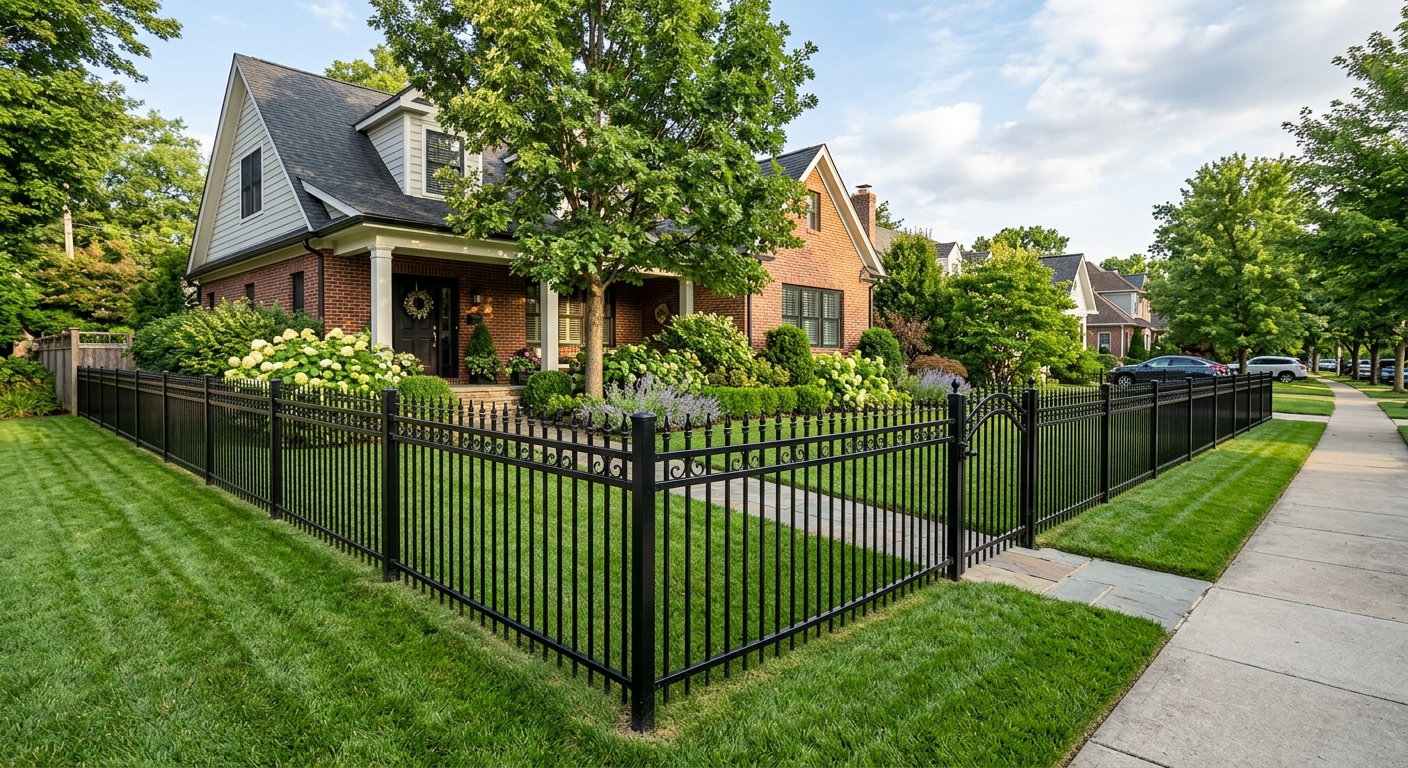
Fencing options and costs in Metchosin
Metchosin has plenty of detached homes that need fencing, and with 1,525 homeowner households (82.2% of households own) (Statistics Canada, 2021 Census), it’s common to see upgrades tied to yard renovations, pet enclosures, and privacy around older properties. In fact, 77.9% of local dwellings are single-detached homes, so each detached lot is effectively its own “fence project”—and that drives steady demand for fence line work from basic boundary upgrades to full privacy installs. Many homes were built before 1981 (49.3% of dwellings), which often means fence posts are older, treatments are spent, and new footing specs are needed to correct leaning sections.
On Vancouver Island and the Coast, your fence budget is shaped by moderate coastal frost (about 45–60 cm), frequent wind exposure off the Strait of Georgia, and wet winters that can accelerate rot if materials and post setting aren’t done right. Contractors typically plan for post holes set deeper (often around 75–90 cm) than you’d assume from “mild” climates, especially where soils are clay-rich or saturated. Also, access and alignment can be slower in Metchosin—rock pockets, slopes, and tight side yards near older housing stock can add labour and increase disposal time.
In Metchosin, we often see especially strong activity around areas like Royal Bay and the surrounding residential neighbourhood streets where properties are frequently landscaped and privacy fencing is in demand. Once you know your material and finish goals, the table below gives a practical way to compare typical lifespan and installed price ranges before we talk site-specific details.
| Material |
Lifespan |
Maintenance |
Privacy Rating |
Price per Linear Foot |
| Pressure-treated pine (standard wood) |
10–15 years (often less near salt air if not sealed) |
Stain/seal every 2–3 years to keep colour and slow greying |
High (solid panels) |
$55–$85 |
| Cedar (natural rot resistance) |
15–25 years |
Light staining or sealing every 2–4 years; check fasteners |
High (solid or close-board) |
$70–$105 |
| Vinyl / PVC (no-maintenance) |
20–30 years |
Rinse as needed; inspect for impact damage |
High (louvered/solid picket options) |
$70–$110 |
| Chain-link (galvanized steel) |
20–35 years (weather and coating dependent) |
Occasional rinse; replace damaged sections |
Low to Medium (privacy slats optional) |
$35–$60 |
| Aluminum ornamental |
25–40 years |
Wash yearly or as needed; check hinges/gates |
Low (decorative panels) |
$80–$140 |
| Composite / recycled |
20–30 years |
Minimal; keep debris out of post pockets |
High (solid boards) |
$95–$140 |
Prices are estimates only and vary by project scope, site access and material selection.
What affects the price of fencing in Metchosin
If you get two quotes for what looks like the same fence in Metchosin, it can still come back 30–50% apart across Vancouver Island and Coast contractors—and sometimes even more when you compare different project scopes or site conditions. The biggest reasons are how far posts must be installed, how much wind and wetness the design must handle, and how labour-intensive your specific fence line is (digging, hauling, alignment, and gate hardware). Local market availability also plays a role: after busy weeks for landscaping and deck work, some crews price higher due to scheduling pressure and material handling costs.
Frost depth is the first technical driver. Even though coastal BC frost is relatively shallow, fence posts still need to be set below frost depth to prevent heaving and long-term leaning. A practical rule we use here is setting posts about 4–6 inches below the design frost depth. In cold regions of Canada, that can mean 1.5–2.0 m embedment; on Vancouver Island, the embedment is often shorter but still meaningful—commonly around 75–90 cm—so contractors may use longer posts and concrete footings on saturated or clay-rich ground. This is one reason a “basic” wood fence can creep into the upper end of the wood bands (for example, the installed range you’ll see is often in the $55–$85 per linear foot band), especially when gates, heavy wind-resisting layouts, or concrete set-ups are added.
Wind exposure is another. Coastal BC may be mild in temperature, but frequent wind gusts off the water push higher loads against solid privacy fences; that can mean closer post spacing or heavier rails. Conversely, open styles like chain-link can use standard spacing. Wet winters also matter: without proper treatment, wood can fail prematurely, requiring more labour now or repairs later—so cedar and properly treated wood often stay better value.
Concrete examples from Metchosin jobs: (1) steep or raked yards often require stepped rails and custom panel fitting, adding time for layout and materials; (2) if your fence line crosses areas with rocky pockets, digging and disposal add labour; (3) removing an old fence that’s set in concrete frequently costs more than you’d expect, because breakers, haul-away, and patching can be significant. These factors can also influence whether the project lands closer to vinyl/PVC’s $70–$110 band versus a lower-cost chain-link layout.
| Price Factor |
Why It Matters |
Cost Impact |
| Fence length in linear feet |
The more lineal footage you add, the more posts, rails, hardware, and labour time are required |
High (typically the largest driver—every variable scales) |
| Post depth required |
Frost conditions set required embedment; deeper holes mean longer posts and more excavation |
Medium to High (can raise costs meaningfully) |
| Post setting method |
Concrete footing vs gravel pack vs driven posts changes labour, material handling, and curing time |
Medium to High (concrete set-ups usually cost more) |
| Material choice |
Different materials have different install complexity and hardware requirements in coastal wind and wet weather |
Medium (e.g., chain-link vs vinyl) |
| Gate count and type |
Gates require heavier frames, hinges, latches, and often extra bracing for wind loads |
High (gates can materially increase the budget) |
| Grade and terrain |
Slopes require stepped or raked panels and careful line-and-level layout |
Medium (labour and waste increase) |
| Old fence removal and disposal |
Demolition time, haul-away, and dealing with concrete-set posts affect overall cost |
Medium to High (varies widely) |
| Permit fees and survey / property line locate |
Higher fences, corner properties, and line clarity needs influence administrative steps |
Low to Medium (but can be a surprise if not planned) |
Permits & regulations in British Columbia
In British Columbia, fence height rules often hinge on where the fence is located on your property and how tall it is; in many cases, fences above the typical thresholds—around 2.0 m (6.5 ft) at the rear and about 1.0–1.2 m (3–4 ft) at the front or corner—can require a building permit (check with the local jurisdiction for the exact thresholds that apply to your lot). Regardless of height, fences must respect property lines and municipal setback bylaws. If you’re near a corner or have any uncertainty about boundaries, budget time for a property line locate or survey so you don’t end up encroaching on a neighbour’s lot.
Before digging any post holes, call for utility locates using the appropriate provincial/call system (BC 1 Call). For boundary accuracy, it’s smart to obtain a survey or at least locate your property pins before installation. Shared fence ownership and line-fence responsibilities are governed by provincial line-fences legislation, so keep in mind that disputes can become an issue of cost-sharing and responsibility for maintenance.
Step-by-step to verify your contractor in Metchosin: (1) confirm they’re properly licensed/registered for the work they’re doing in BC; (2) request a certificate of liability insurance and verify it’s current for the project; (3) confirm coverage for workers—WSIB/WCB is commonly required for contractor crews, and you should ask for clearance documentation if applicable; (4) keep these documents in your project folder before work starts. If a contractor can’t provide current proof, that’s a practical red flag.
Choosing the right fence material for Metchosin
Choosing the right fence material in Metchosin is mostly about matching your priorities—privacy, low maintenance, budget, and lifespan—to the local climate reality: wet winters, frequent wind exposure, and moderate coastal frost. Pressure-treated pine is the budget-friendly option, but it typically needs staining or sealing every 2–3 years to prevent heavy grey weathering and reduce the risk of early failure at cut ends and fasteners. Cedar looks great and offers better natural rot resistance, but it still benefits from maintenance—especially to protect the exposed edges that take the brunt of wind-driven rain.
Vinyl/PVC brings the most “set it and forget it” feel; it’s commonly chosen for low-maintenance yards and consistent colour. However, in extreme cold snaps (rare but possible on the coast), materials can become more brittle than wood—so correct post alignment, proper hardware, and avoiding overly tight bending during install are important. Chain-link is usually the longest-life “low dollar per year” solution, but it offers little privacy unless you add slats or screening. Aluminum ornamental is rust-resistant and mid-range in installed cost, but it’s a decorative barrier rather than a full privacy wall.
For post depth: on Vancouver Island and the Coast, the frost line is shallow (about 45–60 cm), but posts still must be set below frost to prevent heaving and leaning. That’s why concrete-set posts or footings are common where soils are wet, disturbed, clay-rich, or where you have taller and heavier fencing. Wind also influences whether you should use solid panels (more wind load, often heavier framing or closer post spacing) versus open styles.
A practical example: if privacy is your goal and you compare materials, a wood privacy fence might land around the $55–$85 per linear foot range, while vinyl often falls around the $70–$110 band. The extra cost can be justified when you want reduced maintenance and consistent appearance for 20+ years—especially for busy homeowners whose fences are exposed to coastal wind and salt air.
| Material |
Cold Tolerance |
Lifespan |
Annual Maintenance |
Best For |
Price Band |
| Pressure-treated pine |
Good with correct post setting and sealing; handle freeze-thaw with proper embedment |
10–15 years |
Seasonal inspection; stain/seal every 2–3 years |
Budget privacy and traditional look |
$55–$85 |
| Cedar |
Good; performs well in wet coastal conditions when fasteners are corrosion-resistant |
15–25 years |
Check fasteners; stain/seal every 2–4 years |
Attractive privacy with natural rot resistance |
$70–$105 |
| Vinyl / PVC |
Very good; proper installation matters in cold snaps |
20–30 years |
Minimal—rinse and inspect for impact damage |
Low maintenance and consistent privacy |
$70–$110 |
| Chain-link |
Excellent; galvanized coatings handle freeze-thaw well |
20–35 years |
Low—rinse and repair damaged links |
Security and pet containment on a tighter budget |
$35–$60 |
| Aluminum ornamental |
Excellent; powder-coated finish resists coastal corrosion |
25–40 years |
Low—wash and check gates annually |
Decorative boundaries with durability |
$80–$140 |
| Composite / recycled |
Good; resists rot and moisture while staying stable with proper sub-structure |
20–30 years |
Low—keep debris out of seams and inspect annually |
Privacy with low maintenance and modern appearance |
$95–$140 |
How to choose a fencing contractor in Metchosin
Choosing the right fencing contractor in Metchosin comes down to proof of coverage, clarity in the scope, and realistic installation methods for coastal BC conditions. First, verify British Columbia licensing/registration where applicable, and ask for current liability insurance—get the certificate and confirm it covers fencing work at your address. Next, confirm worker coverage (WSIB/WCB as applicable) so you’re not exposed if an injury occurs on your property. Where to look: you can often find licensing/registration through provincial online registries, and you should always review certificates of insurance directly from the contractor (not screenshots) along with any clearance documentation they provide.
Then get 2–3 itemised written quotes. A proper quote breaks down labour and materials separately (posts, rails, fencing material, gate hardware, concrete/footings, and fasteners) rather than one lump number. Read exclusions carefully: is permit pulling included if required? Is fence removal and disposal included, especially for concrete-set posts? Confirm whether the quote includes topsoil restoration or grading touch-ups, and whether post depths and setting method are specified.
Warranty matters too. Ask for two warranties: workmanship (how long the contractor stands behind installation) and product/manufacturer warranty (for materials and components). Also ask whether warranties are transferable if you sell the home.
For payment, never pay more than 10–15% upfront. Use a holdback until completion and final cleanup. Finally, lock in a timeline: request a start date and an estimated completion date in writing, recognizing that rain and soil saturation can affect post-hole work on Vancouver Island.
- Provide written scope with measured linear footage and exact material types.
- Specify post depth and post-setting method (concrete vs gravel pack) for coastal frost protection.
- Include gate count, swing direction, and locking hardware details.
- List disposal and hauling responsibilities for old fencing.
- Confirm utility locates are performed before any digging.
- Show corrosion-resistant fasteners and hardware appropriate for coastal conditions.
- State how they handle slopes: raked vs stepped panels.
- Confirm warranty lengths for both workmanship and materials.
- Require current certificate of liability insurance before work begins.
- Request proof of worker coverage (WSIB/WCB as applicable) for crews.
- Use a payment schedule with a holdback until punch-list items are done.
- Provide a written schedule and what happens with weather delays.
Red flags I see in Metchosin: contractors who won’t specify post depth/footings for coastal soils, quotes that skip gate bracing and hardware specs, “no warranty” or vague workmanship promises, insisting on large upfront payments, and failing to provide current insurance/coverage documentation before you sign.
Frequently asked questions — fencing in Metchosin
Can I install a fence on a slope in Metchosin?
Yes, but it should be designed correctly. In Metchosin, sloped yards are common, and the reliable approach is usually stepped panels or raked (angled) runs matched to the site grade so the fence stays level visually and performs well against wind. For post holes, contractors should still set each post below the required frost protection depth (often achieved with embedment around 75–90 cm in coastal conditions), even if the yard is stepped. If your fence is privacy-style and solid, wind exposure can increase forces on the rail system, so the sub-structure needs to be braced properly. If you’re replacing an old fence, ask whether your quote includes removal and disposal, because the old post layout often complicates re-builds.
What is the most weather-resistant fence for Metchosin's climate?
For most Metchosin homeowners, vinyl/PVC or properly installed aluminum are among the most weather-resistant choices for wet coastal winters. Vinyl (commonly in the $70–$110 per linear foot range) resists rot and needs minimal annual maintenance, which matters when heavy rain and wind-driven moisture are regular in the Vancouver Island and Coast region. Aluminum ornamental can be durable as well, especially with powder coating suited for coastal environments (often in the $80–$140 band). If you prefer wood, cedar is a strong option for rot resistance, but it still needs periodic maintenance to protect edges and hardware. Whichever material you choose, the biggest “weather-resistance multiplier” is correct post setting below frost and corrosion-resistant hardware.
How do I prevent wood fence rot in Metchosin?
Wood rot in Metchosin usually starts at the post and fastener points—where water collects and where exposure accelerates deterioration. Prevention begins with correct installation: set posts below frost depth and avoid leaving wood in contact with saturated soil. Ask your contractor about using concrete footings where ground is wet or clay-rich, and about using proper treatments and sealed ends on cut boards. Cedar and pressure-treated pine can both perform well, but cedar generally handles moisture better. Maintenance also matters: stain or seal on a schedule (often every 2–3 years for pressure-treated pine) and rinse off salt air residue when conditions demand it. Finally, ensure you have good drainage around the fence line so water doesn’t pool at the base.
What is the cost per linear foot for fencing in Metchosin?
Cost per linear foot in Metchosin typically lines up with the Vancouver Island and Coast bands, but your final number depends on post setting, gate count, and terrain. For example, wood fencing installation often lands in the $55–$85 per linear foot range, while vinyl/PVC commonly comes in around $70–$110 per linear foot depending on style and fencing height. Chain-link is usually lower at $35–$60 per linear foot, while aluminum ornamental often runs $80–$140 per linear foot. If you need deeper concrete-set footings due to saturated soils or heavier wind-resisting designs, you should expect to lean toward the higher end within each band. Always request an itemised quote so labour and footing/disposal details are clear.
Should I repair or replace my old fence in Metchosin?
It depends on how far the damage has progressed. If the fence boards are weathered but posts are still plumb and stable, targeted repairs—replacing individual boards, tightening rails, and swapping corroded hardware—can be the best value. However, if you have leaning sections, soft or rotted bottom rails, or posts that have shifted from frost movement or saturated soil, replacement is usually more cost-effective long-term. In Metchosin, many older fences are associated with homes built before 1981, and older footing setups can fail when rain and freeze-thaw cycles act on compromised wood. Ask for an on-site assessment that checks post stability, not just appearance. Also confirm whether your quote includes removal and disposal; concrete-set sections can add cost.
How do I handle a fence dispute with a neighbour in British Columbia?
Start by documenting everything: take photos, measure distances to the fence line, and keep copies of any prior agreements or correspondence. In British Columbia, fence responsibilities and shared fence ownership are addressed under provincial line-fences legislation, so the issue may involve who is responsible for repair or replacement costs. Before doing any work, ensure you have accurate property line information—if boundaries are unclear, a survey or locate can prevent unnecessary conflict. If the dispute involves height or placement, confirm the relevant local bylaw requirements and whether permits are needed for your fence height thresholds (particularly for taller rear fences versus front/corner fences). A calm, written plan (what’s being repaired, what it will cost, and who pays) is often the best first step before escalating to formal processes.