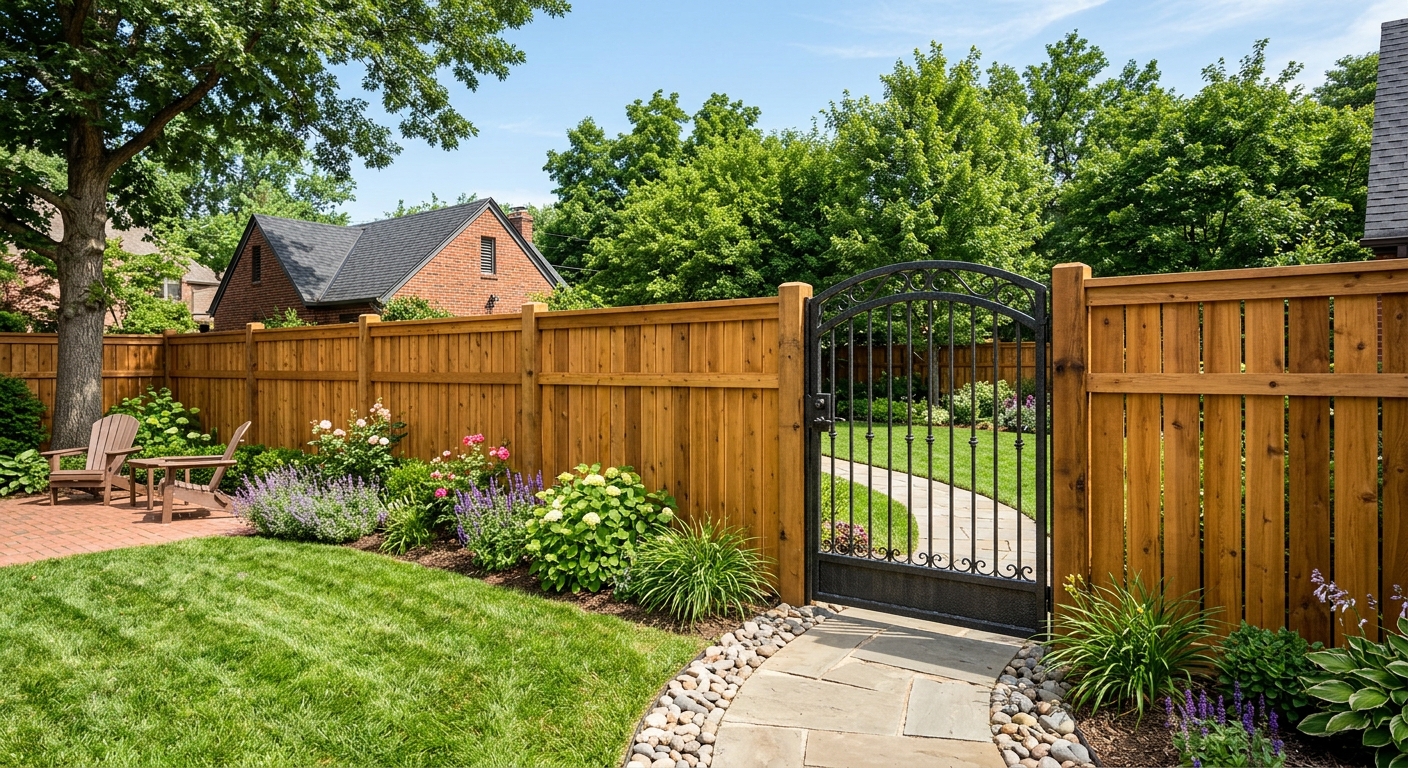
Fencing options and costs in Port Alberni
Port Alberni homeowners have plenty of fencing choices, but the “best” option usually comes down to how much privacy you want versus how much time and money you’re willing to spend maintaining it. With 18,259 residents and about 68.9% of households owning their home (Statistics Canada, 2021 Census), fencing demand stays steady because detached properties make up 67.8% of dwellings—each backyard is a potential project.
On Vancouver Island and the Coast, costs are shaped by moderate coastal frost (roughly 45–60 cm) and frequent wind exposure off the Strait of Georgia and Juan de Fuca Strait. That combination pushes fence builders to set posts below frost—commonly around 75–90 cm in residential practice—even when the ground doesn’t look “that” cold, which helps prevent heaving and long-term leaning. It also affects panel selection: solid privacy fences catch more wind load and may need closer post spacing or venting, while open styles tolerate standard spacing better.
In Port Alberni, trades are especially busy in established residential pockets like Westwood Lake Road and surrounding neighbourhood streets where older homes (74.3% built before 1981, Statistics Canada, 2021 Census) often need line updates, gate replacements, or full panel resets. If you’re comparing materials, it’s also worth knowing that coastal salinity makes quality galvanized and powder-coated hardware (or cedar/vinyl systems) cheaper in the long run.
Below is a practical cost snapshot to help you compare materials before you request an itemised quote.
| Material |
Lifespan |
Maintenance |
Privacy Rating |
Price per Linear Foot |
| Pressure-treated pine (standard wood) |
12–18 years |
Stain/finish every 2–3 years |
High (typical solid boards) |
$55–$85 |
| Cedar (natural rot resistance) |
15–25 years |
Seal/stain every 2–4 years (varies by exposure) |
High (lapped or solid styles) |
$65–$95 |
| Vinyl / PVC (no-maintenance) |
25–35 years |
Rinse/wash as needed; no staining |
High (solid privacy panels) |
$70–$110 |
| Chain-link (galvanized steel) |
20–30 years |
Occasional wash; inspect tension/posts |
Low–Medium (security only) |
$35–$60 |
| Aluminum ornamental |
25–40 years |
Wash annually or as needed |
Low–Medium (decorative/open) |
$80–$140 |
| Composite / recycled |
20–30 years |
Minimal cleaning; occasional tightening |
High (privacy styles) |
$95–$145 |
Prices are estimates only and vary by project scope, site access and material selection.
What affects the price of fencing in Port Alberni
If you’re seeing quote differences of 30–50% for what looks like the “same” fence in Port Alberni, that gap is usually real and explainable. Across Vancouver Island and Coast—and compared with other parts of British Columbia—labour availability, how hard the ground is to dig, and how wind impacts design decisions all change the installed cost. Even small site constraints (tight gates, sloped yards, rock pockets, mature roots) can add hours that don’t show up when someone only measures linear feet.
Two technical drivers matter most here: frost-related post depth and wind exposure. Frost depth in coastal BC is relatively shallow, but posts still need to be set about 4–6 inches below the design frost depth to prevent heaving. In practice, that means digging for fence posts around 75–90 cm on many residential jobs, and using concrete setting more often where soils are wet or clay-rich. A concrete-set approach typically raises material and labour, but it reduces future repair calls. Wind exposure also changes spacing: solid privacy fences can behave like sails, so contractors may use heavier posts or closer spacing—while open styles like chain-link often hold up with standard spacing.
Here are common Port Alberni examples that change the price by hundreds to thousands of dollars: (1) a gate with a double drive-through setup requires stronger hardware and bracing, often pushing the job toward the higher range of wood or vinyl costs (think the mid-$80s to $100s/ft installed for privacy-heavy builds); (2) removing an old fence and disposing of it adds truck/disposal time and sometimes extra excavation for buried posts; and (3) building on a slope often requires stepped panels or raked top rails, which increases layout time and material waste. If you compare chain-link at roughly $35–$60/ft to privacy vinyl at $70–$110/ft, the difference is often justified by post spacing, wind-rated design choices, and the extra structure needed for gates.
| Price Factor |
Why It Matters |
Cost Impact |
| Fence length in linear feet |
The primary input for posts, rails, panels, and labour hours |
Largest driver; scales directly with yard footage |
| Post depth required |
Design frost and soil conditions control how deep holes must be |
Deeper holes mean longer posts, more concrete/gravel, more excavation |
| Post setting method |
Concrete vs gravel pack vs driven posts affects stability |
Concrete setting typically increases labour and material cost |
| Material choice |
Vinyl/cedar require different components than chain-link or aluminum |
Upfront price differences often range from budget to premium bands |
| Gate count and type |
Drive-through/double gates need heavier posts and hardware |
Gates can add major cost beyond the fence’s linear feet |
| Grade and terrain |
Slope requires stepped or raked layouts and more layout time |
Often adds labour and increases material waste |
| Old fence removal and disposal |
Demolition, loading, and disposal add time and truck costs |
Can add a substantial fixed cost depending on volume |
| Permit fees and survey / property line locate |
Some fences require permits; line locating prevents disputes and rework |
Small-to-medium added cost, but avoids expensive corrections |
Permits & regulations in British Columbia
In British Columbia, fence rules depend on height, location, and your municipal setback bylaws. In many BC communities, fences above a height threshold—commonly around 2.0 m (6.5 ft) for rear yards and 1.0–1.2 m (3–4 ft) for the front or corner—often trigger a building permit requirement. The exact threshold and which lots/streets apply can vary, so you should confirm with your municipality before work begins.
Regardless of height, fences must respect property lines and any applicable setbacks. If you’re not sure where the lot line sits, get a survey or an official locate of the property pins before installation—especially in older Port Alberni neighbourhoods where yard layouts may not match how people assume lines run today. Before digging any post holes, call for utility locates (BC 1 Call) so you don’t hit buried services.
Shared fence ownership disputes are handled under provincial line-fences legislation, but the practical step is always documentation: photos, measurements, and written agreements with your neighbour.
To verify your contractor in Port Alberni (BC), check three things:
- BC licence/registration (if applicable): look for the contractor’s business number and any trade registration details on provincial/official listings.
- Liability insurance: request a current certificate of insurance naming you as additionally insured (if offered) and confirm coverage limits.
- Work coverage (WCB/WSBC): confirm the contractor has active clearance; ask for their clearance letter and verify it’s current.
Ask for these before signing—good contractors are used to homeowners checking.
Choosing the right fence material for Port Alberni
Your best fence material in Port Alberni is the one that matches your priorities: privacy, low maintenance, budget, and lifespan—then gets built correctly for coastal BC conditions. With moderate frost and frequent wind, material choice isn’t just about looks; it affects how the fence handles wet winters, salt air, and wind pressure.
Pressure-treated pine is usually the lowest upfront wood option, but it will grey and weather if not finished. Plan on staining or sealing every 2–3 years to keep it looking good and to slow cracking at rails and top boards. Cedar costs more but is naturally rot resistant and typically wears better on Vancouver Island’s wet cycle; it still benefits from periodic sealing, especially on horizontal rails.
If you want “set it and forget it,” vinyl/PVC is compelling: no staining, low routine maintenance, and strong privacy panel options. That said, extreme cold snaps can make some vinyl components more brittle; in Port Alberni this is less about constant deep freeze and more about proper installation and hardware—so it’s important to use quality fastening and leave correct expansion allowance. Chain-link is the budget/long-life security choice; it’s durable and simple to service, but it won’t give privacy unless you add screening. Aluminum ornamental offers no rust and great curb appeal, but it’s open by design.
For frost-depth considerations on Vancouver Island, posts still need to be buried around 75–90 cm in typical residential practice, and concrete-set posts are often recommended for gates, taller fences, or yards with wet/clay soils. If you’re comparing costs, for example: a wood privacy build might land around $55–$85/ft installed, while vinyl privacy often comes in around $70–$110/ft—vinyl tends to be worth it when you want long-term low maintenance and fewer board replacements. If you’re staying on a tighter budget and are okay with finishing, pressure-treated pine can be the smarter value.
| Material |
Cold Tolerance |
Lifespan |
Annual Maintenance |
Best For |
Price Band |
| Pressure-treated pine |
Good (if installed with correct gaps and finish) |
12–18 years |
Inspect seasonally; plan 1 full stain/seal every 2–3 years |
Budget privacy with willingness to maintain |
$55–$85 |
| Cedar |
Good (naturally handles wet cycles better) |
15–25 years |
Light seal/stain as needed every 2–4 years |
Longer-lasting wood look |
$65–$95 |
| Vinyl / PVC |
Good (proper installation matters in cold snaps) |
25–35 years |
Wash/rinse; visual checks |
Low maintenance privacy |
$70–$110 |
| Chain-link |
Very good |
20–30 years |
Minimal; keep hardware/tension in check |
Security with budget control |
$35–$60 |
| Aluminum ornamental |
Very good |
25–40 years |
Wash annually or as needed |
Curb appeal, no-rust ornamental fencing |
$80–$140 |
| Composite / recycled |
Good (avoid poor fastening; allow for expansion) |
20–30 years |
Minimal cleaning; occasional tightening |
Privacy with reduced rot concerns |
$95–$145 |
How to choose a fencing contractor in Port Alberni
Picking the right fencing contractor in Port Alberni comes down to checking credentials, demanding clear itemised quotes, and confirming how they handle the details that prevent future leaning and wind damage. Start by verifying British Columbia work coverage and liability: ask for a current certificate of insurance and confirm the coverage limits match the scope. For work coverage, request their current clearance letter and verify it’s active (this is the piece many homeowners miss). Then ask how they’ll confirm their footing plan for Vancouver Island’s frost and wet soils—reputable crews will talk about post depth and whether they’re using concrete set where conditions demand it.
Get two or three written, itemised quotes, not lump sums. Your quote should separate labour and materials and list quantities like number of posts, rails, fasteners, concrete bags (if used), and the gate components. Also read exclusions: is old fence removal included, is disposal included, and are permits/locates included if needed? A good contractor will also state the expected line start-to-finish, the method for property line verification, and how they’ll deal with slopes (stepped vs raked panels).
Warranty matters too. Ask for the workmanship warranty length and whether any product/manufacturer warranty applies to the specific fence components used. Confirm if the warranty is transferable if you sell your home.
For payment scheduling, never pay more than 10–15% upfront. Hold back the remainder until the fence is fully complete, aligned, gates operate smoothly, and cleanup/disposal is finished. Timeline should be written: request a start date and a completion estimate.
- Request proof of liability insurance (current certificate) before signing.
- Request current work coverage clearance (clearance letter) and verify it’s not expired.
- Ask who will do the post layout and how they confirm property pins.
- Confirm post depth plan for coastal frost (typically around 75–90 cm in practice).
- Ask whether posts are concrete-set in wet/clay or for gates.
- Ensure quotes list quantities: posts, rails, panels/pickets, and gate hardware.
- Confirm disposal/removal of old materials is included or clearly excluded.
- Get gate construction details (hinges, latches, bracing, and post reinforcement).
- Ask how they handle slopes: stepped or raked layout and who supplies the labour/extra materials.
- Check the warranty terms: workmanship length, product warranty coverage, and transferability.
- Verify payment schedule: maximum 10–15% deposit and a holdback to completion.
- Require a written start date and realistic completion timeline.
Red flags I commonly see in Port Alberni include: vague “we’ll figure it out” post depth, quotes that don’t mention gate bracing, no proof of insurance/coverage, missing disposal details for old fences, and payment requests over 30% upfront without a signed schedule.
Frequently asked questions — fencing in Port Alberni
What is the cost per linear foot for fencing in Port Alberni?
In Port Alberni, most installed pricing is easiest to think about in material bands. For example, chain-link fencing is typically the lowest tier at about $35–$60 per linear foot installed, while wood privacy fences often sit in the $55–$85 per linear foot range depending on height, picket/board style, and gate count. Vinyl/PVC privacy commonly comes in around $70–$110 per linear foot, and aluminum ornamental is often the premium tier at roughly $80–$140 per linear foot. Final costs still swing based on frost-conscious post depth, whether posts are concrete-set, site access, slope, and how many gates you need. (Sources: Vancouver Island and Coast regional market context; Statistics Canada, 2021 Census for local housing structure.)
Should I repair or replace my old fence in Port Alberni?
Repair is usually best when the fence posts are still solid, the rails aren’t badly warped, and the line can be straightened without major excavation. On Vancouver Island, wood fences can look “okay” while hidden rot is working at the base and at hardware points—especially in wet stretches of yard. If multiple posts are leaning, if rot has spread through top rails, or if you’re replacing gates/sections at several locations, replacement often becomes more cost-effective than piecemeal fixes. Also consider safety: loose panels and failing gate latches can create hazards. When comparing quotes, ask each contractor to assess post stability (not just boards) and explain whether they plan to re-set posts below frost depth.
How do I handle a fence dispute with a neighbour in British Columbia?
In British Columbia, fence disputes typically fall under provincial line-fences rules, but the best first step is calm documentation. Measure the fence line and compare it to any available survey/locate information. Take dated photos and keep a written log of when issues were observed (leaning, removal, encroachment, or boundary concerns). If the fence affects access or drainage, mention that specifically. Try to resolve it in writing with your neighbour—especially if you’re proposing changes to height, materials, or replacement timing. If you share or are disputing responsibilities, ask for clear, written agreement on scope and cost before work starts. For your contractor, insist on property line verification so you don’t fund a fence that later needs to be moved.
What fence style offers the best wind resistance in Port Alberni?
Port Alberni’s coastal wind exposure generally means you want designs that don’t trap wind like a solid sail. Solid privacy fences can work, but they often need closer post spacing, sturdier posts, and good bracing—especially for taller panels or wide spans. If your main priority is wind resilience and you don’t require full privacy, open styles like chain-link or aluminum ornamental generally tolerate wind better because wind passes through the fence. Vented designs (like certain lattices or privacy systems with airflow) can also reduce wind load while still giving partial screening. The key is correct installation: posts set below frost depth, appropriate post size, and correct hardware. A contractor who understands coastal frost and wind will design around panel type and spacing rather than using one “standard” layout everywhere.
How much does a fence cost in Port Alberni?
Fence cost in Port Alberni depends mainly on length, height, materials, gate count, and how difficult your ground is to excavate. If you’re comparing typical per-foot pricing, chain-link may start around $35–$60/ft, while wood privacy is often about $55–$85/ft installed. Vinyl privacy commonly lands around $70–$110/ft, and aluminum ornamental usually runs about $80–$140/ft. Your total project can move significantly with gate requirements (a double drive gate costs more than a simple walk gate) and with slope or fence removal. Many older Port Alberni properties have established lines and mixed terrain; that means layout time and post setting can add cost even when the measured linear feet look modest.
How deep should fence posts be for Port Alberni's frost?
For Port Alberni, you should set posts below coastal frost so they don’t heave and start leaning. Even though coastal BC’s frost line is relatively shallow (often around 45–60 cm), good residential practice typically buries posts around 75–90 cm in many real-world installs. In other words, the post depth in practice is commonly about 4–6 inches below the design frost depth, then adjusted for soil conditions and local ground moisture. Wet or clay-rich soils and gate locations often justify concrete-set posts rather than a gravel-only pack. Always ask the contractor to explain their post-depth and setting method in writing and to include the footing plan in the quote—this is one of the biggest differences between “cheap” installs that fail early and longer-lasting fences.