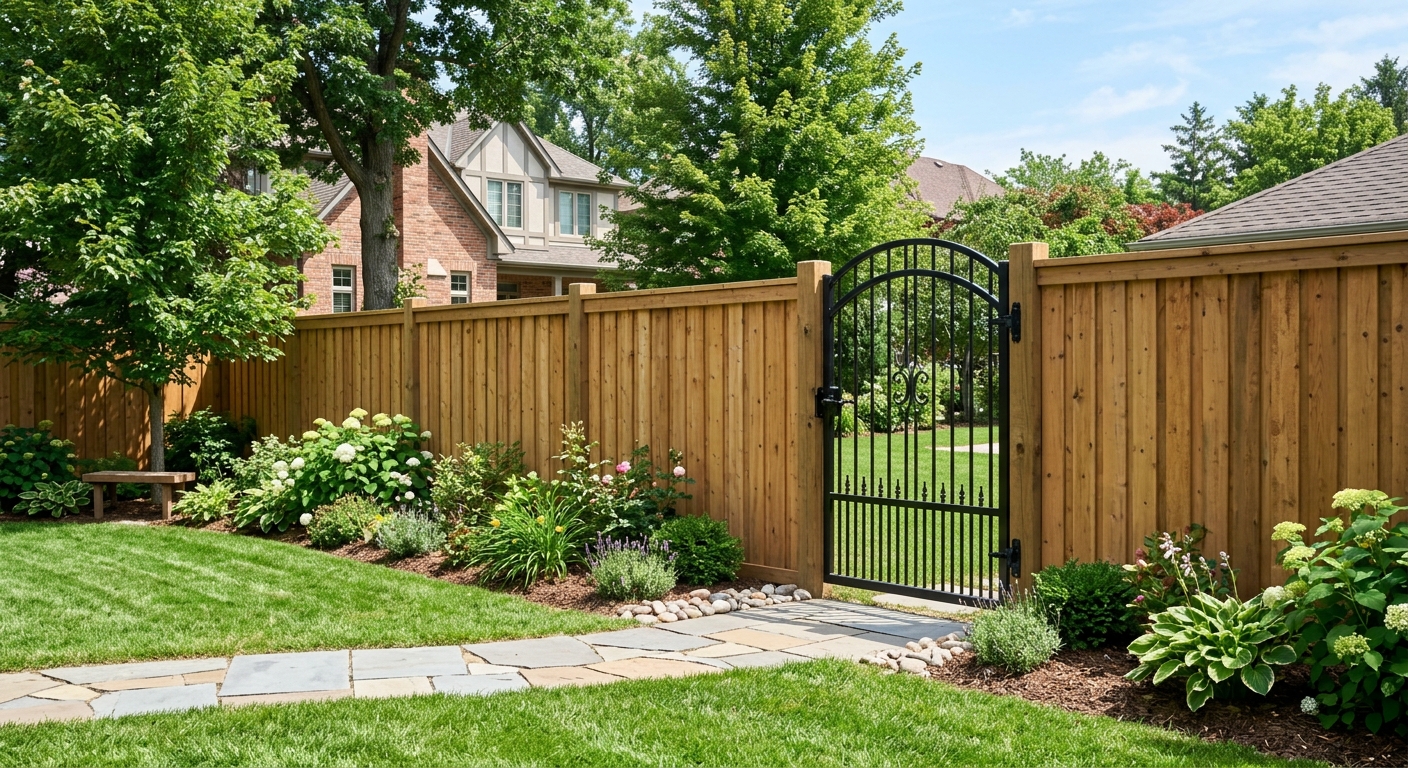
Fencing options and costs in Upper West Lynn
Upper West Lynn homeowners typically shop for fencing based on privacy, curb appeal, and how much time they want to spend maintaining it. With a population of 1,355 residents (Statistics Canada, 2021 Census), demand is often concentrated in the pockets of family housing where yards back onto quieter streets and green spaces—demand is especially noticeable around the residential areas of the City’s west-side neighbourhoods. If you’re in a community where many households are single-detached properties, each property is a potential long-term maintenance and upgrade customer, which is why steady replacement work and new yard installs show up year-round (Statistics Canada, 2021 Census).
In the Lower Mainland–Southwest, pricing is shaped by mild but wet winters, frequent wind off the Fraser Valley, and wet soils that can require deeper post holes and more concrete than a dry-site install. Even though coastal BC conditions are generally shallower than inland Canada, contractors still often set posts deeper than the “bare minimum” to limit heaving and movement during freeze-thaw cycles. That affects both material choices (heavier posts and reinforced rails for solid privacy) and labour time (careful hole excavation, concrete placement, and accurate alignment on uneven grades).
Contractor availability can also change seasonally: spring and early summer tend to bring faster lead times, while late-fall jobs require additional scheduling care due to damp ground and weather windows. The result is that two fences that look identical can still land in different price bands once height, finish grade, and access are accounted for. Below is a practical comparison of common fence types and what you can reasonably expect for installed pricing in Upper West Lynn before we dive into quote drivers.
| Material |
Lifespan |
Maintenance |
Privacy Rating |
Price per Linear Foot |
| Pressure-treated pine (standard wood) |
10–15 years |
Seal/stain every 2–3 years; periodic repairs |
Medium–High (solid/scrubbed boards) |
$55 – $95 |
| Cedar (natural rot resistance) |
15–20 years |
Light staining or sealing every 2–4 years |
High (good board fit) |
$70 – $110 |
| Vinyl / PVC (no-maintenance) |
20–30 years |
Wash only; inspect fasteners in extreme cold |
High (solid privacy styles) |
$75 – $130 |
| Chain-link (galvanized steel) |
20–35 years |
Occasional rinse; replace bent sections |
Low (privacy only with slats/vines) |
$30 – $55 |
| Aluminum ornamental |
25–40 years |
Wash as needed; check gate hardware |
Low–Medium (open pickets) |
$90 – $170 |
| Composite / recycled material |
20–30 years |
Wash only; occasional fastener checks |
Medium–High (solid panel options) |
$85 – $150 |
Prices are estimates only and vary by project scope, site access and material selection.
What affects the price of fencing in Upper West Lynn
If you’re comparing quotes for the same fence line in Upper West Lynn, it’s normal to see differences of roughly 30–50% across the Lower Mainland–Southwest and the wider British Columbia market. The gap usually isn’t the “brand name”—it’s the underlying build conditions. Length and height drive labour, but soil type, drainage, and access determine how long a crew spends excavating, aligning panels, and setting posts. That’s also why two contractors can quote the same material band (for example, chain-link vs. wood) yet still land at very different totals once post depth and hardware complexity are included.
Frost line depth matters even on the coast. In practice, contractors still plan post embedment that sits about 4–6 inches below the design frost depth to reduce heaving risk. Where frost depth is deeper inland, posts often need 1.5–2.0 m embedment, which raises material costs (longer posts) and labour (deeper hole excavation) and commonly increases the use of concrete setting for stability. Coastal BC is generally shallower than Ontario and Alberta, but the wet-soil conditions in parts of the Lower Mainland can still push crews toward concrete-set posts for corner posts, privacy-panel runs, and gate locations—especially when the ground is soft or waterlogged.
Lower Mainland–Southwest wind exposure also affects design. Open rail fences (like ornamental or some wood styles) can move with gusts, while solid privacy builds need heavier posts and tighter spacing. Concrete examples that change costs in Upper West Lynn: (1) soft, wet soil often requires more concrete and slower hole prep to prevent blowouts; (2) yards with drainage issues may require additional grading or stepped panel adjustments; and (3) slopes can turn a “straight run” estimate into stepped or raked sections.
Finally, if your existing fence is older, removal can swing the total quickly—disposing of posts that are concrete-set or rotted at the base isn’t the same as pulling a lightweight run. If you’re selecting between wood (often in the $55–$95 band) and vinyl/PVC (commonly in the $75–$130 band), the price difference is often justified by how much labour the site conditions add for each material system.
| Price Factor |
Why It Matters |
Cost Impact |
| Fence length in linear feet |
Most costs scale directly with total run length |
High: drives the majority of the estimate |
| Post depth required |
Frost protection determines hole depth and post length |
High: deeper holes often mean more concrete and labour |
| Post setting method |
Concrete vs. gravel pack vs. driven posts changes time and material use |
Medium–High: concrete increases both labour and material |
| Material choice |
Different systems require different rails, fasteners and fabrication |
Medium–High: vinyl/PVC typically higher than wood; chain-link lower |
| Gate count and type |
Gates require stronger frames, hinges, latches and sometimes bracing |
Medium: each gate can add significant labour and hardware |
| Grade and terrain |
Sloped yards need stepped or raked panels; extra layout time |
Medium: more cutting, measuring and rework risk |
| Old fence removal and disposal |
Concrete-set posts and debris removal can be time-consuming |
Medium: can materially change totals, especially on privacy fences |
| Permit fees and survey / property line locate |
Some fences exceed height thresholds; line locating prevents disputes |
Low–Medium: varies by scope and documentation needs |
Permits & regulations in British Columbia
In British Columbia, fences that rise above certain height thresholds often require a building permit—commonly around 2.0 m (6.5 ft) at the rear and about 1.0–1.2 m (3–4 ft) at the front or corners, depending on placement and local bylaw interpretation. Even when a permit isn’t required, every fence has to respect your property line and the municipal setback rules for accessory structures. Because fence disputes are usually about location, not aesthetics, the best habit is to confirm where your property pins sit before any digging starts.
Before you install any post holes in Upper West Lynn, call for utility locates. In BC that’s typically arranged through BC 1 Call (the goal is to mark buried services so your crew doesn’t hit lines). Then, obtain a survey or at least a property line locate so the posts and rails aren’t placed over the boundary. Shared fence ownership responsibilities are governed by provincial line-fences legislation, but your first step is still clarity on the exact line.
Permit vs. no-permit (what commonly requires a permit): taller fences above the common height thresholds, fences with special circumstances, and projects where municipal rules trigger documentation requirements. Typically not requiring a permit: smaller boundary fences under the height thresholds, ordinary replacements in like-for-like positions where you’re not changing height or location—though you should confirm with the municipality for your specific siting.
To verify your contractor, ask for their British Columbia licence details and insurance before work starts. Look for: (1) their certificate of insurance showing liability coverage (request the COI and confirm the named insured); (2) clear proof of coverage for workers—requirements are addressed under the appropriate worker protection framework; and (3) any business clearance letter or registry confirmation they can provide. If they can’t produce documents promptly, treat that as a red flag.
Choosing the right fence material for Upper West Lynn
Choosing the right fence material in Upper West Lynn is mostly about matching your priorities—privacy, low maintenance, budget and lifespan—to the realities of Lower Mainland–Southwest weather: mild temperatures, frequent dampness, and coastal wind that can stress rails and fasteners. Pressure-treated pine is the budget-friendly path, but it needs staining or sealing every 2–3 years to prevent grey weathering and to slow surface breakdown. Cedar looks better longer due to its natural rot resistance and often gives a warmer, more premium appearance, though it still benefits from maintenance to keep colour consistent and protect exposed ends.
Vinyl/PVC is popular for homeowners who want to do less. It’s generally low-maintenance, but extreme cold snaps can make some components less forgiving, and you still need correct post spacing and proper hardware installation to avoid warping or flex. Chain-link is the lowest-cost option and has a long life, but it doesn’t provide much privacy unless you add slats or plant coverage; for pure privacy, solid wood, cedar, or PVC privacy panels usually win. Aluminum ornamental fences offer a clean look, won’t rust, and handle damp coastal conditions well, but they’re typically an open design with limited privacy.
For post depth, Lower Mainland embedment is influenced by local frost depth and wet soils. Even if frost is generally shallower than inland provinces, contractors still frequently set posts deeper than the minimum and use concrete for corner posts, gate posts, and privacy-panel runs for stability in softer ground. In wind-exposed yards, heavier posts and tighter spacing reduce racking, which matters for solid wood and vinyl.
A practical cost example: upgrading from chain-link (often around the $30–$55 band) to vinyl privacy (commonly $75–$130 installed) may feel like a big jump. It’s usually justified when you want real privacy, fewer maintenance trips, and stronger resistance to wind movement. If your main goal is security with minimal upkeep, chain-link can be the right value. If your goal is quiet backyard privacy, vinyl or cedar typically pays off over time—especially where wet soil would otherwise undermine neglected wood bases.
| Material |
Cold Tolerance |
Lifespan |
Annual Maintenance |
Best For |
Price Band |
| Pressure-treated pine |
Good with proper detailing |
10–15 years |
Light inspection; stain/seal every 2–3 years |
Budget privacy with classic look |
$55 – $95 |
| Cedar |
Good; watch end-grain |
15–20 years |
Seal/stain every 2–4 years |
Natural appearance and rot resistance |
$70 – $110 |
| Vinyl / PVC |
Very good; requires correct install |
20–30 years |
Wash as needed; check hardware |
Low maintenance privacy |
$75 – $130 |
| Chain-link |
Excellent with coated steel |
20–35 years |
Minimal (rinse and occasional repairs) |
Security and long service life |
$30 – $55 |
| Aluminum ornamental |
Excellent |
25–40 years |
Occasional wash |
Decorative boundary with durability |
$90 – $170 |
| Composite / recycled |
Good; avoid improper fasteners |
20–30 years |
Wash; periodic fastener checks |
Modern look with low maintenance |
$85 – $150 |
How to choose a fencing contractor in Upper West Lynn
When you hire a contractor in Upper West Lynn, verify three things before you sign: their British Columbia licensing status (where applicable), liability insurance, and worker coverage for on-site work. The easiest approach is to ask for documents in writing and to confirm they match the company name on the quote. For liability insurance, request a certificate of insurance (COI) and make sure it lists appropriate coverage limits and includes the correct insured details. For worker protection, ask how they’re covered for employees and check the documentation they provide (clearance and/or proof letters, depending on their setup). Don’t rely on verbal assurances—if they can’t share documentation, you’re the one taking the risk.
Next, get 2–3 itemised written quotes rather than one lump-sum number. A good quote breaks down labour and materials separately (posts, rails, panels, concrete, fasteners, hardware, and gate construction). It should also spell out what’s excluded: for example, is old fence removal included, and is disposal included? Will the contractor pull permits or will you pay separately? Many fencing disputes in British Columbia come from missing scope lines—so confirm line-by-line.
Warranty matters too. Ask for the workmanship warranty length and whether it’s transferable to a new owner. Manufacturer warranties apply to materials, but workmanship covers how posts are set, how panels are aligned, and how gates are braced. Also clarify the payment schedule: never pay more than 10–15% upfront. Hold back the remainder until key milestones are complete (posts set, panels installed, gates operational) and the site is cleaned. Finally, insist on a start date and completion estimate in writing, including weather considerations for wet conditions and ground softness typical in the Lower Mainland.
- Confirm their COI matches the legal company name on the contract.
- Ask for proof of worker coverage and request documentation, not just a promise.
- Request a breakdown of labour vs. materials (not one combined line item).
- Check that post depth embedment approach is stated (frost heave prevention).
- Verify corner posts and gate posts are engineered/braced for strength.
- Confirm whether concrete is included where needed (corner/gate/privacy runs).
- Ask if old fence removal is included and whether disposal is charged separately.
- Confirm permit responsibility: who pulls it, and what’s the cost allocation?
- Review what happens if the property line locate/survey differs from expectations.
- Ensure the quote includes hardware details (latches, hinges, post caps, tension wires if applicable).
- Check the warranty terms in writing, including transferability and exclusions.
- Confirm payment schedule: 10–15% maximum upfront, with holdback until completion.
Red flags I commonly see with fence contractors around Upper West Lynn: refusing to provide insurance paperwork up front; quoting “like for like” without specifying post depth, concrete setting, or hardware grade; using non-itemised pricing that hides disposal, removal, or permit pull costs; asking for large deposits (more than 15%); and vague start/completion timelines that don’t account for wet-ground access or curing time for concrete.
Frequently asked questions — fencing in Upper West Lynn
What is the cost per linear foot for fencing in Upper West Lynn?
For Upper West Lynn (Lower Mainland–Southwest), installed costs usually land within the common regional bands: chain-link is typically around $30 – $55 per linear foot, wood is often $55 – $95, and vinyl/PVC commonly sits around $75 – $130. Aluminum ornamental is usually higher, often $90 – $170, because of material and fabrication. Your real per-foot number will depend on height, whether the posts are concrete-set, yard slope, and how many gates you have. Wet soils and deeper hole requirements in the Fraser Valley can add labour even when the fence looks straightforward.
Should I repair or replace my old fence in Upper West Lynn?
Repair is usually worth it when the fence is still structurally sound: posts aren’t leaning badly, rails are intact, and the bottom is not systematically rotting from trapped moisture. In Upper West Lynn’s damp coastal climate, a fence can look “only slightly tired” while rot has already travelled from end-grain or fasteners into boards and post surrounds. If corner posts or gate posts are concrete-set and have shifted, replacement often becomes the more reliable long-term option because you’ll get correct alignment, consistent post embedment, and properly braced gates. If more than about 25–30% of panels/posts need work, replacement is often closer to the better value than repeated patch repairs.
How do I handle a fence dispute with a neighbour in British Columbia?
In British Columbia, start by confirming the property line before you argue about appearance. Get a survey or at least a property line locate to identify where the fence should sit. Then review the existing fencing agreement context: shared fence ownership rules are guided by provincial line-fences legislation, but you still want documentation of location and responsibility. Communicate in writing and keep the tone neutral—photos help, and a contractor’s written assessment can clarify whether the “issue” is structural movement or a siting encroachment. If the fence is above local thresholds, permits and bylaw compliance may also factor into how the situation is corrected. Ideally, you resolve it collaboratively, but having measurements and records makes any formal next step easier.
What fence style offers the best wind resistance in Upper West Lynn?
In Upper West Lynn, wind can stress weak posts and loosely braced rails, especially on privacy-style fences with solid faces. The best-performing setups typically use stronger corner posts, tighter spacing, and heavier gate bracing. Solid privacy designs often need reinforced posts and correct rail sizes so the fence doesn’t rack (twist out of plane). If you’re choosing between materials, vinyl/PVC and solid wood privacy are commonly built with similar structural considerations—post embedment, concrete setting for key posts, and hardware strength—because the wind load is the same. Chain-link is generally very wind-permeable, which reduces pressure on the fence, but it won’t give privacy without slats or a secondary screen.
How much does a fence cost in Upper West Lynn?
Total fence cost in Upper West Lynn usually depends on linear feet, height, number of gates, and site conditions like slope and soil softness. As a planning guide, wood installs are often around $55 – $95 per linear foot, while vinyl/PVC is commonly $75 – $130. Chain-link is the most budget-friendly at about $30 – $55, and aluminum ornamental can run roughly $90 – $170. A damp-site install can add labour due to deeper post hole work and concrete-setting for stability in wet Fraser Valley soils, even when the fence looks basic. For an accurate total, ask for an itemised quote showing posts, rails, concrete, gates, and any removal/disposal scope.
How deep should fence posts be for Upper West Lynn's frost?
Even though Upper West Lynn is on the coast with generally shallower frost compared with inland Canada, contractors still plan for heaving risk by setting posts below the design frost line. A practical rule contractors use in the Lower Mainland–Southwest is embedment that’s about 4–6 inches below the design frost depth, with post holes often effectively deeper than what homeowners assume from “minimum” guidance. In wet soils, crews often set important posts (corners, gate posts, and privacy-panel runs) in concrete to reduce movement during freeze-thaw. Exact depth can vary with soil conditions and local frost calculations, so your contractor should state the intended embedment depth and setting method in the quote before digging starts.