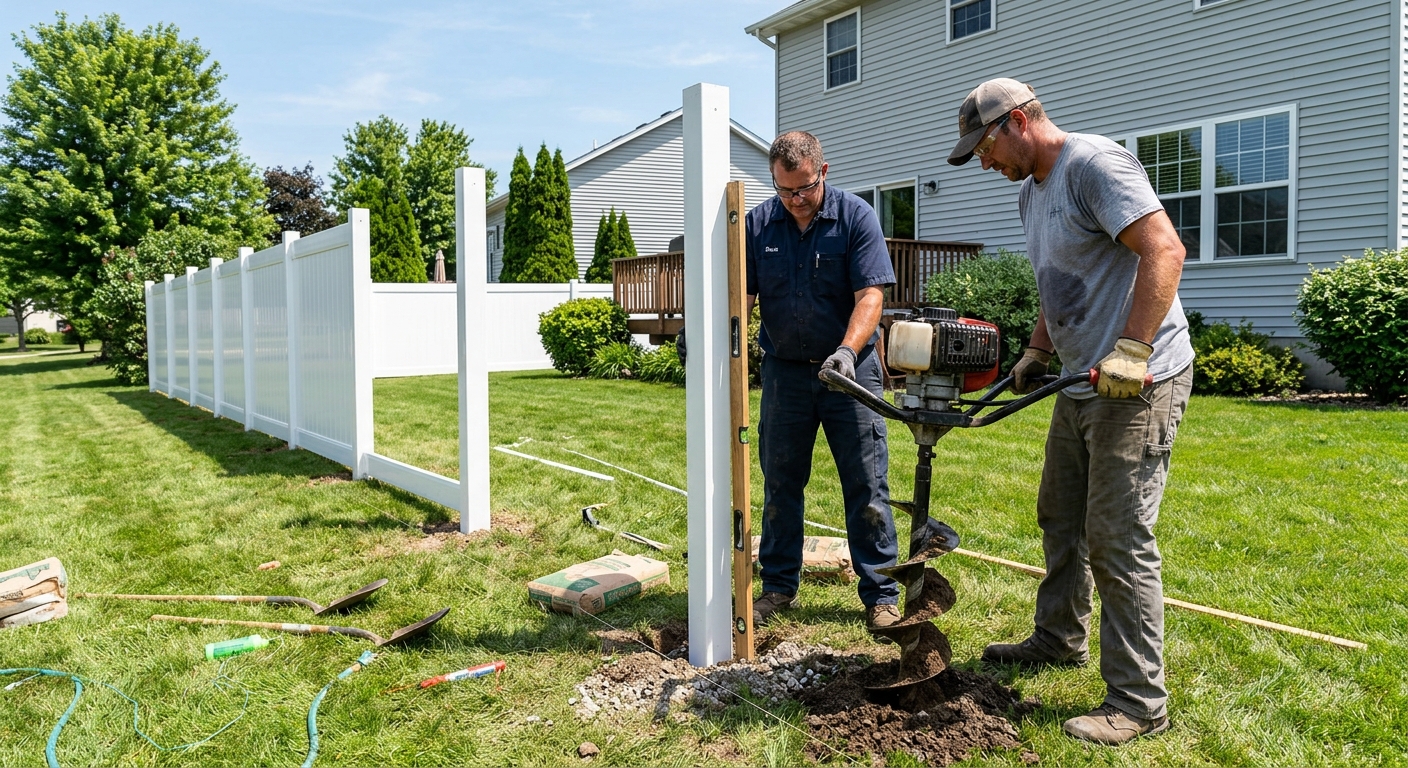
Fencing options and costs in North Kamloops
Fencing in North Kamloops is shaped by real backyard needs and by a climate that can punish poorly installed posts. With a population of 10,995 (Statistics Canada, 2021 Census), the North Shore and Valleyview-style lots that change hands periodically are often the same places where neighbours want upgrades—especially as many residences are detached properties, which makes fences a recurring, practical maintenance project. In the Thompson–Okanagan region, your total cost is strongly influenced by frost depth, soil drainage, and wind exposure on benches and open lots. In interior valleys like Kamloops, posts typically must be set well below grade so freeze–thaw cycles don’t heave the fence line. That usually means concrete-set posts and deeper auger work on many properties, even when you’re choosing “budget” materials.
Material choice also matters. Vinyl can look clean for years, but extreme cold can make some panels feel stiffer and more brittle if the system isn’t designed for local conditions. Chain-link installs fast and lasts, but privacy is limited unless you plan for climbing screens or privacy slats. On the other hand, cedar and pressure-treated wood can be very attractive, though they’re more sensitive to how they’re treated and how quickly water is shed away from post holes. For neighbourhood demand, the trade is especially active around Westsyde, where lots tend to have a mix of open-air wind and older fencing that needs replacement.
Below is a practical comparison to help you budget before you book a site visit—then your contractor can confirm post depth, footing method, and panel style based on your exact yard.
| Material |
Lifespan |
Maintenance |
Privacy Rating |
Price per Linear Foot |
Price Range |
| Pressure-treated pine (standard wood) |
10–15 years |
Stain/seal every 2–3 years |
7/10 |
$20–$30 |
$55–$85 |
| Cedar (natural rot resistance) |
15–25 years |
Seal or stain every 2–4 years |
9/10 |
$28–$40 |
$65–$105 |
| Vinyl / PVC (no-maintenance) |
20–30 years |
Wash annually; check fasteners |
8/10 |
$35–$55 |
$75–$115 |
| Chain-link (galvanized steel) |
25–35 years |
Minimal; tighten/replace sections |
2/10 |
$12–$18 |
$35–$60 |
| Aluminum ornamental |
25–40 years |
No rust; rinse as needed |
3/10 |
$32–$50 |
$90–$150 |
| Composite / recycled material |
20–30 years |
Wash; inspect for warping |
8/10 |
$30–$48 |
$85–$125 |
Prices are estimates only and vary by project scope, site access and material selection.
What affects the price of fencing in North Kamloops
In North Kamloops and across the Thompson–Okanagan, it’s common to see quotes for the “same” fence come back 30–50% apart. The gap usually isn’t the product—it’s the installation reality: required post depth for frost protection, footing method, wind-resistance hardware, and how difficult your site is to access with a skid steer or auger. British Columbia’s interior markets (including Kamloops) often sit in a tougher band than very mild coastal microclimates. Contractors also differ in how they handle drainage around post holes, and that affects long-term stability—especially where clay or poorly drained soil holds water.
The frost line depth is the biggest driver of labour and material. In practice, many crews set posts 4–6 inches below the design frost depth to help prevent heaving during freeze–thaw cycles. In colder Canadian regions like Ontario and Alberta, contractors typically aim for roughly 1.5–2.0 m into the ground, often with concrete-set posts and longer posts—costing more for both materials and auger time. While Kamloops isn’t as cold as the deepest inland zones, interior freeze–thaw can still be severe enough that concrete-set posts and larger footings are frequently the safer route. Wind exposure then influences spacing: open benches can require closer post spacing, heavier rails, and bracing—pushing a project toward the vinyl/metal bands (for example, vinyl often falls in the $75–$115 bracket when hardware and post depth are upgraded).
Two common local examples I see in North Kamloops: (1) clay-heavy soils near wetter backyards often require deeper holes and more careful backfill, which increases auger time; (2) sloped lots in areas like Westsyde and Valleyview often need stepped panels or raked rails, which raises labour even when the linear footage stays the same. If you’re replacing an old fence, disposal and the removal of embedded posts can add meaningful labour, too—sometimes enough to shift you from a wood estimate near the $55–$85 band into cedar/vinyl territory.
| Price Factor |
Why It Matters |
Cost Impact |
| Fence length in linear feet |
Most costs scale directly with panels, rails, and posts |
High |
| Post depth required |
Frost protection determines hole depth and post length |
High |
| Post setting method |
Concrete-set posts increase materials and labour time |
Medium–High |
| Material choice |
Vinyl/metal systems cost more; wood may require treatment |
Medium–High |
| Gate count and type |
Drive-through double gates need heavier frames and bracing |
Medium |
| Grade and terrain |
Slopes often require stepped or raked construction |
Medium |
| Old fence removal and disposal |
Embedded posts take time; hauling fees apply |
Medium |
| Permit fees and survey / property line locate |
Verification reduces disputes and rework |
Low–Medium |
Permits & regulations in British Columbia
In British Columbia, fences above a typical height threshold—often around 2.0 m (6.5 ft) at the rear and about 1.0–1.2 m (3–4 ft) at the front or corner—may require a building permit. Even when a permit isn’t required, you still need to respect property lines and municipal setback bylaws. A practical rule for North Kamloops homeowners: if your fence is near a corner, street frontage, or significantly taller than your neighbours’ fences, confirm requirements before digging.
Before any post holes are dug, you should call for utility locates. In Ontario you may hear “Ontario One Call,” in Alberta “Alberta One-Call,” and in BC the common process is through “BC 1 Call” (the key point is to use the correct provincial utility locating service for your area). Also consider obtaining a survey or at least a locate of your property pins—this reduces the risk of encroachment disputes when old fences were built “around” boundaries.
Shared fence ownership issues typically follow the provincial line-fences framework, so if you’re upgrading an existing fence between properties, clarify who is responsible for maintenance and costs before work begins.
To verify a contractor in BC, ask for: (1) their contractor licence details where applicable in your trade category; (2) a current certificate of liability insurance naming you (or covering the worksite); and (3) proof of workplace coverage (WSIB/WCB-equivalent coverage as applicable). Request the clearance letter or coverage documentation directly, and confirm the information matches your job address and dates.
Choosing the right fence material for North Kamloops
Choosing the right fence material in North Kamloops comes down to matching your priorities—privacy, low maintenance, and budget—to a climate that cycles through winter cold and freeze–thaw. Pressure-treated pine is usually the most budget-friendly way to get a solid backyard barrier, but it needs staining/sealing every 2–3 years to prevent grey weathering and surface breakdown. Cedar costs more upfront, yet it naturally resists rot and often ages better visually. Still, cedar benefits from periodic sealing to keep the top edges from drying out and splitting.
Vinyl/PVC is popular because it’s low maintenance: wash it, check fittings, and move on. The trade-off is upfront cost and the need for the right installation approach; panels can crack if the system is under stress, especially when posts aren’t set correctly for frost. Chain-link is the longest-life value option and performs well through BC winters, but it won’t provide privacy unless you add slats or a privacy screen. Aluminum is corrosion-resistant and looks crisp, but it’s mainly for containment and style rather than privacy.
For post depth in the Thompson–Okanagan, you should plan around setting posts below the local frost impact zone—commonly with deeper holes than you’d use in mild climates. In many North Kamloops yards, that’s why concrete-set posts are often recommended on frost-sensitive ground. Wind and snow loads also matter: wider winds can stress top rails and brackets, which is why bracing and proper hardware are worth paying for on exposed sites.
Example: if you’re comparing pressure-treated pine versus vinyl on a 50-foot run, pine may land closer to the $55–$85 band, while vinyl commonly moves you into the $75–$115 band. That difference can be justified when you want many years of minimal maintenance and you’re using correct post setting and quality rails so the system isn’t working against the freeze–thaw.
| Material |
Cold Tolerance |
Lifespan |
Annual Maintenance |
Best For |
Price Band |
| Pressure-treated pine |
Good when posts are set for frost depth |
10–15 years |
Seal/stain every 2–3 years; inspect yearly |
Budget privacy with willingness to maintain |
$55–$85 |
| Cedar |
Good; performs well with proper ventilation and sealing |
15–25 years |
Seal or stain every 2–4 years |
Natural look + better rot resistance |
$65–$105 |
| Vinyl / PVC |
Very good if installed with correct tension and post spacing |
20–30 years |
Wash annually; check hardware |
Low maintenance privacy |
$75–$115 |
| Chain-link |
Excellent; galvanized steel holds up through winters |
25–35 years |
Minimal; tighten and patch as needed |
Security and long service life |
$35–$60 |
| Aluminum ornamental |
Excellent; doesn’t rot or rust like steel |
25–40 years |
Rinse/wash as needed |
Front-yard look with durability |
$90–$150 |
| Composite / recycled |
Good; avoids rot but requires correct fastening |
20–30 years |
Wash; inspect for warping |
Privacy with less worry about rot |
$85–$125 |
How to choose a fencing contractor in North Kamloops
When you hire a fence contractor in North Kamloops, verify licensing and coverage the same way you would for any outdoor build that needs to last through British Columbia winters. Ask for their BC contractor licence information (or the relevant trade/registration details for fencing and related work), and request a current certificate of liability insurance. For workplace coverage, confirm they carry the appropriate WSIB/WCB-equivalent coverage for their crews; the best contractors will provide a clearance letter or documentation on request, and it should match the job address and dates.
Next, get 2–3 itemised written quotes. A good quote breaks out labour and materials separately (posts, rails, panels, hardware, concrete where needed, gates, and any stain/seal). Avoid “lump sum only” proposals—fences are easy to mis-scope unless the number of posts, post depth allowance, and panel type are clearly stated. Read the exclusions carefully: is permit pulling included if the fence exceeds height thresholds? Is old fence removal and hauling/disposal included? Are utility locate costs included? Are you paying extra if the ground is rockier than expected?
Warranty matters. Look for a workmanship warranty length (often for installation-related issues) and a separate manufacturer product warranty for materials. Ask whether the product warranty is transferable if you sell your home.
For payment schedule, never pay more than 10–15% upfront. A solid approach is a deposit, then progress payments tied to milestones, with a holdback until completion and cleanup. Finally, demand the start date and a completion estimate in writing.
- Confirm post depth and setting method in writing (concrete vs. gravel pack vs. driven posts).
- Ask how they’ll handle frost-prone soil and waterlogged ground.
- Verify they include utility locates before digging.
- Request the number of posts per run and rail type (and bracing on longer/open runs).
- Ensure gates are itemised (frame type, hinges, latch hardware).
- Confirm slope handling: stepped vs. raked panels.
- Ask whether removal and disposal of the old fence is included.
- Check that access constraints (fences near decks/driveways/trees) are acknowledged.
- Get permit responsibility clarified in the contract/quote.
- Review the warranty: workmanship term, product term, and what failures are covered.
- Verify insurance certificate is current and covers the worksite.
- Set milestones and holdback in writing; avoid large upfront payments.
In North Kamloops, red flags I’ve seen include: a contractor who won’t specify post depth or footing method; quoting “wood” without stating treatment grade or staining expectations; offering the lowest price but treating site conditions as a surprise later; missing insurance/WCB coverage documentation; or refusing to put scope details (gates, slope build, removal/disposal) in writing.
Frequently asked questions — fencing in North Kamloops
Should fence posts be set in concrete here?
In North Kamloops, it often makes sense to use concrete-set posts for long-term stability, especially where soil holds water or where freeze–thaw heaving is a risk. The Thompson–Okanagan frost impact means posts generally need to be set below the frost zone influence—commonly with extra depth so the fence doesn’t lift during winter cycles. Concrete adds cost and labour (more auger time, concrete, and curing considerations), but it can prevent sagging and gaps that otherwise show up after a couple of seasons. If your contractor is proposing only gravel backfill on frost-sensitive ground, ask how they’re addressing post movement and what they’ll do if the fence line shifts. A good quote should state post depth and setting method clearly, not just the fence type.
What's the best fence for privacy?
For privacy in British Columbia’s interior, a solid-panel fence with close spacing typically performs best: cedar or pressure-treated wood, or a privacy-style vinyl/PVC system. Cedar can give you a natural look with rot resistance, while vinyl/PVC is the low-maintenance option if you want to avoid staining and frequent upkeep. If you want to plan around typical North Kamloops pricing, solid wood projects often fall near the $55–$85 band depending on height and footing requirements, while privacy vinyl commonly sits around the $75–$115 range. The “best” choice is also about installation quality: correct post depth for frost and solid bracing where wind load is higher will keep privacy panels aligned and looking straight for years.
How do I compare fencing quotes?
Start by comparing apples to apples. Ask for itemised quotes showing labour and materials separately: number of posts, post depth allowance, rail type, panel style, gate hardware, and whether concrete is included. In North Kamloops, some quotes look similar because they use the same material name, but they differ in footing assumptions—post depth and setting method can move the price significantly. Confirm if removal and disposal of an old fence are included, whether utilities locates are covered, and whether permits apply based on the fence height. Also compare warranties: workmanship coverage should be written, and manufacturer warranties should specify what’s covered. If a quote is only a lump sum without details, it’s harder to trust or to enforce if something needs correction after winter.
How long does fence installation take in North Kamloops?
Timeline depends on length, footing type, site access, and whether you’re removing an old fence. For a typical backyard replacement, many crews can install fencing over a few working days once posts are laid out—especially if the ground is accessible and there aren’t lots of obstructions. The frost-related piece is the footing and setting time: concrete-set posts require proper placement and time before rails and panels are installed to ensure alignment and strength. In winter-adjacent conditions, crews may adjust schedules around weather and curing. If you’re planning a gate installation or a longer run with bracing due to wind exposure, add extra time for framing and hardware. The best contractors will give you a start date and completion estimate in writing after a site check.
Can I install a fence on a slope in North Kamloops?
Yes, but you’ll want the design to match the slope rather than forcing straight sections where panels will “gap” or rails will bind. In North Kamloops, most slope builds use stepped panels (each section changes height) or raked panels (matching the ground angle with a consistent top line), depending on your preference and the material system. The important part is that your contractor accounts for proper post depth and footing—if a post is set too shallow on the uphill side, you can still get lift or misalignment with freeze–thaw cycles. In quotes, confirm whether the slope method is included and whether additional labour is allowed. This is one place where “cheap” estimates often fail—because it requires careful layout and measuring.
What is the most weather-resistant fence for North Kamloops's climate?
There isn’t one single “best” for every yard, but the most weather-resistant options typically combine corrosion/rot durability with installation designed for interior winter conditions. Chain-link (galvanized steel) and aluminum ornamental are highly resistant to rot and corrosion and can handle wet winters and snow well with minimal upkeep. If your main priority is privacy, cedar and vinyl/PVC can also be very durable when posts are set appropriately for frost and hardware is installed correctly. For homeowners comparing budgets, chain-link often comes in near the $35–$60 band, while aluminum can land in the $90–$150 range. Whatever you choose, the key weather-proofing factor is proper post depth and setting method—without that, even the best material can shift after freeze–thaw.