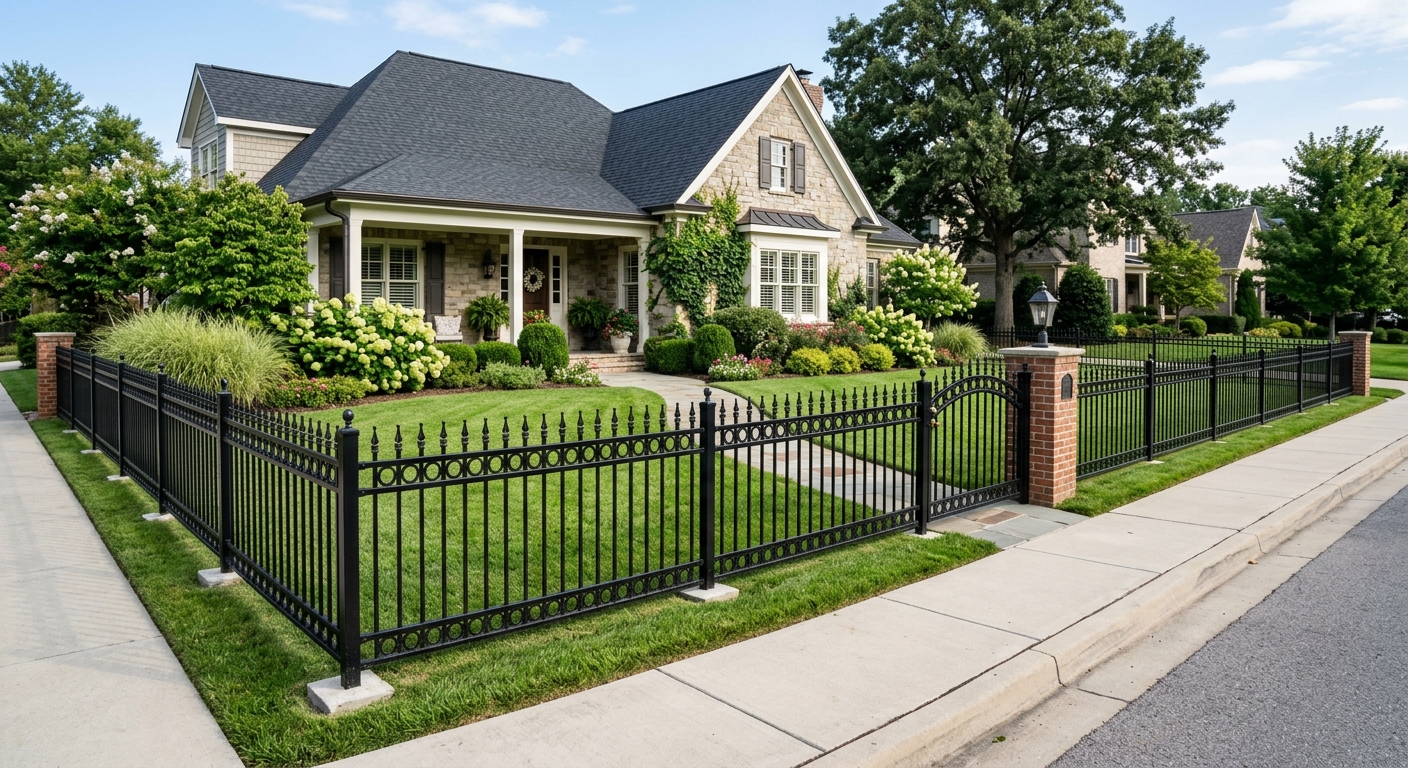
Fencing options and costs in Quesnel
In Quesnel, fence choices and costs tend to follow what you see around town—especially where single-detached homes dominate the housing stock. In the 2021 Census, single-detached houses make up 59.6% of dwellings, and homeowner households account for 62.0% of households (Statistics Canada, 2021 Census). That ownership level matters because homeowners are the ones most often funding new yards, backyard privacy upgrades, and boundary repairs.
In the Cariboo, fencing prices move more than many people expect because of freeze–thaw and the way contractors must anchor posts. We typically set posts at least 3 feet (about 0.9 m) below grade in Quesnel-area conditions to reduce frost heaving, and many installations use concrete-set footings—more labour and more material, but better long-term stability in clay pockets or heavier, poorly drained soils. Wind exposure is also a factor on more open lots along highway corridors; it nudges builders toward sturdier framing and tighter panel spacing, particularly for vinyl privacy and solid wood styles.
In demand right now are privacy fences and replacement panels in neighbourhoods such as Colmane Park and along older residential stretches closer to the river flats, where existing fencing is often sun-faded or already leaning. Once you’ve decided on the look, the next step is comparing materials side-by-side.
| Material |
Lifespan |
Maintenance |
Privacy Rating |
Price per Linear Foot |
| Pressure-treated pine (standard wood) |
10–15 years |
Stain/seal every 2–3 years; inspect for warping |
High (solid picket/close boards) |
$18 – $30 |
| Cedar (natural rot resistance) |
15–25 years |
Light staining 2–4 times over the first decade; yearly visual checks |
High (solid boards/panel systems) |
$22 – $38 |
| Vinyl / PVC (no-maintenance) |
20–30 years |
Occasional rinse; check posts after extreme freeze cycles |
High (privacy panels) |
$28 – $48 |
| Chain-link (galvanized steel) |
20–35 years |
Low: rinse and spot-check tension/frames |
Low–Medium (wire visibility) |
$13 – $22 |
| Aluminum ornamental |
25–40 years |
Low: wash and inspect hardware |
Low–Medium (open style) |
$25 – $52 |
| Composite / recycled material |
25–35 years |
Low: periodic cleaning; check for colour consistency |
Medium–High (board systems) |
$30 – $55 |
Prices are estimates only and vary by project scope, site access and material selection.
What affects the price of fencing in Quesnel
Two homeowners can receive quotes that look wildly different for what seems like the same fence, because Cariboo-region fencing pricing is shaped by how the ground freezes, how exposed your lot is to wind, and how many hours it takes to set posts properly. Across British Columbia, it’s common to see 30–50% quote differences on similar-length fences because some sites need deeper excavation, more concrete, and heavier framework while others are easier to build on. Labour rates and scheduling also vary with whether the crew is currently working in town versus rural acreage, where material runs and access can slow things down.
Frost line depth is the big driver. In Quesnel-area conditions, posts are typically set about 4–6 inches below the design frost depth to help prevent heaving. That often means longer posts and deeper holes, and when you’re using concrete-set footings, both material and labour rise. For context, in colder interior zones of BC, the effective install depth requirement can feel like what homeowners see further east—more like the deeper 1.5–2.0 m hole logic used in harsher climates—so the “hidden” cost can show up fast.
Second, wind exposure changes panel choice and spacing. More open yards often need tighter spacing and heavier posts, especially with vinyl privacy. Third, wood rot risk is accelerated by wet freeze–thaw cycles: untreated or poorly maintained wood can degrade sooner even in regions where summers aren’t extreme. In Quesnel, cost can be higher if your fence runs near low areas that stay damp, or if you have clay that requires wider footing holes. It can be lower if you’re replacing a short run on a well-drained lot with easy access and you choose a chain-link run where privacy isn’t required—often starting in the chain-link band of $35 – $65 for installed work, while wood and vinyl privacy projects commonly land higher.
| Price Factor |
Why It Matters |
Cost Impact |
| Fence length in linear feet |
Every extra foot adds posts, rails, hardware, and time |
Highest cost driver; directly scales total |
| Post depth required |
Frost protection determines hole depth and post length |
Deeper holes increase concrete, excavation and material |
| Post setting method |
Concrete-set footings improve stability in frost-heave soils |
Concrete typically adds labour and cost vs. gravel pack |
| Material choice |
Vinyl, cedar, and chain-link differ in weight, cost and detailing |
Switching materials can change price by tens of percent |
| Gate count and type |
Gates need stronger framing and different hardware |
Drive-through double gates cost noticeably more than walk-through |
| Grade and terrain |
Slope requires stepped or raked rails/panels |
More cutting and labour; sometimes extra posts |
| Old fence removal and disposal |
Haul-away, dismantling, and disposal can be time-consuming |
Can add a meaningful add-on if heavy/rotted posts are present |
| Permit fees and survey / property line locate |
Locates reduce the risk of encroachment corrections |
Varies by site; can add both time and direct expenses |
Permits & regulations in British Columbia
In British Columbia, fences may require a building permit once you exceed certain height thresholds—commonly around 2.0 m (6.5 ft) at the rear and about 1.0–1.2 m (3–4 ft) at the front or corner. Exact requirements can vary depending on location and local bylaws, so treat this as a starting point and confirm with the City of Quesnel before you dig. Regardless of permit needs, your fence must stay within property lines and respect any municipal setback requirements.
Before digging post holes, call for utility locates. In BC, homeowners and contractors use BC 1 Call to mark buried services; this avoids costly damage to power, telecom, and water lines. You should also arrange a survey or obtain a property line locate using your property pins (or an equivalent locate service). This matters in Quesnel because disputes over boundaries usually aren’t about “who is right” later—they’re about avoiding rework once the posts are already set.
Shared fence ownership is governed by provincial line-fences rules: if a fence serves both properties, there are typical cost-sharing expectations, but the details depend on the fence’s purpose and boundary situation.
To verify a contractor in Quesnel, ask for three things in writing: (1) proof of relevant BC business licensing/registration (if applicable to their trade), (2) a certificate of liability insurance naming you as additionally insured where possible, and (3) worker coverage for their crew (WSBC coverage documentation, often via clearance or proof of coverage). You should be able to view or request an up-to-date certificate showing policy active dates, limits, and coverage details.
Choosing the right fence material for Quesnel
The best fence material in Quesnel depends on your priorities: privacy, low maintenance, budget, and lifespan—then the Cariboo climate narrows the field. Pressure-treated pine is the budget-friendly choice, but it needs staining or sealing every 2–3 years to slow grey weathering and keep the wood protected. Cedar looks better for longer and resists rot naturally, but you still shouldn’t ignore maintenance; even cedar benefits from periodic staining in wet seasons. Vinyl/PVC is the low-effort option for busy homeowners—no painting—but extreme cold snaps can make posts and rails behave differently, so proper post depth and stable anchoring matter. Chain-link is usually the lowest upfront and the longest-lasting option, but it offers limited privacy unless you add slats or a screened planting plan. Aluminum ornamental gives a clean, rust-resistant look with low upkeep, though it doesn’t provide the “block the view” privacy most families want.
On frost-depth and installation: in Quesnel, even “low-maintenance” materials still depend on correct post installation. Regardless of whether you choose vinyl, wood, or metal, you should plan for frost-protected anchoring—commonly deeper holes around 3 feet below grade (about 0.9 m) and often deeper depending on site soil and exposure—using concrete-set footings when the ground conditions call for it. Wind and snow load also influence post spacing and rail sizing; open yards and highway-side exposure usually need sturdier framing.
Where does the money make sense? If you’re comparing a wood fence in the wood band of $45 – $80 versus vinyl in the vinyl band of $65 – $110, the extra cost is often justified when you want a consistent privacy look without regular staining—especially for fences that are hard to access from a ladder or that run along the side of the house where maintenance is inconvenient.
| Material |
Cold Tolerance |
Lifespan |
Annual Maintenance |
Best For |
Price Band |
| Pressure-treated pine |
Good with proper sealing and frost-set posts |
10–15 years |
Low to moderate (usually 0–1 visits, plus 2–3 year stain cycles) |
Budget privacy with a classic look |
$45 – $80 |
| Cedar |
Good; natural resistance improves performance in damp cycles |
15–25 years |
Low to moderate (visual checks; stain as needed) |
Longer-lasting wood appearance |
$55 – $95 |
| Vinyl / PVC |
Very good if properly anchored for freeze–thaw |
20–30 years |
Very low (rinse; check posts/hardware after harsh winters) |
Low-maintenance privacy |
$65 – $110 |
| Chain-link |
Excellent; metal tolerates cold well |
20–35 years |
Very low (spot-check tension and posts) |
Security for pets/kids with minimal cost |
$35 – $65 |
| Aluminum ornamental |
Excellent; no rust |
25–40 years |
Very low (wash and inspect hardware) |
Attractive curb-edge fencing |
$70 – $130 |
| Composite / recycled |
Good; performs well with stable post installation |
25–35 years |
Low (cleaning and periodic hardware checks) |
Premium low-maintenance privacy |
$85 – $135 |
How to choose a fencing contractor in Quesnel
Choosing a fencing contractor in Quesnel starts with verifying the basics before you ever review design options. In British Columbia, you want a contractor who can show current business documentation, valid liability insurance, and proof of worker coverage (WSBC/worker protection coverage) for their crew. Ask for the certificate of insurance and confirm the policy is active and that the coverage limit is reasonable for property work—then request documentation showing they have worker coverage and can provide a clearance/proof for their operations. Don’t accept verbal assurances; ask for copies or screenshots of current documents.
Next, get 2–3 itemised written quotes that separate labour and materials. The best quotes break down post count, post depth/footings, rail/hardware, panels, gate framing, and whether disposal and utility marking are included. Look for scope language: is permit pulling included (if required for your height), is old fence removal included, and is labour time allocated for locating buried services and working around tree roots or rocks?
Warranty matters too. A workmanship warranty should be clearly stated (for example, how long they cover post movement, panel sagging, or fastening failures), and manufacturer warranties should be documented separately for the fence product. Ask whether the warranty is transferable if you sell the home. On payment, don’t pay more than 10–15% upfront; keep a holdback until the fence is complete and you’ve confirmed line/grade and gate operation. Finally, get a written start date and completion estimate; weather and excavation schedules in the Cariboo can shift, but your timeline should still be stated.
- Provide proof of current liability insurance (active dates, limits, and coverage details).
- Provide proof of worker coverage for their crew (WSBC documentation/clearance).
- Quote includes post depth plan aligned to frost considerations for Quesnel-area soils.
- Itemised quote lists posts, rails, fasteners, panels, and gate hardware separately.
- Scope states whether concrete footings are included or if a gravel pack alternative is used.
- Clarify whether utility locates are included in the pricing and whether BC 1 Call is scheduled.
- Confirm whether permit pulling is included when height thresholds apply.
- Include disposal/haul-away of removed fencing and debris (or specify it as a separate line item).
- Warranty is written with a clear duration for workmanship and a separate product warranty.
- Ask if warranty coverage is transferable to a new homeowner.
- Payment schedule: max 10–15% upfront, with holdback until walk-through and punch list completion.
- Timeline in writing: start date, approximate finish date, and how weather delays are handled.
Red flags to watch for in Quesnel: a quote that’s a single lump sum with no post/footing details, refusal to show a current certificate of liability insurance, no written warranty terms, asking for full payment upfront, or skipping utility locate confirmation and telling you “we’ll figure it out later.”
Frequently asked questions — fencing in Quesnel
Who owns and maintains a shared fence?
In Quesnel and across British Columbia, shared fence ownership and cost-sharing are handled under provincial line-fences rules. Practically, that means if a fence serves as a boundary fence between you and your neighbour (and is recognized as such), there are common expectations about shared responsibility for maintenance and replacement. However, the exact cost split can depend on the fence’s purpose and the boundary arrangement. Before you start replacing posts, confirm whether your fence is truly on the boundary (a survey or property pin locate helps here) and document the condition with photos so you can fairly discuss repairs.
How do I find my property line before fencing?
Before installing a fence in Quesnel, you should locate your property pins or arrange a survey so you know where your boundary actually runs. Start by checking any documentation you have from previous purchases or subdivision documents, then book a professional property line locate if you can’t clearly find the pins on-site. This step matters because post placement is permanent once holes are dug. Also schedule BC 1 Call utility locates before digging; even a correct line can still create damage risk if services run in the same area. If you’re considering a higher fence, confirm the height and setback rules first—mistakes can lead to rework and added cost.
What's the most low-maintenance fence?
For most homeowners in British Columbia, the lowest-maintenance option is usually vinyl/PVC, because it doesn’t need annual staining and it resists rot the way wood does. In Quesnel pricing terms, vinyl privacy often falls in the $65 – $110 installed band, and that higher upfront cost is typically what you’re “buying” versus pressure-treated pine or cedar. Chain-link is also low-maintenance in terms of cleaning and repairs, but it won’t provide privacy by itself. If you want privacy with minimal work, vinyl with properly anchored, frost-protected posts is usually the best practical combination.
How tall can my fence be in Quesnel?
Fences in BC are often regulated by height thresholds that can trigger a permit—commonly around 2.0 m at the rear and about 1.0–1.2 m at the front or corner. In Quesnel, you’ll want to confirm the exact requirement with the City because front/corner locations are the ones most likely to have tighter limits. The important part for planning is to measure your proposed height from the correct reference point (typically finished grade on-site) and account for sloped yards. If you’re building a privacy fence and you’re near those height thresholds, plan for the permit process before ordering materials.
Should fence posts be set in concrete here?
Often, yes—especially if your yard has clay, stays damp, or you want maximum stability through Quesnel’s freeze–thaw cycles. In the Cariboo, contractors typically set posts deep (commonly around 3 feet/0.9 m below grade) and many installations use concrete-set footings to reduce frost heaving. Concrete increases labour and material costs, but it’s one of the best ways to keep posts plumb and prevent movement over multiple winters. That said, the right approach depends on soil and drainage; a gravel pack method can work in well-drained ground, while low spots and heavier soils usually benefit from concrete. A good quote should clearly explain which method they’re using and why.
What's the best fence for privacy?
For privacy in Quesnel, the best results usually come from a solid-panel style: vinyl privacy, cedar board-on-board, or pressure-treated wood with close pickets. The climate plays into your choice—wood can grey and needs staining every 2–3 years to stay looking good, while vinyl is lower-maintenance if it’s anchored properly for winter freeze–thaw. If you’re balancing budget and privacy, pressure-treated pine is commonly in the $45 – $80 wood installation band, while vinyl privacy generally sits higher at $65 – $110. If your lot is more exposed to wind, ensure the contractor uses robust posts and appropriate spacing so the fence stays straight through gusts and winter conditions.