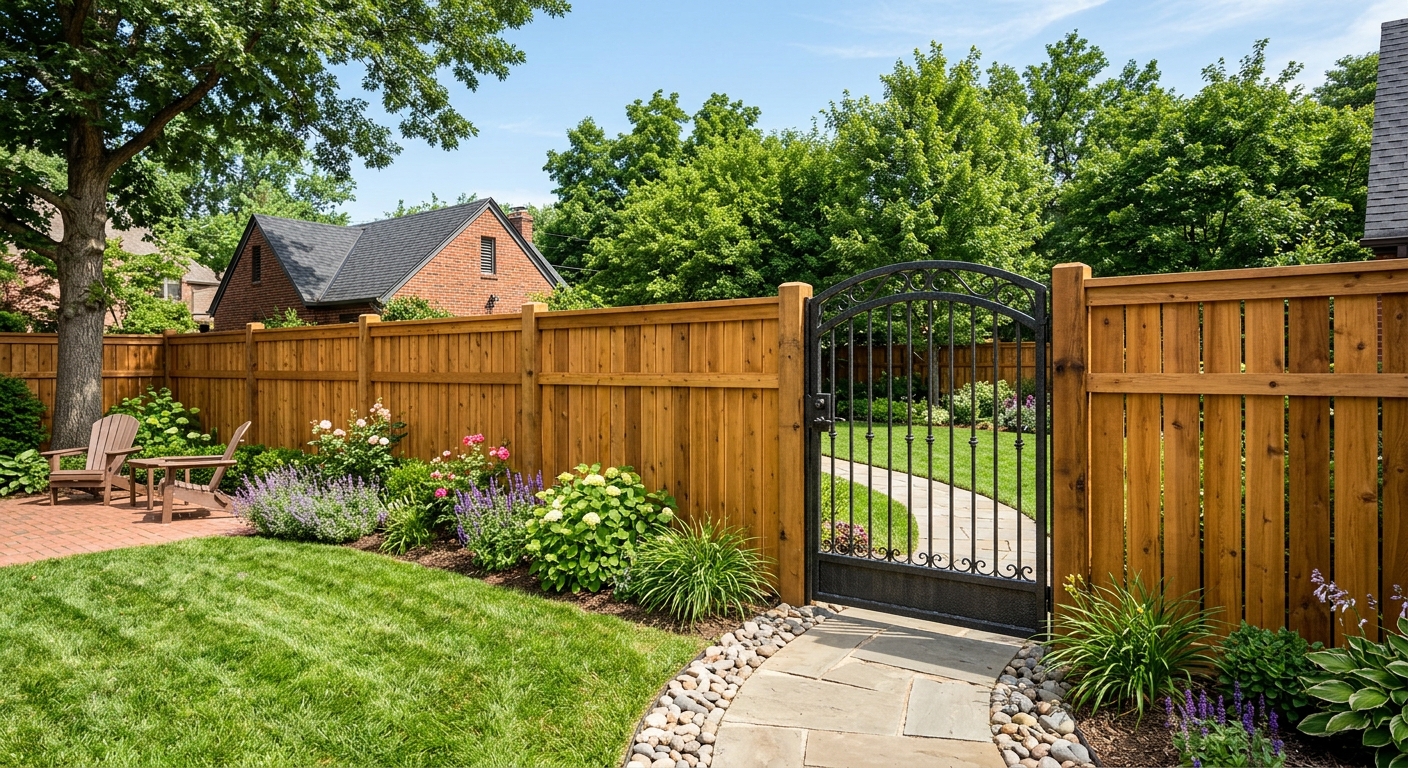
Fencing options and costs in Sardis
In Sardis, British Columbia, homeowners typically choose fencing based on privacy needs, yard drainage, and how long they want to avoid repairs. With a population of 10,010 in the 2021 Census (Statistics Canada, 2021 Census), demand is steady as more detached properties and established neighbourhood yards refresh their boundary lines. The Lower Mainland–Southwest market also has a consistent flow of installs in and around areas like Yale Road and the broader Sardis/Vedder corridor, where family lots are common and backyard access is frequent. That neighbourhood density matters: more repeat customers often means better scheduling and more competitive labour pricing.
Cost is also shaped by Lower Mainland–Southwest conditions. You get mild but not trivial frost and frequent wind exposure, plus wetter Fraser Valley soils that can increase the effort of post holes—contractors often set below the design frost depth to reduce heaving and use concrete for corner posts, gate posts, and privacy panels. Compared with a drier site, that adds material and labour, so two “same-length” fences can still land 10–30% apart depending on ground conditions and finish height. Finish grade and accessibility (driveway width, slope, and whether a crew can stage materials) also affects installed price.
Below is a practical cost-and-performance snapshot to help you compare common materials in Sardis, then we’ll break down what drives your quote up or down.
| Material |
Lifespan |
Maintenance |
Privacy Rating |
Price per Linear Foot |
| Pressure-treated pine (standard wood) |
10–15 years |
Annual inspection; stain/seal every 2–3 years |
Medium–High (depends on board spacing) |
$55–$95 |
| Cedar (natural rot resistance) |
20–30 years |
Stain/finish every 2–4 years to maintain colour and reduce weathering |
High (solid/close-board styles) |
$70–$115 |
| Vinyl / PVC (no-maintenance) |
25–35 years |
Rinse occasionally; inspect fasteners/bracing after storms |
High (solid privacy panels) |
$75–$130 |
| Chain-link (galvanized steel) |
20–40 years |
Minimal; rinse and touch up coating if damaged |
Low (consider slats for partial privacy) |
$30–$55 |
| Aluminum ornamental |
25–40 years |
Occasional wash; check brackets after impact |
Low–Medium (open pickets) |
$90–$170 |
| Composite / recycled material |
20–30 years |
Low; clean with mild detergent when needed |
High (solid boards) |
$85–$145 |
Prices are estimates only and vary by project scope, site access and material selection.
What affects the price of fencing in Sardis
In Sardis and across the Lower Mainland–Southwest, quotes for what looks like the “same fence” can vary by 30–50% because fencing is labour-heavy and site-dependent. Even when the material is identical, your total cost can swing with post-hole conditions, slope, and how many gates you need. That’s why one neighbour’s 6-foot privacy fence can land far lower (or higher) than another’s—contractors can’t control soil cohesion, rock, drainage, or access to the work zone.
Lower Mainland–Southwest frost and wind patterns influence installation depth and structural design. Published guidance often references a minimum embedment around 3 feet in much of Canada; in BC, contractors typically still go deeper than the bare minimum to handle mild but persistent frost and to reduce heaving. In practice, that often means setting posts about 4–6 inches below the local design frost depth and sometimes deeper if the soil is wet, which adds concrete and longer posts. Cold Ontario and Alberta examples put post depth closer to 1.5–2.0 m; Sardis is usually shallower than those regions, but wetter soils can push crews toward more excavation and more concrete setting to stabilise posts.
Two local examples that commonly raise costs in Sardis: (1) privacy fences on wetter ground where holes stay saturated require slower, more careful excavation and more concrete to lock alignment; and (2) sloped yards in the Sardis/Vedder corridor that force raked or stepped framing, which increases labour and rail cuts. Conversely, cost can drop when access is clean (no rock, easy staging) and you choose chain-link—installers often stay near the $30–$55 per linear foot band for simpler layouts, while wood and vinyl privacy can move into the $55–$130 per linear foot range depending on finish and bracing.
Homes built in different eras also affect prep: older yards often have buried fence remnants, uneven grade, and more removal work, which can add hours even before new posts go in.
| Price Factor |
Why It Matters |
Cost Impact |
| Fence length in linear feet |
Materials and labour scale directly with each foot plus end posts and rails |
Highest impact (often 50–70% of the total) |
| Post depth required |
Frost heaving risk drives embedment depth and increases hole excavation |
Can add 10–25% in wetter/heavier frost areas |
| Post setting method |
Concrete setting, gravel pack, or driven posts change both cost and time |
Concrete vs. gravel can shift 5–20%+ |
| Material choice |
Vinyl/PVC and cedar require different components and structural bracing |
Moves you between chain-link ($30–$55) and vinyl/wood bands ($55–$130) |
| Gate count and type |
Gates need heavier posts, hardware, and diagonal bracing |
Often adds 10–30% depending on single vs. double |
| Grade and terrain |
Slopes require stepped framing or custom racking |
Commonly +5–15% on difficult grades |
| Old fence removal and disposal |
Demo time, dump fees, and hauling logistics |
Can be +$500 to +$3,000 depending on condition/amount |
| Permit fees and survey / property line locate |
Some fence heights/locations trigger permitting; locating avoids encroachment work |
Usually smaller but can add +$200 to +$1,500 |
Permits & regulations in British Columbia
In British Columbia, fences above a height threshold—typically 2.0 m (6.5 ft) at the rear and about 1.0–1.2 m (3–4 ft) at the front or corner—often require a building permit. Requirements can differ depending on the fence’s location relative to the street and lot lines, so treat height and placement as two separate checks. In addition, all fence builds must respect property lines and municipal setback bylaws; if you place posts even slightly over a line, you can trigger disputes and costly rework.
Before digging any post hole in Sardis, call for utility locates through the appropriate one-call system (BC 1 Call in British Columbia). Then verify where your property pins are before installation. Many fence conflicts come from “assumed” boundaries—especially on older lots—so it’s smart to obtain a survey or a locate before a contractor starts excavation.
Shared fence ownership rules are governed by provincial line-fences legislation, so if you plan to tie into an existing fence or build on/near a shared boundary, confirm responsibilities for costs, maintenance, and how the boundary is defined.
Licence and coverage checks: ask the contractor for (1) proof they hold the required British Columbia licences/registration for the work they’ll perform, (2) a certificate of liability insurance naming you as additional insured where applicable, and (3) proof of workers’ compensation coverage (WSIB/WCB equivalent coverage in BC). In practice, you can verify licensing and good standing using the contractor’s online registry/registration lookup, and you should also receive a current clearance letter or evidence of coverage directly from the insurer/coverage provider. If they can’t produce documents quickly, that’s a red flag.
Choosing the right fence material for Sardis
Your best fence in Sardis depends on what you’re optimising for: privacy, low maintenance, budget, or lifespan. Pressure-treated pine is usually the budget option, but in our Lower Mainland–Southwest wet-and-windy rhythm it needs proactive staining/sealing every 2–3 years to prevent grey weathering and premature rot. Cedar costs more upfront yet offers natural rot resistance and a warmer look; it still benefits from finishing, but it generally holds up better than pine in damp conditions.
Vinyl/PVC is attractive for “set it and forget it” maintenance—no sanding or staining—and it suits privacy styles well. The trade-off is higher upfront cost and the need for proper post spacing and bracing so panels don’t flex during wind events; extreme cold can make some plastics brittle, so installers often pay close attention to hardware and installation technique. Chain-link is typically the most economical and long-lived (galvanized steel), but privacy is limited unless you add privacy slats or a secondary screen. Aluminum ornamental provides durability and a clean, rust-resistant finish, but it’s usually chosen for appearance and boundary definition rather than privacy. Composite/recycled boards are mid-to-high cost with low upkeep, and they can be a good option when you want a solid privacy look without frequent staining.
On post depth: even with milder BC frost, posts still need to be set below local frost depth to reduce heaving; in practice, that often means deeper holes than a “bare minimum” install and sometimes concrete set for corner and gate posts. Whether concrete is required depends on soil stability and the specific design, but wetter soils in the Fraser Valley frequently push crews toward concrete setting.
For a concrete example: if a pressure-treated pine privacy fence might land in the $55–$95 per linear foot band, upgrading to vinyl can move into the $75–$130 per linear foot range. That difference is most justified when you want fewer maintenance calls for stains/repairs over the next decade and when wind exposure means you prefer rigid, well-braced panels.
| Material |
Cold Tolerance |
Lifespan |
Annual Maintenance |
Best For |
Price Band |
| Pressure-treated pine |
Good with proper sealing; monitor for early rot in damp runs |
10–15 years |
Inspect; plan stain/seal every 2–3 years |
Budget-conscious privacy |
$55–$95 |
| Cedar |
Excellent rot resistance; colour fades without finish |
20–30 years |
Inspect; stain/finish every 2–4 years |
Premium natural look with durable rot resistance |
$70–$115 |
| Vinyl / PVC |
Very good; requires correct bracing and installation |
25–35 years |
Low—rinse/inspect fasteners after storms |
Low maintenance privacy |
$75–$130 |
| Chain-link |
Very good (galvanized steel) |
20–40 years |
Low—inspect and touch up coating if damaged |
Security with minimal upkeep |
$30–$55 |
| Aluminum ornamental |
Very good; won’t rust like steel fencing |
25–40 years |
Low—wash and check brackets |
Clean curb appeal with boundary definition |
$90–$170 |
| Composite / recycled |
Good; suited to freeze-thaw when installed properly |
20–30 years |
Low—clean when needed |
Solid privacy with minimal staining |
$85–$145 |
How to choose a fencing contractor in Sardis
Choosing the right fencing contractor in Sardis starts with verifying credentials and then confirming the details that directly affect your durability and final price. In British Columbia, ask for documentation for: (1) the required contractor licensing/registration for the scope they’ll perform, (2) liability insurance (and confirm the policy is current), and (3) workers’ compensation coverage evidence (WSIB/WCB coverage equivalent in BC). How to check: verify their licensing/registration through the relevant online lookup for BC, and request a current certificate of insurance plus proof/clearance of workers’ compensation coverage. Don’t accept “we’re covered” verbally—get the papers.
Next, get 2–3 itemised written quotes. A proper fence quote should separate labour vs. materials, include post spacing, post-setting method (concrete vs. gravel pack vs. driven posts), hardware/bracing details, and whether removal/disposal is included. Avoid lump-sum quotes that don’t state what happens if the soil is rock, the grade is uneven, or the existing fence can’t be removed cleanly.
Read the scope carefully for exclusions: Is permits/paperwork included if a fence height triggers a permit? Is disposal of the old fence included? Are surface restoration and final grade adjustments included? Warranty matters too—ask for the workmanship warranty length and whether the product/manufacturer warranty is provided in your name and whether it’s transferable if you sell the home. For payment, never pay more than 10–15% upfront; a holdback until completion and final inspection helps ensure crews finish the job to standard. Finally, request a start date and a completion estimate in writing so schedule delays don’t become budget surprises.
- Request BC licence/registration details and verify them via the online lookup.
- Ask for a current certificate of liability insurance before work begins.
- Confirm workers’ compensation coverage (BC equivalent) with proof/clearance.
- Get 2–3 itemised quotes with labour and material line items.
- Ensure the quote states post spacing, fence height, and exact panel style.
- Confirm post setting method: concrete vs. gravel pack vs. driven.
- Check whether disposal/demo is included if replacing an existing fence.
- Ask if a permit is required for your height and whether they pull it.
- Confirm warranty terms for workmanship and product supply; ask if transferable.
- Set payment milestones: small deposit, then progress payments, with a holdback.
- Request a written start date and completion target date.
- Ask how they handle surprise conditions (rock, saturated holes, buried remnants).
Red flags I see around Sardis include: contractors who can’t show insurance or workers’ compensation proof; quotes that don’t specify post depth or post-setting method; “cheap” all-in pricing that omits gate reinforcement or assumes no slope; and crews asking for large deposits before materials are ordered and permits/locates (if needed) are handled.
Frequently asked questions — fencing in Sardis
What is the cost per linear foot for fencing in Sardis?
In Sardis, typical installed fencing pricing generally follows the Lower Mainland–Southwest bands: chain-link is commonly around $30,XXX–$55,XXX per linear foot, wood is often mid-range around $55,XXX–$95,XXX, and vinyl/PVC privacy fencing typically lands around $75,XXX–$130,XXX. Your exact number depends on post depth, soil saturation, how many gates you need, and whether the fence is on a slope that requires raked or stepped panels. Wetter Fraser Valley soils can increase excavation time and how much concrete is used for corner and gate posts, which pushes quotes upward versus a dry, easy-access yard. If you want privacy, choose solid styles (and brace correctly) because wind exposure affects board and panel performance.
Should I repair or replace my old fence in Sardis?
Repair makes sense when the fence posts are solid, rails aren’t extensively rotted, and the problem is limited to a few boards or a minor sag. If posts are loose due to frost heaving, significant rot along the base, or repeated damage after storms, replacement is usually the better long-term value—especially for privacy fences where wind loads stress the structure. In wet yards near the Sardis/Vedder corridor, I commonly see wood fences fail at the post line first; if several posts are compromised, piecemeal repairs become expensive and short-lived. For chain-link, repairs can be cheaper if the framework is still straight. A typical vinyl or cedar replacement may cost more upfront (for example, vinyl often fits the $75,XXX–$130,XXX per linear foot band), but it can reduce maintenance and callbacks significantly over the next decade.
How do I handle a fence dispute with a neighbour in British Columbia?
Fence disputes are common when the boundary isn’t confirmed or when one neighbour’s fence work affects the shared structure. In British Columbia, start by locating the property line accurately—use your survey or have pins located before discussing changes. Document the condition with photos and dates, then communicate in writing (email is fine) outlining what each party believes the boundary and responsibilities are. If it’s a shared fence situation, provincial line-fences rules govern cost sharing and obligations, but the practical first step is still confirming where the fence should sit. Avoid removing your neighbour’s fence components without agreement, and don’t dig post holes until you have utility locates completed. A clean, factual approach usually resolves more disputes than arguing over aesthetics or “who built it first.”
What fence style offers the best wind resistance in Sardis?
In Sardis, wind can stress large surface areas, especially in open stretches and on lots with fewer wind breaks. For wind resistance, the key is structural design: correct post embedment, solid bracing at corners/ends, and proper tensioning for chain-link. For privacy fences, choose designs that maintain rigidity—proper rail attachment, close board spacing, and sturdy gate posts make a noticeable difference when gusts hit. Vinyl privacy can perform well if installed with correct bracing and post spacing (and if panels aren’t under-supported). Wood can also be strong, but it depends on board thickness, fastening, and whether the posts are set below frost depth to prevent movement. If you want maximum airflow with less wind pressure, chain-link or ornamental styles can be more wind-friendly, though they provide less privacy.
How much does a fence cost in Sardis?
Total fence cost depends on length, height, material, gate count, and site conditions like slope and soil moisture. As a quick budgeting guide, chain-link tends to sit around $30,XXX–$55,XXX per linear foot installed, while wood is often around $55,XXX–$95,XXX. If you’re building a privacy fence with vinyl/PVC, plan for $75,XXX–$130,XXX per linear foot installed. Multiply the linear footage by your per-foot band, then add realistic allowances for end/corner bracing, gate hardware, and any removal/disposal of the old fence. In Sardis’s Lower Mainland–Southwest soils, deeper post holes and more concrete setting can push costs higher than on a dry site, even if the fence length is the same.
How deep should fence posts be for Sardis's frost?
Even though Sardis is milder than many parts of Canada, contractors still set posts below the local design frost depth to reduce heaving during freeze-thaw cycles. A common approach is to set posts about 4–6 inches below the design frost depth and to avoid “minimum-only” embedment. In much of Canada, guidance often cites a minimum of roughly 3 feet, but in wetter Fraser Valley conditions contractors frequently go deeper and use more concrete—especially for corner posts, end posts, and gate posts where loads concentrate. The exact depth should be confirmed based on your soil type, fence height, and local conditions on your property. If your yard is saturated or has poor drainage, expect deeper holes and more stabilisation rather than just using a shallow embedment.