Fencing options and costs in Dawson Creek
Dawson Creek is a prairie-forward community in Northeast British Columbia, where many homeowners are settling into long-term yards and keeping outdoor living spaces usable year-round. With 58.2% of households owning their homes (Statistics Canada, 2021 Census), steady demand for new fencing and repairs is driven by property ownership and by the large share of single-detached houses—61.1% of dwellings—which typically means each home needs perimeter coverage and privacy screening. A lot of fencing work also clusters around older neighbourhoods where many properties were built before 1981, so fence lines often need rebuilding rather than minor patching (58.8% pre-1981 homes, Statistics Canada, 2021 Census).
In the Peace River districts around Fort St. John and Dawson Creek, frost penetration commonly exceeds 4 ft, and deep freeze plus seasonal ground movement affects both material choice and installation method. Posts often require setting 4–5 ft deep with concrete in belled footings to reduce frost heave. On exposed sites, wind is another cost driver: taller, solid privacy panels act like sails, so contractors may tighten post spacing, upsize posts, or suggest more wind-permeable designs. Install season is also tighter than in milder parts of BC, which can increase labour demand and machine time when augers or excavators are needed.
If you’re shopping options for the Westgate / Exhibition Park area and along the more open blocks toward the creek corridors, you’ll usually see these exposure factors reflected in quotes. Use the comparison below as a starting point for budgeting—then we can dial in your design based on your fence line length, grade, and wind conditions.
| Material |
Lifespan |
Maintenance |
Privacy Rating |
Price per Linear Foot |
| Pressure-treated pine (standard wood) |
12–18 years |
Stain/seal every 2–3 years |
High (solid pickets/rails) |
$80 – $130 |
| Cedar (natural rot resistance) |
18–25 years |
Light staining every 2–4 years |
High (solid boards) |
$95 – $145 |
| Vinyl / PVC (no-maintenance) |
20–30 years |
Wash as needed |
High (board/solid panel systems) |
$90 – $140 |
| Chain-link (galvanized steel) |
25–40 years |
Occasional rinse; check tension |
Low–Medium (not privacy) |
$55 – $90 |
| Aluminum ornamental |
25–40 years |
Wash occasionally |
Medium (ornamental, semi-open) |
$95 – $150 |
| Composite / recycled material |
20–30 years |
Minimal cleaning; inspect fasteners |
High (privacy boards) |
$105 – $160 |
Prices are estimates only and vary by project scope, site access and material selection.
What affects the price of fencing in Dawson Creek
In Dawson Creek and the broader Northeast BC Peace region, two homeowners can receive quotes that differ by 30–50% for the “same” fence length and height because installation requirements are driven by ground conditions and wind exposure—not just the material on the brochure. In BC’s Northeast, deep frost and strong winter winds push installers toward deeper post setting, tighter spacing, and more hardware. In milder parts of the province, posts can sometimes be set less deeply and labour time is shorter, so the same style may cost less.
Frost line depth is a major driver. For Dawson Creek’s freeze conditions, posts typically must go 4–6 inches below the design frost depth, and in practice that often means 4–5 ft deep with concrete in belled footings. That increases both material cost (longer posts and more concrete) and labour time (excavation/augering and careful setting). Wind exposure on open prairie-style lots also matters: to keep fences standing, contractors tighten post spacing and may upsize posts. Where solid privacy panels are requested on exposed lines, expect heavier concrete bases and upgraded framing—this is one reason wood and vinyl can land on the higher end of the local $80–$130 and $85–$140 per linear foot bands.
Concrete examples from Dawson Creek projects: (1) a privacy fence on a flat, open yard toward a field often needs closer post spacing and heavier top rails, which raises costs even with the same total footage; (2) a boundary line on a sloped lot may require stepped or raked grading and additional framing, increasing labour versus a level backyard; (3) removing an old fence tied into buried debris or old concrete can add disposal fees and extra excavation time, pushing the total toward the upper price range.
Housing age also influences scope. With many homes built before 1981 (58.8% of dwellings, Statistics Canada, 2021 Census), older fence lines may sit on imperfect layout or deteriorated footings, so rebuilds often cost more than “like-for-like” replacements. Next, use the checklist table to understand exactly which line items move your quote.
| Price Factor |
Why It Matters |
Cost Impact |
| Fence length in linear feet |
The single biggest driver of labour, posts, and panels. |
Directly scales total price; small length changes add up fast. |
| Post depth required |
Frost heave protection depends on correct embedment. |
Deep concrete settings add material and hours; can shift price 10–25%+. |
| Post setting method |
Concrete vs gravel pack vs driven posts changes stability. |
Concrete is typically higher cost but better for frost movement. |
| Material choice |
Vinyl hardware and steel reinforcement cost more; cedar/wood depends on durability. |
Can move you between bands (e.g., $55–$90 chain-link vs $85–$140 vinyl). |
| Gate count and type |
Gates require stronger frames, hinges, latches, and sometimes engineered support. |
Each gate adds labour and hardware; double drive-through gates are usually the biggest jump. |
| Grade and terrain |
Slopes may require stepping, racking, or additional framing. |
Typically increases labour 5–20% depending on slope complexity. |
| Old fence removal and disposal |
Demolition, hauling, and possible concrete breakup take time. |
Often adds a separate charge; can add 5–15% to the overall project. |
| Permit fees and survey / property line locate |
Verification reduces risk of encroachment disputes. |
Varies by situation; locate/survey can add cost but prevents costly rework. |
Permits & regulations in British Columbia
In British Columbia, fence rules are typically tied to height thresholds and local bylaws. As a practical homeowner guide in Dawson Creek, fences above approximately 2.0 m (6.5 ft) at the rear and about 1.0–1.2 m (3–4 ft) at the front or corner often trigger a building permit requirement. Setbacks also matter: all fences must respect property lines and municipal setback bylaws. Your contractor should clarify whether your design falls under permit/inspection. If you’re planning anything tall or close to a street corner (for visibility), confirm early—changes later usually mean added labour and materials.
Before you dig any post hole, call for utility locates. In BC, the call is made through BC 1 Call so buried services can be marked. Even if you’ve lived there for years, older lines and irrigation or power runs can be present. It’s also wise to obtain a survey or locate your property pins before installation, especially if you’re replacing an older fence line that may not be perfectly aligned.
Shared fence ownership rules fall under BC’s line fence concepts, and disputes often come down to who maintains what and where the boundary sits—so good documentation matters.
To verify your contractor in BC, ask for: (1) proof of their BC licence/registration where applicable for their scope, (2) a certificate of liability insurance with current dates and sufficient limits, and (3) confirmation of workers’ coverage (WSBC/WCB) if they have employees. Check online for licence status (where your contractor can provide a reference number), verify the COI is from an insurer and matches the company name, and keep a clearance letter if they have it. A professional estimator should provide these before work starts.
Choosing the right fence material for Dawson Creek
Choosing a fence in Dawson Creek is mostly about balancing privacy, maintenance, budget, and how materials behave through deep freeze and wind. Northeast BC often has winter temperatures that stress fasteners and can expose weaknesses in post setting, so a “cheap-looking” choice can cost more if the install details aren’t built for frost movement. Pressure-treated pine is usually the budget starting point, but it typically needs staining or sealing every 2–3 years to avoid grey weathering and to keep the wood performance strong in our wet spring/fall cycle. Cedar looks better longer because of its natural rot resistance, but it still needs periodic maintenance to preserve colour and reduce checking around fasteners.
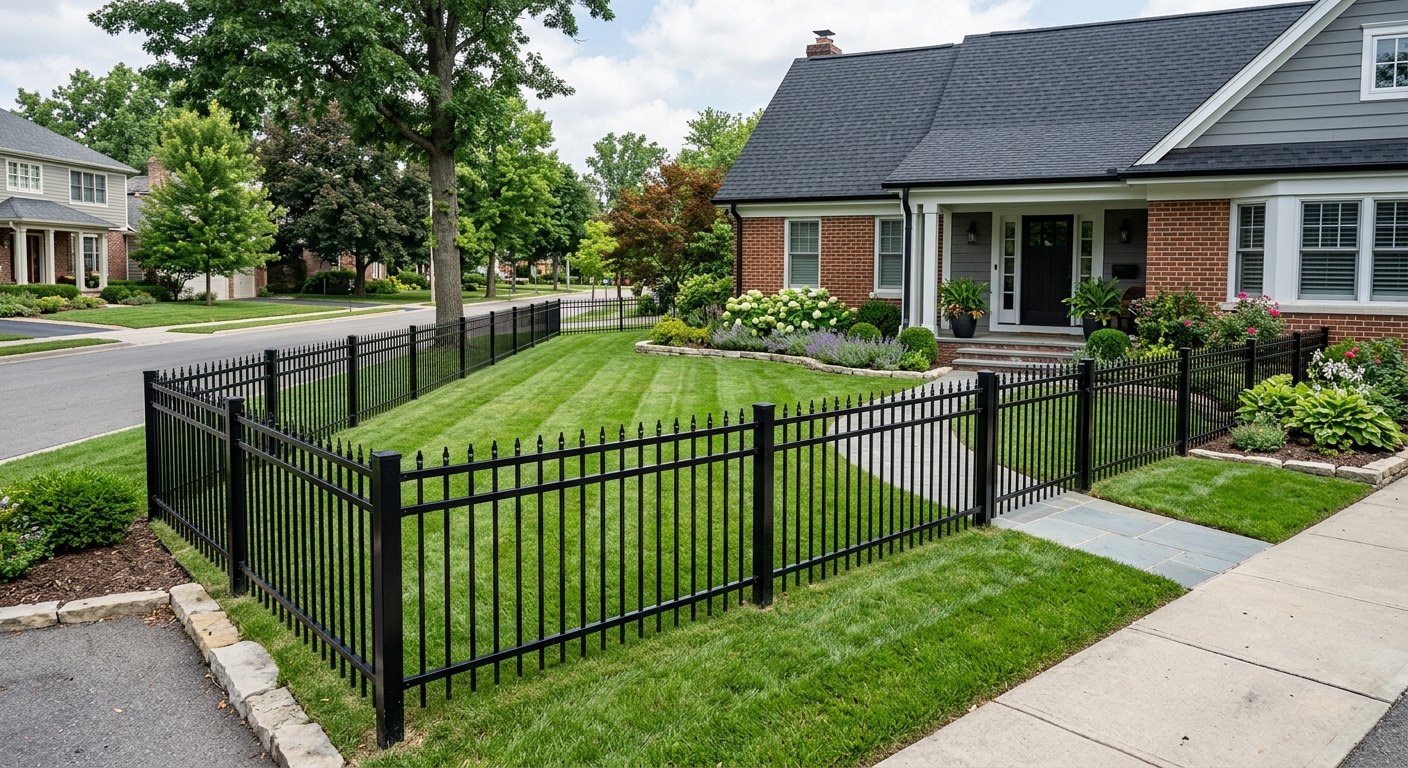
Vinyl/PVC is popular for low maintenance and a clean look. In Dawson Creek cold snaps, vinyl can become brittle if the system is not installed correctly or if panels are unsupported by a solid post and hardware design; however, properly installed vinyl can still be an excellent long-term option. Chain-link has the lowest barrier cost and tends to last a long time, but it doesn’t provide real privacy. Aluminum ornamental offers durability and a rust-resistant look with good wind pass-through, which is helpful on exposed yards, but it won’t block views the way solid boards do.
Post depth is non-negotiable in Northeast BC. With frost penetration commonly exceeding 4 ft, you should expect concrete-set posts (often with bell-shaped footings) and correctly sized posts. This is especially important for heavier privacy styles that trap wind. Snow load and wind gusts can stress rails and tension points, so we design the framing to avoid wobble during freeze-thaw cycles.
Concrete example: if your budget is tight, switching from chain-link at roughly $55–$90 per linear foot to a cedar privacy fence at about $95–$145 per linear foot can be justified if you’re prioritizing visibility control on a backyard line where neighbours are close. But if you mainly want boundary definition and security, chain-link often delivers the best “dollars per year” value without fighting the wind on solid panels.
| Material |
Cold Tolerance |
Lifespan |
Annual Maintenance |
Best For |
Price Band |
| Pressure-treated pine |
Good with proper post setting and sealed hardware areas |
12–18 years |
Inspect and touch up 0–2 times; full stain/seal every 2–3 years |
Best value for privacy when you’re willing to maintain |
$80 – $130 |
| Cedar |
Excellent rot resistance in wet seasons |
18–25 years |
Light staining/sealer every 2–4 years |
Premium appearance with long-term durability |
$95 – $145 |
| Vinyl / PVC |
Very good if installed with correct spacing and hardware |
20–30 years |
Wash as needed (typically seasonal) |
Low maintenance and consistent look |
$85 – $140 |
| Chain-link |
Very good; minimal warping in cold |
25–40 years |
Occasional rinse and check tension posts |
Security, pets, and long-term economy |
$55 – $90 |
| Aluminum ornamental |
Excellent; corrosion resistant for BC winters |
25–40 years |
Wash occasionally; check fit and gate latches |
Wind-friendly appearance with moderate visibility control |
$95 – $150 |
| Composite / recycled |
Good; performance depends on compatible framing and fasteners |
20–30 years |
Minimal cleaning; inspect fasteners |
Privacy with reduced maintenance |
$105 – $160 |
How to choose a fencing contractor in Dawson Creek
Choosing a fencing contractor in Dawson Creek starts with verification. In British Columbia, you should confirm their status for the work they’re doing, and that they carry liability insurance and the proper worker coverage (WSBC/WCB) if they employ workers. Ask for a current certificate of liability insurance showing the insured party matches the company on the quote, plus proof of workers’ coverage. Where to look: request the licence/registration reference from the contractor, verify it using the online registry you can access, and review the COI directly—don’t rely on screenshots that can be outdated. If they can’t provide a clearance letter or current documents on request, that’s a practical red flag.
Next, require 2–3 itemised written quotes. You want labour and materials broken out (posts/footings, panels or rails, gates, hardware, concrete, and disposal). Make sure the scope spells out what’s included and excluded: permit pull responsibility, whether old fence removal is included, whether site grading is part of the job, and how they handle buried utilities marks. In Northeast BC, footings and correct embedment drive performance—so a quote should clearly state post depth and footing method.
Warranty matters too. Ask for the workmanship warranty length and whether it covers labour for repairs, separate from the product/manufacturer warranty. Confirm whether any warranty is transferable if you sell your home. For payment, never pay more than 10–15% upfront—holdback until the fence is fully complete and final walkthrough items are corrected.
Finally, insist on a written start date and estimated completion timeline that fits the realities of our freeze/thaw install conditions.
- Provide licence/registration reference number(s) and verify online before signing.
- Show current liability insurance COI with matching contractor/company name.
- Confirm WSBC/WCB coverage if they have employees or subcontract labour.
- Use itemised quotes: labour, materials, concrete, gates, hardware, disposal.
- Clearly specify post depth and footing method (concrete, bell footings, etc.).
- Confirm post spacing for wind-exposed yards (especially privacy fences).
- State whether permit pull is included or if the homeowner must apply.
- Spell out property line locate/survey responsibility.
- List how they handle sloped yards (stepped vs raked sections).
- Include an explicit gate plan: swing direction, latch type, and hardware grade.
- Confirm warranty terms: workmanship vs product warranty, and coverage limits.
- Payment schedule: no large upfront deposits; define the holdback percentage.
Concrete red flags to watch for in Dawson Creek: (1) a quote that does not state post depth or footing method despite deep frost requirements; (2) refusing to show proof of liability insurance or workers’ coverage (WSBC/WCB) when asked; (3) only offering a lump-sum with no breakdown for gates, concrete, or disposal; (4) promising “same-week” installs in peak winter conditions without acknowledging frozen-ground constraints; (5) skipping a site walk and giving measurements based purely on guesses or maps.
Frequently asked questions — fencing in Dawson Creek
What fence style offers the best wind resistance in Dawson Creek?
In Dawson Creek and nearby Peace River districts, wind exposure makes “sail effect” a real issue. Solid privacy panels (especially tall wood or vinyl) can catch gusts, so they often need tighter post spacing, heavier framing, and properly engineered concrete footings. If your yard is open and gusty, the most wind-resistant styles are usually those that let some air through—chain-link and aluminum ornamental typically perform better because wind can pass. If you prefer privacy, you can still reduce wind stress by using staggered boards, a ranch-rail style with wider spacing, or by choosing a solid design with upgraded posts and deeper settings. A properly installed fence—regardless of material—will usually outlast a “cheaper” fence that’s under-built for frost and wind.
How much does a fence cost in Dawson Creek?
Costs in Dawson Creek generally land in the Northeast BC range based on material and how demanding the ground is. Typical installed pricing per linear foot is around $80–$130 for pressure-treated wood and about $85–$140 for vinyl/PVC. Chain-link often comes in lower at about $55–$90 per linear foot, while aluminum commonly sits roughly $95–$150 per linear foot. Your total depends on linear footage, number of gates, post depth requirements (frost), and whether you need concrete belled footings. For example, a longer privacy run with gates and concrete-set posts will usually price toward the middle to higher end of the wood or vinyl bands. If your site is difficult—sloped yard, poor access, or old fence removal—expect the final number to reflect that scope too.
How deep should fence posts be for Dawson Creek's frost?
For Dawson Creek’s Northeast BC freeze conditions, posts typically need to be set about 4–6 inches below the design frost depth to reduce heaving. In practical terms, contractors often set posts 4–5 ft deep here, using concrete and often belled footings for stability. Deeper embedment is what prevents seasonal ground movement from lifting or tilting the fence line. If someone proposes shallow post holes or gravel-only settings without discussing frost strategy, that’s a durability concern. The exact depth can depend on soil conditions and the fence design, but the key is to build for deep frost penetration and not just “standard” distances that might work in milder BC areas. A good quote should explicitly state post depth and footing method.
Wood vs vinyl vs aluminum fence — which is best?
“Best” depends on your priority: privacy, maintenance, and wind performance. Wood (pressure-treated pine or cedar) gives strong privacy when installed with correct post depth and solid framing, but it typically needs maintenance—staining/sealing every 2–3 years for treated pine is common to slow weathering. Vinyl/PVC is usually the lowest-maintenance for appearance, but you still need correct hardware and post support so panels don’t flex in cold. Aluminum ornamental is often a top choice for wind-exposed yards because it’s more open and generally resists rust well; however, it’s not designed to provide full privacy. If you’re comparing budgets, wood can run around $80–$130 per linear foot, vinyl around $85–$140, and aluminum around $95–$150. Many homeowners in Dawson Creek choose aluminum for front/side lines exposed to gusts and use wood or vinyl where privacy matters most.
Do I need a permit to build a fence in British Columbia?
In British Columbia, permits can be required depending on fence height and location relative to the property line. As a general guideline used during planning, fences above about 2.0 m (6.5 ft) at the rear and around 1.0–1.2 m (3–4 ft) at the front or corners often trigger a building permit requirement. You also must follow property lines and municipal setback bylaws. Before digging, you should always arrange utility locates through the BC 1 Call process. For Dawson Creek homeowners, the safest approach is to ask the contractor to confirm whether your proposed height and placement require a permit and whether they will pull it (or if you’ll need to). If the existing fence is already over threshold, replacing it “as-is” may still require checking the same height/location rules.
How long does a wood fence last in Dawson Creek?
A well-built wood fence can last 12–18 years for pressure-treated pine and roughly 18–25 years for cedar in Northeast BC, assuming correct post setting for deep frost and routine maintenance. In Dawson Creek, the biggest factors are whether posts are set deep enough (often 4–5 ft with concrete) and whether the fence is designed to handle wind—wobbly rails and leaning posts can shorten lifespan even if the wood is good. Maintenance matters: pressure-treated pine commonly needs staining or sealing every 2–3 years to slow weathering, while cedar typically needs periodic treatment to preserve performance and appearance. If you have an older fence line (many homes here are pre-1981, Statistics Canada, 2021 Census), replacements often reveal rot at low points and weakened posts due to past footing methods. That’s why installation details are just as important as the wood type.