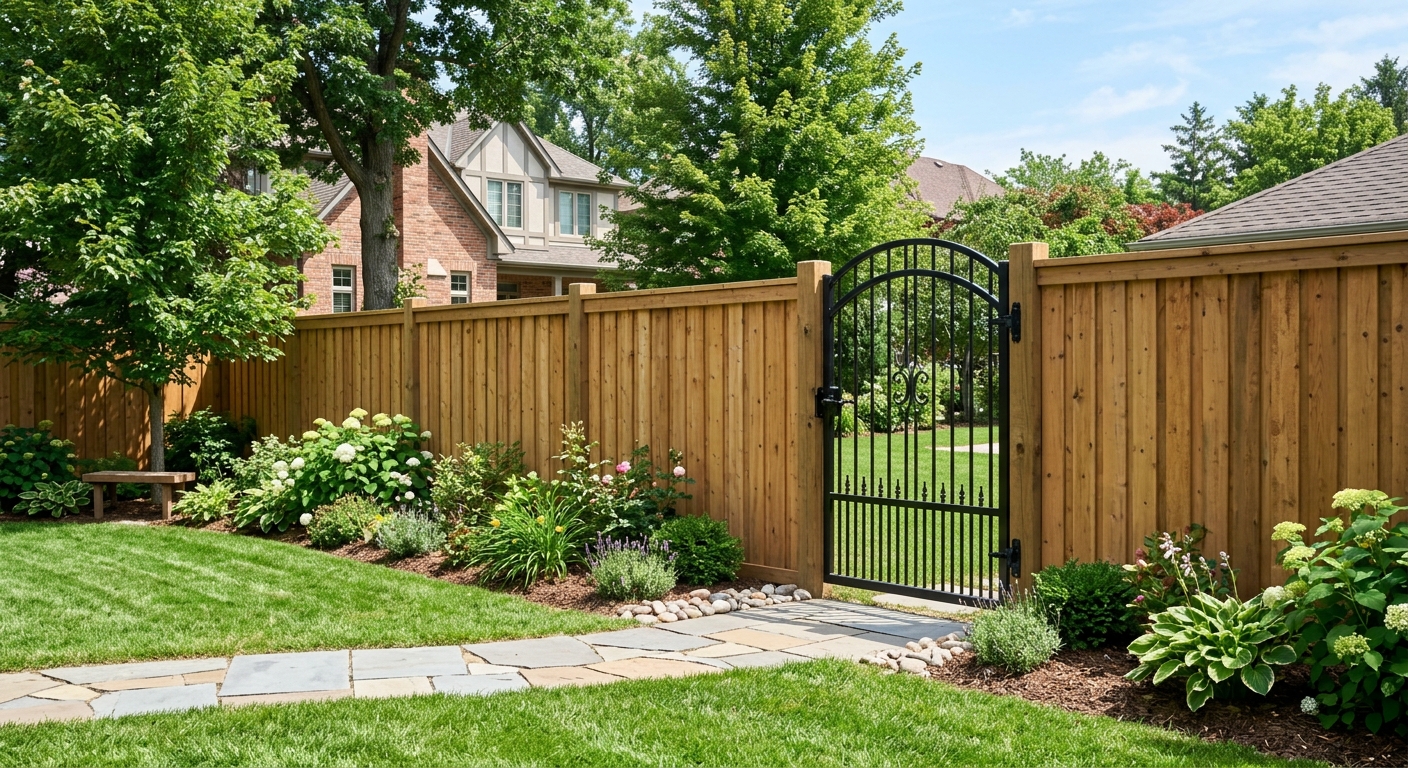
Fencing options and costs in Lantzville
Lantzville is a small community on Vancouver Island, with many properties suited to backyard upgrades—and fencing demand follows that home base. With 94.1% of local dwellings being single-detached homes and 87.2% of households owning, you’ll see fences added or replaced as homeowners settle into their properties, refresh boundaries, or improve privacy for families and pets. (Statistics Canada, 2021 Census.)
In the Vancouver Island and Coast region, fencing pricing is shaped by moderate coastal frost and frequent wind exposure. Frost depth is typically shallow (about 45–60 cm), but contractors still set posts below frost to prevent heaving and long-term leaning—commonly burying fence posts around 75–90 cm in residential installs. Wet winters and coastal air also increase the risk of rot and fast corrosion if hardware and materials aren’t suited to salt-laden conditions. Labour can be higher where there are slopes, rock pockets, or saturated soils that slow excavation and alignment.
Local supply and scheduling also affect the final number: during peak summer install windows, crews can be booked out and changeover time increases. Areas where fencing work is especially in demand include the beachfront-adjacent neighbourhoods near the Malaspina area and the broader residential streets around Lantzville’s town core, where lot lines and wind corridors make fence choices more consequential.
Below are common fence options and realistic cost bands for typical residential projects in Lantzville. Use the table to compare apples-to-apples, then confirm your site conditions with a detailed quote.
| Material |
Lifespan |
Maintenance |
Privacy Rating |
Price per Linear Foot |
Price Range |
| Pressure-treated pine (standard wood) |
10–15 years |
Stain or seal every 2–3 years; re-stain as needed |
High (solid panels) |
$55–$85 |
$3,800–$6,200 |
| Cedar (natural rot resistance) |
15–25 years |
Seal or stain every 2–4 years (helps appearance and longevity) |
High (solid panels) |
$70–$105 |
$4,900–$8,000 |
| Vinyl / PVC (no-maintenance) |
20–30 years |
Rinse/wash as needed; no painting |
Medium to High (depending on panel style) |
$70–$110 |
$4,700–$9,200 |
| Chain-link (galvanized steel) |
20–35 years |
Minimal; periodic wash for salt and debris |
Low (open mesh) |
$35–$60 |
$2,600–$4,700 |
| Aluminum ornamental |
25–40 years |
Wash as needed; occasional touch-ups for minor scuffs |
Low to Medium (pickets) |
$80–$140 |
$5,800–$10,900 |
| Composite / recycled material |
20–35 years |
Low; rinse and inspect fasteners |
High (solid boards) |
$90–$145 |
$6,300–$11,800 |
Prices are estimates only and vary by project scope, site access and material selection.
What affects the price of fencing in Lantzville
Fence quotes for the same basic length can vary by 30–50% on Vancouver Island and across British Columbia because the “hidden” work changes. Two contractors might both quote a 60-foot run, but one may allow for concrete footings, haul-away, and post-depth adjustments for wet, clay-rich pockets while the other assumes easier soil. Labour timing also matters: in peak season, crew availability and travel between Nanaimo-area jobs can increase the installed cost.
Post depth is the biggest technical driver. Even though coastal frost is relatively shallow, posts still must be set below frost to prevent heaving and long-term leaning—commonly 4–6 inches (10–15 cm) below the design frost line. In practical Lantzville residential terms, that usually means about 75–90 cm of burial. Compared with milder or better-drained sites, saturated soil can require more concrete setting to stabilize the post, which raises both material and disposal costs.
Wind exposure affects panel design and post spacing. While the Prairies often demand heavier spacing due to more intense wind regimes, coastal BC still has persistent wind that can flex solid panels—so you may see closer post spacing or heavier rails for solid privacy fences. Wet coastal conditions also accelerate wood rot if treatment and hardware aren’t marine-ready, pushing some homeowners toward cedar, vinyl, or composite.
Real examples that commonly swing the number in Lantzville: (1) a sloped backyard that needs raked/stepped sections can add labour and materials for custom alignment; (2) removing an old fence can add disposal and recycling fees; (3) salt exposure near wind corridors can justify powder-coated or galvanized components.
As a ballpark, a typical pressure-treated wood job may land in the $55–$85 per foot band, while vinyl often starts higher in the $70–$110 per foot band—especially where post setting uses concrete footings and the fence line requires more alignment work.
| Price Factor |
Why It Matters |
Cost Impact |
| Fence length in linear feet |
Most pricing scales directly with feet installed, rails, fasteners, and posts. |
High (largest driver) |
| Post depth required |
Frost depth determines hole depth and post length to reduce heaving. |
Medium to High |
| Post setting method |
Concrete vs. gravel pack vs. driven posts changes materials and labour time. |
High where concrete is required |
| Material choice |
Vinyl vs. cedar vs. chain-link changes material cost and installation complexity. |
High |
| Gate count and type |
Drive-through (double) gates require heavier frames, hinges, and hardware. |
High |
| Grade and terrain |
Slopes require stepped or raked panels, adding fabrication and measuring time. |
Medium to High |
| Old fence removal and disposal |
Haul-away, disposal fees, and dealing with buried remnants add time. |
Medium |
| Permit fees and survey / property line locate |
Required docs prevent encroachment and reduce rework. |
Low to Medium (site dependent) |
Permits & regulations in British Columbia
In British Columbia, fences can require a building permit depending on height and location. As a practical rule of thumb, a permit is often triggered for fences above about 2.0 m (6.5 ft) at the rear and about 1.0–1.2 m (3–4 ft) at the front or corner, but the exact threshold is tied to local bylaw rules and where the fence sits on your lot. Regardless of permit status, all fences must respect property lines and any municipal setback requirements.
Before any post hole is dug, call for utility locates. In BC, this is typically arranged through BC 1 Call, and in some areas you may also hear contractors reference utility location coordination; the goal is the same—avoid damaging buried services. Also verify your property line using a survey or property-pin locate before installing posts, especially where older fences may not match modern property boundaries.
Step-by-step, homeowners in Lantzville can verify a contractor properly: (1) confirm they’re licensed/registered for the work they’re performing (check the relevant online registry for your trade category); (2) request a certificate of insurance showing liability coverage; (3) ensure workers are covered under the applicable provincial workplace coverage program; and (4) ask for a clear letter of good standing or coverage verification if they’re subcontracting. If any of these items aren’t provided promptly, treat it as a serious red flag before work begins.
Choosing the right fence material for Lantzville
Choosing a fencing material in Lantzville should start with how you use the space: privacy from neighbours and wind, low maintenance, budget control, and how long you want the fence to last in wet coastal weather. Pressure-treated pine is often the lowest upfront option, but it typically needs staining or sealing every 2–3 years to slow grey weathering and protect against rot. Cedar offers better natural rot resistance and a look many homeowners prefer; however, it still benefits from periodic sealing, particularly with salt exposure and persistent moisture.
Vinyl/PVC is popular for “set it and forget it” maintenance. In coastal BC, it performs well against moisture and corrosion, but very cold snaps can make some vinyl brittle; proper installation (including correct expansion gaps and rail alignment) matters. Chain-link is the longest-living budget choice and resists corrosion when properly galvanized, but it doesn’t provide privacy and often needs screening plants for privacy. Aluminum ornamental won’t rust and has a clean, modern finish, but it’s lower privacy unless you add privacy screening.
Post depth is similar across materials because it’s a frost-heave issue, not a wood vs. vinyl issue. With coastal frost lines around 45–60 cm, many Lantzville installs bury posts around 75–90 cm to keep them below frost movement. Concrete-set posts are common on heavier fences, taller privacy styles, gates, or where soils are wet/clayey; that extra foundation work is usually justified because it reduces future leaning and replacement risk.
For wind and snow load, solid privacy fences typically need sturdier rails and often closer post spacing than open styles. For example, if a cedar privacy fence comes in at the higher end of the wood band while vinyl is in the $70–$110 per foot range, the vinyl premium is most justified when you want minimal maintenance and consistent appearance through coastal wet winters.
| Material |
Cold Tolerance |
Lifespan |
Annual Maintenance |
Best For |
Price Band |
| Pressure-treated pine |
Good (with proper sealing) |
10–15 years |
Inspect; light cleaning; stain every 2–3 years |
Budget privacy fences with willingness to maintain |
$55–$85 |
| Cedar |
Good (still seals matter) |
15–25 years |
Inspect; seal/stain every 2–4 years |
Natural look and better rot resistance |
$70–$105 |
| Vinyl / PVC |
Good (installation quality affects brittleness risk) |
20–30 years |
Wash/rinse as needed; no staining |
Low-maintenance privacy with coastal moisture resistance |
$70–$110 |
| Chain-link |
Excellent |
20–35 years |
Minimal; periodic wash |
Security/containment, pet runs |
$35–$60 |
| Aluminum ornamental |
Excellent |
25–40 years |
Minimal; occasional cleaning |
Curb appeal with moderate visibility |
$80–$140 |
| Composite / recycled |
Very good (varies by product) |
20–35 years |
Low; inspect fasteners and clean |
Long-term privacy with reduced upkeep |
$90–$145 |
How to choose a fencing contractor in Lantzville
When you’re hiring a fencing contractor in Lantzville, start by verifying the basics: contractor licensing where applicable, liability insurance, and workplace coverage (WSIB/WCB). To check liability, ask for a current certificate of insurance—review the named insured, coverage limits, and effective dates. For workplace coverage, request proof of coverage or an up-to-date clearance/coverage letter if subcontractors are involved. Don’t accept “it’s covered” as a verbal assurance; ask for the documents before the first post is set.
Next, get 2–3 itemised written quotes. You want a line-by-line breakdown showing labour, materials, post setting (including concrete quantity where used), gate hardware, and any extras like removal/disposal and site prep. Avoid lump-sum quotes with vague scopes. Ask whether permit pulling is included if it’s needed for the fence height and placement, and whether property-line locating or survey verification is included or billed separately.
Warranty matters: confirm a workmanship warranty length (for posts, alignment, and panel stability) and the manufacturer warranty for materials like vinyl slats, rails, or aluminum finish. Ask whether the warranty is transferable if you sell the home.
Finally, keep payment sensible. For most residential fencing, don’t pay more than 10–15% upfront, and hold back a portion until the job is complete, cleaned up, and any gate adjustments are finished. Require a start date and a completion estimate in writing, so weather delays can be managed rather than turned into “unknowns.”
- Provide written scope with material brands/models (not just “cedar” or “vinyl”).
- List post setting method (concrete footings vs gravel pack vs driven) and hole depth assumptions.
- Confirm rail and post spacing for wind exposure and solid panel stiffness.
- Identify gate hardware grade (hinges, latches, reinforcement) and whether it’s galvanized/powder-coated.
- Include disposal/removal pricing if replacing an old fence.
- Show whether utility locates are handled/confirmed before digging.
- Provide proof of liability insurance (and coverage limits) before starting.
- Provide workplace coverage proof/clearance and confirm subcontractor coverage.
- Include permit responsibility (who applies, who pays, and what happens if it’s not approved).
- Specify warranty terms for workmanship and product, including start dates.
- Use a payment schedule with a holdback until final walk-through.
- Schedule a pre-install site meeting to mark the exact line and confirm elevations on slopes.
Red flags I see in Lantzville: contractors who won’t show insurance documents, quotes that exclude post setting details, “finish in a day” promises for long privacy runs without excavation time, vague warranty language, and requests for large upfront payments before permits/locates are confirmed.
Frequently asked questions — fencing in Lantzville
What fence style offers the best wind resistance in Lantzville?
In Lantzville and across the Vancouver Island and Coast region, wind is persistent, especially around open lots. For wind resistance, the biggest factor is how the fence handles pressure: solid privacy fences catch more wind and can flex more without adequate bracing, closer post spacing, and heavier rails. An open design like chain-link or properly designed aluminum ornamental vents wind more and usually performs better in high gust conditions. If you want privacy but still need wind stability, consider a “lattice/board with vents” style or thicker rails with reinforced posts and correct post depth (typically around 75–90 cm on many residential Lantzville installs). Pricing often moves accordingly—solid privacy styles commonly align closer to wood’s $55–$85 or vinyl’s $70–$110 per foot bands depending on materials and post setting.
How much does a fence cost in Lantzville?
Fence costs in Lantzville depend mainly on linear feet, post setting, gates, and whether you need disposal and site prep. As a practical guide, wood installation commonly falls in the $55–$85 per linear foot band, while vinyl/PVC often lands in the $70–$110 range. Chain-link is typically the lowest cost option at about $35–$60 per foot, and aluminum ornamental is usually higher at $80–$140 per foot due to materials and installation complexity. Coastal soil can increase labour because posts must be set below frost to reduce heaving, and saturated spots may require concrete footings. That’s why two similar-length projects can differ by a lot—one yard may be rock-free and easy to dig, while another has clay pockets or slopes that require stepped panels and extra measuring.
How deep should fence posts be for Lantzville's frost?
Even with coastal BC’s shallow frost (often roughly 45–60 cm), fence posts still need to be below frost movement to prevent heaving and leaning over time. In Lantzville residential work, a common practice is burying posts about 75–90 cm deep, which gives a buffer below the expected frost line. The goal is to set posts roughly 4–6 inches below the design frost depth, but final depth depends on your site conditions, soil moisture, and fence height/weight. Heavier privacy fences and gates often benefit from concrete setting, especially where soils are wet or disturbed. A good contractor will explain their post depth assumptions in the written quote so you can compare bids accurately, not just look at the material price.
Wood vs vinyl vs aluminum fence — which is best?
“Best” depends on your priorities. Wood (especially pressure-treated pine) can be the best value if you’re comfortable maintaining it—plan for staining or sealing every 2–3 years to protect against coastal moisture and grey weathering. Cedar improves rot resistance, but still benefits from periodic sealing. Vinyl/PVC is usually the best choice for low maintenance; it resists moisture and corrosion, and you typically don’t need painting, but installation details matter in cold snaps. Aluminum ornamental is excellent for longevity and corrosion resistance, but it offers lower privacy unless you add screening. In Lantzville pricing terms, wood commonly aligns with $55–$85 per foot, vinyl with $70–$110, and aluminum with $80–$140—so if you’re comparing comfort vs upkeep vs lifespan, the difference often makes sense when you match the material to how much time you want to spend maintaining it.
Do I need a permit to build a fence in British Columbia?
In British Columbia, some fences require a permit, especially when they exceed typical height thresholds—often around 2.0 m (6.5 ft) at the rear and about 1.0–1.2 m (3–4 ft) at the front or corner. Even when a permit isn’t required, fences must respect property lines and municipal setback bylaws. In Lantzville, I recommend you verify the local bylaw requirements before ordering materials, particularly for taller privacy fences or corner lots. Also remember the practical steps: arrange utility locates before digging and confirm property pins/survey information so you don’t build over the wrong line. When you request a quote, ask whether permit pulling is included or billed separately and get the responsibility in writing.
How long does a wood fence last in Lantzville?
A properly built wood fence in Lantzville typically lasts about 10–15 years for pressure-treated pine, while cedar often ranges 15–25 years depending on maintenance and exposure. Coastal wet winters can accelerate rot if boards, fasteners, and post setting aren’t done correctly—especially where water sits at the base or posts aren’t below frost movement. The biggest longevity factors are correct post depth (commonly around 75–90 cm) and using appropriate treatments/hardware for the coastal environment. Maintenance also matters: most wood fences need staining or sealing roughly every 2–3 years for pressure-treated pine (cedar often every 2–4 years). If you want longer life with less upkeep, that’s often where vinyl (often $70–$110 per foot) or composite becomes a cost-effective trade-off over time.