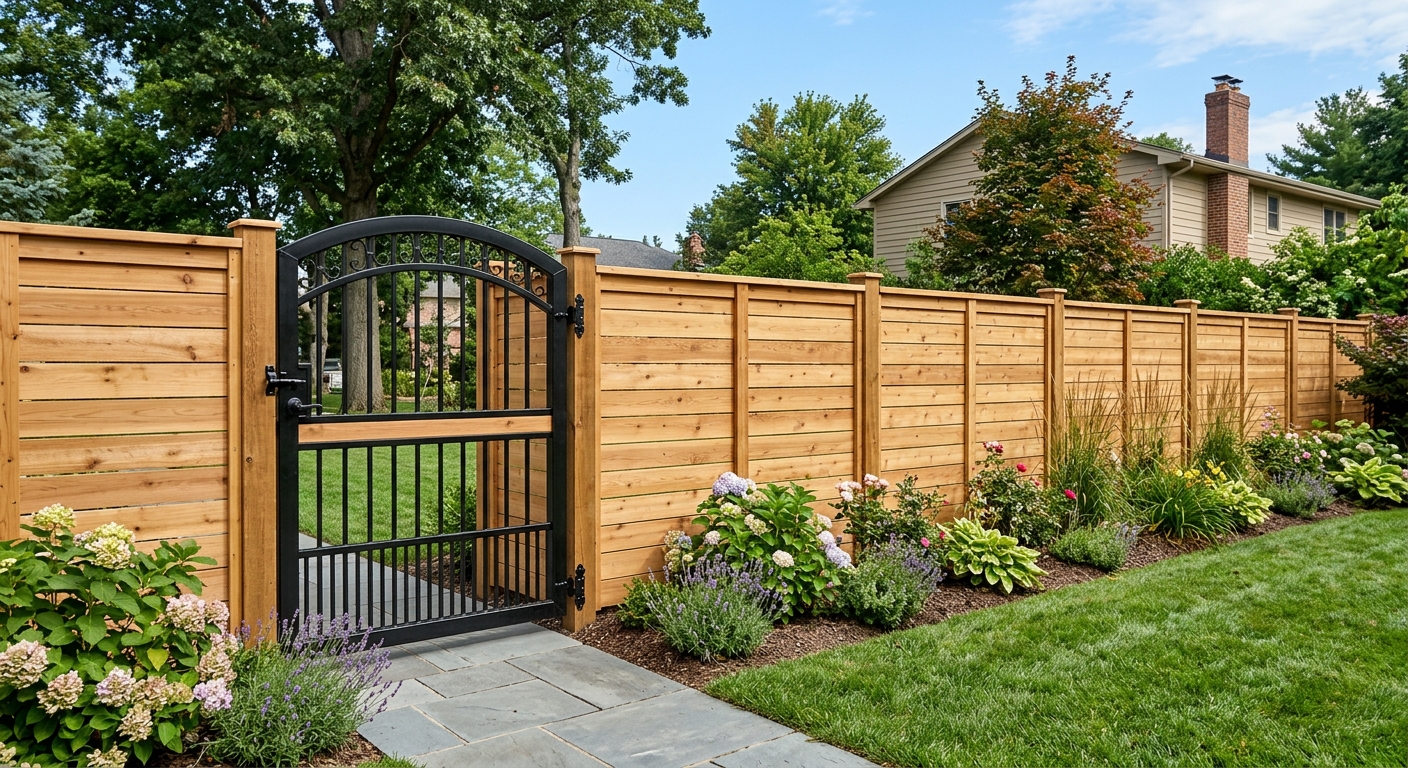
Fencing options and costs in Victoria
In Victoria, choosing a fence comes down to balancing curb appeal, privacy needs, and the realities of a coastal climate. With 39.5% of households owning homes and 13.6% of dwellings being single-detached houses (Statistics Canada, 2021 Census), there’s consistent demand for backyard privacy, dog runs, and driveway perimeter fencing—especially across family-oriented neighbourhoods.
On Vancouver Island and the Coast, costs are shaped by moderate coastal frost and frequent wind exposure. Frost depth here is relatively shallow (often cited around 45–60 cm), but to reduce heaving and long-term leaning, fence posts still need to be buried below frost—commonly around 75–90 cm in typical residential builds. That pushes excavation time, post material length, and the likelihood of concrete-set footings where soils are wet, clay-rich, or disturbed. Wind off the Strait of Georgia and Juan de Fuca Strait also influences how solid you can go: solid privacy panels catch more wind load and generally need tighter spacing and sturdier hardware than more open fence styles.
In practical terms, fence work is especially in demand around Saanich (including parts of Ten-Mile Point and Gordon Head) where older homes and established landscaping create more “fit and finish” work. If you’re planning privacy between properties near mature trees, you should expect extra labour for line tracing, gate alignment, and disposal.
Below is a clear snapshot of common material choices and what you can realistically expect for Victoria pricing.
| Material |
Lifespan |
Maintenance |
Privacy Rating |
Price per Linear Foot |
| Pressure-treated pine (standard wood) |
10–15 years |
Stain/seal every 2–3 years |
High (solid panels) |
$55 – $85 |
| Cedar (natural rot resistance) |
15–25 years |
Light stain every 2–4 years |
High (solid panels) |
$70 – $100 |
| Vinyl / PVC (no-maintenance) |
25+ years |
Wash only; inspect hardware |
Medium to High (board style) |
$70 – $110 |
| Chain-link (galvanized steel) |
20–30 years |
Occasional rinse; check tension |
Low (open weave) |
$35 – $60 |
| Aluminum ornamental |
25+ years |
Rinse; tighten fittings |
Low to Medium |
$80 – $140 |
| Composite / recycled material |
20–30 years |
Minimal; clean and inspect |
High (board/solid styles) |
$85 – $130 |
Prices are estimates only and vary by project scope, site access and material selection.
What affects the price of fencing in Victoria
In Victoria and across Vancouver Island and the Coast, you can see the same general fence project come in 30–50% apart once you factor in post excavation, wind-resistant construction, and how a contractor handles access and disposal. Homeowners sometimes compare “linear foot” pricing without realizing that the labour component is heavily driven by how deep posts must be set, how much concrete is used, and whether the fence must be built to resist coastal gusts. Even with similar materials, one quote may include concrete-set posts and proper gate reinforcement while another may rely on lighter posts and minimal footing work.
Frost line depth is a key driver. On Ontario and Alberta builds, contractors often set posts 1.5–2.0 m into the ground. Coastal BC is typically less deep—about 45–60 cm design frost—yet residential posts still need to be buried below frost (commonly 75–90 cm in practice) to prevent heaving and long-term leaning. That usually means longer posts and more labour per hole, and it’s why wood fence installation in Victoria often lands toward the higher end of the local band (around $55–$85) when concrete footings are recommended.
Wind exposure changes panel design too. Solid privacy fences catch more wind load and may require closer post spacing and heavier top rails to stay true, while chain-link generally tolerates higher exposure with standard spacing. In wet, coastal conditions, untreated wood rot accelerates—so cedar or pressure-treated systems may still need correct sealing and proper drainage details.
Two common Victoria examples: (1) clay-rich or saturated soil often increases excavation time and pushes a quote from a basic gravel-pack approach toward concrete-set footings; (2) removing an older fence can add disposal hauling and labour that doesn’t show up in material-only comparisons. If your yard uses a taller board-style privacy system, you may also see a justified jump toward the higher vinyl range ($70–$110) because sturdier posts and more rigid components help the fence stand up to winter gusts.
| Price Factor |
Why It Matters |
Cost Impact |
| Fence length in linear feet |
Labour, materials, posts, rails, and fasteners scale directly with footage |
Most significant driver; longer runs can dominate the total |
| Post depth required |
Frost depth determines hole depth; coastal frost still requires posts buried below frost |
Deeper holes increase labour and sometimes concrete use |
| Post setting method |
Concrete set vs gravel pack vs driven posts changes labour and stabilization |
Concrete typically adds cost but reduces future leaning/settling |
| Material choice |
Vinyl, cedar, and chain-link differ in panel weight, hardware, and longevity |
Switching materials can move you between price bands |
| Gate count and type |
Drive-through/double gates need heavier hinges and bracing |
More gates increases hardware, alignment time, and reinforcement |
| Grade and terrain |
Slope needs stepped or raked panels to keep top lines consistent |
Extra layout time and sometimes additional labour/material |
| Old fence removal and disposal |
Scrap handling and dump fees add time and cost |
Can add a substantial portion to the job if heavy or tangled |
| Permit fees and survey / property line locate |
Locates reduce rework and protect against encroachment disputes |
Small to moderate cost, but can prevent expensive corrections |
Permits & regulations in British Columbia
In British Columbia, fence permits depend on height and location. As a practical baseline in Victoria-area municipalities, fences above about 2.0 m (6.5 ft) at the rear and roughly 1.0–1.2 m (3–4 ft) toward the front or at corners often trigger a building permit requirement. Setbacks and property-line rules also apply, so even a “legal height” fence may still be restricted by the municipal yard setback bylaws.
Before any post hole is dug, utility locates must be called in. While you may be in a neighbourhood that looks clear on the surface, buried services are common. In BC, use the appropriate utility locate process (commonly referred to as BC 1 Call). Also, obtain a survey or locate your property pins so your fence line matches the actual boundary and avoids encroachment disputes.
Shared fence ownership is governed by provincial line-fences legislation, which can affect who pays to maintain or rebuild a fence that serves both properties.
How to verify a contractor in Victoria: (1) confirm a valid BC business/contractor registration where applicable and review their licensing information through official online registries; (2) ask for a certificate of insurance showing liability coverage, and check that the certificate has your contractor named correctly; (3) request proof of coverage for workplace safety (WSIB/WCB equivalent coverage) so you know workers are properly protected; and (4) keep a copy of the clearance letter or proof of coverage provided with your quote paperwork.
If you’re unsure whether your planned height needs a permit, ask your contractor to confirm the permit requirements for your exact address and corner/front classification before construction.
Choosing the right fence material for Victoria
In Victoria, the “best” fence material depends on what you value most: privacy, low maintenance, budget, or lifespan. Pressure-treated pine is often the lowest first-cost option, but coastal wetting and wind can grey and weather the surface. To keep it looking good and to slow breakdown, plan on staining or sealing every 2–3 years. Cedar offers a natural rot-resistant advantage and typically looks better as it ages, but it still benefits from periodic maintenance to protect against moisture cycling. Vinyl/PVC is popular for low maintenance; it won’t rot like wood, but in extreme cold it can become brittle if the installation isn’t done correctly—so spacing, temperature considerations, and quality components matter.
Chain-link is the budget choice and is extremely durable in our salty air when it’s properly galvanized, but it won’t provide privacy unless you add screening (like lattice with vines). Aluminum ornamental fencing won’t rust and stands up well to corrosion, though it’s usually a mid-range price and provides limited privacy.
Post-depth and footing choices also connect to material selection. Even though Vancouver Island and the Coast has moderate frost, posts still need to be set below frost (often around 75–90 cm in typical residential installations) to prevent heaving and leaning. Concrete-set posts are commonly recommended when soils are wet/clay-rich, when fence panels are taller or heavier (like solid privacy), or when there’s vehicle access nearby. For wind-loaded areas, solid privacy boards need solid bracing and good hardware; open styles are more forgiving.
A clear example: if you’re choosing between a pressure-treated privacy fence and vinyl, the vinyl option may cost closer to $70–$110 per linear foot while wood may land around $55–$85. That extra upfront cost can be justified if you want to avoid the recurring staining cycle in a home with limited free time, or if you’re prioritizing long-term straightness in winter winds.
| Material |
Cold Tolerance |
Lifespan |
Annual Maintenance |
Best For |
Price Band |
| Pressure-treated pine |
Good with proper installation and sealing |
10–15 years |
Inspect coating; spot seal as needed (stain often every 2–3 years) |
Value privacy when you’re comfortable with periodic maintenance |
$55–$85 |
| Cedar |
Good; responds well to moisture management |
15–25 years |
Wash and re-stain typically every 2–4 years |
Attractive privacy with better natural rot resistance |
$70–$100 |
| Vinyl / PVC |
Good; can crack only if poor installation or extreme conditions |
25+ years |
Minimal—seasonal rinse and hardware checks |
Low-maintenance privacy and corrosion resistance |
$70–$110 |
| Chain-link |
Excellent |
20–30 years |
Low—rinse and inspect tension/edges |
Secure boundaries on a budget; pet containment |
$35–$60 |
| Aluminum ornamental |
Excellent |
25+ years |
Low—rinse and tighten fittings |
Decorative perimeter with durability and low rust risk |
$80–$140 |
| Composite / recycled |
Good; consistent across weather cycles |
20–30 years |
Minimal cleaning; inspect posts and fasteners |
Long-life privacy without regular staining |
$85–$130 |
How to choose a fencing contractor in Victoria
Choosing the right fencing contractor in Victoria starts with verification. First, confirm British Columbia coverage expectations by requesting proof of liability insurance; your certificate should clearly show the contractor’s legal name and coverage limits. Next, ask for proof of workplace safety coverage (WSIB/WCB equivalent) and ideally a clearance letter or direct evidence of active account status—this matters because fencing crews work around excavations and lifting heavy panels. Also ask whether the contractor is set up to handle utility locating documentation and post-hole safety processes; reputable crews treat this as standard practice.
Then get 2–3 itemised written quotes. A proper quote should break out labour and materials separately (posts, rails, panels, hardware, concrete, gate components) and show footing depth assumptions and post-setting method. Avoid “all-in” pricing that doesn’t explain whether concrete is included, how removal/disposal is handled, and whether permit pulls or property-line locates are part of the scope.
Warranty deserves the same attention as price. Ask for two warranties: a workmanship warranty (how long they stand behind installation) and the product/manufacturer warranty for the fence system. Clarify whether the warranty is transferable if you sell your home, and whether fasteners, gates, and hardware are covered.
Payment schedule should be controlled: never pay more than 10–15% upfront, and request a holdback until the fence is complete and measured for alignment. For timing, require a start date and a completion estimate in writing, since site conditions, slope adjustments, and disposal can change the schedule.
- Provide a site plan with fence line location and gate swing direction.
- List post depth, expected frost-below-ground allowance, and whether concrete footings are included.
- Show panel type and post spacing (especially for solid privacy in wind).
- Confirm utility locating is included before digging.
- Include survey/property line locate method in writing if boundaries are unclear.
- Itemise removal and disposal (what is hauled away and where).
- State what materials are used for gates (hinge grade, latch type, bracing).
- Confirm warranty length for workmanship and products separately.
- Ask about transferable warranty and proof of purchase/installation records.
- Get a payment schedule in writing with a defined final holdback.
- Request an estimated timeline with lead times for materials and gates.
- Insist on clean-up standards and final yard restoration (topsoil/grade touches).
Red flags to watch for in Victoria: quoting only a ballpark “per linear foot” without post depth details, refusing to discuss footing (gravel pack vs concrete-set) for wind/privacy fences, asking for large upfront payments, providing an incomplete insurance certificate, or promising exact start dates without any allowance for excavation conditions and permit timing.
Frequently asked questions — fencing in Victoria
What's the best fence for privacy?
For privacy in Victoria, solid board or panel-style fences are usually the best match—commonly cedar or pressure-treated pine, or vinyl/PVC when you want low maintenance. In our coastal, wind-exposed conditions, privacy fences also need solid construction: posts set below frost (often around 75–90 cm in practice) and correctly braced rails so the fence stays straight through winter gusts off the Strait of Georgia. If you compare quotes, don’t just compare the fence height—confirm post spacing, whether concrete footings are included, and what the gate reinforcement looks like. Budget-wise, pressure-treated wood often lands in the $55–$85 range, while vinyl/PVC commonly runs higher (around $70–$110) because of the materials and hardware quality.
How do I compare fencing quotes?
Start by comparing the same scope line by line. Ask each contractor to itemise: labour, materials (posts, rails, panels), fasteners, gate hardware, concrete or gravel pack, and removal/disposal. Confirm assumed post depth and how frost considerations are handled for Vancouver Island’s coastal frost line; even if frost is moderate, posts still need to be buried below frost to reduce heaving and leaning. Also verify whether permits or property-line locates are included—if your yard is tight or boundaries are uncertain, the process can change total cost. A clean comparison should also show warranties (workmanship vs product) and a payment schedule. If one quote includes concrete set posts and heavy gate bracing while another doesn’t, their “similar totals” can still hide big differences.
How long does fence installation take in Victoria?
Typical installation timelines in Victoria depend on length, access, and whether there’s removal and slope work. Many straightforward backyards can be completed in a few working days, but longer runs, corner conditions, and vehicle gates can extend the schedule because setting and aligning posts takes time—especially when crews must deal with wet soil, rock pockets, and wind-safe staging. If permits are required for the planned height, that can add scheduling lead time before the first post holes are dug. Also consider that material deliveries (especially gates or special colours) can shift start dates. When you request quotes, ask for a written start date and a realistic completion estimate that includes those contingencies.
Can I install a fence on a slope in Victoria?
Yes—fences can be installed on slopes in Victoria, but you’ll usually need stepped or raked panel layouts to keep the fence looking even and to manage gaps at the base. A contractor should assess the slope before final layout and explain how they’ll transition fence heights while maintaining structural integrity and consistent post spacing. Because wind and moisture are part of coastal conditions, proper base clearance and drainage details matter so water doesn’t pool at post locations. Slope work can add labour and layout time, so it may move you toward the higher end of your chosen material’s local band. For quotes, ask whether they’ll use stepped panels or custom cuts, and whether any extra posts or rails are needed to maintain alignment.
What is the most weather-resistant fence for Victoria's climate?
“Most weather-resistant” usually means the material that handles moisture cycling and coastal corrosion best. Vinyl/PVC tends to resist rot and won’t rust like untreated steel, and aluminum ornamental is also highly corrosion-resistant when installed with appropriate hardware. Cedar can perform very well because of natural rot resistance, but it still needs periodic maintenance to protect its surface and keep up appearances. Chain-link (galvanized) is also long-lasting and generally fares well in wind and rain, though it doesn’t provide privacy. Regardless of material, durability depends on footing: posts set below frost and installed with the correct method for your soil conditions. If you want minimal maintenance, vinyl/PVC is often the practical choice—commonly priced around $70–$110 locally, depending on the style.
How do I prevent wood fence rot in Victoria?
Preventing rot starts before the first board goes up. In Victoria’s wet coastal climate, wood lasts longest when posts are installed correctly: set posts below frost and avoid leaving wood-based members in constant contact with saturated soil. Concrete-set footings are often recommended on clay-rich or wet sites because they reduce movement that can stress joints. Use quality pressure-treated lumber (for wood options) and ensure fasteners and hardware are compatible and corrosion-resistant. For cedar and pressure-treated pine, maintenance is still key—plan for periodic staining/sealing and washing to remove algae or grime that holds moisture against the wood. If you’re comparing options, remember that cheaper boards without proper surface protection can reduce lifespan quickly. Expect pressure-treated wood to commonly fall in the $55–$85 range, but long-term performance improves when the contractor includes the right footing and maintenance approach.