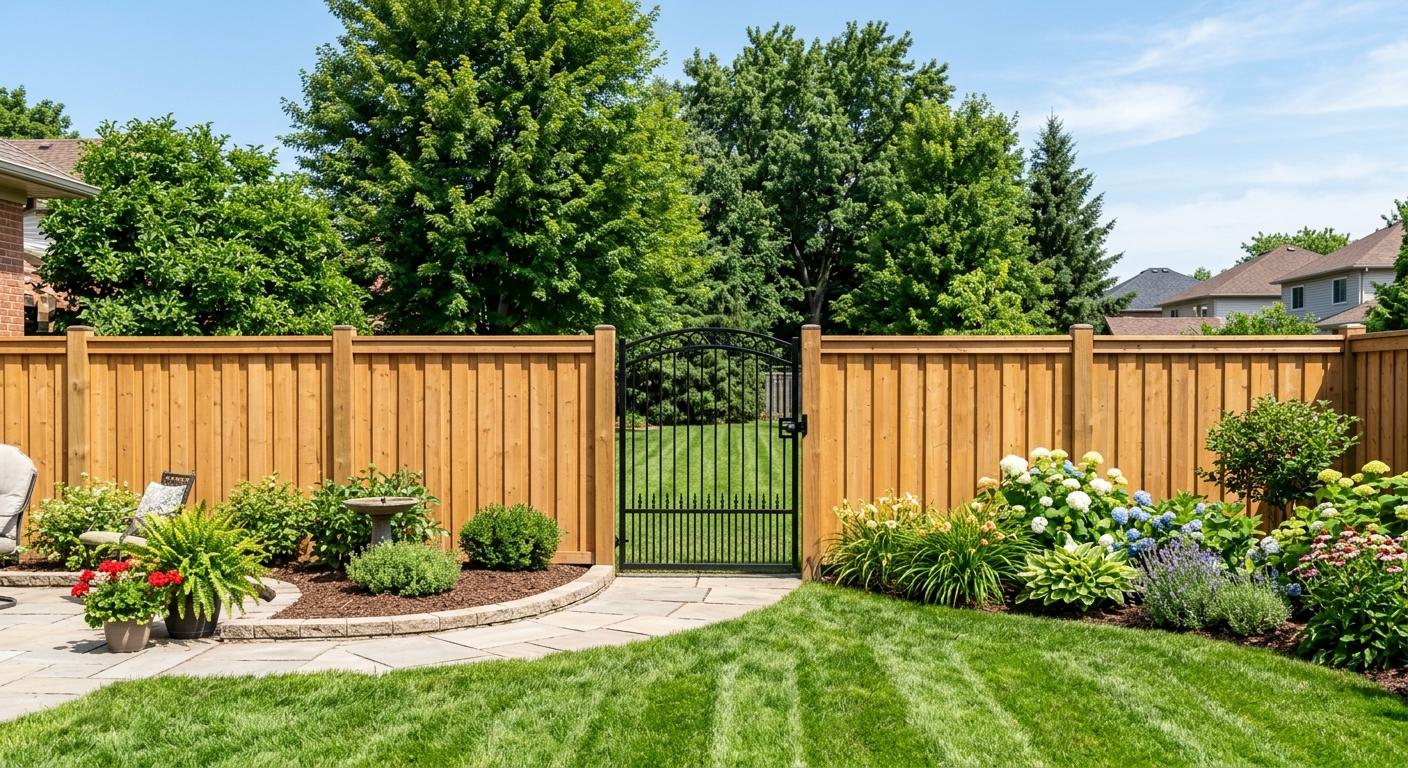
Fencing options and costs in Kerrisdale
Kerrisdale homeowners often start with the same question: “What will a fence cost here, and what options last?” With Kerrisdale’s population at 13,975 (Statistics Canada, 2021 Census), there’s steady demand for residential fencing upgrades—especially because many properties are in established neighbourhood blocks where side-yard fencing is common. When a fence replaces an older barrier, it’s not just appearance; it’s boundary clarity, child and pet safety, and privacy for backyards that may otherwise feel overlooked.
In the Lower Mainland–Southwest, mild but not trivial frost and regular wind exposure affect every budget line. Posts typically need to be set below the local frost conditions to limit heaving, and wetter soils around the Fraser Valley can mean deeper holes, more concrete, and extra labour compared with drier sites. That’s one reason contractor availability can shift with the season—spring and fall tend to be busy because crews coordinate site access, soil conditions, and materials deliveries.
You’ll notice trade interest is especially strong in corridor-heavy streets near the Village (Kerrisdale area), where backyards and laneways can be tight, requiring careful staging and efficient installation. As a result, two fences with the same height and total length can still land in different price bands once you account for gates, slope, and how posts are installed. Use the comparison table below to sanity-check what your quote should include before you compare finishes.
| Material |
Lifespan |
Maintenance |
Privacy Rating |
Price per Linear Foot |
| Pressure-treated pine (standard wood) |
10–15 years |
Stain or seal every 2–3 years; fastener checks |
Good (with solid boards) |
$55–$95 |
| Cedar (natural rot resistance) |
15–25 years |
Periodic staining/sealing every 3–4 years |
Good to very high (solid pickets/boards) |
$70–$110 |
| Vinyl / PVC (no-maintenance) |
25–30 years |
Rinse as needed; inspect for panel warping in cold snaps |
Very high (solid privacy styles) |
$75–$130 |
| Chain-link (galvanized steel) |
20–30 years |
Occasional tension checks and cleaning |
Low (privacy requires slats/planting) |
$30–$55 |
| Aluminum ornamental |
30+ years |
Occasional wash; tighten hardware |
Low to moderate (can add privacy slats) |
$90–$170 |
| Composite / recycled material |
20–30 years |
Minimal; clean and inspect end caps |
Very high (solid privacy styles) |
$85–$150 |
Prices are estimates only and vary by project scope, site access and material selection.
What affects the price of fencing in Kerrisdale
Fence quotes in Kerrisdale can vary by 30–50% for “the same” job because the Lower Mainland–Southwest market prices labour and installation risk differently across sites. Two common examples: one crew may be able to stage materials on a wide lane, while another has to bring everything through a narrow driveway with extra time and protection. On top of that, wet soils around Vancouver and nearby areas can increase the time it takes to excavate post holes cleanly, which pushes up labour—even when material quantities look similar.
The biggest technical driver is frost and frost-protected install depth. In many colder Canadian regions, guidance often targets post embedment about 4–6 inches below design frost depth, which can translate to roughly 1.5–2.0 m into the ground in harsher climates. While coastal BC is milder, crews in Kerrisdale still often go deeper than “bare minimum” to reduce heaving risk—especially for corner posts, privacy sections, and gate locations. That’s why you may see installers using longer posts and concrete setting for specific structural points, even if the fence is “only” 6 ft tall.
Wind exposure also matters. In more open or windy pockets, stronger bracing and tighter post spacing can be specified, particularly for solid wood and vinyl privacy panels. Meanwhile, coastal BC’s mild but wet conditions can accelerate wood rot if boards and posts aren’t properly treated and sealed—meaning cedar and treated pine may still need proper flashing, end-caps, and workmanship that holds up over time.
In Kerrisdale, you often pay more when soil is soft and excavation takes longer, when the yard is sloped and requires stepped panels, or when there are multiple gates. Conversely, costs can come down when you replace a straight run with similar height and good access, or when you keep old posts and only upgrade infill. As a baseline, many homeowners land somewhere within wood’s regional band of about $55–$95 and vinyl/PVC’s $75–$130 depending on these factors.
| Price Factor |
Why It Matters |
Cost Impact |
| Fence length in linear feet |
Most material and labour scale directly with total run |
Highest impact; changes total by hundreds or thousands |
| Post depth required |
Frost conditions determine hole depth and post length |
Deeper embedment increases materials and excavation time |
| Post setting method |
Concrete vs gravel pack vs driven posts changes structure and labour |
Concrete setting typically adds cost and time |
| Material choice |
Vinyl requires different framing and often stronger posts; cedar is higher-grade wood |
Can shift the quote to a different price band |
| Gate count and type |
Gates need heavier hardware, stronger posts, and alignment |
Each gate can add significant labour and component cost |
| Grade and terrain |
Slopes require stepped or raked sections and extra measuring/cutting |
More labour and more materials waste |
| Old fence removal and disposal |
Hauling and dump fees vary with demolition type |
Can add a noticeable surcharge if access is tough |
| Permit fees and survey / property line locate |
Some heights and conditions trigger permits; locate avoids boundary disputes |
May add fixed costs and schedule time |
Permits & regulations in British Columbia
In British Columbia, fence height rules and permitting can depend on where the fence sits (front/side/rear) and how tall it is. As a practical threshold, fences above about 2.0 m (6.5 ft) at the rear and roughly 1.0–1.2 m (3–4 ft) at the front or corner often require a building permit. Even when a permit isn’t required, fences must respect property lines and local setback bylaws, and they must be installed safely with proper footing and drainage around posts.
Before any digging, homeowners should arrange utility locates. In BC, that’s typically done through BC One Call (or the appropriate utility locate request system), so crews can mark gas, hydro, telecom, and other buried services. Next, confirm your property line: use a survey or property pins/locate services before installing, especially in older Kerrisdale neighbourhoods where fences may not have been built perfectly on the line originally. Shared fence ownership is also governed by provincial line-fences legislation, so it’s smart to clarify responsibilities early if your fence affects a boundary with a neighbour.
Verification checklist (licensing/coverage) for a Kerrisdale contractor:
- BC contractor licence (and any required endorsements) from the online registry maintained for contractors.
- Certificate of insurance showing general liability and sufficient limits; confirm it lists your address as a project location if offered.
- Workers’ compensation coverage (WSBC/WCB) proof—ask for the clearance letter or account verification.
- Request the manufacturer warranty terms for the specific system you’re buying and confirm workmanship warranty length in writing.
What typically DOES require a permit: fence heights above the thresholds noted above, and projects tied to building permits or site servicing work. What typically does NOT: normal low fences and like-for-like replacements that stay under the threshold and don’t alter drainage or existing structures—still confirm with your contractor and local guidance for your exact location.
Choosing the right fence material for Kerrisdale
Choosing fencing material in Kerrisdale is about balancing privacy, low maintenance, budget, and how the fence performs in a mild but wet coastal climate. Pressure-treated pine can be a good budget choice, but it typically needs staining or sealing every 2–3 years to prevent greying and surface breakdown. Cedar offers a warmer look and better natural rot resistance, though it still benefits from proper finishing and good construction details to avoid end-grain moisture uptake.
Vinyl/PVC is often the “set it and forget it” option: it generally needs minimal maintenance beyond occasional rinsing. The trade-off is upfront cost, and in extreme cold snaps vinyl can become brittle if installed with insufficient reinforcement or poor post spacing. Chain-link remains the lowest initial cost and often lasts a long time, but it won’t provide privacy unless you add privacy slats, shade cloth, or plantings. Aluminum ornamental fences give a crisp, rust-resistant look and usually perform well without staining; however, they’re not inherently private and can require upgrades for privacy goals.
For Lower Mainland–Southwest installs, even with mild winters, post depth matters. Crews often still set posts below frost-related movement and may use concrete for corner posts, privacy runs, and gate posts to reduce shifting. Concrete-set posts are especially common where heavier solid panels create leverage, and where wetter soils make the ground less stable during wet-dry cycles.
Wind and snow load are usually not “Prairie level,” but gusty conditions can stress solid fences. That means choosing appropriate post spacing and bracing is not optional—especially for privacy styles that act like sails. For budgeting: if you’re choosing between wood at roughly $55–$95 and vinyl/PVC at $75–$130, the extra $20–$40 per linear foot can be justified when you want fewer maintenance visits, long-term appearance, and reduced repair risk in a property where you’ll notice fence wear quickly.
| Material |
Cold Tolerance |
Lifespan |
Annual Maintenance |
Best For |
Price Band |
| Pressure-treated pine |
Good (if properly sealed) |
10–15 years |
Stain/seal every 2–3 years; fastener checks |
Budget-friendly boundaries and standard privacy boards |
$55–$95 |
| Cedar |
Good (with finishing) |
15–25 years |
Seal/stain about every 3–4 years; monitor end-grain |
Natural look with better rot resistance |
$65–$110 |
| Vinyl / PVC |
Good (depends on reinforcement) |
25–30 years |
Rinse/clean as needed; inspect hardware after storms |
Low-maintenance privacy or family-friendly yards |
$75–$130 |
| Chain-link |
Very good |
20–30 years |
Minimal; occasional cleaning/tension |
Security, pets, and long-term value |
$30–$55 |
| Aluminum ornamental |
Very good |
30+ years |
Light wash and hardware tightening |
Attractive curb appeal with open visibility |
$90–$170 |
| Composite / recycled |
Good |
20–30 years |
Minimal; inspect posts and end caps |
Solid privacy with reduced rot concerns |
$85–$150 |
How to choose a fencing contractor in Kerrisdale
Start by verifying credentials for British Columbia work, then move on to the paperwork that protects you if something goes wrong. A reputable fencing contractor should hold the appropriate BC contractor licence for their scope, carry liability insurance, and have workers’ compensation coverage (WSBC/WCB). To check: (1) search the BC contractor registry for the licence status and business name; (2) ask for a current certificate of insurance and read the policy effective date and coverage limits; (3) request WSBC/WCB clearance or verification and confirm the job is covered.
Next, compare quotes correctly. Don’t accept a “lump sum” without a breakdown. Ask for 2–3 itemised written quotes showing labour, materials, post type and setting method, gate hardware, and removal/disposal. You want line items that make it obvious why one bid is within wood’s typical regional range of about $55–$95 while another is closer to vinyl/PVC’s $75–$130—often it’s post depth, concrete setting, and gate reinforcement.
Read the scope line by line: what is excluded (demo, hauling, dealing with roots, replacing damaged sprinklers), is the permit included, and who pulls the locate/survey work if required? Ask for warranties too. A workmanship warranty should be in writing (commonly covering fence alignment and post movement issues), plus you should receive the manufacturer warranty for materials. If the warranty is transferable to you as the homeowner, confirm that in writing.
For payment scheduling, never pay more than 10–15% upfront. Hold back a portion until the fence is complete and cleaned up. Finally, get a start date and completion estimate in writing—fence projects in Kerrisdale can shift by weather and excavation conditions, so schedules should be realistic and documented.
- Confirm BC licence status with the correct business name.
- Verify current general liability insurance (certificate on request).
- Request WSBC/WCB clearance/verification for workers on site.
- Ask for itemised labour and material quantities, not only totals.
- Confirm post depth plan and whether concrete is used at gates/corners.
- Ensure the quote states panel type, board spacing, and hardware grade.
- Clarify removal/disposal: included or extra.
- Ask how they handle slopes (stepped vs raked sections) and who measures grade.
- Confirm the finish grade and top rail height method (especially on uneven lots).
- Check warranty terms: workmanship length, product warranty, and transferability.
- Request a written payment schedule with a holdback for completion.
- Get a written timeline and notice of what could delay the job.
Red flags I see in Kerrisdale include: a contractor who won’t provide written scope details (post depth, concrete setting, gate reinforcement), “discount” quotes that exclude permits/locates and then add them later, missing or expired insurance/WSBC documentation, vague warranty language, and requests for large upfront payments beyond 10–15%.
Frequently asked questions — fencing in Kerrisdale
What's the most low-maintenance fence?
In British Columbia, the lowest day-to-day maintenance is usually vinyl/PVC, because it doesn’t need annual staining and is designed to resist rot. In Kerrisdale specifically, homeowners like vinyl privacy styles because coastal damp cycles don’t break down the material the way untreated wood can. Chain-link is also low-maintenance and can last decades, but it doesn’t provide privacy unless you add slats or planters. If you’re comparing prices, vinyl/PVC typically lands around $75–$130 installed for a standard residential run, while pressure-treated wood is often closer to $55–$95 but usually requires staining or sealing every 2–3 years to maintain appearance and longevity.
How tall can my fence be in Kerrisdale?
For Kerrisdale and across BC, height limits and permitting often depend on whether the fence is in the front/side/corner area versus the rear. A common practical threshold is about 2.0 m (6.5 ft) at the rear and roughly 1.0–1.2 m (3–4 ft) at the front or corner—above those levels, a building permit is often required. Even if your height is under the threshold, you still need to respect property lines and local setback bylaws. Because fence placement matters as much as height, confirm your exact location and plan with your contractor before digging, and ensure your quote accounts for any survey/locate work needed to keep everything on the line.
Should fence posts be set in concrete here?
Many Kerrisdale fences use a mix of methods, but concrete-set posts are common where the fence needs extra structural stability—especially corner posts, privacy sections with solid panels, and gate posts that take repeated opening force. In the Lower Mainland–Southwest, soils can stay wetter and post holes can be more labour-intensive, and mild but non-trivial frost still means posts should be set deep enough to limit heaving. That’s why some installs go beyond “bare minimum” embedment, and concrete can help stabilize posts in wetter ground. For a homeowner, the practical question is what your quote includes: a reputable bid will state post depth, whether concrete is used at key points, and how they brace to handle wind load.
What's the best fence for privacy?
For privacy in Kerrisdale, the best results come from solid-panel designs: vinyl/PVC privacy, cedar or pressure-treated board-on-board, and composite privacy systems. Chain-link can provide a partial feel only if you add slats, lattice, or plant cover; otherwise it’s mostly for security rather than privacy. Because coastal BC wind can stress solid surfaces, the privacy fence should be built with appropriate post spacing, sturdy rails, and reinforced gate hardware—not just “more boards.” Cost-wise, privacy styles often push you into vinyl/PVC territory around $75–$130 or wood in the $55–$95 band depending on material grade, post setting method, and how many gates you need.
How do I compare fencing quotes?
Compare quotes like-for-like. Ask each contractor to provide an itemised breakdown: fence length, height, exact material (board size/grade or vinyl system), post type, post spacing, and post setting method (including whether concrete is used at corners and gates). Also confirm whether old fence removal and disposal are included, and whether permit pulling (if required) and utility locates are part of their scope. In Kerrisdale, two quotes that look similar can still differ by 30–50% because one crew plans for deeper embedment and more concrete at key points, while another uses minimal settings to hit a price target. Finally, check warranty length for workmanship and manufacturer coverage, plus payment terms (avoid large upfront payments).
How long does fence installation take in Kerrisdale?
Most residential fence installations in Kerrisdale are completed within a few days once materials arrive, but the schedule depends on site access, gate count, and how long post holes take in wet or root-heavy soil. If your project includes old fence removal, property line verification, or permit steps, that can add time before the first post goes in. Weather also matters—crews need stable conditions to excavate and set posts properly. As a rough expectation, a straightforward back-yard privacy or perimeter replacement with 1–2 gates may be done quickly, while longer runs with multiple corners, slope-stepping, or significant demo can stretch the timeline. Ask your contractor for a written start date and completion estimate tied to your specific scope.