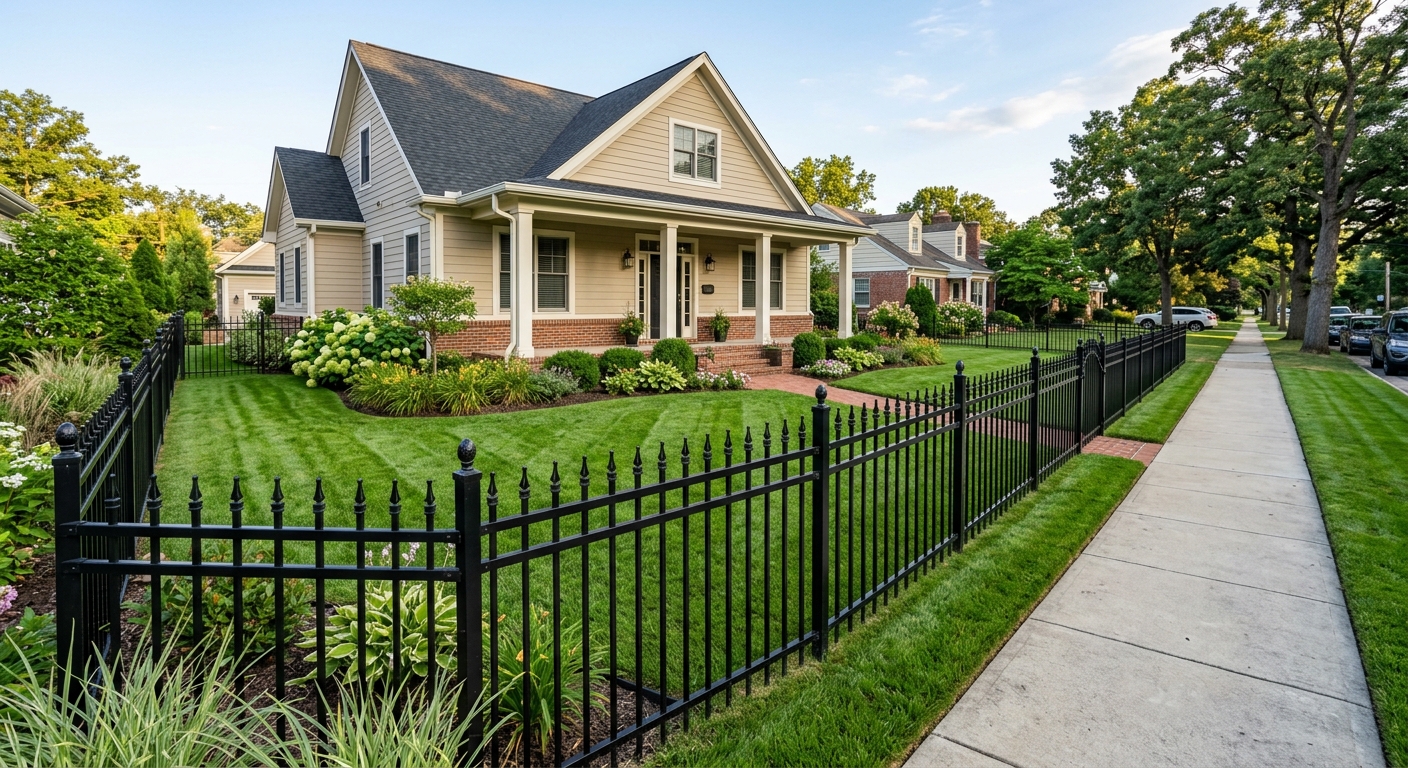
Fencing options and costs in Prince Rupert
Prince Rupert is a coastal community where fencing decisions are shaped by wet weather, salt air, and heavy freeze–thaw swings that still demand solid post footings. With 56.7% of dwellings being single-detached houses (Statistics Canada, 2021 Census), many homeowners are the ones initiating fence projects—so you’ll commonly see new installs and full replacements on residential streets and in older neighbourhoods. Cost is also affected by how long the region’s housing stock has been in place; 75.3% of homes were built before 1981 (Statistics Canada, 2021 Census), and older lots often have aged boundary fences that need removal and relayout. In the North Coast, contractors typically set posts deeper than you might expect from milder-looking maps, because the bottom of the footing must sit below local frost depth to prevent heaving and panel creep. Most reputable installers also favour concrete-set posts in saturated soil, which adds labour and materials but improves long-term stability in Prince Rupert’s damp ground conditions.
Demand is especially consistent in areas with established backyards and frequent waterfront-adjacent wind exposure, including the Uplands neighbourhood (and nearby streets where yards are more exposed). If your site is windier or your yard is tight for access, your quote can run higher even if the total fence length is the same. The table below gives practical cost ranges and performance expectations for common options in Prince Rupert—so you can compare apples to apples before you request itemised quotes.
| Material |
Lifespan |
Maintenance |
Privacy Rating |
Price per Linear Foot |
Price Range |
| Pressure-treated pine (standard wood) |
8–15 years |
Stain or seal every 2–3 years to limit grey weathering and fasteners rusting |
High (solid panel) |
$55–$85 |
$55–$85 |
| Cedar (natural rot resistance) |
12–20 years |
Light wash and re-stain as needed every 3–4 years; expect some colour change |
High (solid panel) |
$70–$110 |
$70–$110 |
| Vinyl / PVC (no-maintenance) |
20–30+ years |
Minimal—rinse as needed; check for post movement and winter panel flexibility |
High (solid or picket with infill) |
$80–$120 |
$80–$120 |
| Chain-link (galvanized steel) |
25+ years |
Occasional rinse; replace damaged sections or ties |
Low (see-through) |
$35–$55 |
$35–$55 |
| Aluminum ornamental |
25–40 years |
Rinse and repaint touch-ups if you choose powder-coated variants that require colour upkeep |
Medium (spaced pickets) |
$90–$140 |
$90–$140 |
| Composite / recycled material |
20–30 years |
Very low—cleaning only; avoid abrasive sanding and confirm cold impact ratings |
High (solid privacy styles) |
$95–$140 |
$95–$140 |
Prices are estimates only and vary by project scope, site access and material selection.
What affects the price of fencing in Prince Rupert
In Prince Rupert and across the North Coast, it’s common to see fencing quotes for the same general job vary by 30–50% once you compare footing depth, post spacing, panel type, and what’s included (haul-away, gate hardware, and property line adjustments). A “basic” fence can also get priced up quickly when a site is wind-exposed, access is tight for delivery and equipment, or the ground is saturated—conditions typical of Prince Rupert’s marine climate.
First, frost protection drives much of the variation. Even though coastal frost can be less severe than in the Interior, contractors still typically set posts about 4–6 inches below the design frost depth to reduce heaving in freeze–thaw cycles. That often means deeper holes than you’d see in southern BC, and deeper holes require longer posts, more concrete, and more labour—pushing wood installs toward the higher end of the $55–$85 band and making “driven-only” solutions less common. Second, wind exposure affects structure. While the Prairies have extreme wind, coastal gusts in open corners and waterfront-adjacent yards in Prince Rupert still justify closer post spacing and more rigid panel choices, particularly for privacy fencing.
Concrete examples: (1) Replacing an old fence in waterlogged soil often increases costs because extra excavation and concrete setting are needed for stability—especially if the existing posts are rotten at ground level. (2) A corner yard with higher gust exposure may require sturdier rails and more hardware, raising material and labour. (3) If your lot has older fence lines that don’t match the current property pins, contractors may need additional layout time and adjustments, which adds labour but prevents future disputes.
Finally, the age of housing and typical lot layouts matter. Many older pre-1981 properties (Statistics Canada, 2021 Census) have narrower setbacks and existing remnants, so demolition and disposal can become a larger portion of the final bill than homeowners expect—particularly when upgrading from chain-link at $35–$55 to privacy materials like vinyl in the $80–$120 range.
| Price Factor |
Why It Matters |
Cost Impact |
| Fence length in linear feet — the primary cost driver |
More lineal footage means more materials, posts, rails, and labour hours |
High impact (drives total project cost directly) |
| Post depth required — frost line determines post length and hole depth |
Deeper, frost-safe footings reduce heaving in freeze–thaw and protect the fence alignment |
Medium to high impact (adds concrete + excavation time) |
| Post setting method — concrete vs. gravel pack vs. driven posts |
Concrete set posts perform better in saturated coastal soils; driven-only can shift in wet ground |
Medium impact (usually increases cost but improves longevity) |
| Material choice — vinyl vs. cedar vs. chain-link |
Upfront material cost and hardware type vary widely; privacy styles also change panel framing |
High impact (largest swings after length) |
| Gate count and type — walk-through vs. drive-through (double) |
Gates require heavier framing, hinges, latches, and often tighter alignment/leveling |
Medium to high impact (gates are labour- and hardware-intensive) |
| Grade and terrain — sloped yards require stepped or raked panels |
Slopes change installation method and can increase labour and special-cut material |
Medium impact (can add time and waste) |
| Old fence removal and disposal |
Rotten boards, embedded posts, and haul-away costs affect both labour and tipping/transport |
Medium impact (often underestimated in early quotes) |
| Permit fees and survey / property line locate |
Locates and administrative steps reduce encroachment risk and may affect schedule |
Low to medium impact (varies by scope and documentation) |
Permits & regulations in British Columbia
In British Columbia, fences may require a building permit depending on height and location. As a practical rule of thumb in many BC municipalities, fences above about 2.0 m (6.5 ft) at the rear and 1.0–1.2 m (3–4 ft) at the front or corner often trigger permitting. Even when a permit isn’t required, all fences must respect property lines and municipal setback bylaws. Before any digging, homeowners should arrange utility locates through BC 1 Call (or your local equivalent service) so contractors can mark underground services prior to post-hole excavation.
To avoid encroachment disputes, it’s strongly recommended to obtain a survey or locate property pins before installing, especially on older lots where boundary lines and fence remnants may not match current records. Shared fence responsibilities are typically handled by provincial line-fences principles—meaning neighbours can have rights and obligations around maintenance and contribution—but the exact arrangement should be clarified in writing before work begins.
What usually DOES require a permit: higher fences (around 2.0 m at the rear and roughly 1.0–1.2 m at the front/corner) and projects that may affect required setbacks or visibility requirements. What typically does NOT require a permit: standard height replacement fences in typical residential side/rear locations, provided they remain within property lines and comply with bylaw height/setback limits.
To verify a fencing contractor in Prince Rupert, ask for: (1) proof they’re properly licensed/registered where applicable in BC (their business listing and trade qualifications), (2) a certificate of insurance showing liability coverage naming you as additionally insured if required, and (3) confirmation of workers’ compensation coverage (WCB). Request clearance documentation or an active coverage letter from the contractor, then confirm the certificate details match the legal business name.
Choosing the right fence material for Prince Rupert
Choosing the right fence material in Prince Rupert is less about looks alone and more about surviving a cool, wet marine climate where moisture accelerates wear and freeze–thaw can expose weak post foundations. Pressure-treated pine is the lowest upfront option, but it typically needs staining or sealing every 2–3 years to limit grey weathering and protect fasteners. Cedar naturally resists rot and often ages more gracefully, yet it still benefits from regular maintenance (usually re-staining every few years) for the best appearance. Vinyl/PVC offers no-fuss cleaning and long service life, but in extreme cold snaps it can become more brittle—so reputable installers account for temperature during installation and confirm correct spacing and post setting. Chain-link is a budget-friendly, long-lasting choice, but it doesn’t provide privacy; many homeowners pair it with privacy slats if budget allows. Aluminum ornamental won’t rust and keeps a crisp look, but it offers only medium privacy due to spaced pickets. Composite/recycled materials can provide privacy with low maintenance, but confirm cold impact ratings and fastening systems designed for BC conditions.
North Coast frost conditions still mean you should expect posts to be set below frost depth—commonly about 4–6 inches beneath the design frost line—often with concrete-set footings in saturated soil. That matters because even the “best” material will fail if posts heave or rails shift. For wind-exposed yards, tighter post spacing and stronger rails keep panels from racking. Snow loads can also add stress to top rails, so it’s worth choosing systems with robust framing for taller privacy styles.
Example: upgrading from chain-link at roughly $35–$55 per linear foot to vinyl privacy in the $80–$120 range can be justified when you need privacy day-to-day and want decades of low maintenance. If your priority is budget and visibility/security over privacy, chain-link usually makes sense; if privacy is a must, the extra spend often pays back in time saved on staining and in fewer early repairs.
| Material |
Cold Tolerance |
Lifespan |
Annual Maintenance |
Best For |
Price Band |
| Pressure-treated pine |
Good (when posts are frost-safe and boards are properly fastened) |
8–15 years |
Low to moderate: stain/seal every 2–3 years; inspect hardware seasonally |
Best-value privacy when you’re willing to maintain |
$55–$85 |
| Cedar |
Good (naturally rot-resistant in wet coastal conditions) |
12–20 years |
Moderate: re-stain as needed every 3–4 years; rinse periodically |
Appearance + rot resistance with reasonable maintenance |
$70–$110 |
| Vinyl / PVC |
Moderate to good (can be more brittle in very cold snaps) |
20–30+ years |
Very low: rinse as needed; check post alignment after freeze–thaw seasons |
Low-maintenance privacy |
$80–$120 |
| Chain-link |
Excellent (galvanized steel withstands coastal moisture) |
25+ years |
Very low: inspect tension and ties occasionally |
Security on a budget (and areas where privacy isn’t required) |
$35–$55 |
| Aluminum ornamental |
Excellent (powder-coated systems resist corrosion) |
25–40 years |
Low: rinse; occasional touch-ups if needed |
Durable look with partial visibility/security |
$90–$140 |
| Composite / recycled |
Good (verify manufacturer cold impact rating) |
20–30 years |
Very low: rinse and spot-clean |
Privacy with minimal upkeep |
$95–$140 |
How to choose a fencing contractor in Prince Rupert
When you’re hiring a fencing contractor in Prince Rupert, you want proof they can build for North Coast conditions—especially frost-safe posts, concrete set practices, and proper hardware for wet, windy weather. Start by verifying their British Columbia coverage and status: ask for a current certificate of insurance showing liability coverage, and confirm it matches their legal business name. For workers, ensure they carry workers’ compensation coverage (WCB) and request a clearance letter or evidence of active coverage. If the contractor is providing trade services that require licensing/registration in BC, request their business registry details or the relevant trade/contracting qualifications so you can confirm they’re in good standing.
Next, get 2–3 itemised written quotes. Insist the quote breaks down labour and materials separately (posts, rails, concrete, hardware, gates, and disposal), and states footing depth assumptions. Avoid lump sums that don’t show whether concrete setting, additional bracing, or wind-rated panel spacing is included. Read the scope carefully: what’s excluded (for example, removal of old posts below grade), whether permit work/pulls are included, and how debris is handled.
Ask about warranty. You should receive a workmanship warranty (how long they stand behind installation, often spanning multiple years) and a separate manufacturer warranty for the product itself. Confirm whether any warranty is transferable if you sell the home. For payment, use a conservative schedule: never pay more than 10–15% upfront; hold back until the fence is complete, inspected, and cleaned up.
Finally, require a written timeline with a start date estimate and completion target—coastal supply logistics and weather can shift schedules, but reputable contractors communicate changes promptly.
- Request itemised quotes (labour + materials + concrete + hardware + gate cost)
- Confirm assumed post depth and whether posts are concrete-set
- Verify insurance certificate (liability) matches the contractor’s legal name
- Confirm WCB clearance/active coverage documentation before work starts
- Ask who locates property lines and how boundary pins are used
- Check utility locate responsibility (BC 1 Call marks before digging)
- Clarify whether old fence removal includes embedded post extraction
- Confirm disposal/hauling is included or priced separately
- Ask what happens if measured lengths differ on site (change order rules)
- Get gate hardware details in writing (hinges, latches, self-closing options)
- Confirm warranty terms for workmanship and manufacturer product
- Agree on payment schedule (no more than 10–15% upfront; holdback until completion)
Red flags I watch for in Prince Rupert: contractors who won’t share a written scope and instead push a lump sum; quotes that don’t mention footing depth or concrete setting for saturated coastal soils; missing or out-of-date insurance/WCB documentation; refusing to put start/completion dates in writing; and vague warranty language like “standard coverage” without specifying workmanship vs product terms.
Frequently asked questions — fencing in Prince Rupert
Wood vs vinyl vs aluminum fence — which is best?
In Prince Rupert, “best” depends on your priorities. If you want the most privacy with the least ongoing work, vinyl privacy fencing (often priced in the $80–$120 range per linear foot) is popular because you typically rinse rather than re-stain. Cedar can look excellent and resist rot better than standard wood, but expect maintenance every few years. Pressure-treated pine is usually the budget play (commonly $55–$85), yet you’ll plan on staining to slow grey weathering and protect fasteners. Aluminum ornamental is durable and won’t rust, but it won’t give full privacy because of spaced pickets. In wet, windy spots, choose systems with solid bracing and frost-safe, concrete-set posts—regardless of material—because installation quality is what prevents panel sagging after freeze–thaw seasons (Statistics Canada, 2021 Census).
Do I need a permit to build a fence in British Columbia?
In British Columbia, permits can be required when fence height exceeds typical thresholds—often around 2.0 m (6.5 ft) at the rear and roughly 1.0–1.2 m (3–4 ft) at the front or corner, depending on the municipal rules. Even if a permit is not required, your fence must respect property lines and setback bylaws. Before you dig post holes in Prince Rupert, you should arrange utility locates through BC 1 Call so marked services aren’t damaged. Also, don’t rely on old fence lines: get a survey or locate property pins so your installation matches current records and reduces the chance of encroachment disputes. A good contractor will tell you whether your planned height/location likely triggers a permit and will describe who handles the permit paperwork in the contract scope.
How long does a wood fence last in Prince Rupert?
A wood fence’s lifespan in Prince Rupert usually depends on the foundation and maintenance routine more than the species alone. When posts are set below frost depth with concrete in saturated soil, wood typically performs significantly better through freeze–thaw cycles. Pressure-treated pine commonly lasts about 8–15 years, while cedar may reach about 12–20 years with regular attention. Because the North Coast is cool and wet, unmaintained wood can weather fast: boards grey, fasteners can corrode, and top rails can loosen if the fence shifts. If you’re budgeting, it helps to compare material cost with upkeep time. For example, a pressure-treated pine fence often sits around $55–$85 per linear foot, but plan for staining every 2–3 years to preserve appearance and reduce early repairs. (Statistics Canada, 2021 Census)
Who owns and maintains a shared fence?
Shared fence ownership and maintenance in British Columbia can be governed by provincial line-fences principles, but in practice it comes down to how the fence sits on the boundary and how neighbour agreements are handled. Generally, if the fence is on or servicing a boundary line, both property owners may share responsibility for reasonable maintenance or cost contribution—yet the exact arrangement can depend on local circumstances and the fence’s history. For a homeowner in Prince Rupert, the safest approach is to confirm the boundary location with pins/survey before building and then document any shared agreement in writing. Before you start work, talk to the neighbour about maintenance expectations, timing, and how repairs will be handled if the fence needs replacement again. A reputable contractor can also help you document the existing fence conditions as part of your project file.
How do I find my property line before fencing?
Before fencing in Prince Rupert, don’t guess based on old fences, landscaping, or “where it looks like the line is.” Instead, confirm property pins and boundaries. Start by reviewing your property documents and any survey you have from your purchase. If you don’t have reliable information, hire a surveyor or request a boundary locate that identifies property pins, then share those points with your contractor for layout. Utility locate is separate (BC 1 Call is for underground services), but both are important before digging post holes. Locating pins helps prevent costly relocation later, especially on older lots where fence remnants may not align with current records. This is also where itemised quotes help: many installers price layout time differently depending on how clear the boundary evidence is.
What's the most low-maintenance fence?
In Prince Rupert, the most low-maintenance option is usually vinyl/PVC privacy fencing or durable metal systems, provided the posts are installed correctly for wet coastal soils and freeze–thaw. Vinyl is popular because it generally requires minimal upkeep beyond occasional rinsing, and it won’t rot like untreated wood. Many vinyl installations land in the $80–$120 per linear foot range, which is higher than chain-link but often less costly over time once you factor in staining labour and materials for wood. Aluminum ornamental can also be low-maintenance because it resists corrosion and doesn’t rot; however, it typically offers less privacy due to spaced pickets. Regardless of material, ask your contractor about concrete-set posts and panel bracing—those details largely determine how long the fence stays straight and functional through the North Coast’s winter cycles (Statistics Canada, 2021 Census).