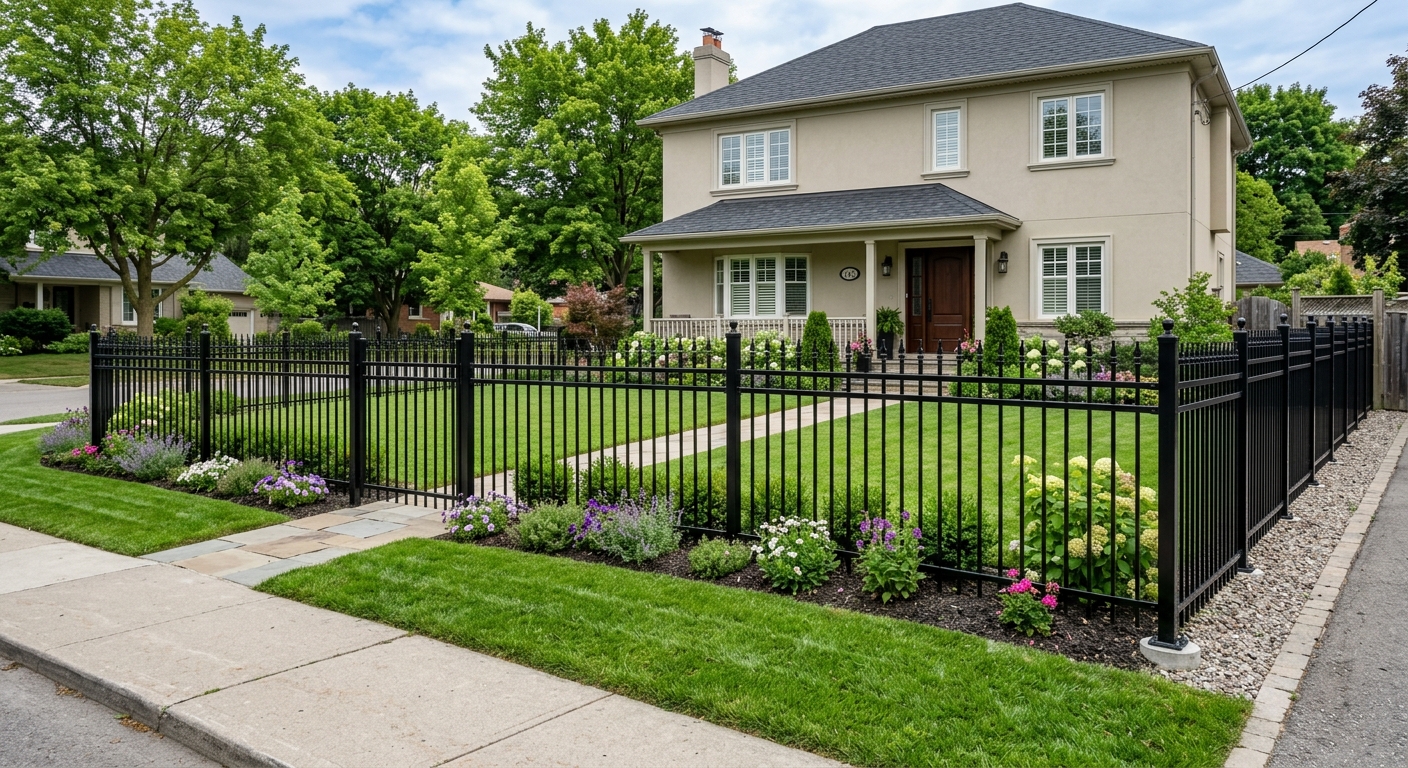
Fencing options and costs in Mount Pleasant
In Mount Pleasant, choosing the right fence starts with understanding what’s already popular in the neighbourhood—and what homeowners want to improve. With a city population of about 33,000 (Statistics Canada, 2021 Census), there’s steady demand for boundary and backyard upgrades. In Lower Mainland–Southwest, fencing is also influenced by the area’s housing stock and lot patterns: when you have many residences with private outdoor spaces, every boundary line can become a potential project. That’s why contractors are especially busy around the older residential blocks near Mount Pleasant and the nearby Commercial Drive corridor, where backyards often back onto laneways or adjacent properties and owners refresh fences to improve privacy and curb appeal.
Lower Mainland–Southwest pricing is typically “mild but not trivial” for frost and wind. Even when temperatures rarely stay extreme, posts still need to be set below local frost depth to limit heaving, and wetter Fraser Valley–type soils often mean deeper holes, more concrete, and more labour than a dry-site install. On top of that, crews price in access constraints—tight side yards, uneven grades, and disposal from old fence removal can materially change the final total.
To compare options clearly, use the table below for realistic installed ranges for Mount Pleasant projects, then match the fence type to how much privacy and maintenance you’re willing to manage.
| Material |
Lifespan |
Maintenance |
Privacy Rating |
Price per Linear Foot |
| Pressure-treated pine (standard wood) |
10–15 years |
Stain/paint every 2–3 years; check fasteners |
Good (solid board / tight spacing) |
$55–$95 |
| Cedar (natural rot resistance) |
15–25 years |
Seal/stain every 2–4 years |
Very good (solid board / tight spacing) |
$70–$115 |
| Vinyl / PVC (no-maintenance) |
20–30 years |
Occasional wash; inspect top rails and panels |
Very good (privacy styles) |
$75–$130 |
| Chain-link (galvanized steel) |
20–40 years |
Minimal; rinse and inspect tension/bracing |
Low (open mesh) |
$30–$55 |
| Aluminum ornamental |
25–40 years |
Minimal; rinse and inspect hardware |
Low to medium (open pickets) |
$95–$170 |
| Composite / recycled material |
20–30 years |
Minimal; wash and check posts/fasteners |
Good (solid/composite privacy panels) |
$85–$140 |
Prices are estimates only and vary by project scope, site access and material selection.
What affects the price of fencing in Mount Pleasant
Even when two homeowners request the same-looking fence, quotes in the Lower Mainland–Southwest can vary by 30–50% because the real drivers aren’t just material—they’re the ground, access, and labour planning. A “straight run” on flat ground is fast, while a stepped yard, tight side passage, or a job requiring heavy concrete setting slows crews down. In British Columbia, contractors also commonly price for wet-soil drilling and disposal, which can make the labour portion swing more than you’d expect. That’s one reason you may see a chain-link project come in at the lower band (often around $30–$55 per linear foot installed), while a wood privacy fence moves into the mid-range when posts, rails, and bracing must be strengthened (often around $55–$95).
Frost matters even along the Pacific Coast. Post depth sets how deep crews must dig so you limit heaving—practically, that often means holes about 4–6 inches below the design frost depth, and in many cases deeper than the bare minimum. While cold Ontario and Alberta discussions commonly translate into much deeper embeds (around 1.5–2.0 m) and higher concrete and post material costs, Mount Pleasant/BC crews still commonly go deeper than “just enough,” especially for privacy panels, corner posts, and gate posts.
Two local cost examples that come up constantly in Mount Pleasant: (1) wet clay or loamy soil—it collapses the hole walls, so the crew spends longer prepping holes and using more concrete for stability; (2) open, wind-exposed backyards—you’ll often pay for heavier posts, tighter spacing, and stronger rails to resist racking, which pushes solid wood and vinyl toward the upper end of their bands.
Finally, older fences on Vancouver-area properties often need removal and disposal, and any needed grade adjustments can shift a “simple” install into a stepped-panel build.
| Price Factor |
Why It Matters |
Cost Impact |
| Fence length in linear feet |
Labour, materials, rails, and fasteners scale directly with length |
Largest driver; small change in footage can swing totals |
| Post depth required |
Frost protection dictates hole depth and post length |
More digging and longer posts; often increases concrete use |
| Post setting method |
Concrete setting adds labour, mixing, and curing time versus gravel pack |
Concrete setting typically raises cost |
| Material choice |
Different framing requirements and component costs |
Vinyl/PVC and aluminum typically cost more than wood/chain-link |
| Gate count and type |
Gates require heavier hardware, bracing, and precise alignment |
Double-drive gates and custom sizes add cost |
| Grade and terrain |
Slopes require raked panels, steps, and additional layout time |
Increases labour and may require custom materials |
| Old fence removal and disposal |
Haul-away, tipping fees, and demolition labour |
Can add a noticeable fixed-cost component |
| Permit fees and survey / property line locate |
Some installs require permits; disputes often require a locate or survey |
Adds administrative and contractor coordination costs |
Permits & regulations in British Columbia
In British Columbia, fence permitting is usually triggered when you’re building above height thresholds—commonly around 2.0 m (6.5 ft) at the rear and 1.0–1.2 m (3–4 ft) at the front or corner areas. Even when a permit isn’t required, your fence must still respect property lines and any local setback rules under the municipal bylaws applicable to your address. In practice in Mount Pleasant, the “where exactly is the fence line?” question is often what causes delays, not the fence itself.
Before any digging, you must call for utility locates. In BC, use BC 1 Call (utility location service) so crews don’t hit buried services. It’s also smart to confirm your property line and pins—either through a survey or a locate—because moving a fence by even a small distance can start a neighbour dispute.
Shared fence ownership is governed by provincial line-fences principles, which commonly determine how costs and responsibilities are handled when a fence is shared on the boundary. For your contractor paperwork in BC, step-by-step: (1) verify the contractor’s business licence/registration status in the relevant online directory you use for your municipality or region; (2) request a certificate of liability insurance showing the correct insured business and coverage limits; (3) ask for proof of clearance for worker coverage (WSIB/WCB coverage) appropriate to the worker protection framework applicable in BC; and (4) keep copies of those documents with your signed contract. If anything is missing, ask before work starts.
Choosing the right fence material for Mount Pleasant
In Mount Pleasant and across the Lower Mainland–Southwest, the best fence material is the one that matches your priorities and tolerates the wet, changeable shoulder seasons. Pressure-treated pine is the budget-friendly choice at the start, but in BC’s damp climate it typically needs staining or sealing every 2–3 years to slow grey weathering and keep boards looking solid. Cedar costs more upfront, yet its natural rot resistance and appearance usually make it a good “value over time” option—expect maintenance too, often every 2–4 years, depending on sun exposure and how shaded your yard is.
Vinyl/PVC is attractive for low maintenance: it doesn’t need staining and you can usually wash it with a hose. However, extreme cold snaps can stress some rigid components, so the install quality (proper alignment, solid post setting, correct panel configuration) matters. Chain-link is the lowest cost per foot and has the longest life expectancy, but it offers low privacy, so many homeowners add privacy screens or plantings. Aluminum ornamental looks sharp and won’t rust like steel fencing, but it’s typically mid- to high-priced and stays open for visibility.
Post depth is where BC installs differ from the marketing brochure. Even with “shallower” frost than the Prairies, lower frost depth protection plus wet soil means concrete-set posts are commonly used for corner posts, gate posts, and privacy runs—so material cost savings can disappear if the ground work isn’t done right. As a simple example: if you compare pressure-treated pine versus vinyl, a wood fence may land around the $55–$95 per linear foot band, but vinyl often comes in nearer $75–$130. The extra cost is justified when you want long-term low maintenance and you’re pairing it with proper concrete setting and bracing for wind exposure.
| Material |
Cold Tolerance |
Lifespan |
Annual Maintenance |
Best For |
Price Band |
| Pressure-treated pine |
Good in typical BC winters; needs treatment against moisture |
10–15 years |
Light: 5–10 minutes inspection; plan staining 1–3 years |
Budget privacy on a straightforward, accessible run |
$55–$95 |
| Cedar |
Good; better performance in damp conditions |
15–25 years |
Light: rinse/inspect; seal every 2–4 years |
Natural look with solid privacy and better rot resistance |
$70–$115 |
| Vinyl / PVC |
Medium to good; rely on correct installation in cold snaps |
20–30 years |
Very low: occasional wash; inspect posts/hardware |
Low maintenance and privacy panels |
$75–$130 |
| Chain-link |
Very good; galvanized components resist corrosion |
20–40 years |
Minimal: occasional rinse and check tension/bracing |
Security with minimal visibility (and add-ons) |
$30–$55 |
| Aluminum ornamental |
Excellent; designed for freeze-thaw and wet weather |
25–40 years |
Minimal: periodic wash and hardware check |
Curb appeal and a clean, rust-free look |
$95–$170 |
| Composite / recycled |
Good; stable panels when installed on proper posts |
20–30 years |
Low: wash and inspect fasteners |
Long-life privacy with less staining |
$85–$140 |
How to choose a fencing contractor in Mount Pleasant
When you’re hiring a fencing contractor in Mount Pleasant, verify credentials the same way you’d verify a plumber: don’t rely on word-of-mouth alone. In British Columbia, ask for (1) proof of contractor licensing/registration where applicable in their trade/business profile—check it through the province or relevant public registry sources; (2) a current certificate of liability insurance with the correct company name and coverage limits; and (3) proof of clearance for worker coverage (WCB/WSIB coverage documentation, as applicable for BC). A legitimate fencing contractor should provide these documents without pushing back, and they should match the exact legal name on your quote.
Next, get 2–3 itemised written quotes rather than one lump-sum estimate. A good fence quote will break out labour and materials (posts, rails, pickets/panels, hardware, concrete setting, and gate components), plus line items for permit pulls if required and for old fence removal/disposal. Read the scope carefully: what’s excluded? Is the property-line locate included, or do you pay separately? Is disposal included in the stated price?
Warranty should be explicit: ask for the workmanship warranty length, the manufacturer warranty for materials, and whether warranties are transferable if you sell your home. Payment schedule matters too: never pay more than about 10–15% upfront. Use a holdback until the job is complete and any punch-list items are finished. Finally, insist on a written start date and a completion estimate.
- Confirm the quote includes total linear feet, fence height, and fence type (privacy vs semi-private).
- Ask how they determine post depth and whether they’ll use concrete for corner/gate posts.
- Verify they list materials by brand/type where possible (especially vinyl, composite, and gate hardware).
- Check whether they’ll step or rake panels for sloped yards (and how they’ll measure the grade).
- Request a disposal line item for old fence removal and confirm who hauls debris.
- Ensure gates include closing hardware, latches, and hinge/bracing details.
- Ask for proof of liability insurance before scheduling excavation.
- Request confirmation of worker coverage clearance documentation.
- Look for a workmanship warranty in writing (not just “we’ll fix it”).
- Confirm the permit responsibility: who pulls the permit if one is required.
- Avoid contractors who won’t put measurements and scope exclusions in the contract.
- Ask for a start date and completion target in the written agreement.
Red flags in Mount Pleasant include: quoting by “guess” without site measurement, refusing to show insurance/coverage documents, offering only a lump-sum with no disposal or permit line items, starting without a clear post-depth plan for your soil conditions, or asking for large upfront payments beyond 10–15%.
Frequently asked questions — fencing in Mount Pleasant
What is the cost per linear foot for fencing in Mount Pleasant?
In Mount Pleasant, typical installed pricing usually follows the Lower Mainland–Southwest bands. For chain-link, you’ll often see the lowest installed range around $30–$55 per linear foot, while standard wood (pressure-treated pine) commonly lands in the mid-range around $55–$95 per linear foot. Vinyl/PVC is typically higher, often around $75–$130 per linear foot, and aluminum/metal fences can run from about $90–$170 per linear foot depending on height, style, and hardware. Final pricing can shift up when crews must dig deeper for post stability in wetter soils, set more concrete for corner/gate posts, or handle slopes and tight access. (Statistics Canada, 2021 Census)
Should I repair or replace my old fence in Mount Pleasant?
It depends on how far the deterioration has gone. In BC’s damp climate, boards can look “mostly fine” while fasteners, corner posts, and mid-rails have already loosened or rotted. If you have wobbly posts, sagging rails, leaning sections, or widespread rot at the ground line, replacement is usually the better long-term value because it restores the whole framework—especially post depth and bracing. If only a few pickets or rails are damaged, repair can make sense and may cost less than a full rebuild within the wood band of $55–$95 per linear foot. Ask for an on-site assessment that includes post stability and how the contractor will set or re-set posts below local frost depth.
How do I handle a fence dispute with a neighbour in British Columbia?
Start by getting the facts, not opinions. In British Columbia, confirm where the boundary is (using a survey or a property pin locate) before you install or adjust anything. Then communicate in writing—photos, measurements, and a proposed solution go further than verbal arguments. Shared fence ownership and responsibilities are addressed by provincial line-fences rules, which typically shape how costs are shared when a fence is on/near the boundary. If the disagreement is about height or placement, review any permit or local setback requirements that apply to your fence location (especially for taller sections). Finally, keep records of your quotes and scope so any agreed changes—like moving a gate or stepping panels on slope—are clearly documented.
What fence style offers the best wind resistance in Mount Pleasant?
For Mount Pleasant, wind resistance is usually best with a fence that’s well-braced and has correct panel spacing plus sturdy post setting. Solid privacy fences can perform very well when the contractor uses stronger posts (often concrete-set at corners and gates), tight rail connections, and appropriate post spacing for your yard’s exposure. Open styles like standard ornamental aluminum or basic chain-link tend to flex less because they allow more wind to pass, but the trade-off is reduced privacy. Vinyl can also be wind-stable when installed with the right framing and hardware. The key point in Lower Mainland–Southwest is that wet soils and wind can both punish weak foundations—so choosing the right material helps, but proper installation planning matters more for longevity.
How much does a fence cost in Mount Pleasant?
Total fence cost depends primarily on length, height, gate count, removal of the old fence, and how the site affects post digging and setting. As a starting point for Mount Pleasant homeowners: chain-link may come out lowest, commonly around $30–$55 per linear foot installed, while pressure-treated wood is often in the mid-range around $55–$95 per linear foot. Vinyl/PVC usually costs more, commonly around $75–$130 per linear foot. If you add a gate or two, go up in height, or need stepped/raked panels for slope, expect the total to rise. Wet soils in the region can add labour and concrete because deeper holes and more concrete setting are often required for stability.
How deep should fence posts be for Mount Pleasant's frost?
Even in coastal BC, posts need to be set below the frost influence to prevent heaving. A common practical approach is to dig holes about 4–6 inches below the local design frost depth, then set posts accordingly and often use concrete for the most structurally critical points (corner posts, gate posts, and frequently privacy runs). Because soil in the Lower Mainland–Southwest can be wetter, the crew may require deeper hole preparation and heavier concrete setting for stability. Exact depth can vary by your specific site conditions, fence height, and soil type, so don’t rely on a universal number—ask your contractor to describe how they determine embedment depth for your location and finish grade. This planning is what keeps fences straight after freeze-thaw cycles.