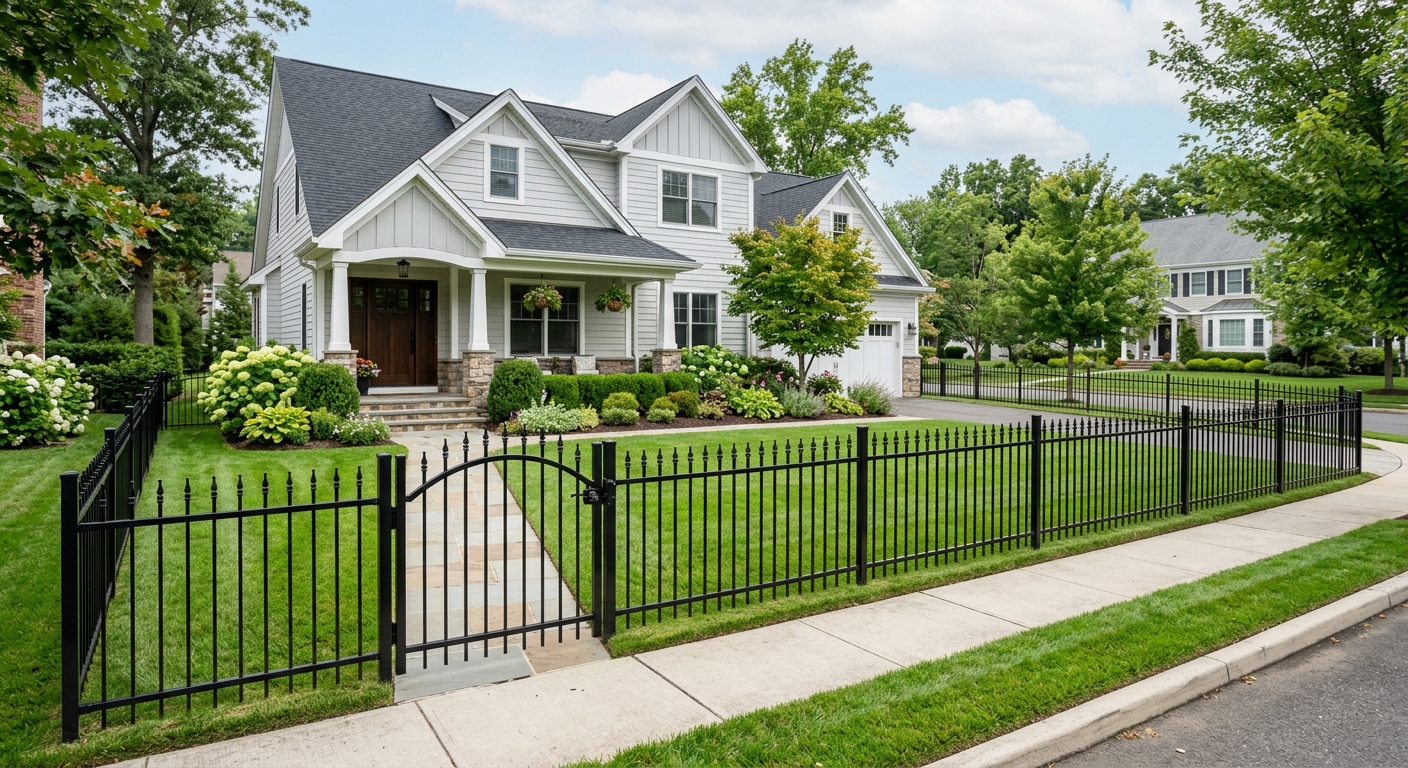
Fencing options and costs in Horseshoe Bay
In Horseshoe Bay, fencing choices usually start with what you want to protect: pets, privacy, or curb appeal. With a population of 1,935 people (Statistics Canada, 2021 Census), local demand concentrates in the pockets of single-detached homes where yards are larger and gates get used daily—each property is effectively a potential fence upgrade. The Lower Mainland–Southwest market is also shaped by steady housing turnover and renovations, including repeat work where homeowners replace older fences that have weathered through wet winters and coastal winds.
Cost in this area is rarely just “material cost.” Lower Mainland–Southwest sees mild but not trivial frost and frequent moisture. That combination means contractors often dig deeper post holes than the bare minimum and commonly set key posts (corners, gate posts, and privacy runs) with concrete, especially in wetter Fraser Valley–type soils. In practice, that pushes labour and installation time up compared with dry-site installs, even when the fence looks simple on paper.
Trade demand is particularly strong around the Bayridge/Outer Bay area of Horseshoe Bay, where properties tend to be landscaped and coastal exposure is common. If you’re comparing options, use the table below as a practical yardstick—then we can dial in your quote based on slope, access, and the fence height you’re aiming for.
| Material |
Lifespan |
Maintenance |
Privacy Rating |
Price per Linear Foot |
| Pressure-treated pine (standard wood) |
10–15 years |
Stain/seal every 2–3 years |
Good (solid boards) |
$55 – $95 |
| Cedar (natural rot resistance) |
15–25 years |
Light re-stain as needed (about every 3–5 years) |
Excellent (solid pickets/boards) |
$70 – $110 |
| Vinyl / PVC (no-maintenance) |
20–30 years |
Rinse only; occasional spot repair |
Excellent (solid privacy panels) |
$75 – $130 |
| Chain-link (galvanized steel) |
25–40 years |
Minimal; occasional coating touch-ups |
Low (good for containment, not privacy) |
$30 – $55 |
| Aluminum ornamental |
20–40 years |
Rinse; repaint only if desired |
Low–Medium (semi-open) |
$90 – $170 |
| Composite / recycled material |
20–30 years |
Low; periodic cleaning |
Good (depending on slat style) |
$85 – $145 |
Prices are estimates only and vary by project scope, site access and material selection.
What affects the price of fencing in Horseshoe Bay
In Horseshoe Bay and across the Lower Mainland–Southwest, two quotes for what looks like the same fence can easily differ by 30–50% because the work content changes: post depth, how many concrete-set posts you need, the number of gate openings, how steep the slope is, and how hard it is to access the yard. Contractors also price risk differently—coastal wind exposure and wet soil increase the chance of replacement sooner if installation details are cut.
Lower Mainland–Southwest pricing is commonly higher than “easy job” scenarios because frost still matters. In practice, contractors set posts about 4–6 inches below the design frost depth to limit heaving, and in wetter soils that often means deeper holes, more concrete, and longer posts than you’d expect from a quick site walk. By comparison, frost-driven regions like Ontario and Alberta can push embedment to 1.5–2.0 m and require heavier setting practices—those costs don’t map one-to-one to BC, but the principle is the same: deeper holes and stronger posts cost more upfront. Coastal BC also has a wet, mild climate that accelerates rot if pressure-treated wood isn’t properly treated and installed with good drainage and spacing.
Concrete examples from local installs in Horseshoe Bay: first, corner and gate posts in privacy fencing are often concrete-set to resist leverage from wind; second, low spots where water collects need extra attention to prevent soft-ground post movement. Third, yards with landscaping beds may require more labour to protect roots and avoid regrading, which can push wood installs toward the top end of the $55 – $95 wood range. If you switch to vinyl/PVC, your foundation and gate framing requirements don’t disappear—so you might see the project move into the $75 – $130 band even though vinyl is “no maintenance.”
| Price Factor |
Why It Matters |
Cost Impact |
| Fence length in linear feet |
Every added foot increases posts, rails, fasteners, and labour hours. |
High |
| Post depth required |
Frost line determines hole depth, required post length, and excavation effort. |
High |
| Post setting method |
Concrete setting resists movement in wet soils; gravel pack may be used on drier sites. |
Medium–High |
| Material choice |
Vinyl and composite require different framing and fasteners; cedar has different labour handling than pine. |
Medium–High |
| Gate count and type |
Gates add hardware, bracing, and precise alignment; drive-through doubles are heavier. |
High |
| Grade and terrain |
Slopes require stepped design or raked panels to keep spacing and privacy consistent. |
Medium |
| Old fence removal and disposal |
Hauling and extra labour are common when replacing older treated wood or chain-link. |
Medium |
| Permit fees and survey / property line locate |
Some fence heights and locations trigger permit work; a locate reduces dispute risk. |
Low–Medium |
Permits & regulations in British Columbia
In British Columbia, fencing is regulated through a mix of municipal bylaws and provincial requirements, and in many areas a building permit becomes relevant when a fence exceeds common height thresholds—often around 2.0 m (6.5 ft) for rear yards and about 1.0–1.2 m (3–4 ft) near the front or corner (exact rules vary by municipality and fence location). Regardless of height, fences must respect property lines and any required setbacks.
Before digging any post hole, homeowners should arrange utility locates through BC 1 Call so you can avoid hitting buried services. Also consider getting a survey or locating your property pins before installing—Horseshoe Bay properties can have landscaping and older markers that make line verification important. For shared fence responsibilities (where a fence serves both properties), boundary and line-fence principles in British Columbia guide who maintains what, and disputes are often resolved through shared understanding of the boundary and agreement history.
What typically requires a permit: fencing above the height threshold in the applicable yard location, and any fence where plans are needed for compliance or safety. What typically does not require a permit: straightforward replacement “like-for-like” that stays under the threshold and stays within setback/property line rules.
To verify a contractor in British Columbia, ask for their licence details (where they apply), a current certificate of insurance showing liability coverage, and proof of coverage appropriate for their workers. Where available, request a WSIB/WCB clearance letter or equivalent proof of current account status; then confirm dates and vendor names match the proposal. A reputable crew will provide documents without pressure and will align the fencing layout to the verified property line.
Choosing the right fence material for Horseshoe Bay
Choosing a fence in Horseshoe Bay is about matching material to your priorities—privacy, low maintenance, budget, and lifespan—while accounting for coastal BC conditions: wet winters, mild freeze–thaw periods, and wind. Pressure-treated pine is the budget-friendly route, but to keep it looking good and reduce grey weathering, it typically needs staining or sealing every 2–3 years. Cedar looks more natural and resists rot better than many pine options, often requiring less frequent maintenance, yet it still benefits from periodic staining and proper installation so water can’t pool at the base. Vinyl/PVC offers the cleanest “wash and forget” routine, but in extreme cold it can become more brittle; good installation and correctly sized components help it perform. Chain-link is usually the most economical and durable, but it won’t give meaningful privacy unless you pair it with slats or screening. Aluminum ornamental gives a rust-resistant, attractive look with mid-range pricing, but it’s typically semi-open.
For post depth, even in the Lower Mainland–Southwest where frost is usually shallower than inland Canada, posts still need to be set below the frost influence to limit heaving. Many contractors place posts with excavation to roughly 4–6 inches below design frost depth, and then decide whether concrete-set posts are needed based on soil moisture and the fence’s structural role (privacy sections, corners, and gate posts). Wind matters on coastal sites: tighter rails, stronger framing, and panel designs that shed wind load help prevent racking and sag over time.
If you’re deciding between options, a practical example: a typical wood privacy run might land around $55 – $95 per linear foot installed depending on height and gate count. A vinyl privacy upgrade commonly pushes you into the $75 – $130 band—worth it when you want long-term low maintenance and a consistent appearance through wet winters.
| Material |
Cold Tolerance |
Lifespan |
Annual Maintenance |
Best For |
Price Band |
| Pressure-treated pine |
Good (with proper treatment and ventilation) |
10–15 years |
Low–Medium (inspect and plan stain every 2–3 years) |
Budget privacy fences and simpler installations |
$55 – $95 |
| Cedar |
Good |
15–25 years |
Low–Medium (light re-stain as needed) |
Natural look with better rot resistance |
$70 – $110 |
| Vinyl / PVC |
Good (avoid impacts; hinges and framing must be correct) |
20–30 years |
Very Low (rinse; check hardware) |
Low-maintenance privacy |
$75 – $130 |
| Chain-link |
Good |
25–40 years |
Low (periodic wash; check tension) |
Pet containment and perimeter security |
$30 – $55 |
| Aluminum ornamental |
Good |
20–40 years |
Very Low (rinse; touch-up if needed) |
Front yards, curb appeal, and rust-free borders |
$90 – $170 |
| Composite / recycled |
Good |
20–30 years |
Very Low (cleaning only) |
Durable privacy with minimal upkeep |
$85 – $145 |
How to choose a fencing contractor in Horseshoe Bay
For fencing in Horseshoe Bay, start by verifying British Columbia contractor coverage so you’re protected if anything goes wrong. Ask for a certificate of insurance that lists liability coverage and confirm the expiry date hasn’t passed. For worker coverage, request proof of current WSIB/WCB status (or the applicable clearance documentation). Then match the company name on the certificate to the name on the quote and agreement—if paperwork doesn’t line up, pause and request corrections.
Next, get 2–3 itemised written quotes—not just a lump sum. The best proposals break down labour, materials, hardware, post setting, gate hardware, and any disposal or haul-away. Carefully read what’s excluded: removal and disposal, permits (if required), property line locate costs, concrete quantities, and any site prep like trimming/clearing. If the quote assumes “level ground” but your yard is sloped, it should specify raked panels or stepped design.
Warranty matters too. Look for a workmanship warranty length (often separate from the material manufacturer warranty) and ask whether it’s transferable if you sell the home. Then set expectations on payment: never pay more than 10–15% upfront. Use a holdback until the job is complete and gates are functioning correctly.
Finally, request a written timeline with a start date estimate and completion target. If a contractor can’t commit to a window for scheduling crews and material delivery, it’s harder to keep your project on track in the Lower Mainland—Southwest where trades can book quickly.
- Ask for insurance certificate and confirm liability coverage limits.
- Request proof of worker coverage (WSIB/WCB clearance or equivalent documentation).
- Verify licence details where applicable and ensure the company name matches documents.
- Require itemised quote: labour + materials + hardware + concrete + fasteners.
- Confirm whether disposal/removal of old fence is included.
- Check post setting method in writing (concrete vs gravel pack vs driven posts).
- Confirm gate type and hardware brand/model if quoted (hinges, latches, braces).
- Ask how they handle slope: stepped vs raked panels and how privacy height is maintained.
- Get permit scope in writing: who pulls it, and whether fees are included or extra.
- Review warranty terms: workmanship length, product warranty, and transferability.
- Use a payment schedule with a holdback until final walkthrough is complete.
- Get a written timeline and production plan for your access constraints.
Concrete red flags in Horseshoe Bay: (1) a quote that says “standard post depth” without tying it to frost influence; (2) no mention of gate bracing or corner reinforcement for privacy fences in windy areas; (3) refusing to provide insurance/coverage documentation; (4) asking for large upfront payment (more than ~15%); and (5) using a single lump sum while leaving out removal, disposal, or post-setting details.
Frequently asked questions — fencing in Horseshoe Bay
How do I handle a fence dispute with a neighbour in British Columbia?
In British Columbia, start by treating it like a boundary-and-maintenance conversation, not a personal argument. First, verify where your property line actually runs—if you suspect the fence is on the wrong side, a survey or property pin locate is often the fastest way to reduce speculation. Next, review what was installed and when: if it’s a shared line fence, maintenance responsibilities may differ from a fence on your own land. Document everything with photos, dates, and the original agreement (if one exists). If the issue is height, setbacks, or alignment, reference your municipal fencing bylaws and whether the fence falls under a permit threshold. In Horseshoe Bay, damp conditions can also cause sagging; clarify whether the problem is structural (settling posts) versus location. A calm written proposal for a repair, re-posting, or re-alignment is usually more workable than immediate escalation.
What fence style offers the best wind resistance in Horseshoe Bay?
In Horseshoe Bay, wind load is a real factor because coastal gusts put stress on corners and gates. The best wind-resistant setups usually use stronger post framing and solid or semi-solid designs with proper bracing—privacy fences with tight framing (and often concrete-set corner/gate posts) typically perform better than lightly built open picket fences. A fully solid panel can catch wind like a sail if it’s under-framed, so quality matters: correct rail spacing, solid corner posts, and bracing that reduces racking are key. If you want wind reduction without full “sail” effect, semi-private styles with controlled openness can help while still keeping structure firm. Material-wise, vinyl and composite privacy panels often hold their shape well, but they rely on correct bracing and hardware. For a typical installed budget, privacy wood work often lands around $55 – $95, while engineered vinyl privacy projects commonly sit in the $75 – $130 range—because the extra structure is part of what improves wind performance.
How much does a fence cost in Horseshoe Bay?
Fence cost in Horseshoe Bay depends on linear feet, height, gate count, and how the posts are set for frost influence and wet soil. As a practical benchmark for the Lower Mainland–Southwest tier, chain-link is often the lowest-cost option at roughly $30 – $55 per linear foot installed, while wood installation commonly falls around $55 – $95. Vinyl/PVC generally costs more—often about $75 – $130—because of structural requirements and material pricing. Aluminum ornamental is typically highest, often around $90 – $170. On a local profile level, Horseshoe Bay has 1,935 residents (Statistics Canada, 2021 Census), and while that limits the number of crews compared with larger cities, contractors still price based on site conditions (slope, access, and soil moisture). If you tell your installer your exact height and whether you need one or two gates, you’ll usually get the most accurate per-foot estimate.
How deep should fence posts be for Horseshoe Bay's frost?
Even though coastal BC frost is usually milder than inland regions, posts still need embedment to help prevent heaving from freeze–thaw. A practical rule contractors use is setting posts about 4–6 inches below the design frost depth so the frost action doesn’t lift the post. In real Horseshoe Bay installs, that often means deeper holes than homeowners expect, especially in wetter soils where excavation must be done carefully and concrete-set posts may be used at corners, privacy transitions, and gate openings. The exact depth depends on your local frost depth calculations and soil conditions, so the best approach is to have your contractor confirm the planned embedment depth in the written quote. If the quote only says “standard depth” without explaining how it addresses frost movement, ask questions—post depth is one of the most important drivers of long-term fence performance.
Wood vs vinyl vs aluminum fence — which is best?
“Best” depends on whether your priority is privacy, low maintenance, or curb appeal. Wood (often pressure-treated pine or cedar) typically gives strong privacy when built as solid panels, and it commonly lands in the $55 – $95 installed range for typical wood fencing. It needs maintenance—pressure-treated pine usually needs staining/sealing every 2–3 years to reduce weathering and keep it looking fresh. Cedar resists rot better and can last longer, but it still benefits from periodic maintenance. Vinyl/PVC is the low-maintenance pick: it commonly sits in the $75 – $130 band and is popular for consistent privacy with less upkeep through wet winters. Aluminum ornamental is more about appearance and rust-free durability; it’s usually higher, around $90 – $170, and it’s typically semi-open rather than full privacy. If wind is a concern, whichever material you choose, ensure corners and gates are correctly braced.
Do I need a permit to build a fence in British Columbia?
Sometimes, yes—especially in British Columbia when fence height and location exceed common thresholds. Many areas treat fences above about 2.0 m (6.5 ft) in rear yards and around 1.0–1.2 m (3–4 ft) near the front or corner as likely to require a building permit, but the exact rules depend on the municipality and where your fence sits on your lot. Regardless of height, fences must respect property lines and any required setbacks. Before digging, you should also arrange utility locates through BC 1 Call. For Horseshoe Bay homeowners, the safest approach is to ask your contractor to confirm whether your proposed height triggers a permit and to document it in the written scope. What typically does not require a permit: like-for-like replacement that stays under the height threshold and remains within setbacks. If you’re close to the threshold, clarification upfront can prevent rework.