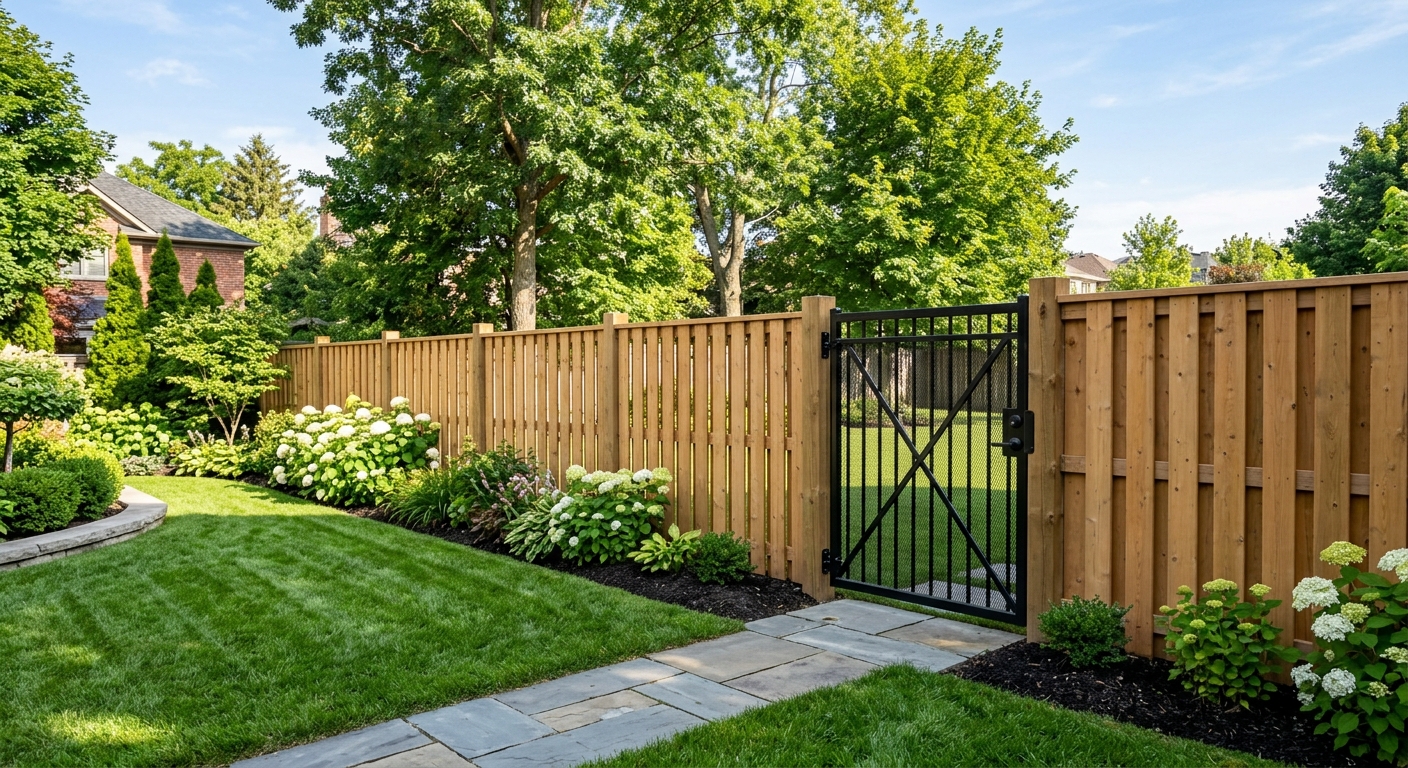
Fencing options and costs in Glenwood
In Glenwood, choosing the right fence usually starts with balancing privacy, maintenance, and budget. With a population of 11,437 (Statistics Canada, 2021 Census), there’s steady ongoing demand for residential upgrades, especially around the established neighbourhood pockets where homeowners commonly replace aging boundary fences. Lower Mainland–Southwest jobs also move quickly because dense housing stock creates frequent yard-access and gate-work—each of which can change pricing. For many homeowners, the strongest local demand signal is the number of households actively investing in their properties, since fences are one of the most visible exterior projects.
Costs in the Lower Mainland–Southwest are shaped by mild but not trivial frost and wind conditions. Posts still need to be set below the design frost depth to limit heaving, and wetter Fraser Valley-style soils often mean deeper holes, more concrete, and more labour than a dry-site install. At the same time, the region’s weather can accelerate wood wear when treatments are skipped or posts aren’t properly sealed. You’ll feel this in places like the older residential stretches near the core of Glenwood, where crews frequently do replacement work alongside driveway and side-yard access constraints. All of these factors are why two quotes for the “same length” can land far apart.
Use the table below as a realistic starting point for comparing materials and expected performance before you request itemised pricing from contractors in Glenwood.
| Material |
Lifespan |
Maintenance |
Privacy Rating |
Price per Linear Foot |
| Pressure-treated pine (standard wood) |
10–15 years |
Stain/seal every 2–3 years to reduce grey weathering |
Medium to high (solid panels) |
$55–$95 |
| Cedar (natural rot resistance) |
15–25 years |
Light staining or sealing as needed (typically every 2–4 years) |
High (solid boards) |
$70–$115 |
| Vinyl / PVC (no-maintenance) |
20–30 years |
Wash occasionally; no staining |
High (solid privacy styles) |
$75–$130 |
| Chain-link (galvanized steel) |
25–40 years |
Minimal; occasional coating touch-ups if damaged |
Low (privacy requires slats or landscaping) |
$30–$55 |
| Aluminum ornamental |
25–40 years |
Wash periodically; check hinges after storms |
Low to medium (ornamental spacing) |
$90–$170 |
| Composite / recycled material |
25–35 years |
Minimal; clean and inspect fasteners |
Medium to high (panel styles vary) |
$95–$160 |
Prices are estimates only and vary by project scope, site access and material selection.
What affects the price of fencing in Glenwood
In Glenwood and across the Lower Mainland–Southwest, fence quotes can vary by 30–50% for the same general job because the “hidden” drivers—soil conditions, post setting depth, slope, access, and gate complexity—aren’t the same from property to property. Even when you select a similar material, contractor labour can change materially based on whether the crew can set posts quickly or has to manage wet ground, narrow side yards, and disposal of old fencing. That same variability is why British Columbia pricing often feels higher than people expect: crews build for wind and for wetter ground that makes proper post anchoring more labour-intensive.
Frost and wind are the two big engineering reasons posts cost more here than a simple surface-set install. Frost line depth sets how deep posts must be set; a practical rule used by many crews is to place posts roughly 4–6 inches below the design frost depth, which in many BC coastal and valley climates is still often more than the “bare minimum” you see in online DIY guides. In colder Ontario and Alberta regions you’d commonly see post setting go about 1.5–2.0 m into the ground, which is one reason those regions can push material and concrete costs up sharply; while Glenwood is milder, the Lower Mainland–Southwest still pushes contractors to set posts properly and often use concrete for corner posts, privacy runs, and gate posts. Wind exposure also matters: taller solid panels and more open sites need stronger posts and tighter spacing, which raises labour and sometimes hardware costs.
In local conditions, these examples commonly move the needle: (1) wet or clay-forward soil can require deeper holes and more concrete to achieve stable set—adding material and time; (2) a sloped yard can require stepped or raked panels, which increases labour and trim waste; (3) old fence removal can add haul-away and dump fees, especially when old treated lumber isn’t clean for reuse. If you compare options, the mid-range wood band (often about $55–$95 installed, depending on style) can become close to vinyl/PVC pricing (about $75–$130) when you’re adding deeper post sets, extra gates, and disposal. For a typical 40–60 linear foot side fence, those differences can easily show up as a several-thousand-dollar swing between “basic” and “properly engineered” installations.
| Price Factor |
Why It Matters |
Cost Impact |
| Fence length in linear feet — the primary cost driver |
More linear feet means more posts, rails, labour hours, and materials |
High impact (linear relationship) |
| Post depth required — frost line determines post length and hole depth |
Deeper holes reduce heaving risk but increase digging time and hardware needs |
Medium to high impact |
| Post setting method — concrete vs. gravel pack vs. driven posts |
Concrete adds materials and curing considerations; gravel packs can reduce cost but must match soil |
Medium impact |
| Material choice — vinyl vs. cedar vs. chain-link |
Material cost and structural requirements differ, affecting both labour and hardware |
High impact |
| Gate count and type — walk-through vs. drive-through (double) |
Gates require extra framing, hinges, latches, and often stronger end posts |
Medium to high impact |
| Grade and terrain — sloped yards require stepped or raked panels |
Slopes require custom layout, extra rails, and more cutting |
Medium impact |
| Old fence removal and disposal |
Includes labour for demolition, hauling, and possible dump fees |
Medium impact |
| Permit fees and survey / property line locate |
Some heights and corner locations require permits; locating prevents encroachment disputes |
Low to medium impact |
Permits & regulations in British Columbia
In British Columbia, fences above a height threshold often require a building permit—commonly around 2.0 m (6.5 ft) for rear yards and roughly 1.0–1.2 m (3–4 ft) for the front or at corners, depending on the exact municipal rules. Even when you do not expect a permit, your fence must still respect property lines and municipal setback bylaws. For Glenwood homeowners, the practical takeaway is simple: if you’re planning a tall privacy fence (especially along a rear boundary) or you’re placing it near a corner, confirm requirements before a post hole is dug.
Before any digging, call for utility locates. In BC you’d use BC 1 Call; doing this protects you from service strikes and also keeps your contractor aligned with safe-work expectations. Next, obtain a survey or property line locate (at minimum, locate and confirm your pins/markers) so you don’t build over a boundary. Shared fence ownership is governed by provincial line-fences legislation, which matters if you’re planning to replace a boundary fence or split the cost with a neighbour.
Work that DOES typically require a permit: new fence construction or replacement that exceeds the height threshold (often especially at rear, corners, or where visibility rules apply), and any change that affects setbacks. Work that typically does NOT: like-for-like fence replacements under the threshold in the same location, assuming setbacks and property lines are unchanged (still confirm locally).
Step-by-step licence and coverage checks: ask the contractor for (1) proof of trades licensing where applicable, (2) a current certificate of liability insurance naming you as additional insured if possible, and (3) evidence of coverage for workers through WSBC (WorkSafeBC) for employees/subcontractors. Verify documents directly by checking the relevant online registry for current status, then ensure the certificate includes coverage limits, effective dates, and the correct business name. Finally, request a clearance letter or equivalent proof when available, and save copies with your contract paperwork.
Choosing the right fence material for Glenwood
Choosing the right fence material in Glenwood is mostly about matching your priorities—privacy, low maintenance, and budget—to the local climate reality: mild temperatures, wet stretches, and winds that can rack lighter panels. Pressure-treated pine is the budget-friendly option, but it needs staining or sealing every 2–3 years to prevent the boards from greying and to slow surface checking. Cedar looks great and resists rot better than pine, but it still benefits from periodic sealing, especially at post locations where water sits longer. Vinyl/PVC offers no-sanding and minimal upkeep, but in extreme cold snaps it can be more brittle than wood if it isn’t installed with correct expansion and properly reinforced corners; that said, for many Lower Mainland–Southwest homeowners it’s a strong “set it and forget it” choice at a higher upfront price.
Chain-link is usually the lowest installed cost and lasts a long time, but it won’t provide privacy unless you add privacy slats or trellised landscaping. Aluminum ornamental fencing is rust-resistant and stable in wet weather, yet it’s generally not a privacy fence because of its open design. For solid privacy, the material selection typically lands on wood (mid-range) or vinyl/PVC (higher upfront).
Post-depth and setting matter regardless of material. Lower Mainland–Southwest frost conditions mean posts still often need to be set below the frost line to prevent heaving; contractors commonly set deeper than DIY minimums and use concrete for corner posts, privacy runs, and gate hardware. For wind exposure, heavier-duty posts and tighter spacing reduce sway—particularly for solid wood and vinyl privacy styles. Snow load is less about heavy accumulation and more about impacts from wind-driven melt and freeze-thaw cycles around post bases.
As a dollar example: if a vinyl privacy section costs about $75–$130 per linear foot installed, but wood privacy lands around $55–$95 per linear foot, the extra $20–$35 per foot can be justified when you want to avoid recurring staining and repairs—especially if your fence faces wet ground and you’d otherwise need to maintain consistently for many years. If you’re comfortable with periodic maintenance and want to keep first costs down, cedar or pressure-treated pine often makes more sense for Glenwood yards where access is straightforward.
| Material |
Cold Tolerance |
Lifespan |
Annual Maintenance |
Best For |
Price Band |
| Pressure-treated pine |
Good with proper sealing; treat for wet cycles |
10–15 years |
Stain/seal every 2–3 years (plus spot checks after storms) |
Best budget privacy when you’ll maintain it |
$55–$95 |
| Cedar |
Good; performs well in damp coastal-style conditions |
15–25 years |
Typically every 2–4 years depending on sun and exposure |
Better look and rot resistance with moderate upkeep |
$70–$115 |
| Vinyl / PVC |
Very good; avoid incorrect installation and ensure spacing |
20–30 years |
Occasional wash and inspection of hardware |
No-maintenance privacy and consistent appearance |
$75–$130 |
| Chain-link |
Excellent; durable galvanization resists wet cycles |
25–40 years |
Minimal (inspect tension and any coatings) |
Security and airflow with low privacy needs |
$30–$55 |
| Aluminum ornamental |
Excellent; powder-coated finish handles wet weather |
25–40 years |
Wash and check fasteners after high winds |
Decorative boundaries that resist rust |
$90–$170 |
| Composite / recycled |
Good; stable in wet climates when installed correctly |
25–35 years |
Low; occasional cleaning and fastener checks |
Low-maintenance privacy in a mid-to-higher budget |
$95–$160 |
How to choose a fencing contractor in Glenwood
When you’re hiring a fencing contractor in Glenwood, verify coverage and credentials before you sign. In British Columbia, request (1) proof of business registration and any applicable trade authorization, (2) liability insurance certificates showing adequate coverage limits, and (3) evidence that workers are covered under WSBC (WorkSafeBC). How to check each: look up the business details through relevant online registry sources, then review the certificate of insurance for the correct legal name, effective dates, and whether you’re listed as an additional insured. For WSBC, ask for a clearance letter or documented account status—don’t accept a verbal “we’re covered.”
Next, get 2–3 itemised written quotes (not just a lump sum). A good quote breaks labour + materials separately and clearly lists post spacing, post depth and setting method, gate hardware, rail types, and finish grade for wood. Read the scope carefully: what is excluded (for example, rock removal, tree trimming, concrete sidewalks through the run, or replacing footings)? Is permit paperwork included if your fence height triggers a permit? Is disposal of old material included, and where will it be hauled? For warranty, ask for two things: workmanship warranty length and product/manufacturer warranty terms. Confirm whether the warranty is transferable if you sell your home.
Payment schedule matters: never pay more than 10–15% upfront. Hold back payment until the job is complete, gates operate smoothly, and final alignment matches the approved layout. Ask for a start date and a completion estimate in writing, including allowances for weather delays. A dependable crew in the Lower Mainland–Southwest will plan around wet ground and will set posts properly despite mild but unpredictable conditions.
- Confirm the quote includes post depth and setting method, not just “concrete included.”
- Ask for material specifications (board thickness, cedar vs. grade, vinyl profile, and hardware quality).
- Check that gate hardware is listed (hinges, latch type, and reinforcement details).
- Ensure labour is itemised separately from materials so you can compare like-for-like scope.
- Verify disposal/haul-away is included if you’re removing an old fence.
- Confirm whether permits and property line locating are included or billed separately.
- Review the workmanship warranty length and what it covers (posts, rails, alignment, sagging).
- Confirm the product/manufacturer warranty terms and whether it transfers to a new owner.
- Match the proposed fence height to BC permit thresholds to avoid surprises mid-job.
- Ask how they handle sloped yards (stepped vs. raked panels) and who designs the layout.
- Verify payment schedule: only 10–15% deposit, with a holdback until completion.
- Get start and completion timelines in writing, including how weather could affect scheduling.
Red flags I see in Glenwood include contractors who: (1) won’t show insurance/WSBC documentation when asked, (2) quote without stating post depth or setting method, (3) provide only a lump-sum number without itemisation, (4) ignore utility locates and want to dig immediately, and (5) demand a large upfront deposit or won’t put the timeline and scope in writing.
Frequently asked questions — fencing in Glenwood
Can I install a fence on a slope in Glenwood?
Yes, you can install a fence on a slope in Glenwood, and it’s fairly common in the Lower Mainland–Southwest where yards aren’t perfectly level. The key is choosing the right layout method: stepped panels follow the grade with small “steps,” while raked panels follow the slope continuously. A contractor should also account for water flow so you don’t create pockets where rain collects around post bases. In BC, if your fence height triggers a permit threshold (often around 2.0 m at the rear and lower in front/corner areas), your layout plan still needs to respect setbacks and visibility rules. If you’re comparing costs, slope work can push labour up because of extra measuring, cutting, and rail adjustments—so don’t compare only total linear feet.
What is the most weather-resistant fence for Glenwood's climate?
For Glenwood and the Lower Mainland–Southwest, vinyl/PVC and properly built cedar are often the most weather-tolerant options, provided posts are set correctly below frost influence and the bases are sealed against standing water. Vinyl is popular because it doesn’t rot or require staining, and it typically sits in the $75–$130 per linear foot installed band depending on style and gate needs. Cedar is naturally rot resistant and can last longer than standard pine, but it still benefits from sealing and good air flow so it dries between wet periods. Chain-link is also extremely resilient and long-lasting for durability, but it won’t provide privacy without slats or landscaping.
How do I prevent wood fence rot in Glenwood?
Rot prevention in British Columbia usually comes down to the details around posts and water management. First, ensure proper post setting depth and use an appropriate setting method—many crews use concrete for corner posts, gate posts, and privacy runs to stabilise the structure in wet soils. Second, keep wood end-grain protected: top caps, good rail alignment, and consistent sealing reduce water sitting on boards. Third, don’t bury more treated wood than necessary; even treated lumber can fail faster when constantly wet at the ground line. Finally, plan maintenance: pressure-treated pine often needs staining/sealing every 2–3 years, while cedar may need it less often but shouldn’t be ignored. If you’re comparing budgets, wood fences may land in the $55–$95 installed band, but neglecting maintenance can shorten lifespan quickly.
What is the cost per linear foot for fencing in Glenwood?
In Glenwood, the installed cost per linear foot depends on material and how complex your site is (access, slope, post depth/setting, and gates). As a practical guide for this area: chain-link is often the lowest around $30–$55 per linear foot, pressure-treated wood typically sits near $55–$95, and vinyl/PVC usually lands around $75–$130 installed. If you’re looking at aluminum ornamental, expect higher pricing, commonly $90–$170. Wet soil that requires deeper holes, plus gate hardware and removal of an old fence, can move the final number upward even within the same material category—so always ask for an itemised quote that states post depth and setting method.
Should I repair or replace my old fence in Glenwood?
Often, you can repair sections if the posts are still sound and the fence hasn’t lost its line and tension. But if you’re seeing leaning posts, widespread rot at ground contact points, or multiple rails failing, replacement is usually the smarter long-term move—especially in the wet cycles common across the Lower Mainland–Southwest. Ask your contractor to check post integrity (not just boards), gate alignment, and how water is sitting at the base. If only a small section is damaged and your posts are solid, repairs can reduce upfront cost. If repairs are needed in many areas, replacement can be more cost-effective because you’re resetting the structural foundation in one project.
How do I handle a fence dispute with a neighbour in British Columbia?
Fence disputes in British Columbia are usually best handled in a calm, documented way. Start by confirming the boundary: get a survey or property line locate if there’s any uncertainty about pins and setbacks. Next, gather your paperwork—any permits, original fence agreements, and photos showing the fence condition over time. If the fence is shared, provincial line-fences rules may affect how costs and responsibilities are determined. For Glenwood homeowners, also review any municipal setback bylaws and permit decisions, because an “it was always there” assumption can still be challenged if the fence doesn’t meet requirements. If you can’t resolve it directly, consider mediation or legal advice. Avoid moving or removing a fence during an unresolved dispute without getting guidance, since boundary issues can quickly escalate.