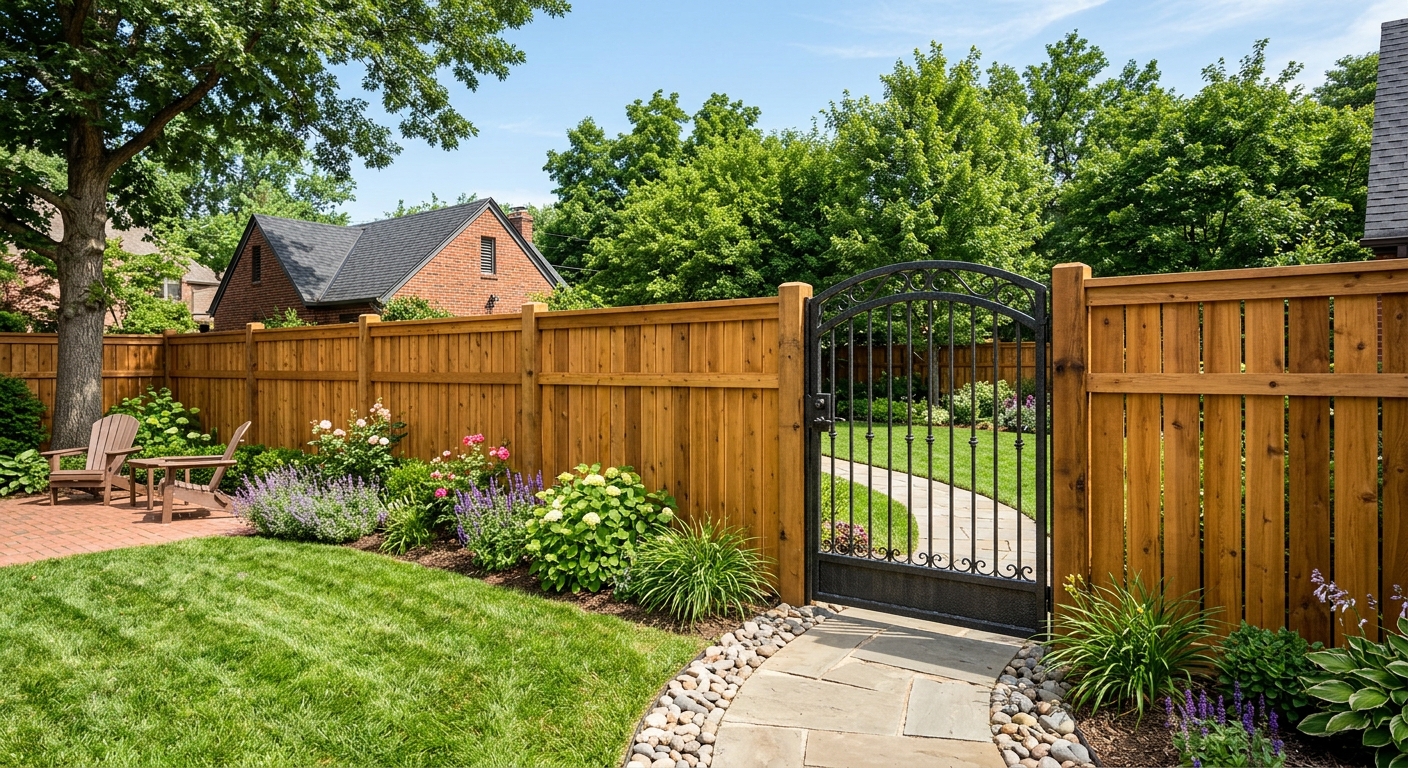
Fencing options and costs in Brighouse-City Centre
Brighouse-City Centre is a busy pocket of Richmond where homeowners often want neat, durable boundaries without turning backyard maintenance into a full-time job. With a population of 62,855 people (Statistics Canada, 2021 Census), there’s steady demand for residential fencing, especially around family-oriented streets and detached homes that need consistent privacy and curb appeal. In this area, the Lower Mainland–Southwest market (think Richmond and Burnaby-style lots nearby) shapes both pricing and availability: jobs tend to be busier during mild spring weather, and crews price for wet-site conditions because soils near the Fraser Valley can stay soft and muddy even when temperatures are mild.
Climate is the other big driver. We see mild but not trivial frost and wind conditions—so posts still need to be set below the design frost depth to reduce heaving, and wind exposure matters for panel strength and spacing. If you’re in a more open, wind-prone lane, solid or semi-solid sections often require stronger posts or closer bracing than you’d choose for sheltered lots. Cedar and pressure-treated wood also need correct finishing so moisture doesn’t accelerate rot and staining problems.
Trade-wise, fencing demand is especially high around the residential stretches near Brighouse Village and the surrounding neighbourhood blocks where properties frequently change hands and upgrades happen quickly. From budget-friendly security to high-privacy backyard enclosures, the best choice depends on how much wind you get, how level your grade is, and how hands-on you want to be with maintenance. Below is a practical comparison table to help you budget for your install.
| Material |
Lifespan |
Maintenance |
Privacy Rating |
Price per Linear Foot |
| Pressure-treated pine (standard wood) |
10–15 years |
Stain/seal every 2–3 years |
Good (solid or close picket) |
$55–$95 |
| Cedar (natural rot resistance) |
15–25 years |
Stain/seal every 2–4 years |
Very good (solid panels) |
$65–$105 |
| Vinyl / PVC (no-maintenance) |
20–30 years |
Rinse/wash as needed |
Very good (solid or semi-solid) |
$75–$130 |
| Chain-link (galvanized steel) |
20–40 years |
Occasional tension/spring check |
Low to moderate (wire visibility) |
$30–$55 |
| Aluminum ornamental |
25–40 years |
Wash annually; no rust |
Low (look-through) |
$90–$170 |
| Composite / recycled material |
20–30 years |
Minimal (no painting) |
Good to very good (board systems) |
$80–$140 |
Prices are estimates only and vary by project scope, site access and material selection.
What affects the price of fencing in Brighouse-City Centre
In Brighouse-City Centre, two quotes for what sounds like the same fence can easily diverge by 30–50% across the Lower Mainland–Southwest and other British Columbia markets. The difference usually isn’t the material on paper—it’s the “site reality”: how long posts must be set, how hard the ground is to dig, how many gates and corners you have, whether there’s removal and disposal, and how wind-exposed your yard is. In Richmond and nearby communities, crews also account for wet soil and labour time for more careful post-setting, because slumped holes and soft footing can create long-term problems if corners are cut.
Frost is a practical cost driver even in coastal BC. Post holes typically require embedment about 4–6 inches below the design frost depth to prevent heaving; in cold regions this translates to deeper holes and often concrete setting. While Brighouse-City Centre tends to have shallower coastal frost than interior provinces, contractors still frequently go deeper than the bare minimum and use concrete for corner posts, gate posts, and privacy panel sections where leverage is highest. That can shift a job from the lower end of the wood band ($55–$95) toward mid-range once deeper holes and extra bracing are included. Wind exposure also changes the engineering: stronger posts, tighter spacing, and heavier hardware are common—especially if you choose solid wood, vinyl privacy, or composite systems.
Concrete examples from typical installs: (1) a sloped rear yard often requires stepped rails or raked panels, which increases layout time and sometimes adds material waste; (2) wet, clay-heavy soil can mean more labour for clean holes and higher concrete volume to properly seat posts; (3) a gate with heavier latching hardware can require upsizing posts and adding extra concrete—pushing vinyl/PVC from the lower end of the $75–$130 band toward the higher end if the frame needs reinforcement.
| Price Factor |
Why It Matters |
Cost Impact |
| Fence length in linear feet |
Most labour, posts, rails, and materials scale directly with total length |
Largest swing—often sets the overall budget |
| Post depth required |
Frost line determines embedment, hole depth, and often post length |
Can add concrete, longer lumber, and extra labour |
| Post setting method |
Concrete vs gravel pack vs driven posts changes stability in damp soils |
Concrete setting increases material and labour time |
| Material choice |
Vinyl vs cedar vs chain-link affects both fabrication and installation speed |
Shifts you between low ($30–$55) and premium ($90–$170) bands |
| Gate count and type |
Drive-through and double gates require stronger frames and hardware |
Often increases cost more than expected |
| Grade and terrain |
Sloped yards require stepped or raked designs and extra layout |
Higher labour; sometimes more components |
| Old fence removal and disposal |
Hauling, dump fees, and demolition time vary by condition |
Can add a noticeable one-time charge |
| Permit fees and survey / property line locate |
Some fence heights and configurations trigger permit steps or verification |
Raises upfront costs and scheduling time |
Permits & regulations in British Columbia
In British Columbia, fences above a height threshold often require a building permit: commonly, fences around 2.0 m (6.5 ft) at the rear and 1.0–1.2 m (3–4 ft) near the front or corner may fall into permit territory. Even when you’re not sure, plan to confirm the applicable height and location rules for your specific boundary and setback. All fencing must respect property lines and the local setback bylaws, because installing too far into a neighbour’s yard is one of the most common causes of disputes.
Before any digging, have utilities located. In BC, you’ll typically use BC 1 Call (and follow any required lead time). Next, get a survey or locate your property pins so your posts sit on your land rather than on assumptions from old stakes, which are frequently inaccurate over time. If you share a boundary fence, line-fence rules in BC govern shared responsibilities—so it’s wise to document agreements in writing.
What usually requires a permit: higher fences that exceed the typical thresholds, and sometimes larger gate structures or boundary conditions that trigger local review. What typically doesn’t: smaller decorative fences or lower backyard fences that remain under the threshold—though your municipality’s bylaw still applies.
Step-by-step contractor checks in Brighouse-City Centre (and across BC): ask for (1) the contractor’s BC business/licence details and verify via the provincial registry website your contractor provides; (2) a current certificate of insurance showing liability coverage that matches fencing work; and (3) proof of clear coverage for workers through the applicable workplace safety system (often shown as an account status or clearance letter). A reputable crew will provide these documents quickly—before you sign.
Choosing the right fence material for Brighouse-City Centre
Choosing a fencing material in Brighouse-City Centre is mostly about matching your priorities—privacy, low maintenance, lifespan, and budget—to the reality of Lower Mainland–Southwest weather. We deal with mild but wet conditions, plus wind that can stress panels. That combination rewards materials installed with correct post embedment (to limit heaving) and good detailing around gates and corners.
Pressure-treated pine is typically the budget path, but it’s also the one that needs you most. Expect staining or sealing every 2–3 years to limit grey weathering and moisture-driven surface breakdown. Cedar offers better natural rot resistance and a warmer look; it still benefits from periodic staining, but it usually holds appearance longer—often 15–25 years depending on coating and sun exposure.
Vinyl / PVC brings “wash-and-go” convenience, and in the Brighouse-City Centre market it commonly falls within the $75–$130 per linear foot band. It’s good for owners who don’t want annual touch-ups, but in extreme cold it can become more brittle; proper framing and flex allowances help. Chain-link stays the lowest-cost option, usually $30–$55 per linear foot, and it’s durable long-term, but it doesn’t provide privacy without add-ons like slats or screening. Aluminum ornamental resists rust and stays attractive with minimal upkeep, but it’s typically more ornamental than private; it often lands in the $90–$170 range depending on height and infill.
Post depth: even though coastal BC frost can be shallower than interior regions, Lower Mainland–Southwest contractors frequently set posts deeper than “minimum” and use concrete-set posts for corner and gate points. For wind and snow load considerations, tighter spacing and stronger framing are especially important for solid privacy designs.
Dollar example: if you’re comparing pressure-treated pine to vinyl privacy for the same length, moving from a $55–$95 wood band toward the $75–$130 vinyl band can be justified when you want to skip stain cycles and reduce future maintenance labour. If budget is the priority and you’re willing to maintain, wood can still be the smarter choice—just plan for regular coating to protect the investment.
| Material |
Cold Tolerance |
Lifespan |
Annual Maintenance |
Best For |
Price Band |
| Pressure-treated pine |
Good with proper staining and dry-matter detailing |
10–15 years |
Light prep/spot touch-ups; stain/seal every 2–3 years |
Lower upfront cost while accepting maintenance |
$55–$95 |
| Cedar |
Good; stable when properly coated |
15–25 years |
Stain/seal every 2–4 years; visual checks after storms |
Attractive privacy with better rot resistance |
$65–$105 |
| Vinyl / PVC |
Good; may be more brittle in extreme cold |
20–30 years |
Wash as needed |
Low-maintenance privacy in wet coastal conditions |
$75–$130 |
| Chain-link |
Excellent |
20–40 years |
Minimal; occasional tension/hardware checks |
Security budget fencing with long service life |
$30–$55 |
| Aluminum ornamental |
Excellent; no rust |
25–40 years |
Wash annually; inspect fittings |
Curb appeal with visibility |
$90–$170 |
| Composite / recycled |
Good; stable boards with correct framing |
20–30 years |
Minimal; occasional cleaning |
Privacy boards with reduced upkeep |
$80–$140 |
How to choose a fencing contractor in Brighouse-City Centre
Choosing the right fencing contractor in Brighouse-City Centre starts with verification. In British Columbia, you should confirm three things: (1) licensing/registration for the contractor or business entity (and ensure the person you’re dealing with matches the invoice name); (2) liability insurance with a certificate you can review; and (3) coverage for workers through the applicable workplace safety system, typically shown via a clearance letter or proof of active coverage. Ask for these before you book a site visit—good contractors want to be verified too.
Next, request 2–3 itemised written quotes. You want line items that separate labour, posts/footings, rails, panels, gates, concrete, hardware, and disposal. Avoid quotes that only show a single lump sum without showing what’s included. Read the scope carefully: is permit handling or permit pull included if needed, is the old fence removal included, and is topsoil restoration part of the finish? Also ask whether the contractor is allowing for fence line locate/survey verification or whether you’re expected to handle it.
Warranty matters. Ask for both the workmanship warranty length and the manufacturer/product warranty for the fence system. Confirm whether the warranty is transferable to you as the homeowner.
Payment schedule should be conservative: never pay more than 10–15% upfront. Hold back the remainder until the job is complete and cleaned up. Finally, get your start date and completion estimate in writing so the schedule is clear.
- Verify BC business details match the quote and invoice name.
- Ask for a current certificate of liability insurance.
- Request proof of worker coverage/clearance letter for active compliance.
- Get 2–3 itemised quotes (labour vs materials vs disposal).
- Confirm post-depth and setting method in writing (concrete where required).
- Clarify whether they include permit pull, if applicable to your height/location.
- Confirm gate hardware type, swing direction, and reinforcement details.
- Ask how they handle sloped yards (racked panels vs stepped layouts).
- Confirm how they measure fence line (locate/survey vs assumptions).
- Request warranty terms for both workmanship and materials.
- Set a payment schedule with a small deposit and a final holdback.
- Get a written start date, completion window, and weather contingency notes.
Red flags in Brighouse-City Centre: a quote that won’t discuss post depth or concrete setting; missing insurance or unwillingness to provide proof of coverage; lump-sum pricing with no breakdown of gates, panels, rails, and removal; vague warranty wording (“best effort” language); and pushing large deposits (beyond 10–15%) before any work starts.
Frequently asked questions — fencing in Brighouse-City Centre
What is the cost per linear foot for fencing in Brighouse-City Centre?
For Brighouse-City Centre, typical installed pricing generally tracks the Lower Mainland–Southwest bands. Chain-link usually lands around $30–$55 per linear foot, wood commonly falls in the $55–$95 range, and vinyl/PVC often sits in the $75–$130 band depending on height, panel type, and gate requirements. Higher-end options like aluminum ornamental typically run from $90–$170 per linear foot in ordinary residential setups. Your final number can move based on post depth, soil softness, wind exposure, and whether removal/disposal is included.
Should I repair or replace my old fence in Brighouse-City Centre?
Repair can be worthwhile when the fence line is sound: posts are stable, rails aren’t rotted through, and damage is limited to a few boards or a section near a gate. In wet coastal conditions around British Columbia’s Lower Mainland–Southwest, the real question is usually the posts and the bottom portions—if you see post wobble, significant rot at grade, or widespread staining failure, replacement is often more cost-effective long-term. A small repair might cover a handful of panels, but if multiple posts need resetting or concrete footings have undermined, the savings usually shrink. For a full replacement, budget within the wood band ($55–$95) or vinyl band ($75–$130) depending on what you choose and how many gates are involved.
How do I handle a fence dispute with a neighbour in British Columbia?
Fence disputes are common in British Columbia because property lines and fence responsibility can be misunderstood. Start by documenting everything: photos, measurements, and the location of your property pins or any survey. In BC, verify the boundary using a proper locate or survey rather than older fence sight lines. Then communicate calmly and in writing—propose a practical solution like a joint inspection and agreement on the shared components. If height thresholds may trigger permits, include that information so you’re not arguing about aesthetics while bypassing the rules. If you can’t agree, take advice from a professional who deals with line issues (often a surveyor first). In most cases, clear documentation helps more than debating opinions.
What fence style offers the best wind resistance in Brighouse-City Centre?
In Brighouse-City Centre, wind resistance usually comes down to how the fence is braced and how posts are set—not just the decorative style. Open styles like lightweight ornamental panels can flutter if spacing is too wide or if posts aren’t reinforced at corners and gates. Solid or privacy-style fencing can catch more wind, so it needs appropriate post depth and stronger framing—often concrete-set corner and gate posts and tighter spacing through the run. When your yard is more exposed to wind, choosing a well-framed privacy system (wood, vinyl, or composite) with proper hardware and bracing typically performs better than a thin, lightly supported layout. Chain-link is generally resilient structurally, but it won’t provide much privacy; it may still be wind-fair if it’s well tensioned.
How much does a fence cost in Brighouse-City Centre?
The total cost depends on length, height, number of corners, and whether you need gates and removal. As a budgeting guide, material bands for installed residential fences in the Lower Mainland–Southwest typically track chain-link at $30–$55, wood at $55–$95, and vinyl/PVC at $75–$130 per linear foot. If you’re comparing options, remember that gates and deeper post setting can move the final cost more than changing from one finish to another. Wet soil conditions in this region can increase labour because crews need to set posts carefully and often use concrete for key points to avoid long-term leaning. The best next step is an itemised quote that shows labour, footings, and disposal separately.
How deep should fence posts be for Brighouse-City Centre's frost?
Even in coastal BC, frost and freeze-thaw still affect how fence posts perform. Contractors typically set posts below the design frost depth to reduce heaving risk—often described as placing posts about 4–6 inches below the frost line. Practically for British Columbia jobs like those in Brighouse-City Centre, that can mean deeper holes than you’d guess from “minimum” rules, especially in wetter, heavier soils. Concrete setting is commonly used for corner posts, gate posts, and privacy panel supports, because those locations experience the most leverage and movement. Your exact embedment should be determined by site conditions and the contractor’s local frost-depth assumptions, so ask to see how they’ll set post depth and whether they’ll use concrete where required.