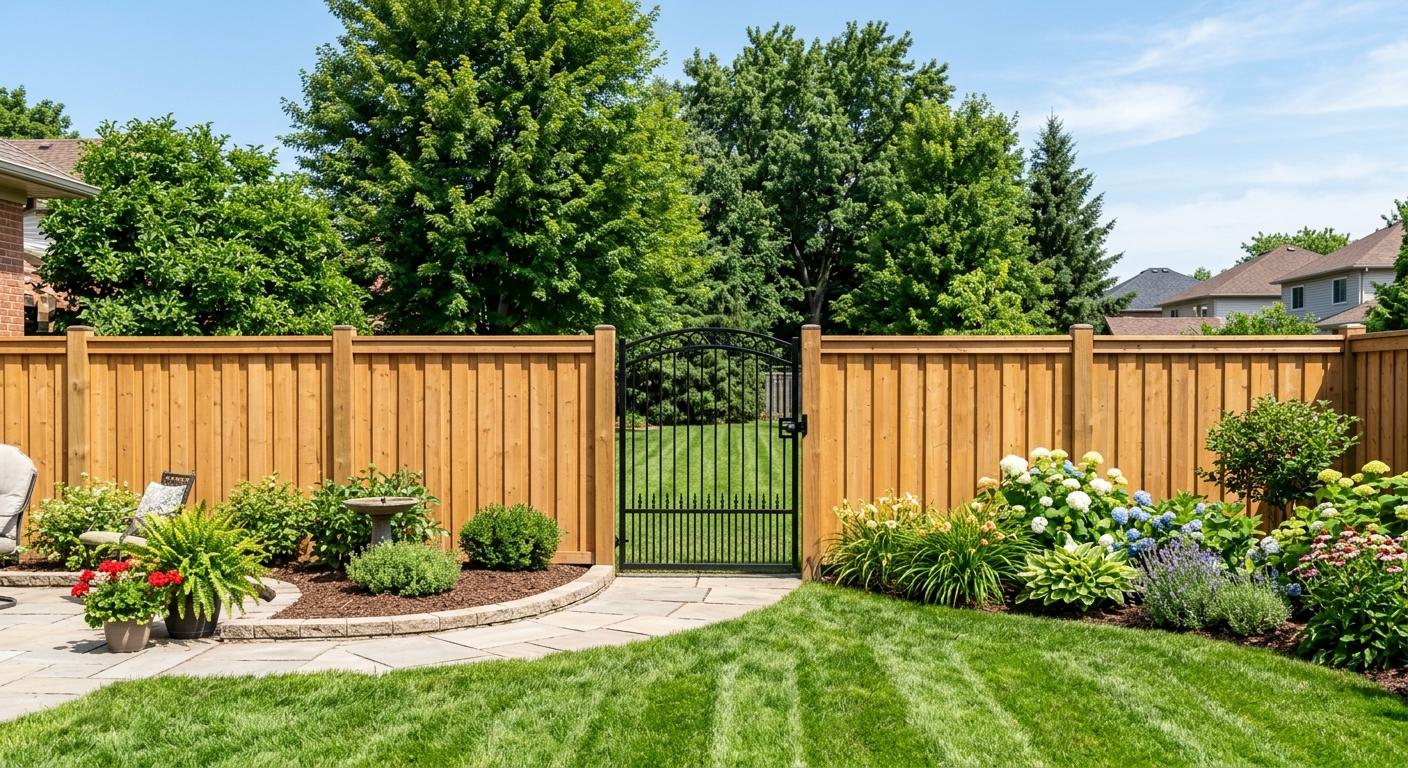
Fencing options and costs in Mary Hill
Mary Hill homeowners often start their fencing search by balancing curb appeal with privacy and upkeep. With a 2021 population of 3,974 people in Mary Hill (Statistics Canada, 2021 Census), demand is concentrated around established streets where properties turn over and landscaping projects run year-round. In neighbourhoods with many single-family homes, each new landscaping or renovation plan can translate into a fresh fence quote, so contractor availability and scheduling can tighten during spring installs. That matters because Lower Mainland–Southwest jobs are priced around mild but not trivial frost and wind conditions: crews still need posts set below frost-susceptible soils to limit heaving, and wetter Fraser Valley soils commonly mean deeper holes, more concrete, and more labour than a dry-site install. At the same time, coastal BC’s freeze–thaw cycles and wind-driven rain can accelerate wood wear if materials and sealing aren’t done right.
In Mary Hill, fencing is especially in demand around the more established residential pockets near West Mary Hill, where privacy screening and property definition are common goals for yards that back onto lanes and park edges. The result is that two quotes for the “same” height can still differ noticeably based on slope, soil type, gate work, and how the contractor handles post embedment, bracing and disposal. Use the table below as a realistic baseline for material choice before you compare line items from local installers.
| Material |
Lifespan |
Maintenance |
Privacy Rating |
Price per Linear Foot |
Price Range |
| Pressure-treated pine (standard wood) |
10–15 years (typical residential) |
Stain/seal every 2–3 years; fastener checks |
6/10 (solid panels higher) |
$25–$40 |
$55–$95 |
| Cedar (natural rot resistance) |
15–25 years |
Re-stain/seal every 2–4 years; inspect posts annually |
7/10 (solid boards) |
$30–$55 |
$70–$120 |
| Vinyl / PVC (no-maintenance) |
20–30 years (material-dependent) |
Rinse and occasional panel/hardware checks |
8/10 (depending on slat style) |
$35–$60 |
$75–$130 |
| Chain-link (galvanized steel) |
25–40 years |
Minimal; straighten sections and replace damaged ties |
3/10 (privacy mesh optional) |
$22–$32 |
$30–$55 |
| Aluminum ornamental |
30–45 years |
Wash as needed; inspect gate hardware |
4/10 (ornamental pickets) |
$45–$75 |
$90–$170 |
| Composite / recycled material |
25–35 years |
Occasional wash; periodic fastener checks |
7/10 (often solid boards) |
$40–$70 |
$85–$150 |
Prices are estimates only and vary by project scope, site access and material selection.
What affects the price of fencing in Mary Hill
In the Lower Mainland–Southwest, fence quotes can vary by 30–50% for what looks like the same fence on paper because the real cost drivers are hidden in the details: post embedment depth, soil conditions, wind exposure, gate work and how much material has to be hauled or set around obstacles. British Columbia pricing also reflects labour availability in peak seasons, plus the fact that wetter ground can behave differently from neighbourhood to neighbourhood. For Mary Hill specifically, posts still generally need to be set well below frost-susceptible soils—often about 4–6 inches below the design frost depth—to reduce heaving risk and keep panels plumb. That’s why contractors may set posts deeper than a “bare minimum” install, particularly for corner posts, privacy panels, and gate posts where loads are concentrated.
To contrast costs, consider that a typical wood privacy run may land near the broader wood band (for installed pricing often in the $55–$95 range depending on height and finish), while vinyl/PVC jobs commonly sit higher (often $75–$130 installed) because the material and structural hardware cost more. Chain-link stays lowest cost (often $30–$55) but won’t provide true privacy without adding mesh or choosing a different panel style; aluminum usually costs more because of fabrication and hardware (often $90–$170).
Concrete examples from Mary Hill installations: (1) wetter Fraser Valley soils can require deeper holes and additional concrete for stability, increasing labour time; (2) sloped yards often need stepped or raked panels, which adds layout time and custom cutting; and (3) heavy gates (especially double-drive gates) increase bracing and post sizing requirements, which pushes both material and labour up. Even small differences in fence length can swing the total, since every extra linear foot means additional posts, rails and hardware.
| Price Factor |
Why It Matters |
Cost Impact |
| Fence length in linear feet |
Drives number of posts, rails, pickets/panels and hardware |
Largest swing; can change total by hundreds to thousands |
| Post depth required |
Frost heave risk means deeper holes and longer posts |
Commonly increases both material and excavation time |
| Post setting method |
Concrete vs gravel pack vs driven posts affects labour and stability |
Concrete-setting typically adds cost but improves long-term alignment |
| Material choice |
Structural requirements differ: vinyl needs braces, wood needs treatment |
Switching materials can shift the job by a major portion of the total |
| Gate count and type |
Double gates and privacy gates require stronger posts and hardware |
Often one of the biggest add-ons after length |
| Grade and terrain |
Slope requires stepped/raked layouts and extra measuring/cutting |
Increases labour and sometimes waste |
| Old fence removal and disposal |
Disassembly, haul-away and dumping fees add to labour |
Can add several hundred dollars or more depending on condition |
| Permit fees and survey / property line locate |
Ensures correct placement and avoids encroachment disputes |
Variable; can be minor on some jobs, larger on complex boundaries |
Permits & regulations in British Columbia
In British Columbia, fencing rules are tied to property lines and local bylaws, and fences above a height threshold—commonly around 2.0 m (6.5 ft) at the rear and about 1.0–1.2 m (3–4 ft) toward the front/corner—often require a building permit. Even when a permit is typically not required for shorter boundary fences, you still must respect setbacks and not place fencing over property line markers. Before digging any post hole, call for utility locates through the appropriate provincial service (commonly BC 1 Call) so you don’t hit underground services. Because fencing disputes can start from a few inches of misplacement, it’s smart to obtain a survey or at least a professional locate of property pins before installation.
Shared fence ownership is also important: in line-fence situations, provincial legislation generally governs how responsibilities and maintenance costs are handled where neighbours share a boundary structure. To protect yourself, confirm whether the fence is solely yours, shared, or part of an agreement before signing.
How to verify a contractor in Mary Hill (BC) before they start: check their British Columbia licensing status through the appropriate online registry, request a certificate of insurance showing general liability (and ensure the address/location matches your job), and confirm the coverage they carry for workers. Ask for proof of WSIB/WCB coverage (as applicable for their workforce) and keep copies with your contract. A clearance letter is sometimes used to confirm standing—request it if the company references their coverage status. Finally, insist your contractor’s scope clearly states what they will handle for permits (if required) and boundary location verification.
Choosing the right fence material for Mary Hill
Choosing a fence in Mary Hill is mostly about matching material to your priorities in a damp, wind-influenced Lower Mainland climate. Pressure-treated pine is the budget-friendly starting point, but it needs staining or sealing every 2–3 years to prevent grey weathering and to keep water from breaking down the surface faster. Cedar looks better and naturally resists rot, which is a plus in coastal moisture, but it still benefits from periodic maintenance to keep it looking clean and to protect boards at high-wet exposure points like near downspouts or low spots. Vinyl/PVC is the low-maintenance favourite: it won’t rot and usually only needs rinsing, but in extreme cold it can become brittle if the wrong grade is installed or if posts/rails aren’t set to manufacturer guidance. Chain-link is the longest-lasting, lowest upfront option, but it won’t provide privacy without adding privacy slats or mesh. Aluminum ornamental gives you rust-resistant style with good longevity, but it’s not the best choice if you want solid privacy.
Post-setting matters across materials. In Lower Mainland–Southwest conditions, posts often still go deeper than the “minimum” rule of thumb to reduce heaving risk, and contractors may use concrete for corner posts, gate posts and privacy panel sections—especially where soil stays wetter. That said, concrete is usually less critical for some lighter, non-privacy runs where proper embedment depth and bracing are achieved. Wind exposure can also push you toward tighter spacing and stronger framing; snow load and wet accumulation can add stress to rails and latching points, particularly for gates.
A practical example: if you’re deciding between wood and vinyl for a typical privacy run, the installed difference is often reflected in the broad ranges—wood commonly lands near $55–$95, while vinyl/PVC tends to land nearer $75–$130. If you expect to stay in the home long enough to avoid repeated staining costs, vinyl can be worth the premium; if budget is tight and you’re comfortable with maintenance, cedar or pressure-treated pine can still be a smart fit.
| Material |
Cold Tolerance |
Lifespan |
Annual Maintenance |
Best For |
Price Band |
| Pressure-treated pine |
Good with proper sealant and correct fasteners |
10–15 years |
Seal/stain every 2–3 years; quick hardware checks |
Budget privacy and a natural look |
$55–$95 |
| Cedar |
Good; handles BC moisture better than pine |
15–25 years |
Stain/seal every 2–4 years; inspect posts yearly |
Appearance and rot resistance |
$70–$120 |
| Vinyl / PVC |
Good; avoid overly stiff/unsupported spans in cold |
20–30 years |
Rinse; check posts/rails and latch alignment |
Low-maintenance privacy |
$75–$130 |
| Chain-link |
Good; galvanized steel withstands cold cycles |
25–40 years |
Minimal; straighten ties and replace damaged sections |
Security on a budget |
$30–$55 |
| Aluminum ornamental |
Good; doesn’t rot and resists corrosion |
30–45 years |
Wash as needed; check gates and base anchors |
Attractive curb definition without rust |
$90–$170 |
| Composite / recycled |
Good; choose manufacturer-rated posts and hardware |
25–35 years |
Occasional wash; periodic fastener checks |
Solid look with reduced wood maintenance |
$85–$150 |
How to choose a fencing contractor in Mary Hill
When you hire a fencing contractor in Mary Hill, start by verifying they’re properly covered and accountable. In British Columbia, request their contractor licensing details (and confirm the business is active in the relevant provincial registry). Then ask for a certificate of insurance for general liability—make sure it lists your job location/address and includes adequate limits for fencing work and site impact. If they’ll have crew on-site, confirm their workers’ coverage (WSIB/WCB as applicable) and request proof or a clearance letter if the company uses one to show current status. Don’t accept verbal assurances—ask for documents you can keep with your contract.
Next, get 2–3 itemised written quotes. You want the breakdown to show labour hours/rates, materials, post embedment approach, and any gate hardware costs—not just a lump sum. Confirm what’s included: permit pull (if needed), property line locate/survey steps, utility locates, and disposal of your old fence. A professional quote should specify fence height, panel type, post spacing, and whether concrete is used for posts and where.
Warranty matters too. Ask for the workmanship warranty length, the product/manufacturer warranty details, and whether warranties transfer to future owners if you sell. For payment, never pay more than 10–15% upfront; hold back a portion until the fence is complete, straight, and gates latch correctly. Finally, get a written start date and a completion estimate—fencing is weather-sensitive in BC, so the schedule should reflect seasonal access and material lead times.
- Ask for BC licence proof and confirm it matches the company name on the quote.
- Request general liability insurance with your job address listed.
- Verify WSIB/WCB coverage for workers (ask for proof/clearance).
- Require a site plan or sketch with dimensions, heights and gate locations.
- Confirm post depth and setting method (concrete vs gravel pack) in writing.
- Ensure the quote states post spacing and rail configuration by fence type.
- Check whether removal and disposal of the old fence is included.
- Confirm utility locate responsibility before digging starts.
- Ask if permit pull is included where the fence height triggers permitting.
- Review warranty: workmanship length and manufacturer warranty coverage.
- Make sure payment schedule aligns with progress—max 10–15% upfront.
- Get a written timeline with start date and completion target.
Common red flags in Mary Hill: quotes that don’t specify post embedment depth or concrete use, asking for large upfront payments without a schedule, vague “installed” pricing that doesn’t list gates/material grades, refusal to provide insurance/licensing documents, and skipping the conversation about property line location (survey/locate) before digging.
Frequently asked questions — fencing in Mary Hill
Wood vs vinyl vs aluminum fence — which is best?
In Mary Hill and across the Lower Mainland–Southwest, “best” depends on whether you want privacy, minimal upkeep, or a more ornamental look. Wood (pressure-treated pine) can be a good value, with installed pricing often aligning with the $55–$95 band, but it typically needs staining or sealing every 2–3 years to prevent premature weathering in our damp conditions. Vinyl/PVC is usually the lowest-maintenance pick for privacy: it commonly falls in the $75–$130 band and won’t rot like wood, though proper post and rail support is still important in winter cold snaps. Aluminum is best if you want a rust-resistant decorative barrier; it’s typically the higher-priced option (often $90–$170) and provides less privacy than solid wood or vinyl. If wind and gate reliability matter most, the best choice is the one with the strongest posts, correct spacing and properly designed gate hardware for your yard’s slope and access.
Do I need a permit to build a fence in British Columbia?
In British Columbia, fences above certain heights commonly require a building permit—often around 2.0 m (6.5 ft) at the rear and about 1.0–1.2 m (3–4 ft) toward the front or corner. Even when a permit is not typically triggered, the fence still must respect property lines and municipal setback/bylaw requirements. For a homeowner in Mary Hill, the safest approach is to ask your contractor to confirm whether your proposed height triggers permitting and to include that in the written scope. If permitting applies, your contractor should outline who pulls the permit and what documents are needed. Also remember to call for utility locates before any post holes are dug, and consider a survey/locate for pin-accurate placement to avoid boundary disputes with neighbours.
How long does a wood fence last in Mary Hill?
Wood life in Mary Hill depends heavily on species, installation quality, and maintenance. Pressure-treated pine is often installed as a budget privacy option and commonly lasts about 10–15 years if it’s stained/sealed regularly and posts are properly embedded for local frost-susceptible soils. Cedar can last longer—often 15–25 years—because it has better natural rot resistance in BC’s wetter conditions, but it still needs periodic maintenance to keep it looking good and to protect fasteners and board ends. The Lower Mainland–Southwest climate is mild, but not frost-free: contractors generally set posts deep enough to reduce heaving risk, and gates/corner posts usually deserve concrete setting for long-term alignment. If you want the longest life with wood, plan on maintenance and choose a contractor who specifies post depth, fastening approach and concrete use where needed.
Who owns and maintains a shared fence?
For shared fences in British Columbia, ownership and maintenance responsibilities are generally governed by provincial line-fence principles and local boundary realities. Practically, that means the fence is treated as a boundary structure where both neighbours may have rights and responsibilities—often depending on which side the fence was built on, how it was agreed upon at the time, and the actual boundary location. In Mary Hill, the best way to avoid surprises is to confirm property line placement (survey/locate if needed) before construction and discuss maintenance in writing with your neighbour if you’re coordinating a shared fence. When replacement is required due to damage, ask whether costs will be shared and document the agreement. Your contractor can help by installing to the correct line, but the ownership/cost split is usually a homeowner-to-homeowner conversation informed by the applicable provincial framework.
How do I find my property line before fencing?
Finding your property line is one of the most important steps in Mary Hill because fence mistakes are hard to fix after posts are set. Start with any existing survey documentation you already have from when the property was purchased or when a previous improvement was done. For accuracy, arrange for a professional property pin locate/survey before digging. Contractors can often guide you on what to look for, but they shouldn’t assume pins are correct without verification. Before any post holes are dug, also call for utility locates through the appropriate provincial service so you don’t hit underground lines. If your fence height or placement is close to a boundary, insist on a clear staking plan and confirm the line before signing the final layout. That extra step helps prevent encroachment disputes and saves cost on rework.
What's the most low-maintenance fence?
For low maintenance in Mary Hill and the Lower Mainland–Southwest, vinyl/PVC is usually the top choice for homeowners who don’t want to stain or seal. It’s typically designed for long-term durability and commonly sits in the installed $75–$130 band depending on height, panel style and gate hardware. Aluminum ornamental can also be very low maintenance because it resists rust; it’s often higher priced (commonly $90–$170) and is better suited for decorative definition than full privacy. Solid-wood fences require more upkeep—at minimum periodic inspection, and often staining every 2–3 years to keep the surface protected from damp weathering. Chain-link is very easy to maintain, but privacy is limited unless you add slats/mesh. If you want the “set it and forget it” approach, vinyl/PVC or well-installed aluminum are usually the most practical.