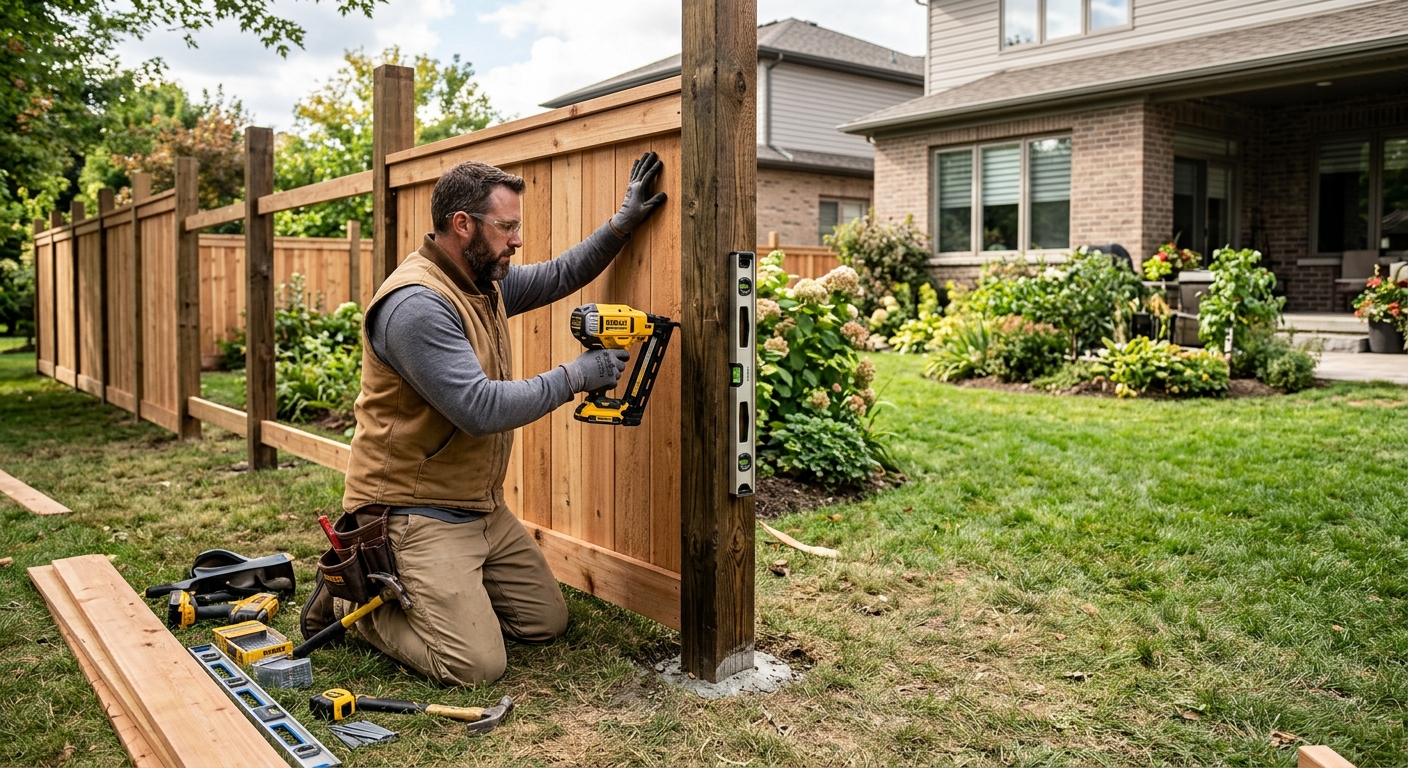
Fencing options and costs in Lumby
In Lumby, choosing a fencing style usually starts with how much privacy you want, how long you need it to last, and whether you’re working with frost-prone soils common to the Thompson–Okanagan. With 700 homeowner households (83.8% of all households) and a housing stock where 66.7% of dwellings are single-detached homes, demand for boundary and backyard fencing tends to be steady. It’s also common to see lots with older homes—42.5% of residences were built before 1981—which can mean more mature landscaping, existing fence remnants, and tighter work access around trees and retained structures.
Pricing in this region is shaped by interior freeze–thaw conditions. Contractors typically set posts below the design frost line so they don’t heave during winter expansion and spring thaw; in colder valleys, that often means deeper holes, larger-diameter footings, and more time for augering and concrete in comparison to milder coastal microclimates. Wind exposure matters too: lots on open benches or edges of town often see gusty conditions, which can drive closer post spacing and sturdier rails.
In Lumby, fence installs are especially busy around the downtown/middle-Lumby corridor and the surrounding residential blocks where properties tend to be established and crews frequently work near existing walkways, hydro lines, and garden beds.
Below is a practical cost comparison you can use as a budgeting baseline before you request an itemised quote.
| Material |
Lifespan |
Maintenance |
Privacy Rating |
Price per Linear Foot |
| Pressure-treated pine (standard wood) |
12–18 years |
Stain/seal every 2–3 years |
8/10 (solid boards) |
$55–$85 |
| Cedar (natural rot resistance) |
18–25 years |
Light staining every 3–4 years (often) |
9/10 (board-on-board) |
$70–$110 |
| Vinyl / PVC (no-maintenance) |
25–35 years |
Rinse only (minor cleaning) |
8/10 (solid privacy styles) |
$75–$115 |
| Chain-link (galvanized steel) |
25–40 years |
Occasional washing; check tension |
2/10 (security only) |
$35–$60 |
| Aluminum ornamental |
25–40 years |
Wash as needed |
3/10 (semi-private) |
$90–$150 |
| Composite / recycled material |
25–35 years |
Minimal cleaning; follow manufacturer care |
8/10 (solid panels) |
$110–$160 |
Prices are estimates only and vary by project scope, site access and material selection.
What affects the price of fencing in Lumby
It’s normal to see the same “type” of fence quote swing by 30–50% across Thompson–Okanagan and other parts of British Columbia because the big cost drivers—post depth, soil conditions, and how crews stage materials—aren’t identical from lot to lot. In interior areas like Lumby, quotes are often higher than mild coastal installs because posts must be set to resist frost heave. A common rule is to place posts roughly 4–6 inches below the design frost depth so expansion and thaw cycles don’t lift the fence line. In colder regions of Ontario and Alberta, that can mean 1.5–2.0 m into the ground and concrete-set posts (longer materials, more auger time, and concrete), but Lumby typically lands in the “deeper than coastal” range too—especially on clay or poorly drained soil.
Wind exposure also affects price. On more exposed benches, heavier rails, closer post spacing, and sometimes open styles with bracing reduce wind load. Coastal BC may be milder, but frequent wetting can accelerate rot in untreated wood, so contractors lean on better treatments and proper drainage details—otherwise wood starts to fail early.
Here are concrete examples of what commonly raises costs in Lumby: (1) clay-heavy soils that hold water can require larger footings and more concrete for stable set; (2) slopes or uneven ground often add stepped rails or raked panels, increasing labour and waste; (3) lots with deep root systems (mature trees near boundaries) slow augering and may force reroutes, which increases crew time. On the other hand, simpler jobs—straight fence runs in level access—can bring pricing closer to the lower end of wood or chain-link bands (for example, chain-link around $35–$60 per linear foot), while higher-spec privacy fences often land nearer vinyl at $75–$115 per linear foot.
| Price Factor |
Why It Matters |
Cost Impact |
| Fence length in linear feet |
Most materials and labour scale directly with run length |
Largest driver (often 60–75% of total) |
| Post depth required |
Frost conditions determine hole depth to prevent heaving |
More depth = longer posts + more auger time |
| Post setting method |
Concrete vs gravel pack vs driven posts affects stability and time |
Concrete-set typically adds labour and material cost |
| Material choice |
Different component costs and install methods |
Vinyl/cedar usually higher than pressure-treated pine; chain-link lowest |
| Gate count and type |
Gates require heavier framing, hinges, latches, and alignment |
Each gate can add a meaningful labour surcharge |
| Grade and terrain |
Slopes require stepped or raked panels and more measuring |
Increases waste, labour time, and hardware |
| Old fence removal and disposal |
Hauling and disposal is time-consuming |
Can add hours and dump fees depending on condition |
| Permit fees and survey / property line locate |
Some fence work requires permits or documented locations |
Variable added cost; avoids boundary disputes |
Permits & regulations in British Columbia
In British Columbia, whether you need a building permit depends on the fence height and where it’s located on your property. As a practical rule of thumb, fences above a height threshold—typically around 2.0 m (6.5 ft) at the rear and about 1.0–1.2 m (3–4 ft) at the front or corner—often trigger a permit requirement. Municipal setback bylaws still apply, so even a “permitted” height may need to respect setbacks from lanes, roads, and sidewalks.
Before you dig any post holes, you should always have utility locates completed. In BC, use BC 1 Call to identify buried services so your contractor can plan safe post placement. It’s also smart to confirm boundary lines with a survey or a property pin locate before installing, especially in older neighbourhoods where fencing may not match current legal boundaries. Shared fence ownership rules are handled under provincial line-fences legislation, which matters when you’re building up to a shared boundary and coordinating with neighbours.
What usually DOES require a permit: building a fence that exceeds the typical height thresholds and/or fences in specific front/corner locations, plus any work that alters the nature of the boundary structure beyond simple replacement in the same location and height. What typically does NOT require a permit: like-for-like fence replacements that stay within the usual height limits and do not change location or footprint—still, confirm with your municipality.
For verifying a contractor in Lumby, ask for (1) their business details and any provincial registration they carry, (2) proof of liability insurance (certificate of insurance showing coverage amount and effective dates), and (3) their workers’ coverage status. Check certificates for active coverage and matching jobsite location.
Choosing the right fence material for Lumby
Choosing the right fence material in Lumby is really about matching your priorities—privacy, low maintenance, budget, and lifespan—to interior BC weather. With Thompson–Okanagan freeze–thaw cycles, the post system matters as much as the boards: deeper post placement below the frost zone helps prevent movement, and that frequently means concrete-set posts on clay or poorly drained lots. If your fence is near open bench areas with stronger winds, plan for sturdier rails and hardware so the fence doesn’t rack under gusts and snow loads.
Pressure-treated pine is the budget-friendly option, but it typically needs staining or sealing every 2–3 years to limit greying and weather checking. Cedar has better natural rot resistance and tends to look great longer, but it still benefits from periodic maintenance if you want the colour and surface to stay consistent. Vinyl/PVC delivers true low maintenance—usually just washing—and it’s popular for privacy styles; however, in extreme cold snaps, vinyl can become more brittle than wood or metal, so you want quality posts, correct spacing, and proper installation details. Chain-link is the longest-life lowest-cost route (often the “set it and forget it” choice), but it provides minimal privacy unless you add slats or plan for screening growth. Aluminum ornamental looks crisp, won’t rust, and is a good mid-range alternative, but it’s not a privacy fence by design. Composite/recycled materials are often chosen for privacy + durability, though they carry a higher upfront price.
On a typical fence run, it’s common to see budget wood at around the $55–$85 band per linear foot versus privacy vinyl at $75–$115. That extra cost can be justified when you value fewer maintenance trips and want a longer colour-stable fence through Lumby winters, especially when post depth and solid panel construction already push labour time up.
| Material |
Cold Tolerance |
Lifespan |
Annual Maintenance |
Best For |
Price Band |
| Pressure-treated pine |
Good (with correct treatment and staining) |
12–18 years |
Low to moderate (stain/seal every 2–3 years) |
Lower initial cost privacy |
$55–$85 |
| Cedar |
Good (natural rot resistance) |
18–25 years |
Low to moderate (light staining every 3–4 years) |
Premium look on a wood budget |
$70–$110 |
| Vinyl / PVC |
Good (avoid poor-quality flex/install) |
25–35 years |
Very low (wash/rinse) |
Low maintenance and solid privacy |
$75–$115 |
| Chain-link |
Excellent (galvanized steel) |
25–40 years |
Very low (check tension; occasional wash) |
Security, pets, boundary definition |
$35–$60 |
| Aluminum ornamental |
Excellent (powder-coated) |
25–40 years |
Very low (wash as needed) |
Curb appeal with minimal upkeep |
$90–$150 |
| Composite / recycled |
Good (quality varies by brand) |
25–35 years |
Very low (follow manufacturer care) |
Privacy with durability |
$110–$160 |
How to choose a fencing contractor in Lumby
Start by confirming you’re hiring a contractor that can work legally and safely in British Columbia. Ask for their liability insurance certificate (it should clearly show they’re covered for fencing/installation work and include an active effective period), and verify they have workers’ compensation coverage if they employ or subcontract labour—then request documentation or a clearance letter where applicable. For licensing, check the contractor’s business information and any trade registrations that apply to the type of work they’re quoting; don’t rely on verbal assurances.
Then get 2–3 itemised written quotes. The best quotes break out labour and materials separately—post supply, concrete/gravel, rails, panel hardware, fasteners, gate framing, and any disposal or salvage credits—rather than one lump sum. Read exclusions carefully: is permit pulling included (if needed), are utility locates included, and does the price include old fence removal and hauling? Also confirm warranty terms: workmanship warranty length, product/manufacturer warranty duration, and whether the warranty transfers if you sell the house.
For payment, a responsible schedule keeps risk low: never pay more than 10–15% upfront. Hold back the remainder until the fence is completed, measured for line and height, and any punch-list items are addressed. Ask for a start date and an estimated completion window in writing, and confirm how weather days are handled—frost, frozen ground, and heavy rain can affect post-hole progress.
- Provide a written scope: exact fence type, panel style, and height.
- List post depth intent (frost considerations) and post spacing assumptions.
- Show whether posts are concrete-set, gravel-packed, or another method.
- Confirm gate hardware grade (hinges, latches, tension devices).
- Include a disposal/haul-away line item for old fencing and debris.
- State whether they include utility locate scheduling and protection.
- Document how they handle slopes (stepped vs raked panels).
- Provide a measurement method (string line, levels, and setbacks).
- Warranty: workmanship in months/years plus manufacturer coverage terms.
- Payment schedule: small deposit and holdback until completion.
- Schedule: start date, estimated duration, and weather contingency.
- Include proof of insurance and workers’ coverage before work begins.
Red flags I see with less reliable fencing contractors in Lumby: vague “we’ll set posts to code” language with no depth method; quotes that ignore gates, disposal, or permit possibilities; refusal to provide an insurance certificate; warranties only covering materials but not installation; and payment requests that ask for a large upfront amount (beyond 10–15%) before any excavation is done.
Frequently asked questions — fencing in Lumby
How do I find my property line before fencing?
In Lumby and across British Columbia, the safest approach is to confirm the legal boundary before you order materials. Start with your survey documents (look for reference plans and marker locations tied to your pins). If you don’t have a current survey, arrange a property-pin locate or commission a surveyor to re-establish the pins—especially important if your area has older fencing that may not match today’s legal line. Also call for utility locates through BC 1 Call before digging post holes, so you don’t rely on assumed “safe” areas. When in doubt, wait to finalize fence location until you’ve confirmed pins and setbacks, because repositioning after materials are installed is costly and can create neighbour disputes.
What's the most low-maintenance fence?
For most Lumby homeowners, vinyl/PVC is typically the lowest-maintenance choice: it doesn’t need annual staining and usually only requires periodic washing. In our Thompson–Okanagan pricing band, vinyl commonly lands around $75–$115 per linear foot depending on height, style (open vs privacy), and gate complexity. Chain-link is also very low-maintenance—galvanized steel tends to hold up well in interior winter cycles—but it won’t give privacy without additional screening. If you want “set it and forget it” and privacy, vinyl or composite privacy panels are usually the top two options, provided posts are installed deep enough for frost heave resistance and hardware is set square to reduce warping over time.
How tall can my fence be in Lumby?
Fence height rules in British Columbia depend on where the fence is located (front, corner, rear) and can require a permit when heights exceed typical thresholds. A common guideline is around 2.0 m (6.5 ft) for rear fences, while front or corner fences are often limited to about 1.0–1.2 m (3–4 ft). However, the final answer is always tied to your municipality’s bylaws and setbacks. In practice, if you’re planning a tall privacy fence in the front yard or near a corner, expect more scrutiny and potentially a permit. The best move is to provide your contractor your planned location and height so they can confirm whether you need to apply before digging starts.
Should fence posts be set in concrete here?
Often, yes—especially in Lumby lots where soil holds moisture or where frost heave risk is higher. Interior Thompson–Okanagan conditions mean contractors generally place posts below the design frost line (commonly about 4–6 inches below it) to prevent movement during freeze–thaw cycles. In many cases, that leads to concrete-set posts and deeper auger holes because concrete helps stabilize the post within the footing zone. That said, the right method depends on soil and drainage. A good contractor will assess your ground type (clay vs sand), slope, and fence weight, then explain why they recommend concrete versus a gravel pack or other approved method. Don’t sign off on a quote that omits post-setting details.
What's the best fence for privacy?
Privacy usually comes from solid panel designs, higher board coverage, and proper alignment of rails. In Lumby, the most common privacy winners are cedar board-on-board, pressure-treated pine privacy styles, and vinyl privacy panels, because each can achieve a high privacy rating with solid construction. Cedar often looks premium and resists rot well, while vinyl offers low maintenance—often worth the difference if you don’t want to stain. Budget-wise, pressure-treated pine privacy projects typically fit within the $55–$85 per linear foot band, while vinyl privacy tends to fall around $75–$115 per linear foot. The “best” option also depends on wind exposure: more exposed lots may require sturdier posts and closer spacing to keep panels tight.
How do I compare fencing quotes?
When comparing quotes in Lumby, don’t compare only the total number. Ask for itemised breakdowns showing labour, materials, post depth/setting method, and what’s included for gates, disposal, and any required locating/permits. Confirm whether the quote assumes concrete-set posts and how deep they’ll go to address frost heave. Compare fence height, panel style, and spacing—not just the material name. A quote that’s cheaper may be using lighter rails, larger spacing, or skipping removal and hauling. Also verify warranty terms: workmanship coverage and manufacturer coverage, and whether warranties transfer if you sell. Finally, check payment schedules—reputable contractors generally take a small deposit (10–15%) and hold back until the fence is complete.