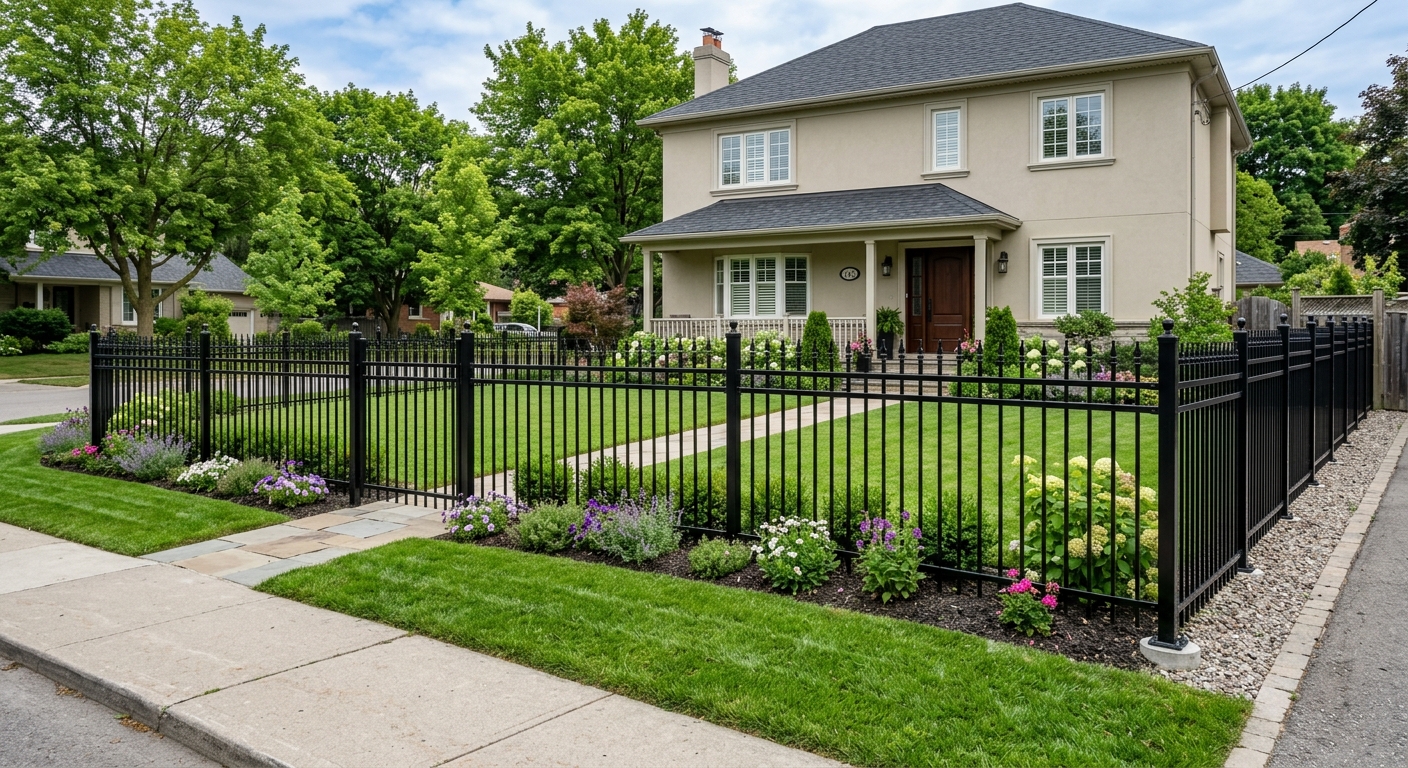
Fencing options and costs in Marpole
In Marpole, Vancouver, choosing the right fence starts with balancing privacy, upkeep, and how your yard handles Lower Mainland–Southwest conditions. With a population of 27,843 (Statistics Canada, 2021 Census), Marpole and nearby neighbourhoods draw steady residential renovation demand—every detached property with side-yard access can become a fencing project. Local housing supply also matters because older homes and mature lots often have existing fences that need replacement, which means more labour for removal and deeper post setting to stabilize panels over time.
Lower Mainland–Southwest pricing is shaped by a “mild but not trivial frost and wind” reality. Posts still need to be set below frost depth to reduce heaving, and Fraser Valley–type soils tend to be wetter and more concrete-hungry than dry sites—so you often see deeper holes, more concrete at corner/gate posts, and longer material runs. At the same time, coastal BC weather can keep wood damp for long stretches, so cheap installs without proper treatment usually cost more later in repairs and re-staining.
In Marpole, installs are especially in demand around Cambie Street corridor areas and the west-of-Marpole community edges where lots commonly border lanes and laneway garages. If you’re comparing options, the table below summarizes typical lifespans, upkeep expectations, and realistic installed price bands for the tier.
| Material |
Lifespan |
Maintenance |
Privacy Rating |
Price per Linear Foot |
| Pressure-treated pine (standard wood) |
10–15 years |
Stain/seal every 2–3 years; inspect posts annually |
Good (solid/close pickets) |
$55–$95 |
| Cedar (natural rot resistance) |
15–20 years |
Light stain/brightener as needed every 2–4 years |
Very good (solid boards) |
$75–$125 |
| Vinyl / PVC (no-maintenance) |
20–30 years |
Occasional wash; check fasteners and panels after storms |
Very good (privacy styles) |
$75–$130 |
| Chain-link (galvanized steel) |
20–35 years |
Rare repairs; clear vegetation and tighten as needed |
Low (open mesh) |
$30–$55 |
| Aluminum ornamental |
25–40 years |
Occasional rinse; tighten hardware |
Low to medium (open design) |
$90–$170 |
| Composite / recycled material |
20–30 years |
Wash only; check fittings after freeze-thaw cycles |
Good (solid privacy panels) |
$95–$150 |
Prices are estimates only and vary by project scope, site access and material selection.
What affects the price of fencing in Marpole
Two homeowners in the Lower Mainland–Southwest can receive quotes that differ by 30–50% for what sounds like the same fence, and it’s usually not the “material” line—it’s the site and the build details. In BC, crews commonly need longer post lengths and careful setting because even coastal areas can see frost depth plus frequent freeze-thaw effects. Local soils also influence excavation time and how much concrete is required for corner posts, gate posts, and privacy runs. Labour availability can further affect pricing: when multiple neighbours are doing replacements at the same time, scheduling and mobilization costs rise.
Frost line depth drives post embedment. A practical rule used by contractors in much of Canada is to set posts about 4–6 inches below the design frost depth; in colder Ontario/Alberta regions that can mean 1.5–2.0 m into the ground, which is why those areas often require concrete setting and longer posts—raising both material and labour. While Marpole isn’t a Prairie-hardfreeze climate, contractors still often go deeper than the bare minimum for stability in wetter ground and to limit heaving.
Wind exposure also matters. Coastal BC is milder than the Prairies, but wind can still stress wide panels, so crews may tighten post spacing and choose stronger designs for solid wood and vinyl privacy fences. For wet sites, cost increases show up as deeper holes and more concrete; for easier access (wide driveway, flat yard), crews can keep costs closer to the lower end of the regional ranges, like wood at the mid-range of the $55–$95 tier or chain-link at the $30–$55 tier.
Concrete examples you’ll feel in Marpole pricing: (1) installing a privacy fence on a damp, clay-heavy boundary often means more concrete and slower post-hole augering; (2) adding a double driveway gate usually means heavier posts, extra bracing hardware, and longer install time; (3) removing an older fence with buried posts can turn a “straight run” into a slower demolition and disposal day, pushing labour upward by the same reason that longer embedment increases cost—more work per post.
| Price Factor |
Why It Matters |
Cost Impact |
| Fence length in linear feet |
Most costs scale directly with how many posts, rails and panels are needed |
Largest driver; longer runs add labour and materials linearly |
| Post depth required |
Frost line sets hole depth and determines how long posts must be |
Deeper holes mean extra excavation time and higher material consumption |
| Post setting method |
Concrete vs. gravel pack affects stability in wetter soils and during freeze-thaw |
Concrete setting increases labour and reduces installed speed |
| Material choice |
Vinyl/PVC and composite require more structural handling than chain-link |
Vinyl/PVC typically runs higher than wood; chain-link is lowest |
| Gate count and type |
Driveway gates need stronger posts, hinges, and often diagonal bracing |
One double gate can cost like an extra fence section |
| Grade and terrain |
Slopes may require stepped panels or raked rails to keep proper alignment |
More fitting time; additional hardware and cut labour |
| Old fence removal and disposal |
Existing rails and buried footings increase demolition time |
Usually adds a noticeable labour and haul-away line item |
| Permit fees and survey / property line locate |
Some fence heights and boundaries require administrative steps |
Can add fixed costs and scheduling delays |
Permits & regulations in British Columbia
In British Columbia, fence rules are largely about height, location and respecting property boundaries. As a homeowner in Marpole, you’ll typically find that fences above a height threshold—often around 2.0 m (6.5 ft) at the rear and about 1.0–1.2 m (3–4 ft) toward the front or corner—may require a building permit. Regardless of height, you must respect property lines and municipal setback rules; the “best-looking” location can still be wrong if it crosses a boundary.
Before digging post holes, call for utility locates. In BC, use BC 1 Call so crews can mark buried services; this reduces the risk of expensive utility strikes. You should also obtain a survey or at least a property pin locate before installation—especially in older Marpole lots where fences sometimes pre-date modern measurements. Shared fence ownership is guided by provincial line-fences legislation, so if your fence is on or near a boundary, clarify maintenance responsibility early to avoid disputes.
What usually requires a permit: fences that exceed the height thresholds (commonly near 2.0 m rear and 1.0–1.2 m front/corner) and fences that affect a setback or require formal approval. What typically does not require a permit: routine replacements that stay within allowed height limits and remain within the established boundary setbacks, but you should confirm with your municipality and your contractor’s compliance checklist.
To verify a contractor in BC, check three things: (1) licensing/registration—look up the contractor in the appropriate online registry used for your trade classification; (2) liability insurance—ask for a current certificate of insurance naming you (or showing your project as covered) and confirm the effective dates; (3) coverage—request proof of workers’ compensation coverage (commonly WCB). For “where to look,” use the contractor’s provided clearance letter or account verification details, and ensure the document matches the company legal name on the quote.
Choosing the right fence material for Marpole
Picking a fencing material in Marpole is mostly about matching your priorities—privacy, low maintenance, budget and lifespan—to Lower Mainland–Southwest climate realities. Pressure-treated pine is the budget-friendly option, but it typically needs staining or sealing every 2–3 years to slow grey weathering and keep the surface protected. Cedar looks great and resists rot better than many softwoods, but it still benefits from periodic maintenance and proper ventilation so the boards dry between wet spells.
For low day-to-day effort, vinyl/PVC is hard to beat: it doesn’t need painting, and a simple rinse is usually enough. The trade-off is upfront cost and performance considerations in colder snaps—vinyl can become brittle if the system is under-designed or fasteners aren’t installed correctly. Chain-link is the lowest-cost and very long-lasting, but privacy is limited unless you add slats or screening. Aluminum ornamental offers longevity and rust resistance with a cleaner, open look; it’s usually a mid-range option, though not a true privacy fence.
On post depth, the Lower Mainland–Southwest still needs frost-conscious installation. Even if the coastal frost depth is shallower than Ontario and Alberta, many crews set posts deeper than a simple rule-of-thumb and use concrete for corner posts, gate posts, and often privacy runs—especially in wetter soils to reduce movement. Wind and snow loading matter too: solid boards and vinyl panels act like sails, so reinforcing posts and tighter rail spacing can be more important than choosing a “cheaper-looking” panel system.
A practical dollar example: if a wood privacy fence lands around the mid-range of the $55–$95 tier per linear foot, you might find vinyl/PVC closer to $75–$130. Spending that extra upfront can be justified when you want fewer maintenance trips and longer straight-run stability—particularly where the yard stays damp most of the year.
| Material |
Cold Tolerance |
Lifespan |
Annual Maintenance |
Best For |
Price Band |
| Pressure-treated pine |
Good (with proper post depth and coating) |
10–15 years |
Inspect yearly; stain/seal every 2–3 years |
Budget privacy with manageable upkeep |
$55–$95 |
| Cedar |
Good (natural rot resistance) |
15–20 years |
Inspect yearly; light stain/brightener every 2–4 years |
Premium look and better rot resistance |
$75–$125 |
| Vinyl / PVC |
Moderate to good (best with correct system build) |
20–30 years |
Wash as needed; check hardware after storms |
Low-maintenance privacy |
$75–$130 |
| Chain-link |
Excellent (galvanized steel) |
20–35 years |
Very low; tighten/stretch and remove weeds |
Security and durable boundary marking |
$30–$55 |
| Aluminum ornamental |
Excellent (powder-coated) |
25–40 years |
Wash/inspect hardware periodically |
Attractive curb style without rust |
$90–$170 |
| Composite / recycled |
Good (designed for freeze-thaw) |
20–30 years |
Wash; check fittings for tightness |
Privacy with minimal upkeep |
$95–$150 |
How to choose a fencing contractor in Marpole
When you hire a fencing contractor in Marpole, verify three coverage items before you sign: (1) British Columbia licensing/registration—confirm the contractor’s trade authorization is current for the type of work they’re doing; (2) liability insurance—request a certificate of insurance and ensure the coverage is active through the project start and completion dates; and (3) workers’ compensation coverage (WCB clearance/coverage). In practice, you can check by asking for proof documents and reading the company legal name, expiry dates and scope details. If they can’t provide insurance paperwork or it doesn’t match the quote, treat it as a major risk.
For pricing, ask for 2–3 itemised written quotes that separate labour and materials. A solid quote breaks out: post depth/setting method, rail configuration, panel style, gate hardware, concrete quantity (or method), and disposal/removal. Scope clarity matters because “fence length” can hide cost differences—some contractors price a run without accounting for a sloped yard, extra corner bracing, or permit steps. Confirm whether permit pulling is included, whether old fence removal and haul-away are part of the quote, and whether any survey/pin locate support is included or billed separately.
Warranty is another differentiator. Ask for the workmanship warranty length (and what it covers—posts settling, hardware failures, alignment), plus the product/manufacturer warranty, and whether the warranty transfers if you sell. Payment should be conservative: never pay more than 10–15% upfront. Use a holdback until the job is complete and measured. Finally, get a written start date and a completion estimate that matches crew availability and material lead times.
- Request the contractor’s insurance certificate and check coverage dates.
- Verify workers’ compensation clearance/coverage for the company.
- Confirm they’re using frost-conscious post embedment practices for BC soils.
- Get an itemised quote showing labour, posts/rails, concrete setting, and gate hardware.
- Ask whether disposal of old fencing is included (haul-away fees add up).
- Confirm if permit pulling is included for the height and location.
- Verify they will follow property line locate/survey requirements before digging.
- Ensure warranty details are written, including workmanship and manufacturer terms.
- Review the payment schedule; keep a holdback until final walk-through.
- Ask about how they handle sloped grades (stepped vs. raked panels).
- Ask who supplies and installs gates and whether hardware is included or “allowance.”
- Make sure the quote includes a start date and completion timeframe.
Common red flags in Marpole: (1) quoting a low price range without specifying post depth or setting method; (2) refusing to provide insurance/WCB clearance paperwork; (3) giving only a lump-sum without concrete vs. gravel-pack details; (4) vague scope language like “removal included” but no disposal/haul-away line; and (5) asking for a large upfront payment (more than 10–15%) with no written schedule or warranty terms.
Frequently asked questions — fencing in Marpole
How long does a wood fence last in Marpole?
In Marpole and the broader Lower Mainland–Southwest, a properly built wood fence commonly lasts about 10–15 years for pressure-treated pine, and roughly 15–20 years for cedar. The lifespan depends on post embedment (frost-conscious setting), how corners and gate posts are braced, and whether the boards can dry between wet spells. Coastal BC’s mild but wet conditions accelerate grey weathering and surface checking on untreated-looking finishes—so even “rot-resistant” materials need periodic maintenance. If you maintain a pressure-treated pine fence by staining/sealing every 2–3 years and keep bottom rails clear of constant splashback, you can usually stay closer to the upper end of the range. For budget planning, homeowners often compare wood to chain-link at the $30–$55 tier or vinyl at the $75–$130 tier, because maintenance trips become the deciding factor over time. (Statistics Canada, 2021 Census)
Who owns and maintains a shared fence?
If your fence is on or near a boundary, shared fence rules in British Columbia determine ownership and maintenance responsibilities. In plain terms, the “shared fence” concept often means both neighbours may have rights and obligations, but the specifics can depend on where the fence sits relative to the property line and what’s been historically agreed. Before installing a replacement in Marpole, confirm whether the fence is truly shared and who will pay for upkeep. Practical step: ask for a property line locate or survey reference so you’re not relying on the existing fence’s “assumed” position. Then put maintenance responsibilities in writing—especially if you’re adding privacy panels, changing height, or replacing posts that could affect the other property. If a dispute arises, it’s easier to resolve when you have documented measurements and a clear scope of work from your contractor.
How do I find my property line before fencing?
Before you dig any post holes in Marpole, you should not guess based on the existing fence—use a property line locate. The most reliable option is a survey, especially on older lots where previous fences may have been offset from modern measurements. If you’re trying to confirm pins without a full survey, ask a qualified service to locate your property pins and mark the boundary for your contractor. Your contractor should also be willing to coordinate layout so posts land correctly. This matters because fence height and placement rules can interact with setbacks, and an encroachment dispute is expensive to fix. Once you have pin locations, you can request an on-site measurement walk with your installer, so the fence layout is aligned from the beginning. You can then compare quotes apples-to-apples, because accurate lengths and post counts depend on true boundary placement.
What's the most low-maintenance fence?
In Marpole and coastal Lower Mainland–Southwest conditions, vinyl/PVC is typically the lowest-maintenance choice for a privacy-style fence, followed by aluminum and then composite. Vinyl usually needs no staining and is generally handled with occasional rinsing; the key is ensuring the system is built correctly so it doesn’t develop loose hardware after wind or freeze-thaw cycles. Chain-link is also low maintenance for longevity, but it won’t give privacy unless you add slats or screening. If you’re comparing options, consider the installed price gap: vinyl/PVC often lands around the $75–$130 tier, while pressure-treated pine may come closer to $55–$95. The extra upfront cost is often justified when you want fewer maintenance visits and fewer repairs from recurring wet-season wear.
How tall can my fence be in Marpole?
In British Columbia, maximum fence height depends on whether the fence is in the front/corner/side-rear portion of your yard and on municipal setback rules. A common guideline used in BC is that fences above roughly 2.0 m (6.5 ft) at the rear and around 1.0–1.2 m (3–4 ft) at the front or corner may require a building permit. In Marpole, the safe approach is to confirm your lot’s front/corner definition with your municipality before you plan a privacy fence. Your contractor should help identify whether the height triggers permitting and whether a locate/survey is needed. Also, remember that even if a fence height is permitted, it must be installed within property lines and respect setbacks; going taller often increases wind loading, so framing and post design may need to change to keep the fence straight over time.
Should fence posts be set in concrete here?
For Marpole and the Lower Mainland–Southwest, many residential fences use concrete for the most critical points—especially corner posts and gate posts—and often for privacy fence runs depending on soil moisture and slope. The reason is stability: posts must be set below frost depth to reduce heaving, and wetter soils can increase movement if a fence isn’t well anchored. While “concrete vs. gravel pack” isn’t one-size-fits-all, crews frequently find that concrete setting better controls post wobble in clay-heavy or consistently damp areas. If your yard is relatively dry and you’re using properly designed embedment, a contractor might choose gravel pack for some sections, but they should explain the rationale in writing. When you’re comparing quotes in the $55–$95 wood tier or the $75–$130 vinyl/PVC tier, ask each contractor to specify exactly which posts are concrete-set and what embedment depth they’re using, because those details often explain quote differences more than the fence material itself.