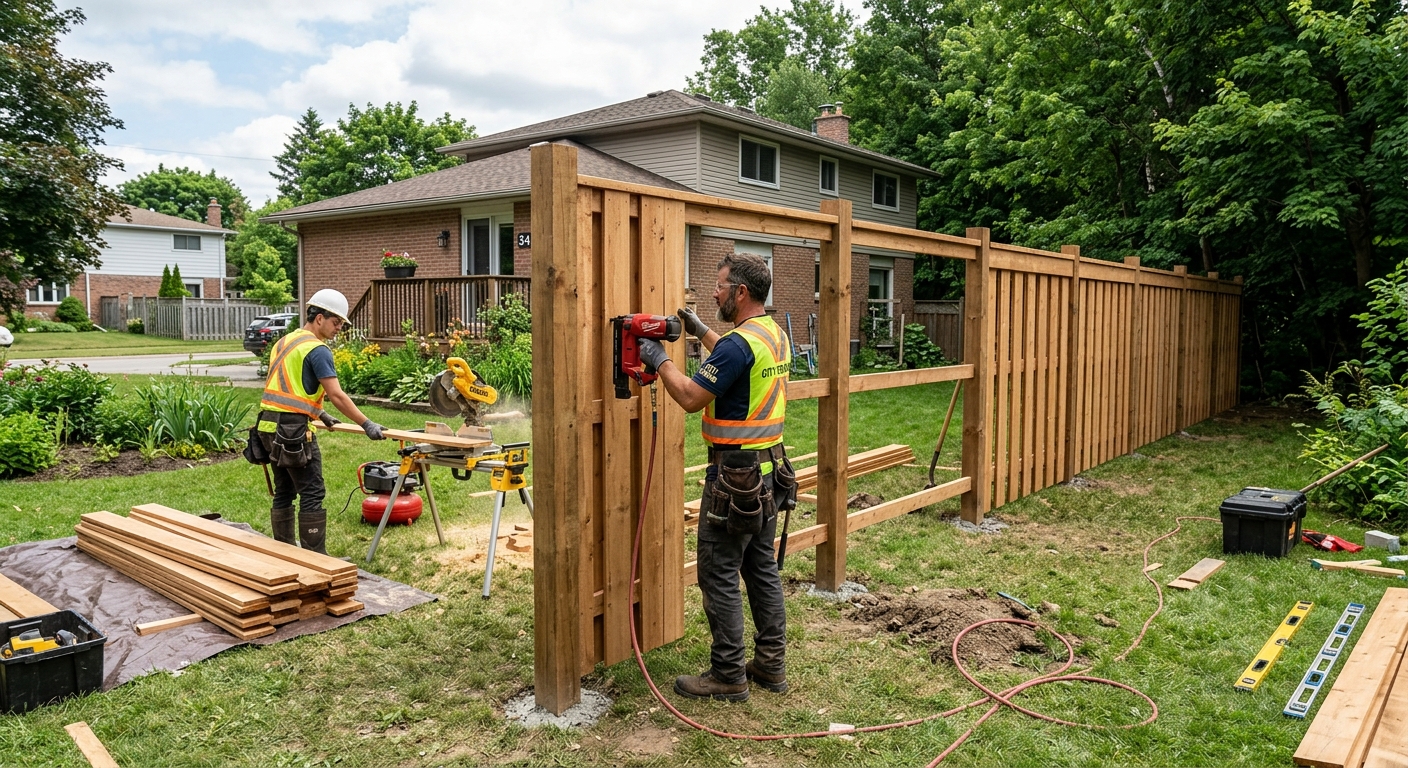
Fencing options and costs in Bridgeport
In Bridgeport, choosing a fence is often less about style and more about reliability—especially for the many homes in the area as the population sits at 4,140 residents (Statistics Canada, 2021 Census). Fence demand typically tracks with how many detached homes and yard-facing properties are in the market, and in the Lower Mainland–Southwest that usually means steady work for privacy panels, side yard runs, and gate installations. That’s why you’ll see contractors booked around busy neighbourhoods like the Bridgeport area near River Road, where lots of properties have long fence lines and frequent gate upgrades.
Lower Mainland–Southwest pricing is shaped by a mild but not trivial frost-and-wind reality. Even though coastal BC frost isn’t as deep as Ontario or Alberta, posts still must be set below the local frost depth to limit heaving, which often translates to deeper holes, more concrete, and longer posts—particularly in wetter Fraser Valley-type soils that common around the region. On top of that, coastal winds can rack lighter panels, so contractors account for post spacing, corner reinforcement, and panel stiffness.
As a result, “same fence, different yard” can land in different price bands, ranging from budget chain-link to premium metal and vinyl systems. The comparison below helps you estimate typical installed ranges before you request an itemised quote. Use it as a starting point, then fine-tune based on length, slope, soil conditions, and whether you need removal and disposal.
| Material |
Lifespan |
Maintenance |
Privacy Rating |
Price per Linear Foot |
| Pressure-treated pine (standard wood) |
12–18 years |
Stain/seal every 2–3 years; routine fastener checks |
Good (solid or close-spacing) |
$55–$95 |
| Cedar (natural rot resistance) |
18–25 years |
Re-stain or seal every 2–4 years; inspect for warping |
Very good (solid boards or shadow gaps) |
$70–$120 |
| Vinyl / PVC (no-maintenance) |
25–35 years |
Wash annually; no staining |
Excellent (solid privacy styles) |
$75–$130 |
| Chain-link (galvanized steel) |
20–40 years |
Occasional tension/trim checks |
Low (unless privacy slats added) |
$30–$55 |
| Aluminum ornamental |
25–40 years |
Rinse as needed; inspect hinges/rails |
Low to medium (decorative pickets) |
$90–$170 |
| Composite / recycled material |
20–30 years |
Minimal cleaning; occasional panel/fastener inspection |
Good to very good (solid systems) |
$80–$140 |
Prices are estimates only and vary by project scope, site access and material selection.
What affects the price of fencing in Bridgeport
Fence quotes in Bridgeport can differ by about 30–50% across the Lower Mainland–Southwest because the “hidden costs” change from yard to yard. Two contractors may both quote “wood privacy fence,” yet one yard has easier access, dry soil, and straight runs—while the other has steep grade, soft or wet earth, and extra time for deeper post-set holes and raked panels. In practice, Vancouver-area labour and disposal logistics, along with freight and installation complexity, are what push the high end versus the low end of BC’s typical installed pricing bands (wood $55–$95; vinyl/PVC $75–$130; chain-link $30–$55).
Frost behaviour is the big technical driver. Published guidance across Canada often assumes minimum embedment around 3 feet in many regions; coastal BC is usually shallower than Ontario and Alberta, but contractors still commonly set posts below design frost depth. In practice for Bridgeport, that often means deeper holes and more concrete—especially for corner posts, end posts, and gate posts—so the fence resists heaving during cold snaps and freeze–thaw cycles.
Wind exposure also matters. The Prairies are famous for design choices that handle gusts, but coastal BC still sees racking—so privacy panels may require closer post spacing or sturdier rails. Meanwhile, coastal wet weather accelerates wood rot if treatment and detailing are off; that’s why properly set, concrete-supported posts and correct fasteners can raise the cost up front to prevent early failures.
Concrete examples in Bridgeport: (1) a sloped yard may require stepped or raked sections, which adds labour for measuring and trimming; (2) wet soil can increase time and concrete volume for post set; and (3) removal of an old fence often adds disposal fees and extra crew hours even before new materials arrive. In dollar terms, it’s common to see a low-end quote jump by roughly $600–$1,800 when embedment, concrete setting, and disposal are included—and that can be the same reason a vinyl/PVC option closer to $75–$130 per foot starts to look competitive versus repeatedly repairing mid-range wood.
| Price Factor |
Why It Matters |
Cost Impact |
| Fence length in linear feet — the primary cost driver |
Materials and labour scale directly with total run |
Often determines 60–75% of the total |
| Post depth required — frost line determines post length and hole depth |
Deeper embedment reduces heave risk |
Can add $5–$15 per foot depending on soil and concrete use |
| Post setting method — concrete vs. gravel pack vs. driven posts |
Concrete increases stability for corners and gates |
Concrete-set jobs can run $10–$25 per post higher |
| Material choice — vinyl vs. cedar vs. chain-link |
Material cost and structural requirements differ |
Can swing the project between $30–$170 per foot equivalent ranges |
| Gate count and type — walk-through vs. drive-through (double) |
Gates need heavier framing and hardware |
Typically adds $400–$2,500 per gate |
| Grade and terrain — sloped yards require stepped or raked panels |
Layout time and board cutting increase labour |
Often adds 10–25% labour cost |
| Old fence removal and disposal |
Extra crew time, dump fees, and hauling |
Can add $300–$1,500+ depending on debris and length |
| Permit fees and survey / property line locate |
Some fence heights or situations require paperwork |
Often $0–$800+ depending on what’s needed |
Permits & regulations in British Columbia
In British Columbia, fences above a height threshold—typically 2.0 m (6.5 ft) at the rear and about 1.0–1.2 m (3–4 ft) at the front or corner—often require a building permit. The exact threshold can vary by location and whether the fence sits in a corner visibility area, so it’s smart to verify before you order materials. Regardless of height, all fences must respect property lines and municipal setback requirements.
Before digging any post hole, call for utility locates. BC uses BC 1 Call, and the goal is to mark buried services so your crew can work safely. Also, obtain a survey or locate your property pins before installing—this is one of the most common causes of neighbour disputes, because fences built even slightly over a line can trigger removal costs and legal wrangling. Shared fence ownership is generally handled under provincial line-fences legislation, which means your agreement with a neighbour and who benefits from the fence matters.
To verify a contractor in Bridgeport (BC) step-by-step: (1) licence—check the provincial registry or contractor listing where applicable for fence-related contracting status; (2) liability insurance—request a certificate of insurance naming you as the certificate holder if possible; (3) coverage for workers—confirm current WSBC/WCB coverage status and clearances (if your contractor employs workers). Ask for the documents before work starts, not after. A reputable crew will provide these promptly and in writing.
Choosing the right fence material for Bridgeport
Choosing the right fence material in Bridgeport comes down to what you want most: privacy, low maintenance, lifespan, or staying closer to budget. Pressure-treated pine is the lowest-cost wood option, but in coastal BC’s wet climate it still needs staining or sealing about every 2–3 years to reduce greying and premature weathering. Cedar looks better and resists rot more naturally, so many homeowners find it worth the extra cost for a warmer, richer finish—though it still benefits from routine maintenance. Vinyl/PVC is the “set it and forget it” option: it doesn’t require staining, but in extreme cold it can become brittle if the system isn’t installed correctly or if materials are low-quality. Chain-link is the cheapest long-life barrier, but it delivers little privacy unless you add privacy slats or top screening. Aluminum ornamental offers a clean, no-rust look and generally holds up well to wind and moisture, though it provides limited privacy by design.
For post durability, Lower Mainland–Southwest frost depth usually means you should set posts below local frost depth (often deeper than the bare minimum), and concrete-set posts are commonly used for corners and gates because those areas carry leverage loads. Wind and snow load considerations translate into using sturdier rails and correct spacing so panels don’t rack during gusts and wet-weather storms.
Concrete example: if you’re deciding between wood around $55–$95 per foot and vinyl around $75–$130 per foot, a common justification is reducing maintenance hassle. If you expect to restain wood multiple times over the next decade, the “difference” can get smaller than it looks—especially if you already know the yard has wet soil and you want posts set with concrete for long-term stability.
| Material |
Cold Tolerance |
Lifespan |
Annual Maintenance |
Best For |
Price Band |
| Pressure-treated pine |
Good (if fasteners and staining are maintained) |
12–18 years |
Low to moderate (check boards; plan stain every 2–3 years) |
Budget privacy with routine upkeep |
$55–$95 |
| Cedar |
Good (warping reduced with correct installation) |
18–25 years |
Low to moderate (seal/stain every 2–4 years) |
Appearance and rot resistance |
$70–$120 |
| Vinyl / PVC |
Good (proper system design and installation required) |
25–35 years |
Very low (wash and quick hardware inspection) |
Low-maintenance privacy |
$75–$130 |
| Chain-link |
Excellent (galvanized steel resists corrosion) |
20–40 years |
Very low (tension and trim checks) |
Security/containment at lowest cost |
$30–$55 |
| Aluminum ornamental |
Excellent (powder-coated systems resist weather) |
25–40 years |
Very low (rinse; inspect gates/anchors) |
Attractive front-yard fencing |
$90–$170 |
| Composite / recycled |
Good (quality varies by manufacturer blend) |
20–30 years |
Low (occasional cleaning; hardware checks) |
Durable privacy with minimal upkeep |
$80–$140 |
How to choose a fencing contractor in Bridgeport
When you hire a fencing contractor in Bridgeport, BC, verify licensing and coverage before you sign. For liability insurance, request a certificate of insurance and confirm it covers your worksite and has adequate limits. If the contractor employs workers, confirm WSBC/WCB coverage (and ask for clearance or evidence of good standing). Don’t accept “we’re covered” verbally—ask for the certificate and clearance proof, then keep copies with your contract.
Next, request 2–3 itemised written quotes. You want labour and materials separated so you can compare like-for-like: post depth and setting method, rail and panel type, concrete quantity allowances, gate hardware grade, and whether removal/disposal is included. Scope gaps are a common source of cost surprises. Read the exclusions: are permit pulls included (when required), is survey/locate included, and who is responsible for repair if locates are marked incorrectly? A good quote will explicitly list what’s included and what’s not.
Warranty matters too. Ask for the workmanship warranty length (often 1–2 years for installation), the product/manufacturer warranty length, and whether warranties are transferable if you sell your home. For payment, never pay more than about 10–15% upfront; hold back a portion until the job is complete and gates/lines are adjusted. Finally, get a start date and completion estimate in writing so the project schedule is enforceable.
- Provide a written quote with post depth, panel spacing, and concrete setting details
- List material grades (cedar type, pressure-treated standard, vinyl profile thickness if applicable)
- Confirm disposal: dump fees included or not, and how old fencing is handled
- Ask who calls for utility locates before digging (you or them)
- Verify liability insurance and request the certificate before work begins
- Confirm WSBC/WCB coverage (and clearance evidence if applicable)
- Ensure gates are specified: frame type, latch/hardware, and hinge method
- Clarify warranty: workmanship term and product warranty term separately
- Check if the contractor will include property line locate/survey recommendations
- Confirm permit responsibilities if you’re building above typical thresholds
- Use a payment schedule that keeps holdback until final walk-through
- Get a written timeline and identify weather-based scheduling contingencies
Common red flags in Bridgeport include: vague “lump sum” quotes with no post depth or setting method listed; no proof of insurance or worker coverage when asked; refusing to put start dates, warranty terms, and scope inclusions in writing; “we don’t need permits” assurances even when fence height is near thresholds; and pushing for large upfront payments (well beyond 10–15%).
Frequently asked questions — fencing in Bridgeport
Should I repair or replace my old fence in Bridgeport?
In Bridgeport (British Columbia), the decision to repair versus replace usually comes down to post stability, not just surface appearance. If your existing posts are loose, leaning, or have heaving after cold snaps, repairs often won’t last—because wind and moisture will keep working the joints. A fence with sound posts and minor board damage (split boards, a few missing pickets, or tightening of rails) can often be repaired to extend service life. But if you’re seeing widespread rot at ground level, deteriorated rails, or multiple failed fasteners, replacement is typically the longer-term value. For budgeting, repairs can be worthwhile even when an installed new fence would be in the typical range (for example, wood at $55–$95 per linear foot), especially if only part of the fence needs work.
How do I handle a fence dispute with a neighbour in British Columbia?
Fence disputes in British Columbia are most often about property line placement, shared responsibility, or who benefits from the fence. Start by verifying the actual boundary: locate your pins or obtain a survey, and compare it to where the existing fence sits. If the dispute is about construction quality or damage, document the condition with photos and dates, and get a written assessment from a fencing professional explaining what is wrong and what the fix would cost. British Columbia’s line-fence approach generally focuses on shared benefits and ownership responsibilities, but your best first step is to communicate in writing and keep details factual. Avoid moving forward with major changes until you confirm the boundary to prevent escalation—especially important in Bridgeport where wet soils can make fence positions drift over time.
What fence style offers the best wind resistance in Bridgeport?
For wind resistance in Bridgeport, the “best” fence style is usually the one with the strongest framing and correct panel-to-post engineering rather than the most solid material by itself. Solid privacy fences can catch wind like a sail if the system is undersized, so it’s important that the contractor uses sturdy rails, properly set corner/end posts, and appropriate spacing to reduce racking. In practice, wood and vinyl privacy fences can perform well when built with reinforced posts and correct hardware; aluminum ornamental is also good for wind because the picket design lets air pass through. If your yard is exposed to gusts, ask about thicker posts, closer spacing, and reinforced rails, not just a switch in material. That’s often a better lever than spending extra simply to change the surface finish.
How much does a fence cost in Bridgeport?
Fence cost in Bridgeport depends mainly on linear footage, fence height, material choice, gate count, and whether the contractor needs to set posts with concrete due to soil and frost considerations. Typical installed pricing in the Lower Mainland–Southwest often lands within these broad bands: chain-link roughly $30–$55 per linear foot, wood roughly $55–$95, and vinyl/PVC roughly $75–$130. Aluminum ornamental is commonly higher, and the total project price can rise with gate hardware, sloped yards, removal and disposal, and permit/survey steps when applicable. To get a realistic number, ask for an itemised quote that specifies post depth, setting method, rails, and what’s included for disposal. Even one extra walk-through or a stepped section on a slope can change the total meaningfully.
How deep should fence posts be for Bridgeport's frost?
For Bridgeport and much of the Lower Mainland–Southwest, posts should be set below the local design frost depth to reduce heaving during freeze–thaw cycles. While published Canadian guidance often cites minimum embedment around 3 feet in many regions, coastal BC frost effects are typically shallower than Ontario and Alberta—yet contractors commonly go deeper than the bare minimum, especially in wetter or heavier soils where movement is more noticeable. A practical rule of thumb you’ll hear locally is setting posts about 4–6 inches below the design frost depth used for the area, then adjusting for soil conditions and fence critical points (corner posts and gates). Your contractor should spell out the planned hole depth, post length, and whether concrete setting is included, because those details drive long-term stability.
Wood vs vinyl vs aluminum fence — which is best?
There isn’t a single “best” choice for every Bridgeport yard—it depends on whether you prioritize privacy, upkeep, and budget. Wood is often the best mid-range balance: it can look natural and deliver strong privacy in solid styles, but it needs staining or sealing every 2–3 years to avoid weathering and rot in BC’s moist conditions. Vinyl/PVC is usually the lowest-maintenance option for privacy because there’s no staining; however, it costs more upfront and must be installed correctly to handle temperature swings. Aluminum ornamental is a great choice for a front-yard or boundary where you want durability and a rust-free look, with wind-friendly spacing, but it offers limited privacy by design. If you’re comparing price bands, many homeowners start with wood ($55–$95) versus vinyl ($75–$130) when they want low maintenance, then choose aluminum based on aesthetics and airflow.