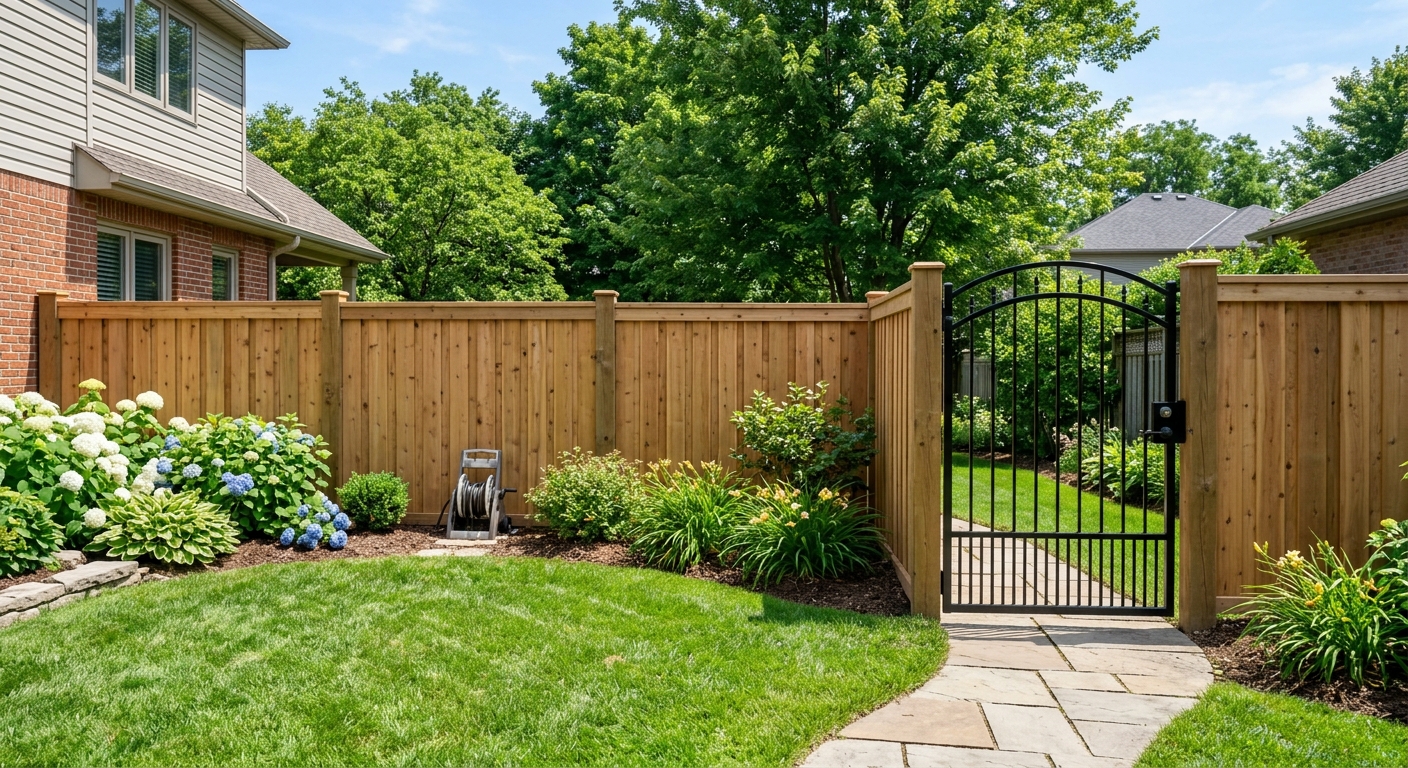
Fencing options and costs in Ashcroft
Ashcroft is a great place for fences because many homes are detached—single-detached houses make up 64.8% of dwellings—so you’re often fencing a larger perimeter than in denser neighbourhoods. With 79.2% of households owning their homes, local demand stays steady year-round, not just when lots change hands. According to the 2021 Census, Ashcroft’s population is 1,670, and that stable owner base supports a consistent pool of installers who understand local site conditions.
In the Thompson–Okanagan region, fence pricing is shaped by frost depth, soil conditions, and wind exposure. Interior valleys can require deeper post installation (often to sit below the design frost line) to prevent freeze–thaw heave. On top of that, Ashcroft lots can see gustier conditions on exposed benches, which means heavier hardware, closer post spacing, or bracing—especially for solid panels.
Where this shows up most in Ashcroft is around the older housing stock built before 1981 (76.1% of homes), where many properties need either full fence replacement or upgraded posts once old rails start failing. You’ll also tend to see the most frequent requests in more established residential pockets such as the area around Trans-Canada Highway corridors and near the downtown core, where fence lines are older and access for equipment is often tighter.
Below is a quick cost comparison to help you match typical budgets to material choices—then we’ll break down the specific factors that move quotes up or down.
| Material |
Lifespan |
Maintenance |
Privacy Rating |
Price per Linear Foot |
| Pressure-treated pine (standard wood) |
10–18 years |
Stain/seal every 2–3 years; post-checking |
Medium–High |
$18–$26 |
| Cedar (natural rot resistance) |
15–25 years |
Stain/maintain every 2–4 years (for best appearance) |
High |
$24–$36 |
| Vinyl / PVC (no-maintenance) |
25–35 years |
Wash as needed; inspect posts and rails |
High |
$28–$44 |
| Chain-link (galvanized steel) |
20–30 years |
Occasional tensioning and rinsing |
Low |
$12–$20 |
| Aluminum ornamental |
25–40 years |
Rinse/clean seasonally; hardware checks |
Low–Medium |
$30–$52 |
| Composite / recycled material |
25–35 years |
Wash; check fasteners |
High |
$26–$42 |
Prices are estimates only and vary by project scope, site access and material selection.
What affects the price of fencing in Ashcroft
In Ashcroft and across the Thompson–Okanagan, two fence quotes for the same look can easily differ by 30–50% because the “hidden work” changes: footing depth, whether posts are concrete-set, how much bracing is required for wind, and how tough the access is for augers and delivery. Even across British Columbia, regional soil and frost requirements can push costs up, while sheltered lots with easier access keep costs closer to the low end. In practice, a contractor pricing a cold, exposed yard has more labour time in excavation, concrete, and hardware than a contractor pricing a well-drained, sheltered back line.
Frost line depth is the biggest structural driver. Local practice typically sets posts 4–6 inches below the design frost depth to prevent heaving during freeze–thaw. In colder inland settings, that often translates to deeper holes (commonly in the ~0.9–1.2 m range or more depending on soil and frost depth), which can mean longer posts and more concrete when posts are concrete-set. That’s why a “basic wood fence” can shift into concrete-set pricing once the ground is clay or poorly drained.
Wind exposure also changes engineering choices. More gusty lots usually need closer post spacing, heavier rails, and sometimes open-style panels to reduce wind load. Coastal BC can be milder, but the wet climate accelerates wood rot if treatment and post detailing aren’t done properly—so “maintenance and durability” costs can move around even when frost is shallow.
Concrete examples you’ll see in Ashcroft: (1) a pressure-treated pine privacy fence on clay may require deeper, concrete-set posts—pushing you toward higher labour within the wood band (for example, installed wood budgets often land in the $55–$85 range per linear foot); (2) a chain-link run with good site access can stay near the $35–$60 band because there’s minimal material build-up; (3) replacing sections of an older, pre-1981 fence often adds labour for removal, re-staking, and aligning new lines, especially if old posts are still solid.
Finally, remember most homeowners start with a material selection, but the final invoice is usually shaped by how the fence performs in freeze–thaw cycles and wind—especially in an interior community with a high share of owner-occupied detached homes.
| Price Factor |
Why It Matters |
Cost Impact |
| Fence length in linear feet |
Most materials and labour scale directly with total run |
Primary driver; longer runs typically reduce per-foot efficiency |
| Post depth required |
Frost line determines hole depth to prevent heave |
Deeper holes increase excavation time and post material cost |
| Post setting method |
Concrete vs. gravel pack vs. driven posts affects stability |
Concrete-set posts add auger time and concrete; gravel pack is usually cheaper |
| Material choice |
Vinyl, cedar, and chain-link have different costs and installation complexity |
Vinyl often lands above wood; chain-link can be the budget option |
| Gate count and type |
Gates require heavier framing, hinges, and latch hardware |
Each gate can add significant labour and material |
| Grade and terrain |
Sloped yards require stepped or raked panels |
More cutting and alignment time increases labour |
| Old fence removal and disposal |
Hauling and dump fees add time and cost |
Can add a measurable surcharge, especially with concrete or large posts |
| Permit fees and survey / property line locate |
Administrative steps and locate work prevent encroachment disputes |
May be a one-time add; required when height/setbacks trigger permitting |
Permits & regulations in British Columbia
In British Columbia, fence permitting depends mainly on height and where the fence sits on your property. As a practical rule of thumb, fences above a height threshold—typically 2.0 m (6.5 ft) at the rear and about 1.0–1.2 m (3–4 ft) at the front or corner—often require a building permit. Your municipality’s bylaws still control setbacks and may require approval for certain siting conditions, especially near lanes or intersections.
Before digging any post hole, call for utility locates so you don’t hit gas, power, or communication lines. In BC, use BC 1 Call. Also, obtain a survey or locate your property pins before installing if there’s any doubt about the property line; this helps you avoid neighbour disputes about encroachment.
Step-by-step, here’s how to verify a contractor in Ashcroft: (1) confirm their business licence status through the province’s contractor directory/registry channel used for the trade they claim to perform; (2) ask for a current Certificate of Insurance showing general liability (and request to see it—don’t accept summaries); (3) for work crews, ensure workers’ coverage is in place (BC WCB coverage). Finally, request a clearance letter where applicable and keep a copy of the certificate for your records; you should be able to read coverage dates and named insured details. Shared fence ownership issues are handled through provincial line-fences principles, so document your agreement in writing if you’re splitting costs with a neighbour.
Choosing the right fence material for Ashcroft
Choosing a fence material in Ashcroft is mostly about matching your priorities—privacy, low maintenance, upfront budget, and lifespan—to the reality of interior freeze–thaw and occasional wind loading. Pressure-treated pine is usually the best budget starting point. The trade-off is that wood still needs periodic protection: staining or sealing every 2–3 years helps slow grey weathering and keeps fasteners and boards working together. Cedar offers better natural rot resistance and a warmer look, but it still benefits from maintenance to preserve appearance and reduce cracking at fastener points.
Vinyl/PVC is popular for homeowners who want “set it and forget it.” It has no routine staining, but very cold snaps can make some rigid products more brittle, so installers should use proper hardware and keep posts plumb and stable—especially since Thompson–Okanagan frost can demand deeper post setting. Chain-link is the lowest-cost, longest-life option for perimeter security, but it won’t provide privacy unless you add privacy slats or a secondary screen. Aluminum ornamental fences are clean-looking and won’t rust, but they’re typically a mid-range choice with low privacy.
Post depth is common across many materials: because interior frost can heave posts if they’re set too shallow, contractors typically set posts below the design frost depth (often with concrete-set posts in heavier soils). Where wind is a factor—open benches or yards exposed to gusts—closer spacing, heavier rails, and solid-but-braced panels cost more, but performance is better.
Price justification example: if you’re deciding between cedar and vinyl for a privacy run, cedar may cost less upfront than vinyl in many bids, but if you want minimal future labour, vinyl’s higher initial installed price can pencil out over time—especially when wood fences in older Ashcroft neighbourhoods need replacement earlier due to post rot and rail failure.
| Material |
Cold Tolerance |
Lifespan |
Annual Maintenance |
Best For |
Price Band |
| Pressure-treated pine |
Good (with proper post depth and sealing) |
10–18 years |
Low to moderate (check posts/fasteners; stain 2–3 years) |
Budget privacy with regular upkeep |
$55–$85 |
| Cedar |
Good (resists rot better than pine) |
15–25 years |
Low to moderate (maintenance for appearance) |
Natural look and better weathering |
$65–$95 |
| Vinyl / PVC |
Good (use correct hardware; keep posts stable) |
25–35 years |
Very low (wash; inspect rails) |
Low maintenance privacy |
$75–$115 |
| Chain-link |
Very good (galvanized steel) |
20–30 years |
Very low (tension and rinse) |
Security on budget, pets/small yards |
$35–$60 |
| Aluminum ornamental |
Excellent (powder-coated) |
25–40 years |
Very low (seasonal cleaning) |
Attractive boundaries with durability |
$90–$150 |
| Composite / recycled |
Good (stays stable with correct framing) |
25–35 years |
Low (wash; check fasteners) |
Privacy panels with minimal upkeep |
$85–$130 |
How to choose a fencing contractor in Ashcroft
Start by verifying licensing and coverage, then protect yourself with itemised quotes. In British Columbia, fencing isn’t a one-size-fits-all permit situation, so a good contractor should ask about your fence location (front/corner/rear), expected height, and whether a permit is required. Ask for (1) their business licence or registration details, (2) a current Certificate of Insurance for general liability, and (3) workers’ coverage for on-site labour (BC WCB). Where to look: request the certificate PDF from the contractor and confirm the effective dates and named insured; if they’re performing contracted work with employees, the coverage should be current and not expired.
Next, get 2–3 written, itemised quotes—not just a lump sum. You want labour and materials broken out, including post depth, post setting method (concrete vs gravel pack), rail spacing, hardware grade, and the cost for gates. Confirm what’s excluded: permit pulling, property line locating, concrete disposal, and any disposal/hauling of your old fence. A contractor should clearly state whether they pull permits, or whether you (homeowner) are responsible for that step if required.
Warranty matters too. Ask for the workmanship warranty length (how long they’ll fix installation issues without charge) and the manufacturer warranty for materials. Also ask if the warranty is transferable to future owners. For payments, never pay more than 10–15% upfront; the remainder should tie to milestones, with a holdback until completion and cleanup are confirmed. Finally, request a start date and completion timeframe in writing, including whether delays due to weather affect the end date.
- Proof of liability insurance with matching company name
- Workers’ coverage confirmation (BC WCB) for on-site crews
- Itemised quote with post depth and setting method stated
- Separate line items for gates, hinges, and latches
- Confirm whether permit fees (if any) are included or your responsibility
- Utility locate confirmation (BC 1 Call) before digging
- Stated plan for property line location (survey vs pin locate)
- Workmanship warranty in writing (length and coverage scope)
- Manufacturer warranty details for materials and whether it transfers
- Payment schedule with small deposit (10–15% max) and holdback
- Clear disposal/haul-away pricing for old fence materials
- Written timeline with a completion estimate and weather-plan notes
Red flags in Ashcroft: contractors who won’t show insurance certificates, quotes that don’t specify post depth or setting method, vague scope language like “fence as discussed” without measurements, insisting on large deposits (over ~15%), and promises that ignore freeze–thaw performance (for example, shallow post holes with no mention of frost depth).
Frequently asked questions — fencing in Ashcroft
How do I prevent wood fence rot in Ashcroft?
In Ashcroft and throughout British Columbia’s interior, wood rot prevention starts below the surface. Make sure posts are set deep enough to sit below the design frost depth and avoid freeze–thaw heave; heaving tears out fasteners and breaks the seal where moisture gets in. A contractor should either concrete-set posts in challenging soil (clay/poor drainage) or use a properly engineered gravel pack with drainage considerations. Above grade, keep boards off the ground and use correct fasteners to reduce trapped moisture. For maintenance, plan on staining or sealing pressure-treated pine every 2–3 years; for cedar, maintenance helps slow cracking and helps it keep its protective oils longer. If your current fence is from the pre-1981 housing stock (76.1% of homes were built before 1981), it’s especially important to inspect post bases and any sections that collect snowmelt.
What is the cost per linear foot for fencing in Ashcroft?
In Ashcroft, the “per linear foot” price depends on material and what’s required for frost and wind stability. Typical installed bands for this city tier are about $55–$85 for wood, $75–$115 for vinyl/PVC, $35–$60 for chain-link, and $90–$150 for aluminum/metal. A pressure-treated pine privacy fence often lands within the wood band if posts are properly sized and set; if soil conditions force deeper concrete-set footings, your per-foot price tends to rise toward the top of the range. Chain-link can come in near the low end when site access is straightforward and no gates or heavy bracing are needed. If you’re comparing quotes, ask each contractor to state post depth and setting method—those details explain most of the difference even when fence “styles” look identical.
Should I repair or replace my old fence in Ashcroft?
In many Ashcroft yards—especially where fences match older property improvements—replacement is often the smarter long-term call when the posts are failing, not just the boards. Repair makes sense when rails and pickets are damaged but posts are solid, plumb, and well-set below the frost-affected zone. If you see leaning sections, gaps that widen after thaw, or obvious rot at post bases, the cost of repeated patching usually catches up quickly. Because much of the local housing stock is older (76.1% built before 1981), posts may have been set shallow or with details that don’t perform well through freeze–thaw cycles. A contractor should assess post integrity and show you which sections can be salvaged. Expect that removal and disposal can add cost, but it often offsets future labour by giving you new, correctly installed posts for the entire run.
How do I handle a fence dispute with a neighbour in British Columbia?
Fence disputes in British Columbia are usually about property line location, shared-cost responsibilities, or who approved the fence height/style. Your best first step is to verify the boundary using survey pins or a survey—don’t rely on “where it looks like the line is.” If utilities or landscaping are involved, make sure utility locates have been completed and document any work dates. Communicate in writing: share the contractor’s measurements, the proposed fence line, and the reason the change is needed (for example, stability concerns caused by frost heave or a non-compliant placement). Provincial line-fences rules can guide shared ownership and cost-sharing, but the exact outcome depends on your situation and evidence. If you can’t resolve it directly, consult the appropriate dispute pathway or professional advice for boundary matters. In practice, the dispute usually ends faster when both parties agree on a survey and a written scope.
What fence style offers the best wind resistance in Ashcroft?
For Ashcroft’s interior conditions—where wind gusts can hit exposed yards—the best “wind-resistant” result is usually achieved through structure rather than just solid visuals. Close post spacing, properly sized rails, and bracing at intervals help most. In exposed locations, solid privacy panels can catch wind load, so some homeowners choose designs that reduce pressure build-up (for example, certain open or semi-open panel styles) while still maintaining usability. Heavy hardware and correct tensioning on gates matter too, because gates often become the weak point under wind. If your lot sits on a more open bench, ask your contractor how they account for wind exposure in the layout—especially whether they’re upgrading hardware and adjusting spacing. A good fence also survives frost cycles: if posts are installed below the frost-affected zone, the fence stays aligned when freeze–thaw happens.
How much does a fence cost in Ashcroft?
Total fence cost in Ashcroft is usually driven by linear footage, number of gates, and how difficult the install is (frost-depth footing, soil type, grade, and disposal). As a starting point, wood privacy fences typically land around $55–$85 per linear foot installed, while vinyl/PVC often comes in at $75–$115 per linear foot installed. Chain-link is commonly the budget option at $35–$60 per linear foot installed, and aluminum ornamental tends to be the premium range at $90–$150 per linear foot installed. To estimate your total, measure the full run length and count gates—each gate adds framing and hardware. Then get itemised quotes that specify post depth and post setting method; those two items can swing the total more than the material name. If your fence line is on older, pre-1981 properties, you may also have extra labour for removing old posts and resetting new ones properly.