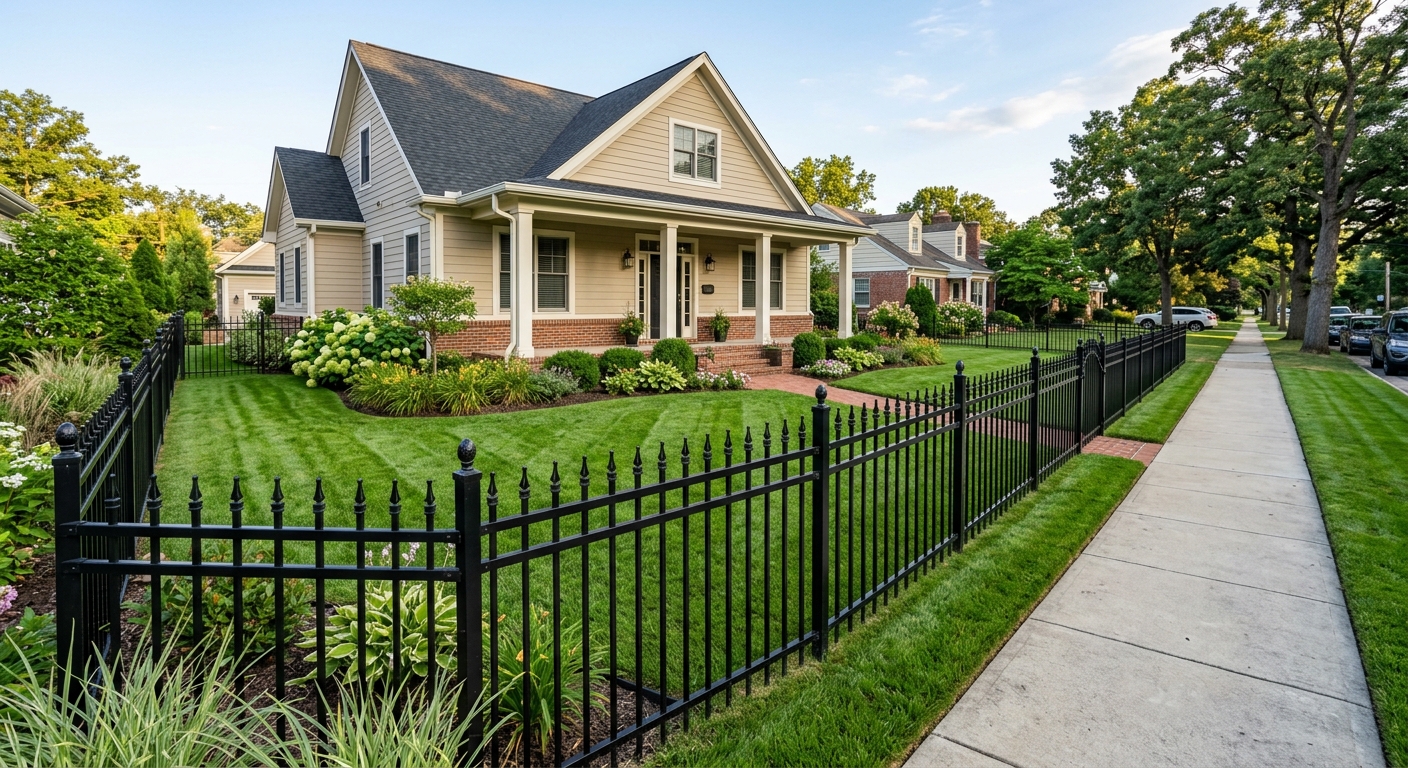
Fencing options and costs in Yarrow
In Yarrow, the most common fencing question homeowners ask is what to choose for privacy, curb appeal, and long-term upkeep. With a population of 3,326 in 2021 (Statistics Canada, 2021 Census), demand is steady but not as “constant replacement” as in larger centres—so you’ll typically see more value in picking a material that matches Lower Mainland–Southwest conditions than chasing the lowest install price. Lower Mainland–Southwest buyers also tend to favour durable residential perimeter solutions as neighbourhoods expand and properties change hands.
Pricing in this part of BC is shaped by a mild but not trivial frost-and-wind reality. Even though coastal BC’s frost is generally less severe than inland regions, crews still need to set posts below the local frost influence to limit heaving, especially in wetter Fraser Valley soils where holes often require more concrete for stability. For solid wood and vinyl privacy fences, wind exposure means stronger corner posts, tighter spacing, and bracing where needed—factors that can push labour and hardware costs up compared with a simple chain-link run.
In Yarrow, trade work is especially in demand around the newer residential pockets and infill streets just off the main corridor, where lots have changing grades and homeowners want cleaner lines between properties. If you’re planning a new boundary or replacing an older fence, the next step is to compare options side-by-side so your quote makes sense against typical installed price bands in the Lower Mainland–Southwest.
| Material |
Lifespan |
Maintenance |
Privacy Rating |
Price per Linear Foot |
| Pressure-treated pine (standard wood) |
10–15 years |
Stain/finish every 2–3 years |
High (if solid pickets or boards) |
$55 – $95 |
| Cedar (natural rot resistance) |
15–25 years |
Light sealing/staining every 3–4 years |
High (solid board or tight picket spacing) |
$65 – $115 |
| Vinyl / PVC (no-maintenance) |
20–30 years |
Occasional rinse; inspect panels and posts |
High (solid privacy styles) |
$75 – $130 |
| Chain-link (galvanized steel) |
20–40 years |
Occasional cleaning; replace damaged links as needed |
Low to Medium (visibility-dependent) |
$30 – $55 |
| Aluminum ornamental |
25–40 years |
Wash as needed; repaint only if required |
Low to Medium (decorative spacing) |
$90 – $170 |
| Composite / recycled material |
20–30 years |
Minimal; occasional cleaning |
High (privacy board styles) |
$95 – $155 |
Prices are estimates only and vary by project scope, site access and material selection.
What affects the price of fencing in Yarrow
In the Lower Mainland–Southwest, it’s common to see the same basic fencing idea come back 30–50% apart between quotes because contractors price risk differently: soil conditions, post depths, wind loading assumptions, and how they handle slope and disposal. In BC, labour availability can also swing during peak spring and early summer installs, so an identical 40–60 linear foot run can be priced differently depending on crew scheduling and how quickly materials can be procured.
The biggest driver is frost-related post depth. Typical Canadian guidance often uses minimum embedment at about 3 feet in many regions, but in practice for Lower Mainland–Southwest installs, crews still set posts deeper than the bare minimum—often roughly 4–6 inches below the design frost influence—to prevent heaving and wobble. Wetter Fraser Valley soils mean deeper holes and more concrete for stability, which raises both material cost and labour time. For cold snaps and damp freeze–thaw cycles, that extra embedment is what keeps a privacy fence from leaning within the first few seasons.
Wind matters too. While the Prairies are the extreme case, open yards and exposed lots in BC still require tighter panel spacing and stronger bracing—especially with solid wood and vinyl privacy systems—so quotes may rise versus a chain-link line. Coastal BC’s mild but wet cycle accelerates wood rot if the fence wasn’t built with proper ventilation, pressure treatment, and correct hardware.
Concrete examples from Yarrow: (1) a slope where the rails must be raked often adds labour for stepped alignment and extra hardware; (2) soft, saturated ground after winter storms can turn a “standard hole” into a concrete-intensive install; (3) removing an old fence with buried posts frequently adds disposal and excavation time.
That’s why you’ll see price bands like chain-link at $30 – $55 per foot when access is straightforward, while wood privacy and vinyl privacy often land higher—commonly within $55 – $95 for standard wood installs and $75 – $130 for vinyl, depending on height and layout.
| Price Factor |
Why It Matters |
Cost Impact |
| Fence length in linear feet |
Most materials and labour scale directly with feet installed |
High (primary driver) |
| Post depth required |
Frost influence and soil stability determine embedment and post length |
Medium to High |
| Post setting method |
Concrete vs gravel pack vs driven posts changes labour and material volume |
Medium to High |
| Material choice |
Vinyl, cedar, and metal require different framing, brackets, and fabrication |
Medium to High |
| Gate count and type |
Gates require stronger framing, hinges, and latching hardware |
Medium |
| Grade and terrain |
Slope requires stepping/raking, extra rails, and careful alignment |
Medium |
| Old fence removal and disposal |
Hauling, additional excavation, and unknown buried conditions |
Medium |
| Permit fees and survey / property line locate |
Admin time and locating reduce the chance of encroachment disputes |
Low to Medium |
Permits & regulations in British Columbia
In British Columbia, fences above a height threshold often require a building permit—commonly around 2.0 m (6.5 ft) for rear yards and about 1.0–1.2 m (3–4 ft) for front yards or corners. Even when a permit isn’t required, you still need to respect property lines and any local setback bylaws that apply to your specific lot. In addition, shared fence ownership rules are governed by provincial line-fences legislation, so it’s wise to confirm what’s considered “shared” before you remove or replace an older boundary fence.
Before any post holes are dug, call for utility locates so you don’t hit power, telecom, or irrigation lines. In BC, homeowners can use BC 1 Call for underground utility location requests. Also, have a survey or at least a property pin locate done so your fence sits where it should—this avoids costly disputes with neighbours.
Licence and coverage checks should be part of your contractor vetting in Yarrow. Ask for: (1) the contractor’s BC business licence details (as applicable to their work category), (2) liability insurance with a current certificate of insurance showing the coverage amount, and (3) clearance coverage for workers—commonly handled through WSBC compliance documentation. Where to look: the online registry/contractor listing your provider uses, and the certificate of insurance and WSBC clearance letter you should receive before work starts. Step-by-step, request these documents up front, verify they’re current, and match the named insured/coverage dates to your project start date.
Choosing the right fence material for Yarrow
Choosing a fence material in Yarrow is mostly about matching your priorities—privacy, low maintenance, budget, and lifespan—to a climate that’s mild but wet, with occasional frost and wind impacts. Pressure-treated pine is the budget-friendly starting point. It’s a solid option for homeowners who can plan on staining or sealing every 2–3 years to slow grey weathering and protect the surface. Cedar looks better longer and has natural rot resistance, but it still benefits from periodic sealing—especially where panels trap moisture.
Vinyl/PVC is popular when homeowners want “set it and forget it.” It’s low maintenance and won’t rot, and it generally performs well through BC’s wet conditions. The trade-off is upfront cost, and in extreme cold snaps vinyl can become more brittle, so installs must be built correctly with proper post spacing, strong rails, and hardware that doesn’t stress the panels. Chain-link is usually the most economical and can last decades, but it won’t give privacy unless you add slats or planting. Aluminum ornamental gives a rust-resistant decorative look with mid-range pricing, but it’s typically not a privacy solution due to the open design.
For post depth: in the Lower Mainland–Southwest, frost influence is usually less than inland Canada, but we still set posts deeper than the “minimum.” Concrete-set posts are often used for corner posts, gate posts, and where soil is wetter—helpful for preventing wobble and heaving. Wind and snow load aren’t usually “storm-level” for every lot, but open sites and solid panels benefit from stronger framing and tighter spacing.
For example, spending closer to $75 – $130 per foot for vinyl can be justified if you want a privacy fence that won’t require staining in our damp winters and rainy springs. If your budget is tighter, standard wood within $55 – $95 can still make sense—but only if you’re comfortable maintaining it and choosing hardware and finishing details that resist moisture build-up.
| Material |
Cold Tolerance |
Lifespan |
Annual Maintenance |
Best For |
Price Band |
| Pressure-treated pine |
Good (with proper finishing) |
10–15 years |
Inspect 1–2 times; stain/seal every 2–3 years |
Budget privacy with regular upkeep |
$55 – $95 |
| Cedar |
Good (natural rot resistance) |
15–25 years |
Inspect; seal/light stain every 3–4 years |
Attractive, long-lasting wood look |
$65 – $115 |
| Vinyl / PVC |
Good (proper install required) |
20–30 years |
Minimal—wash and inspect hardware |
Low maintenance privacy and clean appearance |
$75 – $130 |
| Chain-link |
Very good |
20–40 years |
Minimal cleaning; occasional repairs |
Security with minimal visual barrier |
$30 – $55 |
| Aluminum ornamental |
Very good |
25–40 years |
Wash as needed |
Decorative boundaries with durability |
$90 – $170 |
| Composite / recycled |
Good |
20–30 years |
Minimal—keep clear of debris and rinse |
Privacy look with reduced rot risk |
$95 – $155 |
How to choose a fencing contractor in Yarrow
When you’re hiring a fencing contractor in Yarrow, verifying insurance and compliance protects you from project delays and liability. First, ask for their certificate of liability insurance—look for the insured name, coverage limits, and that the certificate is current for your job dates. Second, confirm worker coverage through WSBC compliance documentation (commonly provided as a clearance letter). Even if you’re “just doing a fence,” you want proof they’re properly covered for on-site work. Where to look: the paperwork they provide before signing, plus any online business listing or registry record they reference.
Next, get 2–3 itemised written quotes. You want a breakdown that clearly separates labour, materials, concrete/post setting, rail and panel components, gate hardware, and any trucking or disposal. A good quote should also state what’s included and excluded—common exclusions include replacing damaged underground drainage that’s discovered during digging, removing buried fence materials, or moving shrubs/obstacles. Clarify whether permit pulls are included (if required) and whether disposal and hauling are included for old fencing.
Warranty matters. Ask for a workmanship warranty (often stated as a number of years from substantial completion) and confirm whether the product/manufacturer warranty applies to specific components and whether it’s transferable to future owners. For payment, never pay more than 10–15% upfront; hold back an amount until the job is complete and surfaces are inspected. Finally, insist on a start date and completion estimate in writing—especially if your fence line is time-sensitive for pets, children, or seasonal landscaping.
- Verify current liability insurance certificate before signing
- Confirm WSBC clearance/documentation and that it covers workers on your site
- Ask for a written, itemised quote (labour + materials, not a single lump sum)
- Confirm post setting method (concrete, gravel pack, or driven) in writing
- Check how they handle slope: stepped vs. raked panels should be stated
- Make sure corner posts and gate posts are reinforced (not “same as fence posts”)
- Confirm disposal/hauling of old fence materials is included (or priced separately)
- Ask who pulls any permit if height thresholds require it
- Review warranty terms: workmanship coverage length and exclusions
- Clarify product warranty and whether it’s transferable
- Require a start date and completion timeframe on the contract
- Keep upfront payment to 10–15% and hold back until final inspection
Concrete red flags I commonly see with fencing contractors in Yarrow include: (1) no proof of current liability insurance or WSBC compliance documentation; (2) quotes that don’t explain post depth and setting method in BC’s frost-influenced conditions; (3) “allowance-only” pricing where rail/panel type or gate hardware is vague; (4) missing disposal terms for old fence removal; and (5) pressure for large upfront payments (over 10–15%) with no completed-work milestone schedule.
Frequently asked questions — fencing in Yarrow
What fence style offers the best wind resistance in Yarrow?
In Yarrow and across the Lower Mainland–Southwest, wind resistance comes down to how much surface area the fence presents and how well posts and rails are braced. For windy yards, tighter picket spacing or designs that allow some airflow (like ranch-style slats with gaps, or certain semi-privacy layouts) often perform better than fully solid panels that act like sails. That said, solid privacy fences can still be very wind-stable when the contractor uses correct post embedment (set below frost influence), strong corner posts, proper rail thickness, and reinforcement on gate openings. If your lot is more exposed, expect more hardware and potentially concrete-set posts for key posts. Installed pricing typically tracks the finish and framing complexity, so solid privacy options often fall into higher bands (for example vinyl privacy commonly aligns with $75 – $130 per foot).
How much does a fence cost in Yarrow?
Fence cost in Yarrow depends mainly on linear feet, height, gate count, and site conditions like slope and wet soil. As a practical reference for the Lower Mainland–Southwest, chain-link is usually the most budget-friendly at about $30 – $55 per foot installed, while standard wood privacy typically lands around $55 – $95 per foot depending on height and panel style. Vinyl/PVC is higher because of material and structural components, commonly falling around $75 – $130 per foot for typical residential runs. If you have steep grade or require lots of raking/stepping, expect labour to increase even if you keep the same material. Finally, older fence removal and post replacement can add cost because saturated ground and buried remnants often mean extra excavation and disposal time.
How deep should fence posts be for Yarrow's frost?
For Yarrow, crews plan post depth to resist heaving from freeze–thaw cycles while also accounting for wetter Fraser Valley soils. While published guidance often points to roughly 3 feet as a minimum in much of Canada, practical Lower Mainland–Southwest installs usually go deeper than the bare minimum—often about 4–6 inches below the design frost influence—so posts stay stable over seasons. In soft or saturated ground, we commonly increase concrete volume and sometimes extend embedment for corner and gate posts. Concrete-set posts are especially important for privacy panels and any opening that gets frequent use, because movement at the gate quickly turns into misalignment. The right depth should be stated in your quote along with the post-setting method (concrete vs. gravel pack) and the expected hole size.
Wood vs vinyl vs aluminum fence — which is best?
The “best” choice for British Columbia homeowners in Yarrow depends on whether you prioritize privacy, maintenance, or appearance. Wood (pressure-treated pine) is usually mid-range on price and can look great, but it typically needs staining/sealing every 2–3 years to prevent weathering. Cedar is more rot-resistant and often looks better longer, though it still benefits from periodic sealing. Vinyl/PVC is the low-maintenance privacy option and commonly costs more upfront; it also requires correct framing and spacing so panels don’t stress in cold snaps. Aluminum ornamental is durable and won’t rust like steel, but it’s generally better for decorative boundaries than full privacy due to open spacing. If your goal is privacy with minimal upkeep, vinyl often makes sense in the $75 – $130 per foot band. If budget is top priority and you’ll maintain it, standard wood around $55 – $95 per foot is frequently the better value.
Do I need a permit to build a fence in British Columbia?
In British Columbia, fences above certain height thresholds often require a building permit—commonly around 2.0 m (6.5 ft) for rear yards and about 1.0–1.2 m (3–4 ft) for front yards or corners. Even if a permit isn’t required for your specific height, your fence must still respect property lines and municipal setback rules. Before digging, you should also arrange utility locates through BC 1 Call and confirm property line locations with a survey or pin locate to avoid encroachment disputes. Shared fence rules are also handled under provincial line-fences legislation. For your project in Yarrow, the easiest approach is to ask your contractor to confirm whether your proposed height and location trigger a permit and to clearly state in writing whether permit pulling is included in the quote.
How long does a wood fence last in Yarrow?
A wood fence in Yarrow typically lasts around 10–15 years for pressure-treated pine when it’s built with good ventilation, quality hardware, and routine maintenance (stain/seal every 2–3 years). Cedar usually lasts longer, often 15–25 years, because it naturally resists rot better in damp conditions. The biggest shortening factors in Lower Mainland–Southwest weather are trapped moisture (panels installed too tight to the ground), poor post embedment, and using fasteners that corrode or loosen over time. Wind exposure can also loosen rails and hinges if the posts weren’t set deep enough below frost influence. If you’re replacing an existing fence, a contractor should address post depth and how they’ll deal with wetter soils in your specific area. In practical terms, wood longevity is strongly tied to workmanship and upkeep—not just the species.