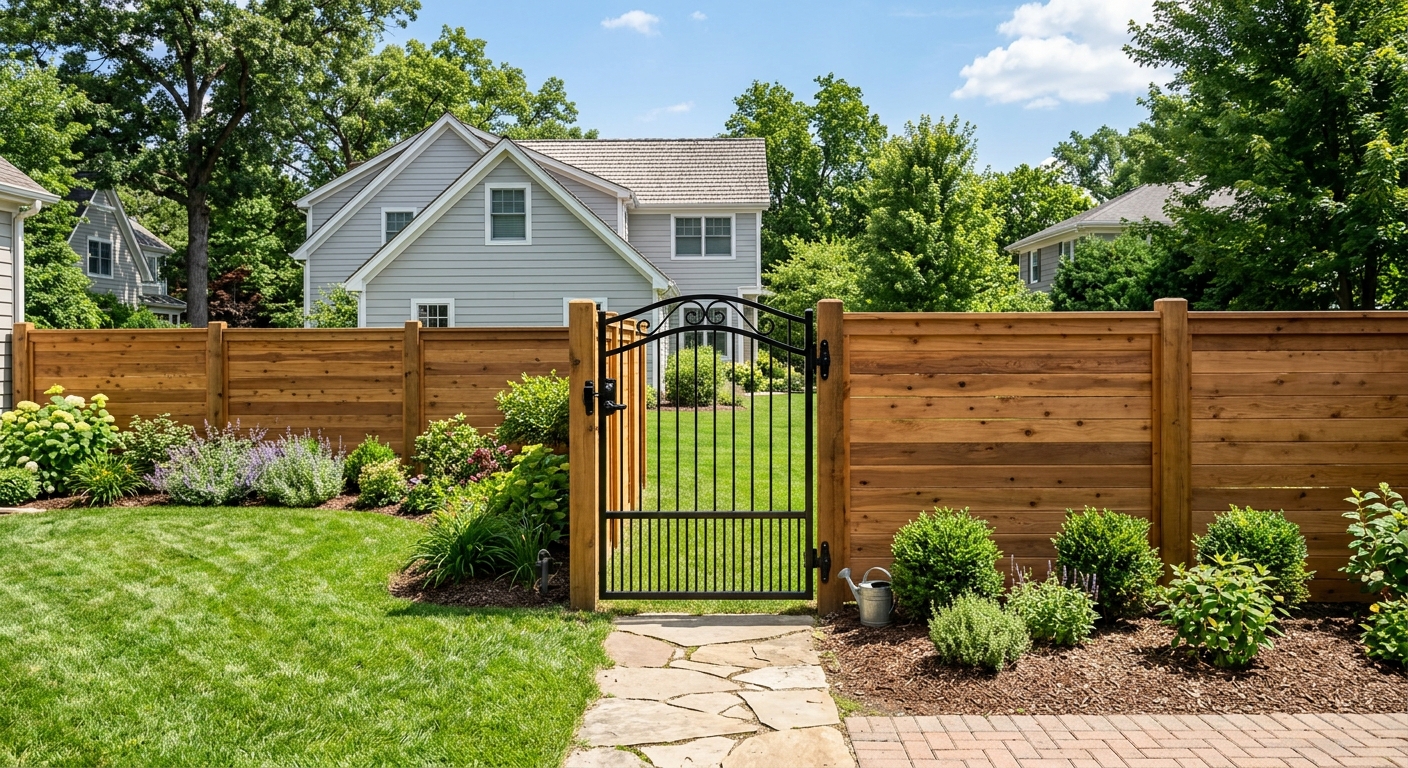
Fencing options and costs in Cache Creek
Fencing in Cache Creek is usually decided by a balance of privacy needs, how much maintenance you’re willing to do, and how the Thompson–Okanagan climate stresses materials. With just 969 people in town (Statistics Canada, 2021 Census) and 410 homeowner households (86.3% of households own), most fences are built to match long-term home plans rather than short-term rentals. That’s why contractors see steady demand around established residential pockets such as the older downtown and along the main residential streets where properties are typically lived-in year-round.
In the Thompson–Okanagan region, frost depth and soil conditions shape both price and design. Even though the Coast stays relatively mild, interior valleys in B.C. commonly require deeper post setting so panels don’t heave during freeze–thaw cycles. For Cache Creek, that typically means longer posts and more labour around augering, post alignment, and—on tougher soils—concrete-set footings. Wind exposure can also drive cost: on more open lots, tighter post spacing and heavier hardware help keep panels stable through gusty spring weather.
Material selection follows naturally. If you want the lowest upfront cost, chain-link and basic pressure-treated wood are common starting points. If you want longevity with less upkeep, cedar or vinyl/PVC are frequent upgrades, while aluminum ornamental tends to be chosen for appearance where homeowners don’t need full privacy. Use the comparison below to set expectations before you request your estimate.
| Material |
Lifespan |
Maintenance |
Privacy Rating |
Price per Linear Foot |
| Pressure-treated pine (standard wood) |
12–18 years |
Stain/seal every 2–3 years; inspect rails annually |
6/10 (board spacing dependent) |
$55 – $85 |
| Cedar (natural rot resistance) |
18–25 years |
Light staining every 2–4 years; quick spot checks |
8/10 (good solid-board options) |
$65 – $95 |
| Vinyl / PVC (no-maintenance) |
20–30 years |
Occasional wash; inspect posts at ground line |
8–9/10 (solid picket/board styles) |
$75 – $115 |
| Chain-link (galvanized steel) |
20–35 years |
Minimal; rinse and check tension |
2–3/10 (low privacy) |
$35 – $60 |
| Aluminum ornamental |
25–40 years |
Wash annually; check gate hardware |
3–4/10 (decorative, open design) |
$90 – $150 |
| Composite / recycled material |
20–30 years |
Wash; avoid impact damage; check brackets |
8/10 (solid panel options) |
$85 – $135 |
Prices are estimates only and vary by project scope, site access and material selection.
What affects the price of fencing in Cache Creek
In Cache Creek, even two bids for the “same” fence can differ by 30–50% once you account for Thompson–Okanagan labour constraints, required footing depth, and how much work is needed to get posts plumb in local soil. Across B.C., and versus some milder markets, interior projects also tend to use concrete-set posts more often because frost heave risk is higher than in coastal microclimates. That labour and material shift is one reason fence installation pricing commonly lands closer to the $55–$85 range for wood and can move toward $75–$115 for vinyl when deeper post work is required.
Frost line depth is the big driver for posts: the practical rule local installers follow is setting posts about 4–6 inches below the design frost depth to prevent heaving during freeze–thaw cycles. In colder interior zones, that can mean posts are effectively 75–90 cm or more below grade, and sometimes deeper depending on soil and elevation. Where that depth is required, contractors often need longer posts, more auger time, and additional concrete—so “small” fences get more expensive fast.
Wind exposure matters too. In open benches and valley-bottom lots, stronger gusts can require tighter spacing, heavier rails, or bracing. As a result, a solid privacy panel in high-wind areas may cost more than an equivalent fence in a sheltered yard.
Local examples in Cache Creek: (1) clay-heavy or poorly drained soil often increases excavation time and pushes contractors toward concrete-set posts; (2) lots with rock near the surface can slow augering and increase labour even if the fence length is short; (3) yards with older fencing (built around the area’s housing stock—65.3% of homes built before 1981) can require extra time for removal and disposal before the new layout can start. Those realities influence whether a project sits nearer the lower end of $35–$60 for chain-link or rises toward $90–$150 for aluminum with reinforced bracing.
| Price Factor |
Why It Matters |
Cost Impact |
| Fence length in linear feet |
The more footage, the more posts, rails, and materials you buy. |
Highest—directly scales labour and hardware |
| Post depth required |
Frost line determines hole depth and post length to reduce heaving. |
Can shift total by a large margin when concrete-set is needed |
| Post setting method |
Concrete vs. gravel pack vs. driven posts affects strength and install time. |
Concrete typically increases cost but improves stability in tougher soils |
| Material choice |
Vinyl, cedar, and chain-link have different install methods and material costs. |
Often the second-biggest difference after length and footing |
| Gate count and type |
Drive-through double gates add framing, stronger hinges, and alignment work. |
Often adds noticeable cost even on short fence runs |
| Grade and terrain |
Slopes require raked panels or stepped sections for proper appearance. |
More cutting and layout time; materials can increase |
| Old fence removal and disposal |
Disposal, hauling, and dealing with damaged footings adds time. |
Can add a significant line item for neglected or mixed materials |
| Permit fees and survey / property line locate |
Some heights or corner/rear configurations trigger permitting and formal locating. |
Usually moderate, but critical for avoiding rework |
Permits & regulations in British Columbia
In British Columbia, fences above a height threshold—commonly around 2.0 m at the rear and about 1.0–1.2 m near the front or at corner visibility lines—often require a building permit. Exact requirements can vary by municipality, but the practical homeowner takeaway for Cache Creek is the same: treat fence height, location, and visibility as potential permitting triggers, especially for corner lots and higher privacy walls.
All fences must respect property lines and any municipal setback bylaws. Before you dig any post hole, you should call for utility locates (BC 1 Call) so contractors don’t hit buried services. It’s also wise to confirm property pins or order a locate/survey before installing, because encroachment disputes can lead to costly adjustments.
For shared fence situations, line-fences responsibilities are governed by provincial line-fences legislation, so communication with neighbours matters—particularly where a fence must be replaced or upgraded to an agreed standard.
How to verify a contractor is legit in B.C. step-by-step: (1) licence/registration information: check the contractor’s business listing and trade registration details on provincial or relevant online business registries; (2) liability insurance: request a current certificate of insurance showing the effective dates and that the policy covers fencing installation; (3) workers’ coverage: confirm coverage paperwork for workplace injury protection (WSIB in many cases or the applicable WCB registration depending on employer status), and ask for the clearance/coverage letter if they claim it; (4) keep copies of all documents before work starts.
Choosing the right fence material for Cache Creek
Choosing a fence material in Cache Creek is easiest when you start with your “must-haves”: privacy level, maintenance tolerance, and expected lifespan. In the Thompson–Okanagan interior, freeze–thaw cycles and seasonal dampness mean the ground line and post construction matter as much as the fence material itself. With many homes built earlier (65.3% pre-1981), you’ll also see existing fence posts that can be heaved or rotted at the base—so selecting a material with the right post detail helps you avoid replacing the entire system early.
Pressure-treated pine is usually the best budget option, but it typically needs staining or sealing every 2–3 years to prevent grey weathering and to slow surface checking. Cedar is a popular upgrade because of better natural rot resistance and a warmer look; it still benefits from periodic staining and inspections, but it generally holds up better in damp seasons. Vinyl/PVC is attractive for low maintenance—wash and move on—but in extreme cold it can be more brittle if panels are incorrectly braced or if posts aren’t set securely below frost. Chain-link is the lowest-cost, longest-lived option when privacy isn’t your goal, and aluminum ornamental offers a rust-resistant, tidy appearance with mid-range pricing.
Post-depth is the decision that affects all materials. If your site requires deeper setting below the regional frost line, concrete-set posts may be necessary to prevent heaving. That extra footing work can narrow the “price gap” between materials, because labour depth dominates totals on shorter runs.
For a concrete dollar example: if a cedar privacy fence costs closer to the $65–$95 band while vinyl lands in the $75–$115 band, the extra $10–$40 per linear foot may be worth it if you want fewer yearly tasks and you expect to keep the fence 20+ years. If you’re trying to control upfront cost and can commit to periodic staining, pressure-treated wood can justify the lower spend—often sitting near the $55–$85 band—while still performing well when posts are installed correctly.
| Material |
Cold Tolerance |
Lifespan |
Annual Maintenance |
Best For |
Price Band |
| Pressure-treated pine |
Good with proper post depth and sealing at ground line |
12–18 years |
Seasonal check; stain/seal every 2–3 years |
Budget privacy with a maintenance plan |
$55 – $85 |
| Cedar |
Excellent rot resistance in damp seasons |
18–25 years |
Inspect and stain every 2–4 years |
Natural look and longer life |
$65 – $95 |
| Vinyl / PVC |
Good; needs solid bracing to avoid brittle damage in cold |
20–30 years |
Wash; inspect posts and hardware |
Low-maintenance privacy |
$75 – $115 |
| Chain-link |
Very good; resilient to cold and weather |
20–35 years |
Minimal; rinse and check tension |
Security with lowest upfront cost |
$35 – $60 |
| Aluminum ornamental |
Excellent; won’t rust like steel in wet cycles |
25–40 years |
Wash annually; check gate alignment |
Appearance-focused perimeter fencing |
$90 – $150 |
| Composite / recycled |
Good; performs well if panels are installed with correct tolerances |
20–30 years |
Wash; inspect for impact damage |
Privacy with reduced upkeep |
$85 – $135 |
How to choose a fencing contractor in Cache Creek
Choosing the right fencing contractor in Cache Creek starts with verifying they’re properly set up for the work. In B.C., ask for (1) their proof of business registration/trade listing as applicable, (2) liability insurance—your certificate of insurance should show the coverage is active during your project dates and that fencing installation is covered, and (3) workers’ coverage—confirm the employer’s current workers’ injury protection paperwork (WSIB/WCB clearance depending on the employer setup). Don’t accept “we’re covered” without documentation; photocopy or save the certificates.
Next, get 2–3 itemised written quotes instead of a single lump sum. You want a line-by-line breakdown showing labour, materials, concrete/post setting method, gate framing, hardware, and whether disposal is included. Read the scope for exclusions: permit pull, utility locate coordination, property line locating, old-fence removal, and what happens if the ground is rockier than expected.
Warranty matters in fencing. Ask for the workmanship warranty length (how long the installer stands behind alignment, posts, and bracing) and the manufacturer/product warranty for materials like vinyl rails, cedar components, or composite boards. Confirm whether warranties are transferable if you sell your home.
For payment schedule, never pay more than about 10–15% upfront. Hold back the remainder until key milestones are complete—especially post-setting confirmation, gate operation, and final alignment. Finally, request a written start date and completion estimate so weather-related delays don’t turn into scope creep.
- Provide insurance proof with project dates and coverage amount.
- Show evidence of current workers’ injury coverage/clearance.
- Give a written itemised quote (labour + materials, not lump sum).
- Confirm post-setting method (concrete vs gravel pack) in the scope.
- Specify post depth below grade and how frost conditions are handled.
- Include gate hardware brand/type and number of gates.
- List disposal/hauling responsibilities for old fence materials.
- State what utilities locate call coordination is included.
- Confirm permit responsibility (if a permit is required for height/location).
- Provide a workmanship warranty in writing with start/end dates.
- Require a payment schedule with no more than 10–15% upfront.
- Lock in a timeline: start date and estimated completion.
Concrete red flags to watch for in Cache Creek: (1) refusing to show an insurance certificate or workers’ coverage; (2) quoting “standard” post depths without discussing frost heave risk; (3) leaving scope vague on gates, disposal, or whether braces are included for wind-exposed lots; (4) asking for large upfront payments; and (5) giving only a verbal timeline or no completion date in writing.
Frequently asked questions — fencing in Cache Creek
How do I compare fencing quotes?
In Cache Creek (and across B.C.), the best way to compare quotes is to match scope details, not just the total. Ask each contractor to list fence length, number of posts, and post-setting method (concrete-set vs gravel pack), because frost-depth performance is a cost driver in the Thompson–Okanagan interior. Also confirm materials: “wood” can mean pressure-treated pine vs cedar, which changes lifespan and finish requirements. For pricing, compare like-for-like bands—for example, a basic wood privacy job may fall around the $55–$85 per linear foot range, while vinyl/PVC often comes closer to $75–$115. Finally, check inclusions: gate framing, permit pulling, utility locate coordination, and disposal of the old fence.
How long does fence installation take in Cache Creek?
Typical installation timing in Cache Creek depends mostly on fence length, access, and how the ground behaves during augering. On straightforward runs with easy access, many privacy fence projects can be completed in a couple of working days, but longer property lines or multiple gates can push it toward a week. The schedule also changes if contractors need extra time for deeper footing below the frost-influenced set point or if they encounter rock/clay that slows hole drilling. Weather matters too: heavy rain can delay post-setting and concrete curing. When you request estimates, ask for a written start date and a completion window that accounts for concrete cure time and hardware/gate alignment.
Can I install a fence on a slope in Cache Creek?
Yes—sloped yards are common in the Thompson–Okanagan, and fencing can be done successfully in Cache Creek as long as the design is adjusted for grade. Contractors typically use stepped panels or raked sections so the fence follows the slope while keeping an even top line and proper post stability. The bigger concern is not the “look,” but ensuring each post is set at the required depth below grade to reduce freeze–thaw heave risk. If grade changes significantly, you may also see higher labour because it requires more layout time, more cutting, and sometimes additional bracing to handle uneven wind loading. In your quote, ask how they’ll handle racking, and whether the post depth is consistent for each stepped section.
What is the most weather-resistant fence for Cache Creek's climate?
For Cache Creek’s interior B.C. conditions—freeze–thaw cycles, seasonal dampness, and wind exposure—weather resistance usually comes down to the full system: post setting, hardware corrosion resistance, and panel material. Generally, chain-link (galvanized steel) is extremely durable and often lasts the longest with minimal maintenance; aluminum ornamental also performs well because it won’t rust like untreated steel. Among privacy options, vinyl/PVC and cedar tend to be strong performers when posts are set correctly below frost and hardware is installed properly. Wood can be excellent if it’s properly stained/sealed and installed with correct footing, but it usually requires more ongoing maintenance. Whatever you choose, ensure the installer addresses frost-depth post depth so the fence doesn’t heave over the winter.
How do I prevent wood fence rot in Cache Creek?
Wood rot prevention starts at the base. In Cache Creek, prevent rot by ensuring posts are set deeply enough to avoid freeze–thaw movement and using proper concrete-set details where soil conditions require it. Keep wood components off saturated soil when possible, and make sure cut ends are sealed before or after installation. Pressure-treated pine and cedar both benefit from periodic staining/sealing—pressure-treated typically needs attention every 2–3 years, while cedar often goes 2–4 years depending on sun and moisture. Also check that rails have good drainage and that fasteners and hardware are corrosion-resistant. Finally, remove debris that holds moisture at the fence line (leaves and stacked firewood against posts) so the area can dry between wet spells.
What is the cost per linear foot for fencing in Cache Creek?
In Cache Creek, fence pricing is typically discussed in per-linear-foot terms that align with Thompson–Okanagan market bands. Common ranges for installation pricing are: chain-link around $35–$60 per linear foot, wood (pressure-treated) around $55–$85, vinyl/PVC around $75–$115, and aluminum ornamental around $90–$150. Your actual cost depends on length, gate count, post depth required for frost considerations, and whether concrete-set posts are needed due to soil. If your quote seems low, compare whether it includes the same footing depth and whether disposal and hardware upgrades are included. If your quote is higher, confirm it’s for the right reasons—typically deeper posts, more bracing for wind, or a premium material like cedar.