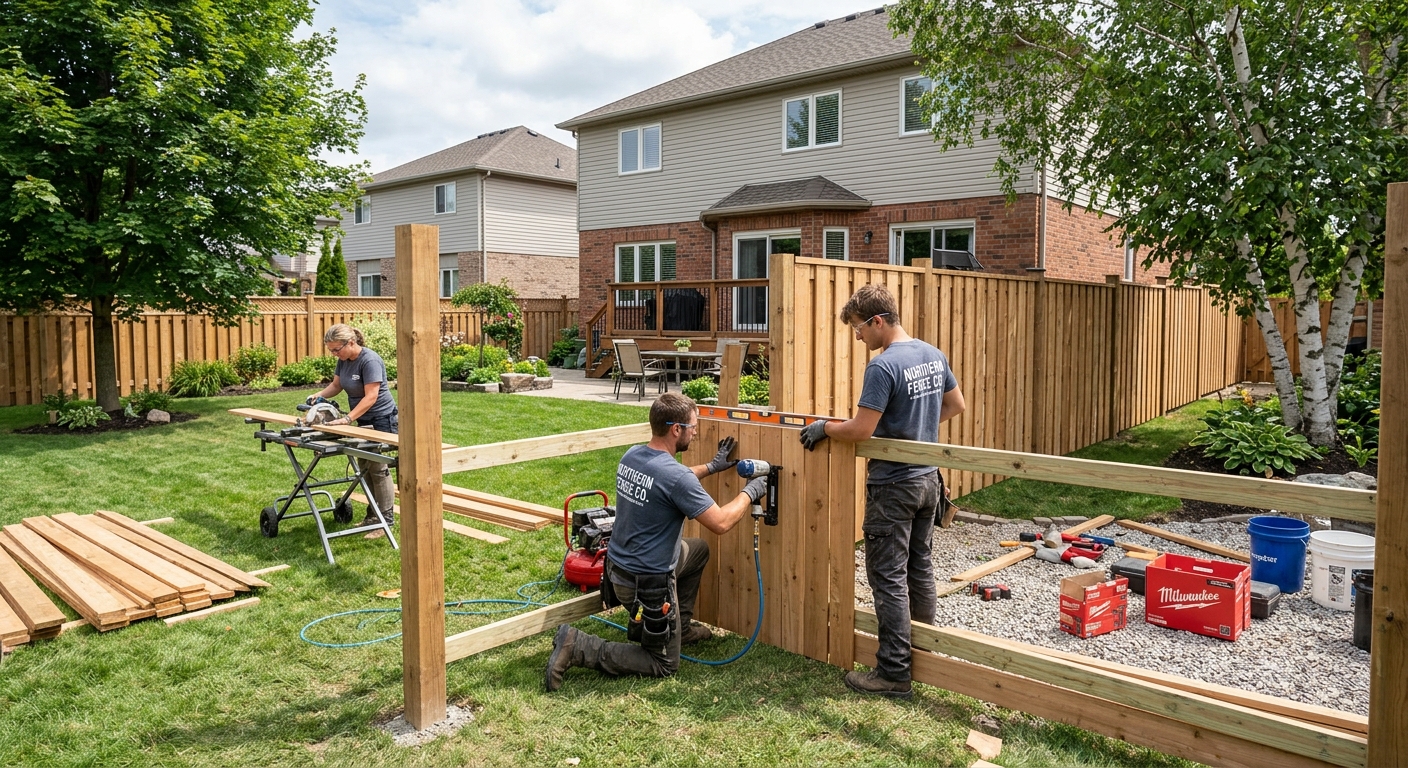
Fencing options and costs in Logan Lake
Logan Lake is a compact community with a lot of detached housing—single-detached homes make up 63.4% of dwellings (Statistics Canada, 2021 Census). That matters because each detached property typically needs its own perimeter fencing for pets, kids, and boundary control, so demand stays steady even when homeowners aren’t doing major renovations. Locally, 83.6% of households own their homes, which also supports longer-term upgrades like replacing aging fence lines around backyards and side yards (Statistics Canada, 2021 Census).
In the Thompson–Okanagan, fence pricing is shaped by interior frost depth and how wind behaves on open lots. Even though Logan Lake isn’t coastal, freeze–thaw cycles still drive the need to set posts below the regional frost line; when clay or poorly drained soil is present, contractors often switch to concrete-set posts and deeper auger holes. Wind exposure can also force tighter post spacing and heavier rails on privacy fences, particularly along more exposed stretches near Highway 97 and the open benches around town.
If you’re in the West Logan Lake area or another wind-exposed neighbourhood edge, it’s common to see higher labour and hardware costs than sheltered yards. That’s why it’s worth comparing materials side-by-side before you request quotes—start with the table below.
| Material |
Lifespan |
Maintenance |
Privacy Rating |
Price per Linear Foot |
| Pressure-treated pine (standard wood) |
10–15 years |
Stain/Seal every 2–3 years; tighten hardware as needed |
High (solid board/picket styles) |
$55–$85 |
| Cedar (natural rot resistance) |
15–25 years |
Optional stain; often 1–3 re-coats over lifespan |
High (solid board styles) |
$70–$110 |
| Vinyl / PVC (no-maintenance) |
20–30 years |
Rinse with hose; inspect for impact damage |
Medium to High (solid or semi-solid panels) |
$75–$115 |
| Chain-link (galvanized steel) |
25–35 years |
Occasional tension/repairs; rinse to slow coating wear |
Low (open weave) |
$35–$60 |
| Aluminum ornamental |
25–40 years |
Wash occasionally; touch up rare impact damage |
Low to Medium (open pickets) |
$90–$150 |
| Composite / recycled material |
20–30 years |
Minimal cleaning; occasional fastener checks |
High (solid privacy styles) |
$85–$130 |
Prices are estimates only and vary by project scope, site access and material selection.
What affects the price of fencing in Logan Lake
In Logan Lake and the wider Thompson–Okanagan, quotes for the “same” fence can differ by 30–50% once contractors factor in frost depth, soil conditions, and wind load. In British Columbia’s interior, your post holes often need to be dug deeper and set more securely than in mild coastal microclimates, and that extra auger time and concrete work can move a project quickly. Material pricing also changes the labour-to-material balance—chain-link can be labour-light per panel, while privacy fences with rails, pickets, and bracing add more installation time.
Frost depth is the biggest driver. Local practice is to set posts at least 4–6 inches below the design frost depth so they don’t heave during freeze–thaw cycles. In colder interior pockets, that typically means deeper holes and longer posts, and often concrete-set installation rather than a simple gravel pack. In a colder Prairie-style frost regime, posts can be required 1.5–2.0 m into the ground; while Logan Lake may be less extreme than the coldest regions, you still feel the impact through deeper digging and longer hardware.
Two practical Logan Lake examples: (1) on heavier clay or damp low spots after spring melt, contractors spend more time stabilizing holes and sealing bases—raising costs versus gravelly yards; (2) on exposed property edges where wind pushes harder on panels, installers tighten post spacing and add more rails, which raises both material and labour. If you’re comparing options, the difference between a budget wood run (often aligning with wood bands around $55–$85) and vinyl privacy (often aligning with $75–$115) is usually justified by the extra hardware and rework risk that comes from deeper posts and bracing needs.
| Price Factor |
Why It Matters |
Cost Impact |
| Fence length in linear feet |
Every fence cost has a per-foot base plus end-post and gate complexity. |
High (primary driver) |
| Post depth required |
Frost line depth determines how long posts must be and how deep holes are dug to prevent heaving. |
High |
| Post setting method |
Concrete-set posts can be required for clay/poor drainage or deeper frost protection; gravel pack is faster where conditions allow. |
Medium to High |
| Material choice |
Vinyl, cedar, and metal each have different material price points, rail systems, and installation rates. |
Medium to High |
| Gate count and type |
Drive-through (double) gates need heavier frames, hinges, and stronger posts. |
High |
| Grade and terrain |
Sloped yards require stepped or raked panel layouts, more trimming, and more labour to keep spacing consistent. |
Medium |
| Old fence removal and disposal |
Demo can add hauling, disposal fees, and extra time, especially with concrete bases or buried sections. |
Medium |
| Permit fees and survey / property line locate |
Depending on height and location, permits or formal property line verification can be required. |
Low to Medium |
Permits & regulations in British Columbia
In British Columbia, fence permitting commonly comes down to height and placement. As a practical threshold, fences above about 2.0 m (6.5 ft) along the rear and above about 1.0–1.2 m (3–4 ft) near the front or corner often require a building permit in many BC municipalities. Even when a permit isn’t required, you still must respect property lines and municipal setback bylaws.
Before digging any post holes, call for utility locates. In BC you typically use BC 1 Call to mark buried services. Separately, confirm your property line: if you don’t have reliable documentation, obtain a survey or at least ensure your property pins/locate are correct. This step helps prevent encroachment disputes—an issue that’s surprisingly common when old fences were erected without an accurate boundary reference.
Shared fence ownership is also important. Line-fence obligations and shared maintenance responsibilities are governed by provincial line-fences rules.
For licensing verification, ask your contractor for: (1) proof of British Columbia contractor licensing where applicable for the scope of work; (2) a current certificate of liability insurance with adequate limits; and (3) evidence of coverage for workers if required (often via WSIB/WCB-style coverage documentation). Look online for the applicable licensing registry to confirm the business name matches the quote, then request a certificate of insurance (and, if asked, a clearance letter) before work starts—don’t rely on verbal assurances.
Choosing the right fence material for Logan Lake
Choosing fence material in Logan Lake is mostly about balancing privacy, maintenance comfort, and how well the system handles interior cold snaps and wet spring freeze–thaw cycles. Pressure-treated pine is usually the budget pick, but it needs regular staining or sealing every 2–3 years to prevent grey weathering and slow surface breakdown. Cedar offers better natural rot resistance and a more attractive look, yet it still benefits from maintenance to keep colour and reduce splitting over time. Vinyl/PVC is the low-maintenance option—no annual painting—and it resists rot, but it can become brittle if exposed to repeated extreme cold impacts, so proper post depth and secure fastening still matter.
For Logan Lake yards, chain-link is typically the longest-life value and lowest upfront cost, but it provides little privacy by itself. Aluminum is durable and rust-resistant, making it good for decorative fronts, but it’s open-style so it won’t fully block wind or sightlines. Composite/recycled boards can deliver strong privacy with minimal upkeep, though it’s often priced closer to mid-to-high material tiers.
Because Thompson–Okanagan sites require posts below the frost line to prevent heaving, concrete-set posts are commonly used where soils hold moisture or where deeper holes are needed. That’s a setup decision that applies to wood, vinyl, and composite alike: even the “lowest maintenance” materials suffer if the foundation moves.
Where the price difference makes sense: upgrading from basic wood to cedar is often worth it when you want better longevity and appearance without going all the way to vinyl. If your quote for a wood privacy run sits around $55–$85 per linear foot, moving to a higher material like vinyl or premium cedar (often in the $75–$115 band) can be justified when you’re trying to reduce future board replacement cycles and avoid frequent re-staining in an already busy ownership schedule.
| Material |
Cold Tolerance |
Lifespan |
Annual Maintenance |
Best For |
Price Band |
| Pressure-treated pine |
Good (foundation quality matters) |
10–15 years |
Inspect seasonally; stain/seal every 2–3 years |
Budget privacy with acceptable upkeep |
$55–$85 |
| Cedar |
Good to very good |
15–25 years |
Minimal; often 1–3 re-coats over lifespan |
Longer-lasting privacy and curb appeal |
$70–$110 |
| Vinyl / PVC |
Very good (avoid impact) |
20–30 years |
Light wash and hardware checks |
Low maintenance privacy |
$75–$115 |
| Chain-link |
Excellent |
25–35 years |
Occasional tension/repair; rinse |
Security and pet containment |
$35–$60 |
| Aluminum ornamental |
Excellent |
25–40 years |
Occasional wash |
Front yards and attractive lines |
$90–$150 |
| Composite / recycled |
Good to very good |
20–30 years |
Low; periodic inspection of fasteners |
Privacy with reduced upkeep |
$85–$130 |
How to choose a fencing contractor in Logan Lake
Start by verifying the basics. In British Columbia, ensure your contractor is properly licensed for the work they’re doing and provide a certificate of liability insurance that matches the company name on the quote. Next, confirm workers’ coverage documentation (WSIB/WCB-type coverage, as applicable) so you’re not exposed if there’s an onsite injury. Ask for these documents before you sign, not after—then check that the certificate dates are current and that the insurance limit is appropriate for the project size.
Get 2–3 itemised written quotes instead of a lump sum. You want a breakdown that shows labour, materials, post type/size, concrete quantity (if used), and line items for removal/disposal and gates. A good quote also clarifies exclusions: for example, whether permit pulls are included, whether the contractor will do a locate request, and what happens if you discover hidden concrete remnants or rock during drilling. Read the scope line-by-line, especially around grading/steps on slopes and how they’ll keep fence height consistent across uneven ground.
Warranty matters too. Ask for a workmanship warranty length and whether the product/manufacturer warranty is included and transferable to future owners. For payment, never pay more than 10–15% upfront; use a holdback until the job is complete and you’ve accepted final alignment and hardware operation. Finally, insist on a start date and completion estimate in writing so you’re not left waiting through weather windows.
- Licensing proof is current and matches the contractor’s legal business name.
- Certificate of liability insurance provided before contract signing.
- Workers’ coverage documentation provided (as applicable) for fence crews.
- Quotes list post setting method (concrete vs gravel pack) and post depth assumptions.
- Material grade and profile type stated (e.g., cedar board size, vinyl system, rail count).
- Gate pricing is itemised (frame type, hinge/bracing hardware, latch quality).
- Removal and disposal included or clearly excluded.
- Permit pull responsibilities stated clearly (included vs homeowner responsibility).
- Property line/survey assumptions documented.
- Slope handling described (stepped vs raked; panel consistency plan).
- Clear warranty terms for workmanship and manufacturer components.
- Payment schedule shown with a small upfront deposit and a holdback to completion.
In Logan Lake, red flags I’ve seen include: contractors who won’t state post depth or concrete-setting assumptions in writing; quotes that are only a single total without hardware/post and gate breakdown; missing insurance/coverage documentation; promising “no permit ever” without checking height and placement; and asking for large upfront payments (beyond 10–15%) or refusing a written timeline.
Frequently asked questions — fencing in Logan Lake
How long does fence installation take in Logan Lake?
In Logan Lake, installation time depends mainly on fence length, gate count, and how easy the ground is to drill. For straightforward runs with standard spacing and good access, many jobs turn over faster than homeowners expect—think “days to a week” for smaller backyards. Longer perimeters, multiple gates, steep slopes, or lots with rocky/clay soil can add drilling time because posts often need to be set below frost depth to prevent heaving during freeze–thaw cycles. If old fencing removal is included, allow extra time for demo and hauling/disposal. Weather also matters in the interior: crews typically avoid wet, unstable ground when holes can collapse and concrete can’t cure properly. Your contractor should give a start date, a realistic completion estimate, and a daily work plan in writing before you book labour.
Can I install a fence on a slope in Logan Lake?
Yes, you can install a fence on a slope in Logan Lake, but the design needs to match the terrain. Contractors usually use stepped or raked layouts so the top rail (or each panel) stays consistent while the post heights adjust to maintain a straight visual line. The slope also affects excavation effort—holes may be deeper on one side to maintain proper post depth below the frost line, and it can influence how much concrete is required for stability on heavier soils. For privacy fences, wind exposure is still a consideration: closer post spacing and sturdier rails can help keep panels from sagging on uneven ground. When you request your quote, ask how they’ll handle grade changes and whether they’ll keep your fence height within boundary/permit expectations for front versus rear locations.
What is the most weather-resistant fence for Logan Lake's climate?
For Logan Lake’s interior freeze–thaw cycles and wet spring conditions, the most weather-resistant choices are usually chain-link with proper galvanization/coating or cedar and vinyl systems installed on stable, correctly set posts. Chain-link is extremely durable and often holds up for decades because it tolerates moisture well and doesn’t rot. Cedar has natural rot resistance and looks great, though it still benefits from basic maintenance to slow splitting and surface breakdown. Vinyl is popular for low upkeep and resists rot, but it still depends on correct post installation—if posts shift above the frost line, any material can fail prematurely. In cost terms, chain-link often lands closer to the $35–$60 per linear foot band, while cedar or vinyl privacy tends to be higher, commonly in the $75–$115 range.
How do I prevent wood fence rot in Logan Lake?
Wood rot prevention is mostly about stopping moisture at the foundation and keeping boards ventilated where possible. In Logan Lake, that starts with proper post depth and secure installation: posts set above the effective frost depth can heave, creating gaps that trap water at the base. Concrete-set posts (where soil holds moisture or drainage is poor) are often the best approach because they reduce movement. Above ground, use the right hardware (corrosion-resistant fasteners) and avoid leaving end grain unprotected—cap rails and seal cut ends where applicable. For pressure-treated pine, plan on staining or sealing every 2–3 years to slow grey weathering and surface breakdown. For cedar, maintenance is lighter than pine but still important: periodic inspection and re-coating extend life and reduce the risk of rot where boards meet damp soil or sprinklers.
What is the cost per linear foot for fencing in Logan Lake?
In Logan Lake, typical installed pricing per linear foot generally follows the Thompson–Okanagan bands. Wood fences commonly fall around $55–$85 per linear foot, while vinyl/PVC is often around $75–$115. Chain-link is usually the lowest, often in the $35–$60 range, and aluminum ornamental tends to be higher, commonly $90–$150. Your exact number will change with fence height, length, gate count, how deep posts must be set for frost protection, and whether old fence removal and disposal are included. If your yard has clay, standing water, or exposed wind conditions, you may see the higher end of the range because contractors allocate more time for drilling, concrete, and bracing.
Should I repair or replace my old fence in Logan Lake?
Repair is usually worth it when the posts are solid and the damage is limited—like a few loose rails, broken pickets, or minor sagging. Replacement becomes the better value when you see widespread rot at bases, repeated post movement, or multiple sections that are out of alignment (often a sign posts were not set deeply enough for frost or soil conditions). In Logan Lake’s interior climate, a fence that has already heaved once is more likely to fail again, and repeated patchwork can cost nearly as much as replacement after labour and materials. A practical approach is to have a contractor assess: check post stability first, look for rot lines near grade, and confirm whether concrete bases are compromised. If your old fence was built before 1981 (58.2% of local homes were built before then), the materials and fastening methods may also be less compatible with modern fastening and wind bracing expectations.