Fencing options and costs in Dunbar-Southlands
Dunbar-Southlands homeowners often ask the same question: what will it actually cost to fence a yard that’s built for Vancouver weather? With a population of 21,245 in the area (Statistics Canada, 2021 Census), the demand is steady, and almost every detached property ends up planning some sort of boundary upgrade over time. In practice, fence installation becomes more frequent as older lots cycle through landscaping renewals, gate additions, and privacy upgrades—especially on the quieter streets near major pedestrian corridors and schools.
In the Lower Mainland–Southwest, mild winters don’t eliminate frost and wind. Posts still need to be set below the design frost depth to limit heaving, and the Fraser Valley soils can be wetter than they look, which typically means deeper holes and more labour for backfilling. Coastal moisture also shifts the material balance: wood fencing can perform very well when properly treated, but the “cheap wood” approach often backfires due to faster weathering and staining frequency. Availability is generally good in Dunbar-Southlands and nearby areas like the Dunbar neighbourhood, but crews still price for access (lane work, gate widths, and yard grading) and for the extra concrete setting that many jobs require.
To make it easier to compare quotes, here’s a realistic cost snapshot for common fencing materials, followed by what those numbers usually mean on the ground.
| Material |
Lifespan |
Maintenance |
Privacy Rating |
Price per Linear Foot |
| Pressure-treated pine (standard wood) |
10–15 years |
Stain/seal every 2–3 years |
High (with solid panels) |
$55 – $85 |
| Cedar (natural rot resistance) |
15–25 years |
Light stain/maintain every 2–4 years |
High (with solid boards) |
$70 – $105 |
| Vinyl / PVC (no-maintenance) |
20–30 years |
Occasional wash only |
High (solid pickets/panels) |
$85 – $125 |
| Chain-link (galvanized steel) |
20–35 years |
Minimal (tension and minor repairs) |
Low (visibility remains) |
$30 – $55 |
| Aluminum ornamental |
25–40 years |
Occasional rinse and hardware checks |
Medium (open design) |
$95 – $160 |
| Composite / recycled material |
20–30 years |
Low (cleaning; no staining) |
High (solid or close-spacing) |
$90 – $135 |
Prices are estimates only and vary by project scope, site access and material selection.
What affects the price of fencing in Dunbar-Southlands
Fence quotes can vary by 30–50% in the Lower Mainland–Southwest—and across British Columbia—because the “same fence” on paper often becomes a different job after site conditions are measured. A 6 ft privacy run on a flat, well-drained lot may price near the mid-range, while the same height on a sloped yard with wet soil, gate work, and removal can move closer to the upper end. Labour rates also change with crew availability, but in Vancouver-area jobs the bigger swing is usually installation method: how deep you set posts, whether concrete is needed, and how long the crew spends on cleanup and disposal.
Frost line depth is a big driver. Even in milder BC weather, contractors still plan for posts to sit roughly 4–6 inches below the design frost depth to prevent heaving. You’ll often see deeper holes here than you’d expect from “coastal mildness,” which can mean longer posts and more concrete—especially for privacy panels, corner posts, and gates. That’s why a wood privacy job can land in the $55–$95 band per linear foot while vinyl/PVC frequently comes in higher at the $75–$130 band, both because of material structure and because tougher post-setting requirements don’t disappear just because the finish costs more.
Local examples that regularly raise cost in Dunbar-Southlands include: wetter soil near downspouts and gardens requiring additional excavation and drainage backfill; and yards with soft edges where posts need to be set in concrete for stability. Cost can drop when an existing fence is reused as bracing for a short extension, when there’s easy lane access for a mini-excavator, or when the run is short and fully level.
| Price Factor |
Why It Matters |
Cost Impact |
| Fence length in linear feet |
The primary driver: materials, posts, rails and labour scale directly with length |
Large (often the biggest swing) |
| Post depth required |
Frost considerations determine hole depth and required post length |
Medium to large |
| Post setting method |
Concrete vs. gravel pack vs. driven posts changes labour, materials, and stability |
Medium |
| Material choice |
Vinyl/PVC and cedar require different structural tolerances and hardware |
Medium to large |
| Gate count and type |
Drive-through double gates need heavier frames, hinges and alignment work |
Medium to large |
| Grade and terrain |
Sloped yards need raked panels or stepped layout; extra layout time is required |
Medium |
| Old fence removal and disposal |
Disassembly, hauling and dump fees add time and cost |
Medium |
| Permit fees and survey / property line locate |
Some fencing sizes need permits; unclear lines can require a locate or survey confirmation |
Small to medium |
Permits & regulations in British Columbia
In British Columbia, fencing requirements can vary by municipality and by height, but a common rule of thumb is that fences above a height threshold—often around 2.0 m (6.5 ft) at the rear and about 1.0–1.2 m (3–4 ft) at the front or at corner areas—may require a building permit. Regardless of permit needs, your fence must be built within property lines and comply with local setback bylaws.
Before you dig any post holes, call for utility locates. In BC this is typically handled through BC 1 Call. Even if you’ve never hit a line before, don’t skip this step—new irrigation, low-voltage lighting, and buried services are common in older Dunbar-Southlands yards.
Next, verify your property boundary. Getting a survey or at least a property pin locate helps you avoid disputes, especially where lots back onto lanes or where vegetation has obscured line markings.
Shared fence ownership disputes are also common. In BC, shared fence responsibilities are governed by provincial line-fences legislation, so documentation (photos, measurements, and written correspondence) matters if neighbours disagree about maintenance or height.
Step-by-step contractor verification for Dunbar-Southlands:
- Licence/registration: ask for the contractor’s BC business details and confirm any required trades registration for the scope.
- Certificate of insurance: request a current certificate of insurance showing general liability coverage and the named insured.
- WCB/coverage: confirm the contractor is covered and ask for proof of WorkSafeBC coverage where applicable.
- Clearance: if they provide it, review their latest clearance/coverage status as part of your file before work starts.
- Ask for these documents before signing the contract so you can compare them across quotes.
Choosing the right fence material for Dunbar-Southlands
Choosing a fence in Dunbar-Southlands is less about “what looks best today” and more about what still looks good after wet stretches, coastal wind, and freeze-thaw cycles. Pressure-treated pine is the budget-friendly choice, but it needs staining or sealing every 2–3 years to reduce grey weathering and to keep boards from drying out unevenly. Cedar has better natural rot resistance and a warmer appearance; it still needs ongoing maintenance, but many homeowners find it ages more gracefully than basic pine when kept on schedule. Vinyl/PVC is popular for low maintenance—wash and move on—but extreme cold snaps can make it more vulnerable to cracking if it’s not installed correctly with proper post spacing and expansion considerations.
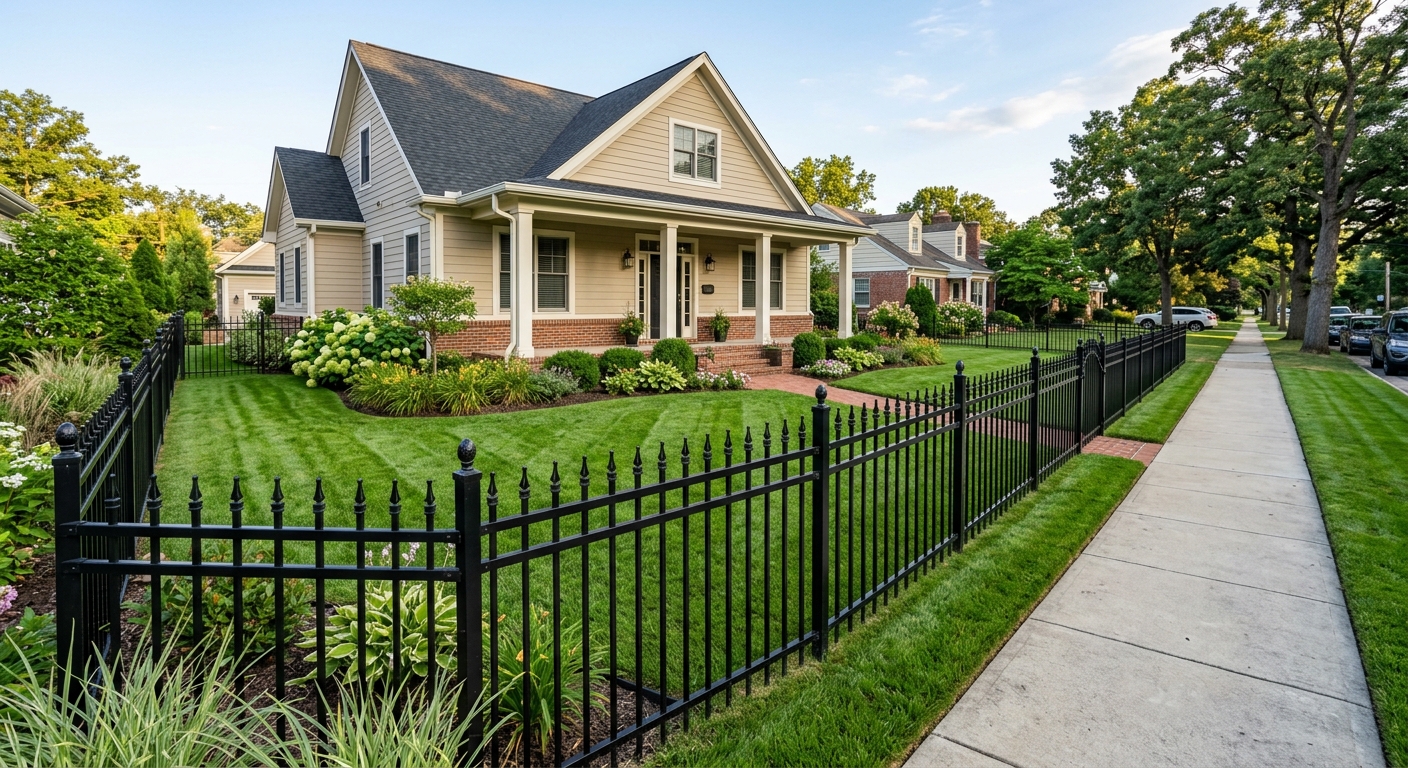
Chain-link is the longest-life, lowest-cost option when you’re okay with visibility. It typically suits security, pet containment, and perimeter definition rather than privacy. Aluminum ornamental offers a clean, rust-resistant look with mid-range pricing, but it’s still an open style, so it won’t give the same privacy as solid wood or vinyl.
On frost-depth post setting in the Lower Mainland–Southwest: many contractors use deeper post holes and concrete for corner posts, end posts, and gates, even if the frost is shallower than in colder provinces. That’s why a vinyl privacy job can be justified when you compare total upkeep—e.g., moving from a wood run around the $55–$95 band to a vinyl/PVC run in the $75–$130 band can pencil out if you want to avoid staining labour and the risk of premature board failure from missed maintenance.
| Material |
Cold Tolerance |
Lifespan |
Annual Maintenance |
Best For |
Price Band |
| Pressure-treated pine |
Good (with proper sealing and hardware) |
10–15 years |
Seal/stain effort every 2–3 years |
Budget privacy where maintenance is planned |
$55 – $95 |
| Cedar |
Good (handles damp better than pine) |
15–25 years |
Light stain/inspection every 2–4 years |
Better appearance with moderate maintenance |
$70 – $105 |
| Vinyl / PVC |
Moderate to good (install spacing and bracing matter) |
20–30 years |
Wash as needed (usually 0–1 times/year) |
Low maintenance privacy and longevity |
$75 – $130 |
| Chain-link |
Very good (galvanized steel) |
20–35 years |
Minimal checks (tension and minor repairs) |
Security, pets, and perimeter definition |
$30 – $55 |
| Aluminum ornamental |
Very good (powder-coated finish) |
25–40 years |
Occasional rinse and hardware checks |
Attractive curb appeal without rust |
$90 – $170 |
| Composite / recycled |
Good (stable boards; proper installation still matters) |
20–30 years |
Low (cleaning; occasional hardware check) |
Modern look with less maintenance than wood |
$90 – $135 |
How to choose a fencing contractor in Dunbar-Southlands
When you’re hiring a fencing contractor in Dunbar-Southlands, start with proof and process, not just the lowest number. For British Columbia work, confirm the contractor’s general liability insurance by requesting a certificate of insurance (COI) that names your property or at least the insured business, and verify they carry appropriate WorkSafeBC coverage for their workers. You should also ask for any required trade documentation that matches the scope—especially if the project includes deck tie-ins, gate electrical components (operators/doorbells/lighting), or substantial demolition.
Next, get 2–3 itemised written quotes—not a lump-sum only. A solid fence quote breaks down: material lines (boards/posts/rails/hardware), labour (digging, setting, framing, finishing), and extra scope (disposal, surveying assist, permit support, and hauling). Read the exclusions carefully: are they including old fence removal, concrete, and dump fees? If they “assume” certain conditions, ask what happens if they hit rocky soil, buried services, or an unexpected grade change.
Warranty matters too. Ask for two warranties: workmanship (how long they stand behind installation) and manufacturer coverage for materials. Confirm whether the warranty is transferable if you sell your home.
Payment schedule: never pay more than 10–15% upfront. Hold back a portion until the fence is complete, straight, properly secured at gates, and final cleanup is done. Finally, ask for a written timeline with a start date and realistic completion estimate—weather and soil moisture can affect post-setting in the Lower Mainland.
- Request insurance COI and confirm it’s current before scheduling.
- Ask for WorkSafeBC proof/clearance documentation for the contractor’s coverage.
- Get quotes in writing with itemised labour and materials (not just “fence supply & install”).
- Ensure permit support (where needed) is clearly stated: included or extra.
- Confirm whether property line locate/survey work is included or excluded.
- Verify post depth and setting method (concrete vs gravel pack) in the scope.
- Ask how they handle wet soil, buried lines, and rocky ground if discovered.
- Confirm gate hardware specs (hinges, latch type, tension and frame reinforcement).
- Ask for product brand/model for boards, rails, and vinyl profiles.
- Review warranty terms in writing (workmanship length and manufacturer coverage).
- Use a payment schedule: small deposit, holdback until completion and cleanup.
- Get a clear start/completion date estimate and what weather impacts it.
Red flags I see in Dunbar-Southlands: contractors who refuse to provide a COI on request; quotes that won’t specify post depth and setting method; “allowances” for materials that get swapped to cheaper products at install; unclear gate reinforcement details; and contracts that list disposal as “not included” but still assume it in the price.
Frequently asked questions — fencing in Dunbar-Southlands
Should I repair or replace my old fence in Dunbar-Southlands?
In Dunbar-Southlands, it’s usually worth repairing if the posts are sound and the fence has only localized board damage (storm panels, a few rotted rails, or minor sag). The most expensive hidden issue is post failure: if corner posts or gate posts have loosened in the soil, the whole layout often needs resetting, not just board replacement. In wetter garden-adjacent areas, rot can spread from the bottom rails upward, so an inspection should include probing at rail connections and the base of posts. If you’re already near the end of the typical lifespan—around 10–15 years for standard pressure-treated pine—replacement often ends up cheaper than repeating repairs. If your current fence is simple and you want privacy, many homeowners move from chain-link to wood or vinyl; as a ballpark, wood privacy can fall in the $55–$95 range, while vinyl privacy commonly lands in the $75–$130 range.
How do I handle a fence dispute with a neighbour in British Columbia?
Fence disputes in British Columbia are common, especially where lines aren’t clearly marked or where older fences were installed without a recorded boundary. Start by documenting everything: photos, measurements from your property pins, and a short written timeline of when the issue started. Then communicate calmly and in writing—ask what each neighbour believes the boundary and responsibility are. In BC, shared fence ownership and responsibility are governed by provincial line-fences legislation, so it’s important to understand whether the dispute is about boundary location, height, maintenance, or repairs. Practical next steps: confirm the boundary with a survey or a pin locate, check if the fence height triggers permit requirements locally, and request that both parties agree on a contractor assessment in writing. If you’re trying to resolve quickly, a professional site visit for measurements and a written scope can reduce misunderstandings. For anything involving excavation near boundaries, ensure utility locates are completed before work begins.
What fence style offers the best wind resistance in Dunbar-Southlands?
For wind resistance in Dunbar-Southlands, the “best” style is usually a properly built solid panel fence (wood or vinyl privacy) with well-anchored corner posts and correctly spaced intermediate posts. Solid surfaces can catch wind load, so contractors must reinforce rails and use proper post depth and setting—typically deeper holes with concrete for end/corner/gate posts, and strong bracing where the run changes direction. If you choose chain-link, wind passes through the mesh, which reduces pressure but still requires solid post bracing so it doesn’t sag or deform. Aluminum ornamental can handle wind well structurally, but its open design reduces load pressure; the real limiting factor is still post embedment and frame rigidity. In practical terms, if your yard is exposed to prevailing gusts and ocean-side weather swings, I usually recommend a privacy style with reinforced posts and solid corner framing. A well-built fence built for wind often sits closer to the upper end of material bands—wood privacy frequently trends toward the $75–$95 side depending on layout and gates, while vinyl privacy can land nearer the $100+ end with heavier bracing.
How much does a fence cost in Dunbar-Southlands?
Fence cost in Dunbar-Southlands depends mainly on length, height, material, gate count, and whether you need permit support or boundary verification. As broad, realistic installed ranges for this area: chain-link commonly lands around the $30–$55 band, wood fencing around $55–$95, vinyl/PVC around $75–$130, and aluminum/metal often around $90–$170 depending on design and finish. Your specific quote can move up or down based on site factors: slope (raked/stepped panels), wet or soft soils (extra excavation and more concrete setting), and access for hauling materials or equipment. For example, a short run with no removal and easy lane access will typically price closer to the lower end of the band; a full backyard privacy replacement with old fence removal, double gates, and deeper post setting will commonly push higher. Always request an itemised quote so you can see how much of the difference is labour, concrete setting, and gates—not just the fence material.
How deep should fence posts be for Dunbar-Southlands's frost?
Even though coastal BC experiences milder freezes than the Prairies, you still need to set posts below frost influence to limit heaving. In Dunbar-Southlands, many contractors target a depth that places the bottom of the post roughly 4–6 inches below the design frost depth, which often means digging deeper than the “bare minimum” used in some online guides. In practice, that typically requires concrete setting for end, corner, and gate posts—because those points take the most load and the fence can shift if base support is weak. Softer or wetter soils can also require deeper holes and careful backfilling so posts don’t settle unevenly after rainfall. The best approach is to have your contractor confirm the post depth and setting method in writing after they assess your site conditions. If you’re comparing quotes, the post-depth line and whether they use concrete should be clear—this is often where “low price” bids become expensive later.
Wood vs vinyl vs aluminum fence — which is best?
The “best” fence for a Dunbar-Southlands home depends on your priorities. Wood is usually the best match when budget matters and you’re willing to maintain it: pressure-treated pine often needs staining/sealing every 2–3 years, while cedar needs periodic maintenance too, but tends to look better as it ages. Vinyl/PVC is usually the best choice if you want low maintenance and a consistent finish—wash occasionally and avoid staining—but it costs more up front and still needs correct installation (bracing, post spacing, and solid gate hardware). Aluminum is best for curb appeal and long-term corrosion resistance with minimal maintenance, but it’s typically less private because most styles are ornamental/open. Cost-wise, wood is often mid-range (around $55–$95), vinyl is higher (around $75–$130), and aluminum/metal is usually highest (often $90–$170). If you’re deciding between privacy and maintenance, vinyl tends to win; if you’re deciding between look and durability with open visibility, aluminum is hard to beat.