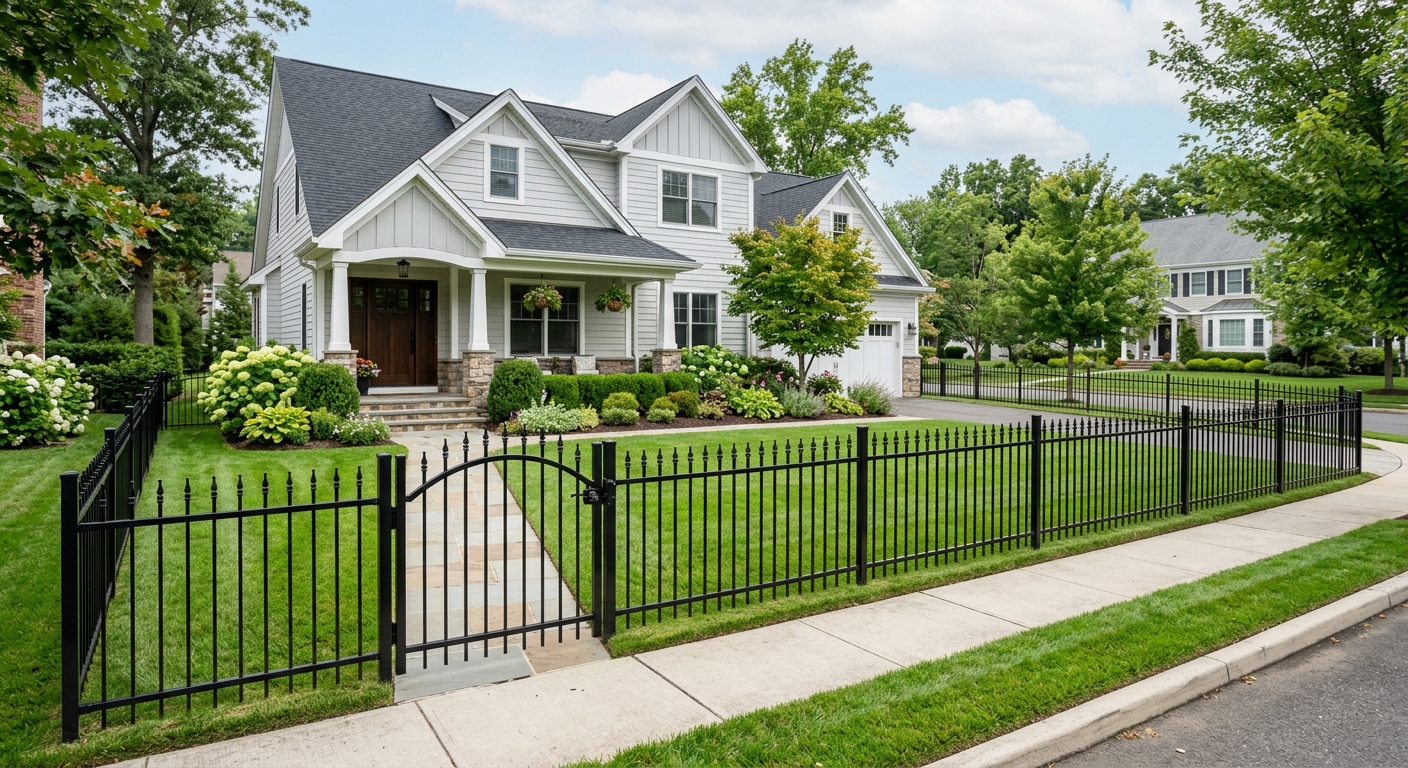
Fencing options and costs in Bowen Island
In Bowen Island, homeowners commonly want a fence that fits the look of the island while standing up to coastal wind, frequent moisture, and freeze–thaw swings along the shoreline. With 89.0% of dwellings being single-detached homes and homeowner households making up 84.9% (Statistics Canada, 2021 Census), there’s steady local demand for boundary upgrades—especially around older properties where fences often need full replacement. The Lower Mainland–Southwest market also affects pricing: crews price in mild but not trivial frost and wind conditions, and Bowen Island’s wetter, rockier soil can make post holes more labour-intensive than a dry-site install. In practice, contractors still set posts below the local design frost depth to reduce heaving, and that typically means deeper holes, more concrete at key posts, and more time on layout and bracing. Access matters too—many Bowen Island sites have narrow driveways or slope—so labour and material handling can shift a “standard” job upward.
That’s why you’ll see stronger interest in privacy fencing in higher-traffic residential areas such as the residential pockets around Terrance Bay and the north side of the village, where backyard screening is popular. Below is a practical cost comparison to help you benchmark quotes before you compare contractor itemisations.
| Material |
Lifespan |
Maintenance |
Privacy Rating |
Price per Linear Foot |
Price Range |
| Pressure-treated pine (standard wood) |
10–20 years |
Stain/seal every 2–3 years |
Fair–Good (depends on slat spacing) |
$55–$95 |
$55–$95 |
| Cedar (natural rot resistance) |
15–25 years |
Light staining every 3–4 years |
Good–Excellent |
$65–$110 |
$65–$110 |
| Vinyl / PVC (no-maintenance) |
25+ years |
Occasional wash only |
Good–Excellent (solid styles) |
$75–$130 |
$75–$130 |
| Chain-link (galvanized steel) |
20–35 years |
Minimal; rinse as needed |
Poor–Fair |
$30–$55 |
$30–$55 |
| Aluminum ornamental |
25–40 years |
Minimal; rinse and inspect annually |
Low (open pickets) |
$90–$170 |
$90–$170 |
| Composite / recycled material |
20–30 years |
Minimal (wash; occasional panel checks) |
Good–Excellent |
$80–$140 |
$80–$140 |
Prices are estimates only and vary by project scope, site access and material selection.
What affects the price of fencing in Bowen Island
In Bowen Island and across the Lower Mainland–Southwest, it’s common to see fencing quotes for what looks like the “same” fence land 30–50% apart. The big reason is that BC pricing isn’t only material—it’s how long it takes to set posts properly in wetter soils, manage wind loading, and handle site conditions. Your contractor’s crew availability also matters: Bowen Island jobs can require extra time for travel, careful staging, and sometimes additional labour to move materials across uneven ground, which pushes total labour cost even when the fence length is similar. That’s why one quote might land near typical wood pricing (often roughly in the $55–$95 band), while another comes back closer to vinyl/PVC levels (often roughly $75–$130) once the installer factors in concrete setting, stronger bracing, and longer posts.
Lower Mainland–Southwest climate specifically drives post work. Frost line depth still dictates how deep posts must be set; many contractors aim about 4–6 inches below the design frost depth to limit heaving. In cold-soil conditions, that can translate to roughly 3.5–4.5 feet of embedment (sometimes more on tougher sites), which means longer posts and more concrete for stability. Coastal BC is milder than inland regions, but it’s wetter—so wood rot protection (good treatment and proper top caps/trim) becomes non-negotiable, affecting labour and sometimes the choice between cedar and pressure-treated pine.
In Bowen Island, cost often rises when you have: (1) rocky ground that slows digging and forces concrete-set posts; (2) a sloped backyard that requires stepped or raked panel fabrication; and (3) gate openings that need reinforced frames and closer spacing of posts. It can also fall when your yard is flat, soil is workable, and you’re building a shorter run with fewer corners and no old-fence disposal. Housing stock plays in too: with 36.8% of homes built before 1981 (Statistics Canada, 2021 Census), older lots frequently have mature vegetation, buried obstructions, or outdated line posts that add locating and remediation time—quietly increasing your final bill.
| Price Factor |
Why It Matters |
Cost Impact |
| Fence length in linear feet — the primary cost driver |
More feet means more posts, rails, and labour hours. |
Typically the biggest swing; small length changes can shift total by hundreds. |
| Post depth required — frost line determines post length and hole depth |
Deeper embedment reduces heaving and improves durability. |
Often adds concrete, longer lumber/metals, and extra excavation time. |
| Post setting method — concrete vs. gravel pack vs. driven posts |
Concrete is commonly used for corners, gates and privacy sections. |
Concrete setting usually increases cost versus basic backfill. |
| Material choice — vinyl vs. cedar vs. chain-link |
Materials differ in structural demands and expected longevity. |
Vinyl/PVC and cedar typically cost more per foot than chain-link; aluminum is often highest. |
| Gate count and type — walk-through vs. drive-through (double) |
Gates require heavier frames, additional hardware and alignment work. |
Each gate can add substantial labour and reinforced posts; drive-through doubles the impact. |
| Grade and terrain — sloped yards require stepped or raked panels |
Slope affects layout, cut angles, and rail alignment. |
Can add fabrication time and extra fasteners; often increases cost even at same linear footage. |
| Old fence removal and disposal |
Demolition, haul-away, and debris handling are labour-heavy. |
Often adds a separate line item; can materially increase the total if disposal is tight. |
| Permit fees and survey / property line locate |
Paperwork and locating protect you from boundary disputes. |
May add modest costs, but avoids expensive rework later. |
Permits & regulations in British Columbia
In British Columbia, whether a permit is required depends on fence height and location. As a practical starting point, fences above a height threshold—commonly around 2.0 m (6.5 ft) at the rear and roughly 1.0–1.2 m (3–4 ft) at the front or corner—often require a building permit. Even when a permit isn’t required, all fencing must respect property lines and the applicable municipal setback requirements. Before you dig any post holes, call for utility locates through the appropriate service (BC 1 Call) to protect water, power, and low-voltage lines.
It’s also smart to get a survey or confirm the location of your property pins before installing. That step is especially important for Bowen Island because older lots can have outdated markers, and trees/shrub lines can make “eyeballed” boundaries inaccurate—leading to encroachment disputes and costly removal.
What typically DOES require a permit: new fences that exceed the common rear/front height thresholds, fences that change an existing structure significantly, and projects that trigger other municipal review. What typically does NOT: small-height boundary fences within the usual limits, like modest side runs that stay under threshold heights and meet setback rules (always confirm locally before work begins).
To verify a contractor in Bowen Island/BC: check their business registration/contracting compliance details online (through provincial business listings where applicable), review a current certificate of insurance (liability should name you as additional insured if offered), and confirm worker coverage where required. For provincial coverage, ask for proof related to worksite insurance (and request a clearance-style document if they can provide one). If a contractor can’t show current documentation promptly, that’s a red flag.
Choosing the right fence material for Bowen Island
Choosing the right fence material in Bowen Island is mostly about matching your priorities to BC’s wetter coastal conditions and regular wind exposure. Pressure-treated pine is usually the best budget path, but it typically needs staining or sealing every 2–3 years to prevent grey weathering and surface breakdown. Cedar has better natural rot resistance and a more premium look, but it still benefits from periodic maintenance to keep colour and reduce surface splitting. Vinyl/PVC costs more upfront, yet many homeowners like it because it’s effectively “wash and go”—though extreme cold snaps can stress some plastics, so you want a system built for outdoor freeze–thaw cycles with correct post anchoring and good spacing.
Chain-link is often the lowest-cost option and has excellent longevity with low maintenance, but it offers limited privacy unless you add screening. Aluminum ornamental is rust-resistant and clean-looking, with a mid-to-high price, but it won’t provide privacy the way solid wood or vinyl panels do. For Lower Mainland–Southwest installs, post depth is a key equaliser across materials: posts should still be set below the local frost line to reduce heaving, and on many privacy runs contractors use concrete-set corner posts, corner braces, and gate posts for long-term stability.
Where the price difference is justified: if you’re deciding between a standard wood privacy fence (often landing near the $55–$95 band) and vinyl/PVC (often near the $75–$130 band), vinyl can make sense when you don’t want ongoing staining and you’re planning to keep the fence for decades. Conversely, if you’re comfortable doing maintenance, cedar or pressure-treated pine can deliver a strong return—especially for shorter, accessible runs where labour is easier.
| Material |
Cold Tolerance |
Lifespan |
Annual Maintenance |
Best For |
Price Band |
| Pressure-treated pine |
Good (with proper treatment and correct embedment) |
10–20 years |
Check annually; stain/seal every 2–3 years |
Lowest upfront cost with a willingness to maintain |
$55–$95 |
| Cedar |
Good (natural rot resistance helps in wet periods) |
15–25 years |
Inspect annually; stain/light maintenance every 3–4 years |
Natural look and better longevity without going premium |
$65–$110 |
| Vinyl / PVC |
Very good (system-dependent; needs correct installation) |
25+ years |
Wash as needed; check posts/fasteners annually |
Low maintenance privacy and longer service life |
$75–$130 |
| Chain-link |
Excellent |
20–35 years |
Minimal; rinse and check tension occasionally |
Security, pets, and budget-conscious boundaries |
$30–$55 |
| Aluminum ornamental |
Excellent |
25–40 years |
Minimal; quick inspection each year |
Appearance and rust resistance (limited privacy) |
$90–$170 |
| Composite / recycled |
Good (depends on product quality and frost detailing) |
20–30 years |
Minimal; periodic wash and hardware check |
Solid look with reduced maintenance |
$80–$140 |
How to choose a fencing contractor in Bowen Island
Start by verifying a contractor’s legitimacy in BC. Ask for their current liability insurance and review the certificate for active dates and appropriate coverage limits; it should clearly cover fencing work and jobsite operations. For worker protection, request proof of appropriate worker coverage for the job—then confirm the document references the correct employer and effective period. If they can’t provide documentation promptly, you’ll likely see delays and “surprise” costs later.
Next, get 2–3 itemised written quotes rather than a single lump sum. A good quote breaks down labour (layout, post setting, rail/panel install, gate build/fit), materials (posts, rails, pickets/panels, fasteners, hardware), and site costs (digs, concrete quantity, slope racking, debris removal). Confirm whether permit pull (if required), utility locate coordination, and property line locating/survey are included or listed as an add-on. Make sure old fence removal and haul-away are explicitly covered if you need it.
Warranty matters: ask for the workmanship warranty term, whether it’s tied to the installer for a set number of years, and the manufacturer warranty on materials. Clarify whether the warranty is transferable if you sell the property.
For payment, never pay more than about 10–15% upfront. Hold back a portion until completion, final grading, and a walkthrough check confirm everything is straight, properly fastened, and gates latch correctly. Also require a written timeline with a start date and an estimated completion date so you can plan around seasonal weather and delivery lead times.
- Request itemised quotes (labour vs. materials) for every line item.
- Confirm how posts are set (concrete at corners/gates, embedment depth plan).
- Ask who does utility locates and whether they’re scheduled before digging.
- Verify insurance certificate dates and coverage scope before signing.
- Confirm documentation for worker coverage for the specific contractor/company.
- Check warranty length for workmanship and manufacturer coverage details.
- Ensure gates include reinforcement, hardware type, and clear latching specs.
- Look for explicit slope handling (stepped panels vs. raked rails).
- Confirm disposal/haul-away is either included or priced separately.
- Ask whether permit costs are included for height-exceeding fences (if applicable).
- Schedule a site visit to verify access constraints and staging plan.
- Use a clear payment schedule with a holdback until final walkthrough.
Red flags specific to fencing jobs in Bowen Island include: vague quotes with no embedment/concrete details; promises of “no paperwork” without confirming permit triggers; charging most of the amount upfront with no holdback; refusing to provide insurance proof; and starting without confirming property line intent or having a plan for rocky/slope sites.
Frequently asked questions — fencing in Bowen Island
How deep should fence posts be for Bowen Island's frost?
For Bowen Island in the Lower Mainland–Southwest, the key is to set posts below the frost line so soil movement doesn’t heave the fence. Many installers target roughly 4–6 inches below the local design frost depth to reduce the risk of post movement during freeze–thaw cycles. In practical terms, that often lands around several feet of embedment rather than a shallow “minimum” hole—especially on wetter sites where excavation is harder and post stability matters more. Corner posts, gate posts, and privacy sections are frequently concrete-set for added stiffness. If you’re comparing quotes, make sure the embedment plan is stated clearly; otherwise you may see cheaper bids that omit proper depth and concrete, then fail early.
Wood vs vinyl vs aluminum fence — which is best?
“Best” depends on what you value most. Wood (pressure-treated pine or cedar) tends to cost less upfront and looks natural; typical installed pricing often sits in the wood band of about $55–$95 per linear foot depending on height, spacing, and rail design. Cedar usually runs a bit higher but holds up well in Bowen Island’s wet conditions. Vinyl/PVC is usually the lowest-maintenance choice: it often lands around $75–$130 per linear foot, and it can be worth the difference if you don’t want to stain every couple of years. Aluminum ornamental typically costs more (often about $90–$170) and provides great appearance and rust resistance, but it won’t give you privacy like solid panels. If privacy is your main goal, vinyl or solid wood styles usually outperform aluminum.
Do I need a permit to build a fence in British Columbia?
In British Columbia, a permit is commonly required for fences that exceed typical height thresholds—often about 2.0 m (6.5 ft) at the rear and roughly 1.0–1.2 m (3–4 ft) at the front or corner—though you must confirm the exact local trigger with the applicable municipal rules for Bowen Island. Even if you don’t need a permit, you still must respect property lines and setback bylaws. Before digging post holes, you should also arrange utility locates through the appropriate BC service, and it’s wise to use a survey or locate your property pins to avoid boundary disputes. Ask your contractor to specify whether permit pull is included in their scope or listed as a separate line item.
How long does a wood fence last in Bowen Island?
A wood fence in Bowen Island can last a meaningful length of time, but lifespan depends heavily on material choice and installation details. Pressure-treated pine commonly performs in the range of about 10–20 years, while cedar often reaches about 15–25 years when installed with correct embedment, good drainage, and proper treatment. Moisture and coastal wind can accelerate surface wear, so using quality fasteners and installing with the right post depth and bracing matters. Maintenance is also a factor: staining or sealing every 2–3 years for pressure-treated wood (and light maintenance on cedar) helps slow grey weathering and surface breakdown. If you’re comparing quotes, ask how the installer handles wet-site rot protection and what they do at corners and gates—those areas often fail first.
Who owns and maintains a shared fence?
For shared fences in British Columbia, ownership and maintenance are governed by provincial line-fences legislation and how the boundary is defined on your property. In practice, neighbours may share the cost and responsibility depending on where the fence sits, whether it’s truly a boundary fence, and the agreement between property owners. If you’re unsure whether your fence is on the line, get a property line locate/survey and confirm the structure’s position relative to the boundary before discussing repairs. When maintenance is required, both parties should agree on scope, material standards, and cost sharing before work begins. If there’s no agreement, you may need to follow the formal process in the legislation rather than assuming “whoever built it pays.”
How do I find my property line before fencing?
In Bowen Island, the safest approach is to confirm property pins or arrange a survey before you install any fence. Start by checking any existing survey plan from your closing package or local records and look for the pin/property corner markers on-site. If markers are missing, overgrown, or unclear, order a property line locate or survey so you know the fence location is within the boundary and meets setback requirements. This is especially important for older lots—36.8% of homes built before 1981 (Statistics Canada, 2021 Census) can mean older boundary markers or landscape changes that make “visual boundaries” unreliable. Also confirm with your contractor that they’ll use the locate information in their layout so you don’t end up rebuilding after a boundary dispute.