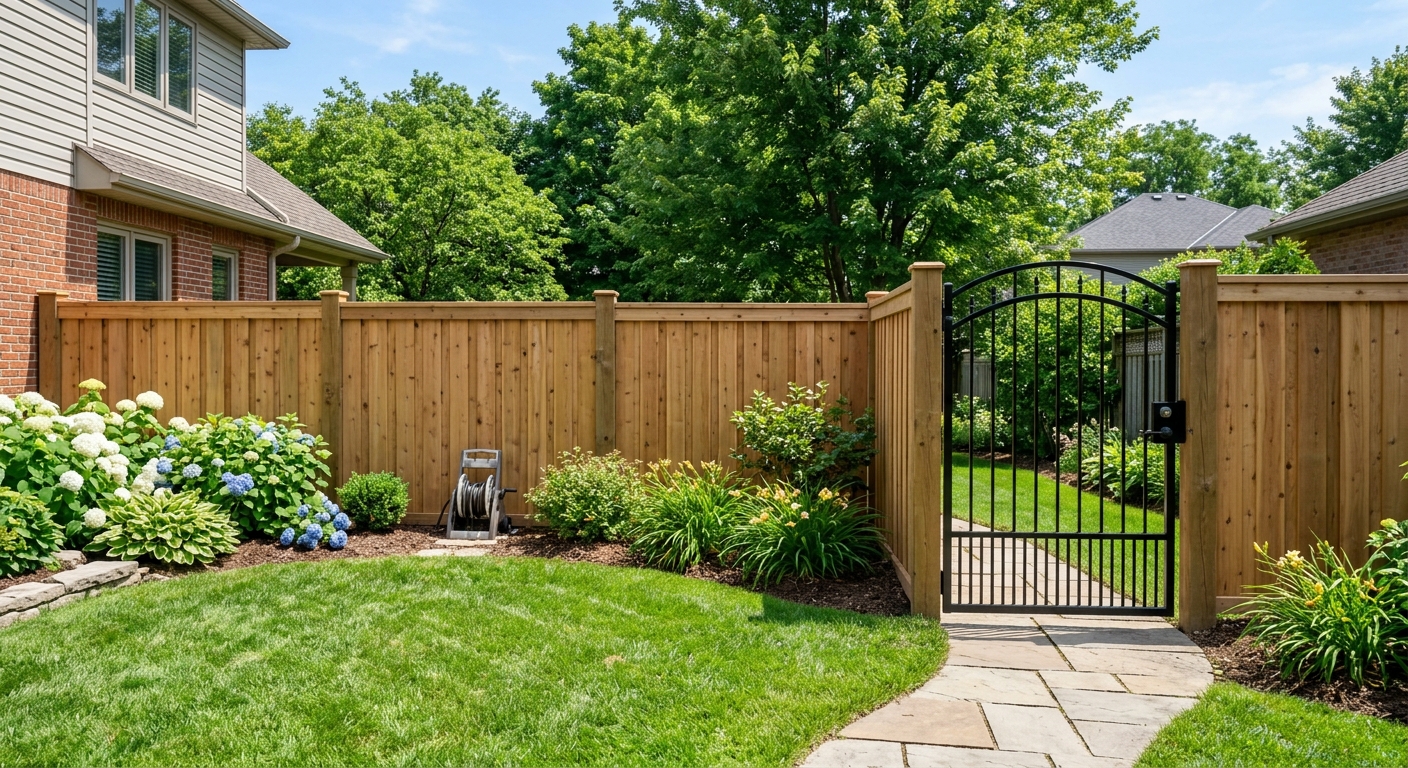
Fencing options and costs in Clearwater
Clearwater homeowners often start shopping for fencing because they’re protecting pets, defining yards, and managing privacy along busy residential streets. In Clearwater specifically, homeowner households make up a strong majority—800 households, with 75.5% owning their homes (Statistics Canada, 2021 Census). That mix, paired with the fact that 72.6% of local dwellings are single-detached homes, means most fence jobs are tied to detached property boundaries and driveways, not shared multi-unit corridors.
In the Thompson–Okanagan region, fencing costs are shaped by frost depth, soil drainage, and wind exposure. Even though Clearwater isn’t coastal, interior freeze–thaw still demands that posts be set below the regional frost line to reduce heaving. Where soils are clayey or poorly drained, contractors typically switch to concrete-set posts for stability, which adds auger time, concrete, and labour. On open benches or wind-exposed lots, panel and hardware upgrades (like heavier rails and tighter post spacing) are often needed to prevent racking.
Trade demand is especially common around the more established residential pockets near the Clearwater Valley corridor where backyards face prevailing winds and mature lots tend to need replacement or upgrades. As a result, you’ll see faster scheduling for standard runs, while custom privacy builds usually take longer due to post-depth excavation and bracing requirements.
Below is a practical comparison to help you budget for your Clearwater project before we look at the site-specific factors that move pricing up or down.
| Material |
Lifespan |
Maintenance |
Privacy Rating |
Price per Linear Foot |
Price Range |
| Pressure-treated pine (standard wood) |
10–15 years |
Stain/seal every 2–3 years |
6/10 (solid boards; depends on spacing) |
$55–$85 |
$55–$85 |
| Cedar (natural rot resistance) |
15–25 years |
Light staining every 3–4 years |
8/10 (solid pickets/boards) |
$70–$110 |
$70–$110 |
| Vinyl / PVC (no-maintenance) |
20–30 years |
Wash as needed; inspect hardware |
8/10 (solid styles available) |
$75–$115 |
$75–$115 |
| Chain-link (galvanized steel) |
25–35 years |
Occasional tension/repair |
3/10 (limited privacy unless screened) |
$35–$60 |
$35–$60 |
| Aluminum ornamental |
20–35 years |
Occasional wash; check gate hinges |
4/10 (open pickets) |
$90–$150 |
$90–$150 |
| Composite / recycled material |
20–30 years |
Wash as needed; rare repairs |
7/10 (solid plank options) |
$95–$140 |
$95–$140 |
Prices are estimates only and vary by project scope, site access and material selection.
What affects the price of fencing in Clearwater
Even when two contractors quote the “same” fence line in Clearwater, pricing can swing by roughly 30–50% across the Thompson–Okanagan region and the broader British Columbia market. The biggest reason is that site conditions dictate labour intensity—how deep posts must go, what soil behaves like in the hole, and whether wind requires stronger framing. Material pricing also varies: vinyl and aluminum can be relatively predictable, while wood is more sensitive to board grades and the chosen finish system to handle interior moisture and temperature swings.
Frost line depth sets how deep posts must be set. Locally, the goal is typically to set posts about 4–6 inches below the design frost depth so the fence stays stable through freeze–thaw cycles. In colder interior pockets, that often means posts going roughly 75–90 cm or more below grade, and in challenging soils contractors may recommend concrete-set posts rather than gravel packing. Concrete adds cost quickly: more auger time, concrete volume, and extra labour to keep posts plumb during curing.
Wind exposure also matters. In open lots, contractors often tighten post spacing and increase rail sizing to reduce panel flex. Coastal BC is milder but wetter—wood rot can accelerate if treatment and detailing aren’t right—so you’ll see different wood-care strategies in coastal quotes compared with interior jobs. In Clearwater, the mix is different: you’re planning for both moisture and freeze–thaw, which is why we watch drainage and post-depth carefully.
Here are a few Clearwater examples that commonly raise or lower cost: replacing a fence on an older lot (many homes were built before 1981—50.5% of dwellings) often means more excavation surprises and more rotten fasteners, nudging wood jobs above typical $55–$85 expectations. A job on firm, well-drained ground can use efficient post methods and keep wood competitive, while clay or saturated spots can push even chain-link projects upward due to deeper, concrete-set holes. On windward runs, you may choose a higher grade cedar or a sturdier vinyl assembly versus a basic layout—sometimes the upgrade is justified when labour to reinforce is similar but material durability lasts longer.
| Price Factor |
Why It Matters |
Cost Impact |
| Fence length in linear feet |
Controls the quantity of posts, rails and panels across the whole run. |
Largest driver of total price; longer runs multiply labour and materials. |
| Post depth required |
Frost protection determines hole depth and required post length. |
Deeper holes increase excavation, material, and often concrete volume. |
| Post setting method |
Concrete vs. gravel pack vs. driven posts changes labour and stability. |
Concrete-set posts typically increase cost; driven posts can reduce it if soil supports it. |
| Material choice |
Different materials have different hardware, framing and lifespan requirements. |
Vinyl commonly lands around $75–$115 per estimate band; chain-link can start lower around $35–$60. |
| Gate count and type |
Gates require heavier frames, hinges, latches and tighter alignment. |
Multiple walk-through gates or a drive-through double gate adds significant labour and hardware. |
| Grade and terrain |
Slopes need stepped systems or raked panels to maintain top line. |
More planning, extra materials, and longer install time. |
| Old fence removal and disposal |
Debris hauling and salvage time can be substantial. |
Often adds both dump fees and labour hours; can swing the quote noticeably. |
| Permit fees and survey / property line locate |
Locates and permit paperwork prevent encroachment risk and rework. |
Survey/locate cost can be a one-time add; permit steps can add admin time. |
Permits & regulations in British Columbia
In British Columbia, fence height rules can trigger permitting depending on where the fence sits on your property and how tall it is. As a practical rule homeowners use in Clearwater, fences above about 2.0 m (6.5 ft) at the rear and around 1.0–1.2 m (3–4 ft) at the front or corners often require a building permit. Regardless of height, the fence must respect the property line and municipal setback requirements established by the local bylaws.
Before digging any post holes, call for utility locates through the appropriate service (BC 1 Call in British Columbia). This matters even on rural or established streets because lines can run outside the typical road right-of-way. Also obtain a survey or locate your property pins before installing—this prevents costly disputes if the existing fence is offset from the legal boundary.
For shared fences, line-fence rules in British Columbia govern shared ownership and cost responsibility, but the exact arrangement can depend on how your boundary fence is treated and whether neighbours agree to maintain it.
To verify your contractor in Clearwater, ask for (1) their British Columbia licence or registration information (where applicable for the type of work), (2) a current certificate of liability insurance showing they can cover damage, and (3) clearance documentation for worker coverage—commonly WSBC/WCB-related proof. Look for the certificate’s policy effective dates, ensure it names the correct insured entity, and confirm the clearance letter is current before work starts.
Choosing the right fence material for Clearwater
Choosing a fencing material in Clearwater is mostly about matching the fence to your priorities: privacy, low maintenance, upfront budget and expected lifespan. That decision is influenced by the Thompson–Okanagan climate—freeze–thaw stresses the posts and fasteners, and interior moisture can cause wood wear if boards aren’t properly sealed. If your home is in a more exposed yard, wind can also push on panels and loosen hardware over time, so material stiffness and framing quality matter.
Pressure-treated pine is usually the budget starting point, but it requires staining or sealing every 2–3 years to avoid grey weathering and uneven surface breakdown. Cedar has natural rot resistance and typically looks better as it ages, but it still benefits from periodic maintenance to preserve appearance and reduce cupping. Vinyl/PVC is the low-maintenance option—wash it occasionally and inspect fasteners—but extreme cold can make some plastics more brittle, so we focus on quality product and correct installation and hardware compatibility. Chain-link offers the longest service life for the least money, but it provides little privacy unless you add slats or a separate screen. Aluminum ornamental is rust-resistant and mid-range in cost, but it’s still an open style for most privacy needs. Composite/recycled boards can deliver strong privacy with low maintenance, though they’re usually priced above standard wood.
On post depth: Thompson–Okanagan practice generally sets posts below the regional frost line to reduce heaving. In many Clearwater sites this means deeper holes and, for unstable soils, concrete-set posts. If you’re comparing budgets, a wood privacy fence priced near $55–$85 may be the right choice if you’re comfortable with regular staining. If you want to pay more upfront to reduce upkeep and labour over time, vinyl or PVC priced around $75–$115 can be justified—especially when wind exposure increases maintenance costs for wood frames.
| Material |
Cold Tolerance |
Lifespan |
Annual Maintenance |
Best For |
Price Band |
| Pressure-treated pine |
Good with correct stain and proper post depth |
10–15 years |
Light inspection; stain/seal every 2–3 years |
Lower upfront cost with a solid maintenance plan |
$55–$85 |
| Cedar |
Good; performs well in wet-cold freeze–thaw zones |
15–25 years |
Inspect; stain/light re-seal every 3–4 years |
Natural look and strong rot resistance |
$70–$110 |
| Vinyl / PVC |
Very good in cold when installed with correct hardware |
20–30 years |
Wash as needed; check hinges and tension |
No-fuss maintenance and consistent appearance |
$75–$115 |
| Chain-link |
Excellent; steel and galvanizing handle cold well |
25–35 years |
Occasional tensioning and spot repairs |
Security, pets, and budget control |
$35–$60 |
| Aluminum ornamental |
Excellent; coated metal withstands winter |
20–35 years |
Wash and inspect gate hardware |
Attractive curb definition without rust |
$90–$150 |
| Composite / recycled |
Good; depends on product quality and installation |
20–30 years |
Wash as needed; rare repairs |
Privacy with reduced maintenance |
$95–$140 |
How to choose a fencing contractor in Clearwater
In British Columbia, you should treat fencing like any other exterior build: verify coverage and credentials before work starts. First, ask for proof of the contractor’s liability insurance (a current certificate of insurance). Make sure it’s not expired and that it lists the correct legal business name. Second, confirm worker coverage—commonly WSBC/WCB clearance or related proof of worker protection—so you’re not exposed if someone is injured on your property. Third, request any relevant business registration/licensing information applicable to the scope; reputable contractors will provide these without pressure.
Get 2–3 itemised written quotes rather than one lump-sum number. A good quote breaks out labour (excavation, setting, framing, installation), material quantities (posts, rails, panel sections, gates), and access costs if there are delays due to landscaping or tight driveways. Read the scope carefully for exclusions: is old fence removal included, and are dump fees included? Is permit work included (where required), or is it your responsibility? Also confirm what happens if they find unstable soil, buried debris, or damaged property line markers.
Warranty is another differentiator. Ask for the workmanship warranty length (how long the contractor stands behind alignment, post plumbness, and hardware fastening) and confirm the product/manufacturer warranty terms. If you plan to sell your home, ask whether the warranty is transferable.
For payment scheduling, never pay more than 10–15% upfront. Use a holdback until the fence is complete and cleaned up. Timeline matters too: ask for a start date and an estimated completion window in writing, including how weather may impact post-hole drilling and curing.
- Request certificate of liability insurance with effective dates and correct insured name.
- Confirm WSBC/WCB worker coverage or clearance proof before crew mobilization.
- Ask for the quote to list labour, materials, and quantities separately.
- Verify post depth and setting method (especially in frost-prone ground).
- Confirm gate hardware type, latch style, and swing direction included.
- Ask if old fence removal and disposal are included, including dump fees.
- Check if permit pulls are included where the fence height triggers it.
- Confirm how they handle property line uncertainty (survey/locate responsibility).
- Review warranty terms for workmanship vs. product.
- Ensure payment schedule is staged, with a clear holdback amount.
- Require a written start date and a completion estimate window.
- Ask what happens if buried utilities are encountered (locate proof process).
In Clearwater, common red flags include: quoting a fence without stating post depth or setting method; refusing to provide insurance/coverage proof; using only verbal “permits included” statements; requiring a large upfront payment (beyond 10–15%); and vague scopes that don’t address disposal, gates, or grade adjustments.
Frequently asked questions — fencing in Clearwater
Who owns and maintains a shared fence?
In British Columbia, shared fence ownership and maintenance typically follow the provincial line-fences rules, but the practical outcome depends on how the boundary fence is treated between neighbours. If a fence is confirmed as a shared boundary structure, neighbours may share responsibility for maintenance and replacement costs, while in other cases one party may have sole responsibility because of how the fence is positioned or documented. The most reliable approach in Clearwater is to confirm the fence sits on the legal property line (using a survey or pin locate) and then discuss responsibilities in writing. If there’s no agreement, ask your contractor to document what they are installing and where the posts will be set so you can address ownership and maintenance more clearly with your neighbour.
How do I find my property line before fencing?
Before you install any fence posts in Clearwater, you should verify the legal property boundary—don’t rely only on an existing fence location. The safest homeowner method in British Columbia is to obtain a survey or have your property pins located by an appropriate professional so the fence can be installed on the correct line. If you’re dealing with an older boundary where prior fences may have shifted, this step can prevent expensive rework. After the line is confirmed, ask your contractor to show you the proposed post layout before digging. This matters because post-depth excavation is irreversible, and corrections after installation can erase any savings you hoped for—especially on privacy styles often budgeted around $55–$85.
What's the most low-maintenance fence?
For low-maintenance in Clearwater and much of the Thompson–Okanagan, vinyl/PVC is usually the best match: it typically doesn’t require staining, and it holds colour better than most basic woods with no added coating. You still need routine inspection for hardware and gate operation, and an occasional wash is recommended to clear winter grime. Composite/recycled privacy fences can also be low-maintenance, depending on the product quality. If you’re choosing between categories, note that chain-link is also low-maintenance for repairs, but it won’t give privacy without slats or screening. Budget-wise, vinyl/PVC often falls in the local estimate band around $75–$115, which can be worth it if you prefer to avoid the recurring work of staining pressure-treated pine every 2–3 years.
How tall can my fence be in Clearwater?
In British Columbia, the allowed height can depend on whether the fence is at the front/corner versus the rear and whether it crosses local thresholds that typically trigger a permit. A commonly used guideline is about 2.0 m (6.5 ft) for the rear and about 1.0–1.2 m (3–4 ft) at the front or corner, where a building permit is often required. Clearwater homeowners should also confirm municipal setback rules and ensure the fence is built within the property line. Because bylaws can vary by location and because height alone doesn’t tell the whole story (placement and setbacks matter), it’s smart to ask your contractor to explain the permit trigger and provide confirmation steps before construction starts. This avoids the common scenario where a “slightly taller” privacy upgrade becomes a schedule and admin delay.
Should fence posts be set in concrete here?
In Clearwater, concrete-set posts are often recommended when soil is clay-heavy, poorly drained, or when frost protection needs extra stability. Thompson–Okanagan practice focuses on setting posts below the design frost line to reduce heaving during freeze–thaw cycles; deeper holes and stable bases matter most where ground shifts. While some sites can use alternative methods (like a properly built gravel pack) depending on soil condition, concrete is commonly chosen for reliability. Concrete can add labour and material costs, so it’s not automatic everywhere—but it’s frequently a smart upgrade when you’ve got unstable ground or you want longer-term fence alignment. If you’re planning a privacy fence and keeping your budget near $55–$85 for wood, ask the contractor to state in writing when concrete is included and where it may be required.
What's the best fence for privacy?
The best privacy fence in Clearwater is usually a solid-panel design made from cedar, pressure-treated pine, vinyl/PVC, or composite, because the panel style determines how much sightline is blocked. Cedar and pine can look great, but they demand maintenance (staining or sealing) to handle interior moisture and winter conditions. Vinyl/PVC and composite generally reduce maintenance while still providing strong privacy with solid board styles. For winter performance, the most important factor is how the posts are installed—proper post depth below frost and sturdy framing help prevent leaning that reduces privacy over time. If your yard is wind-exposed, request bracing and stronger rails so panels don’t rack during snow and wind events. Many homeowners weigh wood priced around $55–$85 against vinyl around $75–$115 when they decide between ongoing maintenance and a longer, more consistent upkeep profile.