Fencing options and costs in University Endowment Lands
University Endowment Lands is a distinctive place to live, and fencing demand follows the same pattern: when neighbourhoods have more detached homes, there’s more need for side and backyard boundaries. The area’s population was 16,920 people in 2021 (Statistics Canada, 2021 Census), and that translates into steady residential work for fencing contractors serving the Lower Mainland–Southwest. In practice, the biggest cost drivers aren’t just “fence height” and “materials”—they’re access, the condition of the ground, and how much labour is required to set solid posts in wetter soils.
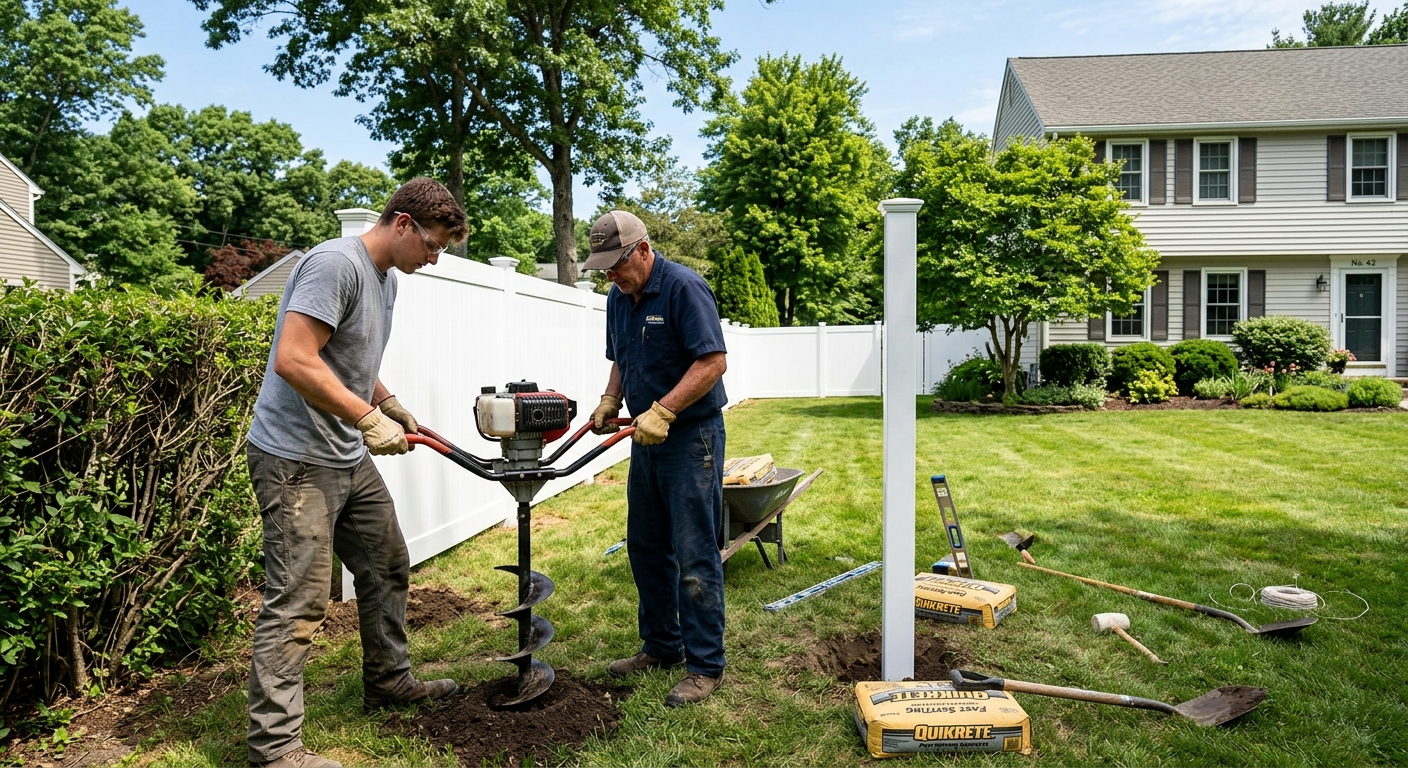
In the Lower Mainland–Southwest, frost is mild but wind and wet conditions are very real. Posts still need to be set below the local frost depth to limit heaving, and Fraser Valley–type moisture often means deeper holes, more concrete for corner posts and gate posts, and extra time to get straight, long-lasting lines. You’ll commonly see strong demand around areas like the UEL lands near University Boulevard and the residential pockets that feed into the Broadway–University area, where property lots and boundary lengths keep crews busy.
Availability also matters: if you want a solid privacy fence with reinforced framing for wind, you’ll usually pay a bit more than a basic open fence because the crew must build for wind loads, not just aesthetics. With that in mind, the comparison below uses typical installed ranges for University Endowment Lands and the surrounding Lower Mainland–Southwest market, so you can quickly map your priorities to realistic numbers.
| Material |
Lifespan |
Maintenance |
Privacy Rating |
Price per Linear Foot |
| Pressure-treated pine (standard wood) |
10–18 years |
Stain/seal every 2–3 years; inspect bottom rails |
Medium–High (solid boards) |
$18–$32 |
| Cedar (natural rot resistance) |
15–25 years |
Periodic staining; check for loose boards |
High (solid boards) |
$22–$38 |
| Vinyl / PVC (no-maintenance) |
25–35 years |
Rinse as needed; check hardware annually |
High (privacy panels) |
$25–$45 |
| Chain-link (galvanized steel) |
20–30 years |
Minimal; tighten fabric and tops as needed |
Low–Medium (add slats if desired) |
$12–$20 |
| Aluminum ornamental |
25–40 years |
Wash down; check pickets and gate alignment |
Low–Medium |
$23–$48 |
| Composite / recycled material |
20–30 years |
Occasional wash; inspect fasteners |
Medium–High (solid styles) |
$24–$46 |
Prices are estimates only and vary by project scope, site access and material selection.
What affects the price of fencing in University Endowment Lands
In University Endowment Lands, two fences that look identical on paper can still come in 30–50% apart across the Lower Mainland–Southwest, even within the same city. The reason is that fencing pricing is highly sensitive to how crews can access your yard, how the soil behaves when we dig, and how much reinforcement is required for wind and moisture. A contractor’s labour availability can also change pricing: tighter scheduling for privacy fences with solid framing tends to raise labour rates during peak periods, while chain-link quotes often pencil out faster because installs are typically less labour-intensive.
Frost and soil moisture drive the “hidden” part of the job. Even though coastal BC has shallower frost than Ontario and Alberta, published guidance commonly uses minimum post embedment of about 3 feet in much of Canada, and contractors often go deeper than the minimum to limit heaving. In wetter soils common around the Fraser Valley influence, deeper holes and additional concrete setting increase labour time and material costs.
Concrete examples: (1) a property with soft, wet ground may need deeper holes and more concrete at corner and gate posts to prevent movement; (2) a yard with a slope often requires stepped or raked panels, which increases framing time and can add waste. If you compare typical installed ranges, chain-link can start around the Lower Mainland–Southwest band of $30–$55, while vinyl privacy usually lands higher—around $75–$130—because it needs more rigid structural support and hardware to stay aligned in wind.
Finally, housing age can matter. Older lots sometimes have buried debris, irregular grades, or legacy fence offsets that lead to extra time verifying lines and removing remnants—so a “standard” run can cost more than you’d expect.
| Price Factor |
Why It Matters |
Cost Impact |
| Fence length in linear feet |
Most of the cost is driven by posts, rails, and materials per run |
High (primary driver) |
| Post depth required |
Frost and wet soil determine hole depth and how long posts must be |
Medium–High |
| Post setting method |
Concrete vs. gravel pack vs. driven posts changes labour and stability |
Medium |
| Material choice |
Vinyl/cedar cost and structural requirements differ from chain-link and aluminum |
High (varies widely) |
| Gate count and type |
Drive-through and double gates require heavier framing and hardware |
Medium–High |
| Grade and terrain |
Slope requires stepped/raked installation and often extra labour |
Medium |
| Old fence removal and disposal |
Hauling, dump fees, and extra labour depend on what’s there |
Medium |
| Permit fees and survey / property line locate |
Locates and permits protect you from encroachment disputes |
Low–Medium (project-dependent) |
Permits & regulations in British Columbia
In British Columbia, fence rules are typically tied to height limits and where the fence sits on the property. As a practical guideline for many residential situations, fences above about 2.0 m (6.5 ft) along the rear yard and around 1.0–1.2 m (3–4 ft) at the front or corner often trigger a building permit requirement. Property lines and setback bylaws still apply, meaning your fence may need to be positioned differently than where an old fence sat.
Before any post holes are dug, call for utility locates. In BC this is commonly handled through the provincial utility locate request process (the equivalent of One-Call). Even though you’re not “connecting” anything, crews still need to confirm buried services so digging doesn’t create safety hazards or extra delays.
For shared fencing and boundary responsibility, line-fences principles in BC can affect ownership and maintenance—so it’s smart to verify how your boundary is managed before you remove an existing fence. Step-by-step, a University Endowment Lands homeowner can also protect themselves by ensuring the contractor provides:
- a copy of their BC licence information (if applicable to the work they’re doing),
- liability insurance certificate showing your project address,
- work coverage documentation (commonly WSIB/WCB-type coverage depending on the jurisdiction and worker status), and
- a clearance letter or coverage confirmation if requested for proof.
Where to look: ask for the certificates up front, verify the insurer details on the certificate, and confirm the contractor’s standing in any relevant online registries they provide. That checklist reduces the chance of unpaid work or disputes later.
Choosing the right fence material for University Endowment Lands
Choosing the right fence for University Endowment Lands is really about matching material behaviour to your priorities—privacy, low maintenance, budget, and how long you want it to last in a mild but wet coastal climate. Pressure-treated pine is often the budget-friendly way to get a solid privacy look, but it typically needs staining every 2–3 years to reduce grey weathering and keep boards looking good. Cedar naturally resists rot better and usually has a nicer appearance for longer, but it still needs periodic maintenance for best longevity.
Vinyl/PVC is the low-maintenance option for many homeowners: you mainly rinse it and keep an eye on hardware. In extreme cold snaps, vinyl can become brittle, and you may see cracking if the fence is poorly framed or installed under-spec conditions—but with correct post setting and reinforcement, it performs well in BC’s real-world cycles. Chain-link is the longest-lived low-budget option and usually requires the least ongoing care, but it offers little privacy unless you add slats or a privacy mesh. Aluminum is mid-range on cost for looks and durability, and it won’t rust; it’s great for boundary definition, not solid privacy.
In the Lower Mainland–Southwest, posts still need to be set below frost influence to reduce heaving—often deeper than the bare minimum—especially in wetter ground where holes collapse or hold water. Concrete-set posts are commonly used for corner posts and gate posts for stability, even when surrounding posts use other methods.
Real cost justification example: if a wood privacy fence is quoted at roughly $55–$95 per installed range while vinyl runs about $75–$130, the extra vinyl cost can be worth it when you want “set it and forget it” maintenance and you’d rather invest in long-term panels and hardware.
| Material |
Cold Tolerance |
Lifespan |
Annual Maintenance |
Best For |
Price Band |
| Pressure-treated pine |
Good (with proper sealing) |
10–18 years |
Inspect + quick touch-ups; stain every 2–3 years |
Budget privacy with traditional wood look |
$55–$95 |
| Cedar |
Good (natural rot resistance) |
15–25 years |
Check boards/fasteners; stain as needed |
Better appearance and longer wood lifespan |
$65–$110 |
| Vinyl / PVC |
Very good (avoid under-framing) |
25–35 years |
Rinse and inspect hardware |
Low-maintenance privacy in wet coastal climates |
$75–$130 |
| Chain-link |
Excellent |
20–30 years |
Minimal; tighten fabric/top as needed |
Security, pet containment, and budget fencing |
$30–$55 |
| Aluminum ornamental |
Excellent (powder-coated) |
25–40 years |
Wash down; inspect gate alignment |
Attractive boundary with durable upkeep |
$90–$170 |
| Composite / recycled |
Good (depends on product spec) |
20–30 years |
Wash and inspect fasteners |
Privacy with reduced rotting concerns |
$85–$150 |
How to choose a fencing contractor in University Endowment Lands
When you hire a fence contractor in University Endowment Lands, start with verification. In British Columbia, reputable fencing businesses should be able to provide proof of general liability insurance and worker coverage (commonly referred to through WSIB/WCB-type documentation, depending on their worker status). Ask for the certificate of insurance and confirm it covers both the company and their work at your specific address. For worker coverage, request a clearance letter or coverage confirmation and keep it on file with your contract documents.
Next, get 2–3 itemised written quotes. You want a breakdown that shows labour, materials, post depth setting approach, concrete quantities (if included), gate framing, and removal/disposal—so you can compare apples-to-apples rather than chasing a low lump sum. For example, one quote may include concrete set for corner and gate posts while another only allows gravel backfill, which changes both stability and price.
Read scope details carefully: is permit pulling included if required, or is it “by homeowner”? Is old fence removal and dump disposal included? Are utility locate costs included or excluded? Ask for the start date and completion estimate in writing, plus how delays (rain, access constraints, material lead times) will be handled.
Warranty matters too. Look for a workmanship warranty length (often tied to post set, alignment, and hardware installation) and a product/manufacturer warranty on materials. Confirm whether warranties transfer if you sell the property.
Finally, keep payments sensible. Never pay more than 10–15% upfront; use progress payments and hold back a portion until the job is complete and cleaned up.
- Request certificate of liability insurance with your project address listed or endorsed.
- Request worker coverage proof (WSIB/WCB-type documentation) and a clearance letter if available.
- Confirm who pulls any required permit and whether that cost is included.
- Ask for a written, itemised quote: posts, rails, panels, hardware, concrete, labour.
- Verify post depth expectations in writing (heaving prevention needs correct embedment).
- Confirm corner post and gate post reinforcement details.
- Get clarity on setting method per post type (concrete vs gravel pack vs alternatives).
- Ask about slope handling: stepped vs raked, and whether it changes labour/material.
- Ensure old fence removal and disposal is explicitly included or excluded.
- Confirm protection of landscaping and restoration (topsoil grade, sod/ground cover).
- Make sure the quote states the warranty period for workmanship and materials.
- Use a payment schedule with a final holdback until completion and walk-through sign-off.
Concrete red flags I see in the University Endowment Lands market: quotes that don’t specify post depth or setting method, unwillingness to provide insurance/coverage documentation, refusal to itemise labour vs materials, “permit included” claims with no written scope, and requests for large upfront payments beyond 10–15% without any milestone schedule.
Frequently asked questions — fencing in University Endowment Lands
How long does a wood fence last in University Endowment Lands?
In University Endowment Lands and the broader Lower Mainland–Southwest, a properly installed wood fence typically lasts about 10–18 years for pressure-treated pine and 15–25 years for cedar. The difference comes down to board quality, fastening, and—most importantly—post setting. Because BC is mild but wet, wood can weather and fasteners can loosen if water is trapped at the bottom rails. Contractors usually set posts below frost influence to reduce heaving and use concrete for key posts like corners and gates to keep alignment. If you’re budgeting, wood privacy often falls in the $55–$95 range; a cedar upgrade is commonly higher but can extend the period between maintenance cycles.
Who owns and maintains a shared fence?
For shared fences in British Columbia, ownership and maintenance usually follow the line-fence principles that apply to how the boundary is treated on title and agreements between neighbours. Practically, you’ll want to identify whether your property boundary is governed by a shared fence arrangement, and whether your neighbour is expected to contribute to maintenance, repairs, or replacement. Before removing or replacing any section, speak with the neighbour and confirm responsibilities in writing, ideally with photos and a clear scope for what’s being replaced. If your fence is near property lines in University Endowment Lands, don’t assume “whoever built it” is the owner—verify the boundary arrangement to avoid disputes.
How do I find my property line before fencing?
The safest approach in British Columbia is to locate your pins/markers with a surveyor or use a property-locate service before installing posts. If you have survey documents from purchase, start there; they often show boundary coordinates and pin references. In University Endowment Lands, don’t rely on old fence positions—fences can shift over decades. Before any digging, call for utility locates through the BC process so you don’t hit buried lines. Then confirm the line with your pins and mark the fence line on site with string and stakes. A correct line prevents encroachment problems and reduces the chance you’ll have to rebuild at extra cost.
What's the most low-maintenance fence?
For low maintenance in University Endowment Lands, vinyl/PVC is usually the top choice: it typically needs little more than an occasional rinse and periodic hardware checks. Chain-link is also very low maintenance—minimal upkeep, long service life, and simple repairs if a section gets bent. Wood can be made to last, but it usually needs staining or sealing every 2–3 years to prevent weathering and protect fasteners in wet coastal conditions. If you want a real cost anchor, vinyl privacy commonly falls in the $75–$130 installed band, while chain-link often comes in around $30–$55. The “best” low-maintenance option depends on whether you need privacy or just boundary security.
How tall can my fence be in University Endowment Lands?
Fence height rules in British Columbia commonly depend on where the fence sits (front/corner vs rear) and whether it exceeds certain thresholds. A common guideline is that fences above about 2.0 m (6.5 ft) at the rear and around 1.0–1.2 m (3–4 ft) at the front or corner may require a building permit. University Endowment Lands homeowners should also ensure the fence respects property lines and any applicable setback requirements. Because these rules can be project-specific, the right move is to confirm your proposed fence height location with your contractor before ordering materials—and ask whether any permit is required as part of the scope.
Should fence posts be set in concrete here?
In the Lower Mainland–Southwest, many installers set at least key posts (corner posts, line end posts, and gate posts) in concrete because it stabilizes the structure in wind and helps prevent movement over wet seasons. Even though frost is milder than colder regions, posts still need adequate embedment to reduce heaving risk. In practice, post depth often goes below the design frost influence, and contractors commonly adjust hole depth based on soil moisture and site conditions. Whether every post must be in concrete depends on the fence type, soil, and engineering approach, but concrete at stress points is a common best practice in University Endowment Lands. If you want to keep costs down, ask your contractor what combination they recommend and why.