Fencing options and costs in Pemberton
Pemberton homeowners typically have a strong demand for fencing because a fence is both boundary protection and day-to-day property improvement. With 880 homeowner households in the community (64.9% of households own), every detached property or larger lot has a good chance of needing a new run, a replacement after storm damage, or an upgrade for privacy. The housing mix also matters: single-detached houses make up 16.6% of dwellings, so many projects are traditional back-yard installs rather than shared-site work.
In the Lower Mainland–Southwest, fencing pricing is shaped by mild but not trivial frost and frequent wind-driven rain. Even though BC is milder than the Prairies, contractors still plan for post movement by setting posts below the design frost depth; in many wet Fraser Valley-style soils, that often means deeper holes, more concrete at key posts, and extra labour to keep holes stable. Wind exposure can also affect panel choices, especially for solid wood and heavier vinyl privacy systems, which need sturdier framing and stronger corner/gate posts.
On top of that, the market in Pemberton can be busier in the areas where larger lots are common and backyard living is a priority—local installs are particularly active around the Meadowlark / McGregor Lane area where properties tend to be more spacious and fence lines are longer. That means schedule and access considerations can move quotes quickly from one contractor to another.
Below is a practical comparison of material lifespans, maintenance expectations, and the installed price bands most homeowners in Pemberton use to budget before an on-site measurement.
| Material |
Lifespan |
Maintenance |
Privacy Rating |
Price per Linear Foot |
| Pressure-treated pine (standard wood) |
10–15 years |
Stain/colour treatment every 2–3 years |
Good (solid panels or tight boards) |
$18 – $30 |
| Cedar (natural rot resistance) |
15–25 years |
Light re-stain or seal every 2–4 years |
Very good (with tight pickets/boards) |
$22 – $38 |
| Vinyl / PVC (no-maintenance) |
20–30 years |
Minimal—rinse occasionally; check alignment after freeze-thaw |
Excellent (privacy styles) |
$25 – $48 |
| Chain-link (galvanized steel) |
20–35 years |
Minimal—wash and inspect for coating wear |
Low to moderate (add slats for privacy) |
$13 – $22 |
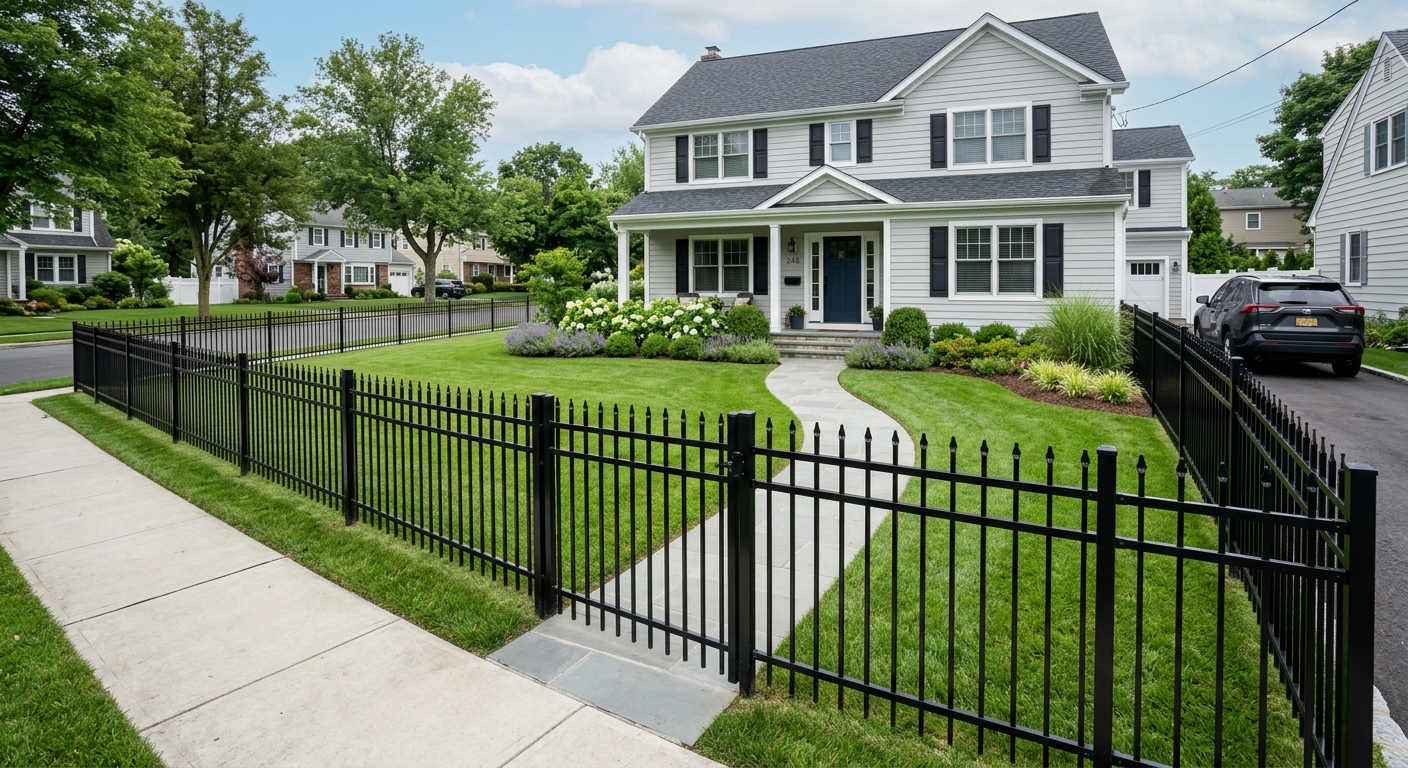
| Aluminum ornamental |
25–40 years |
Low—wash and check hardware |
Low (open pickets) |
$22 – $45 |
| Composite / recycled material |
20–30 years |
Low—wash; no painting, occasional tightening |
Good (solid composite styles) |
$24 – $50 |
Prices are estimates only and vary by project scope, site access and material selection.
What affects the price of fencing in Pemberton
In Pemberton and across the Lower Mainland–Southwest, two quotes for the “same-looking” fence can still differ by 30–50%. The most common drivers are how contractors handle frost-safe post depth in wet soil, how they frame for wind, and what’s included in the scope (old fence removal, disposal, gate hardware, and any property-line locate work). Availability of crews can also shift labour pricing during busier weeks, but it’s usually site conditions that move the needle the most.
Frost protection is the big hidden cost. Even with BC’s milder weather, contractors generally set posts deeper than a bare “minimum” because heaving risk increases when posts sit too high in freezing/wetting cycles. Published guidance commonly uses about 3 ft embedment in much of Canada, and in cold Ontario/Alberta regions contractors often go 1.5–2.0 m into the ground with concrete setting—Pemberton crews often choose a similar approach in wetter sites by setting deeper than the bare minimum and using concrete for corners and gates.
Concrete setting can raise costs, but it can reduce future rework. For example, wetter Fraser Valley-style soils can require deeper holes and more concrete at corner posts to stop leaning after freeze-thaw. If your yard has poor drainage or clay that holds water, crews may need additional labour to stabilize holes, which can push a wood project toward the upper end of the local wood band. By contrast, a dry, well-drained slope with accessible access can keep costs closer to the low end.
Wind also plays a role. While the Prairies see harsher exposure, open coastal BC conditions still demand tighter post spacing and stronger rail systems—especially on solid wood and vinyl privacy panels. If you’re comparing budgets, chain-link often lands near the $30–$55 band, while vinyl/PVC pricing typically rises into the $75–$130 band because of material and structural requirements.
| Price Factor |
Why It Matters |
Cost Impact |
| Fence length in linear feet |
The longer the run, the more posts, rails, and labour are required. |
Highest impact on total cost |
| Post depth required |
Frost line determines post length and hole depth to limit heaving. |
More depth can add concrete and longer lumber |
| Post setting method |
Concrete vs. gravel pack vs. driven posts changes labour and materials. |
Concrete-set corners/gates increase cost |
| Material choice |
Vinyl and cedar differ in cost, weight, and installation labour. |
May shift you across entire local price bands |
| Gate count and type |
Gates need heavier framing, hinges, and latching hardware. |
Every additional gate often adds a noticeable premium |
| Grade and terrain |
Slope often requires stepped or raked panels and extra layout time. |
Can increase labour and material waste |
| Old fence removal and disposal |
Hauling and prep are time-consuming, especially with rails stuck in concrete. |
Adds labour + disposal fees |
| Permit fees and survey / property line locate |
Survey work and administrative requirements protect you from boundary disputes. |
Variable, but can be a meaningful add-on |
Permits & regulations in British Columbia
In British Columbia, fences above a height threshold—commonly around 2.0 m (6.5 ft) for rear yards and about 1.0–1.2 m (3–4 ft) for front or corner areas—may require a building permit. Exact thresholds can vary by municipality and lot location, so in Pemberton you should confirm with the local permitting office before ordering materials. Regardless of permit requirements, fences must respect property lines and any municipal setback bylaws, and they can’t extend beyond your boundary.
Before digging post holes, call for utility locates. In BC, use BC 1 Call so utilities are marked before any excavation. Also, obtain a survey or locate your property pins before installing, particularly if your current fence line is older or appears offset. This reduces the risk of encroachment disputes with neighbours.
Shared fence ownership and responsibilities are handled through provincial line-fences principles. Practically, if you’re sharing a boundary fence, it’s smart to document agreement on height, style, and cost-sharing expectations in writing—especially when replacing an older fence.
How to verify a contractor in BC step-by-step: (1) check their licensing credentials through the appropriate online registry provided by the province (or trade registration where applicable), (2) request an active certificate of insurance showing general liability and proper limits, and (3) ask for evidence of worker coverage (WSBC/WCB coverage) if they will have workers on site—then review the certificate details for validity dates. A clearance letter is often included with insurance documentation; if it’s missing, ask for it before signing.
Choosing the right fence material for Pemberton
Choosing the right fence material in Pemberton is mostly about matching your priorities—privacy, low maintenance, budget, and lifespan—to how our local conditions behave. Pemberton has a cool, wet-in-winter climate pattern that can stress wood systems if they aren’t properly treated and maintained. Pressure-treated pine is the budget-friendly path, but it typically needs staining every 2–3 years to prevent grey weathering and to protect surface integrity. Cedar offers better natural rot resistance and usually looks warmer and more attractive, but it still benefits from periodic sealing or re-staining for longevity.
Vinyl/PVC is popular for low maintenance because you don’t paint or stain it, and it suits privacy styles well. That said, extreme cold snap can make some vinyl systems feel more rigid, and if post depth/spacing isn’t correct for your ground conditions, alignment issues can show up sooner—so proper install matters as much as the material. Chain-link is the lowest cost and often has the longest life, but it provides little privacy unless you add slats or privacy screening. Aluminum ornamental looks great and won’t rust like some metals, but it’s generally open for visibility rather than privacy. Composite/recycled products aim to combine low maintenance with solid styles.
For post depth in the Lower Mainland–Southwest, the safest installs account for frost-safe embedment. Even if BC’s coastal frost can be shallower than colder regions, many crews still go deeper than the bare minimum to reduce movement on wetter soils. Concrete is often used for corner posts, gate posts, and sometimes all posts on heavier privacy systems to stabilize them.
Dollar example: if a cedar privacy fence quote comes in around the mid-range of the wood band (roughly $55–$95 installed for typical wood runs) but a vinyl privacy quote lands nearer the $75–$130 band, the price difference can be justified when you want a “set it and forget it” schedule and you’re planning to stay in the home long-term. For many homeowners, the decision is less about upfront material cost and more about how much time and upkeep they want to manage.
| Material |
Cold Tolerance |
Lifespan |
Annual Maintenance |
Best For |
Price Band |
| Pressure-treated pine |
Good (with proper treatment and regular coating) |
10–15 years |
2–3 year stain cycle (light prep as needed) |
Budget privacy or basic boundary security |
$55 – $95 |
| Cedar |
Good (naturally rot-resistant in wet climates) |
15–25 years |
2–4 year re-stain/seal cycle |
Attractive privacy and natural look |
$60 – $110 |
| Vinyl / PVC |
Good (avoid sloppy installs; check alignment after freeze-thaw) |
20–30 years |
Near zero—occasional rinse |
Low-maintenance privacy |
$75 – $130 |
| Chain-link |
Very good (steel + galvanizing) |
20–35 years |
Low—inspect coating and wash as needed |
Secure boundaries, pets, and side yards |
$30 – $55 |
| Aluminum ornamental |
Excellent (coated metal system) |
25–40 years |
Low—wash + hardware checks |
Curb appeal with some visibility |
$90 – $170 |
| Composite / recycled |
Good (solid panels, good weather stability) |
20–30 years |
Low—clean and tighten fasteners when required |
Solid privacy with minimal upkeep |
$85 – $150 |
How to choose a fencing contractor in Pemberton
Choosing a fencing contractor in Pemberton is about reducing risk as much as finding a good price. First, verify British Columbia credentials and coverage: ask for (1) proof of appropriate trade licensing/registration where applicable, (2) a certificate of insurance with general liability, and (3) confirmation of worker coverage (WSBC/WCB). When you get documents, check the policy effective/expiry dates and that the certificate lists your job location and/or the insured business name. If a contractor can’t provide current paperwork immediately, treat that as a red flag.
Next, get 2–3 written, itemised quotes that separate labour and materials rather than a single lump sum. The scope should clearly state what’s included (post depth method, rail/bracing, fasteners, gate hardware, colour/finish options) and what’s excluded (rock removal, trimming existing landscaping, removal of old fence, and any re-location of posts if a property line differs from assumptions). Ask whether permit pulling is included if you’re building a taller fence near the thresholds that may trigger permitting.
Warranty matters too. Request the workmanship warranty length in writing and understand whether it’s transferrable if you sell the property. For product warranties, ensure you know what’s covered (materials only vs. labour) and what conditions void coverage (improper drainage, failure to stain where required, or non-standard installation).
Payment schedule should be conservative: never pay more than 10–15% upfront. Hold back a portion until substantial completion and final cleanup. Finally, ask for a written start date and completion estimate—weather and soil conditions in the Lower Mainland–Southwest can cause schedule shifts, but you should still have a realistic timeline in the contract.
- Confirm BC coverage: certificate of insurance and WSBC/WCB proof with valid dates.
- Request an itemised quote showing labour, materials, gates, and hardware separately.
- Ask what post depth and post setting method they use for your soil and height.
- Verify whether corner and gate posts are concrete-set and why.
- Confirm whether old fence removal and disposal are included.
- Check if permits/property line locate work are included or billed separately.
- Ensure the contract states height, style, and number of rails/components.
- Ask how they handle sloped yards (stepped vs. raked panels) in writing.
- Review warranty terms: workmanship duration and product warranty boundaries.
- Clarify whether warranties transfer to a new owner.
- Set a payment schedule with 10–15% max upfront and holdback at completion.
- Get a start date and completion window in the signed agreement.
Concrete red flags I see in Pemberton: quotes that don’t specify post depth or setting method; “allowance” language for materials with no upgrade pricing; refusing to provide an up-to-date certificate of insurance; asking for most payment upfront before any work starts; and vague scope terms like “install as needed” that omit gate hardware, disposal, and property-line verification.
Frequently asked questions — fencing in Pemberton
Who owns and maintains a shared fence?
In British Columbia, shared fence issues generally fall under provincial line-fences principles, but the practical answer depends on how the fence is positioned on the boundary and what you and your neighbour agreed to historically. If the fence is truly on the shared line, neighbours often share maintenance responsibilities, but disputes can happen when one side replaced materials without an agreement. Before starting in Pemberton, confirm whether the fence sits on your boundary line using a survey/locate of pins, and ask your contractor to describe the exact alignment they will use. If you’re replacing a fence, it’s wise to document height, material choice, and cost-sharing expectations in writing so there’s no surprise later.
How do I find my property line before fencing?
Your safest first step in Pemberton is to locate the property pins (or arrange a survey if pins can’t be found). A contractor can help mark the alignment, but you should verify the boundary first to avoid installing on the wrong side—especially if your existing fence looks aged or appears offset. When you confirm the line, you can then plan the fence run and gate locations with less rework. Because permits may apply for taller fences (commonly around 2.0 m in rear yards), accurate boundaries also protect you from compliance issues and neighbour disputes. If you’re budgeting, remember that a boundary correction can add labour and materials costs quickly—often turning a “mid-band” install into the higher end.
What's the most low-maintenance fence?
For low maintenance in Pemberton, vinyl/PVC privacy fencing is usually the easiest option—there’s typically no annual staining or regular painting, and it’s designed to resist rot in wet winters. The trade-off is higher upfront cost; many homeowners budget for vinyl/PVC in the $75–$130 installed band depending on height, style, and gate hardware. Chain-link can also be very low maintenance, with long life and minimal upkeep, but it doesn’t provide privacy unless you add slats or screening. Pressure-treated pine is low-cost at the start, but it usually needs staining every 2–3 years to protect against weathering, which means more homeowner involvement over time.
How tall can my fence be in Pemberton?
In BC, fence height limits can trigger permits depending on location (front/corner versus rear) and local bylaws. As a general rule of thumb used in BC, fences around 2.0 m (6.5 ft) at the rear and about 1.0–1.2 m (3–4 ft) at the front or corner may require a building permit. The key point is that municipal bylaws and siting details matter, so Pemberton homeowners should confirm with the local permitting office before construction. If you’re planning a taller privacy fence, ensure your quote includes any permit paperwork—or at least clearly states who is responsible. Accurate boundary placement is also essential, because setbacks and height rules depend on where the fence is located.
Should fence posts be set in concrete here?
Often, yes—especially for corner posts and gate posts—but it depends on soil conditions, frost movement, and how the contractor plans to manage drainage and embedment in Pemberton’s wet winter patterns. Even with milder BC weather than the Prairies, frost-safe post depth is important to reduce heaving, and contractors frequently set posts deeper than the bare minimum. Concrete setting can stabilize posts on wetter ground and for heavier privacy systems, which helps prevent leaning over time. That said, many installs use a concrete approach strategically rather than always filling every hole with concrete, because cost and drainage considerations vary. The best quotes will clearly explain post depth, spacing, and which posts are concrete-set.
What's the best fence for privacy?
The best privacy fence in Pemberton usually comes down to style and maintenance preference. Vinyl/PVC privacy fencing is a common top choice because it creates solid visual screening and stays looking consistent with minimal upkeep; it typically sits in the $75–$130 installed band depending on height, design, and gates. Cedar or pressure-treated pine privacy fences can also deliver excellent screening, but they require ongoing maintenance—staining for pine every 2–3 years is typical, and cedar benefits from periodic sealing or re-staining. For cost control, chain-link alone won’t provide privacy, but you can add slats or screening. For any material, proper framing for wind and correct post embedment are what keep privacy panels straight and tight through BC’s freeze-thaw and wet seasons.