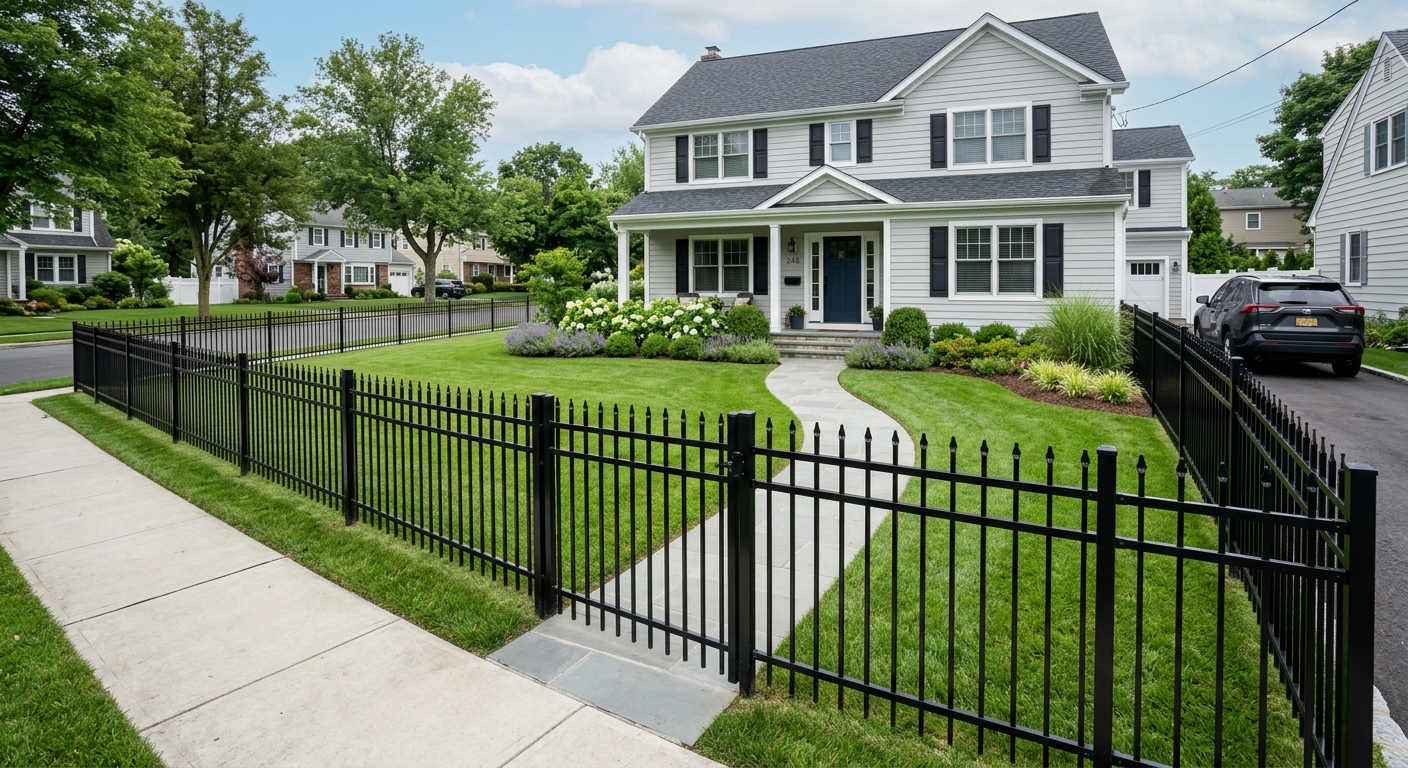
Fencing options and costs in Walnut Grove
Walnut Grove is a fast-growing community in the Lower Mainland–Southwest, and that means homeowners regularly look to update or replace fences as lots mature and landscaping gets upgraded. With a total population of 25,683 (Statistics Canada, 2021 Census), you’ll see steady demand across the area—particularly where backyards face busy streets or where pets and kids need a secure boundary. The strongest predictor of fence demand is the number of detached properties, because each home effectively needs its own fencing plan, gate set, and maintenance routine over time.
In this part of BC, pricing is shaped less by extreme cold and more by mild but wet conditions plus wind exposure around open yards. Posts still need to be set below local frost to reduce heaving, and Fraser Valley soils can be wetter or more variable, which often pushes crews to dig deeper holes and use more concrete for corner posts and gate hardware. Contractor availability can also affect your final price: crews who can mobilize quickly for routine installs typically price more competitively, while jobs requiring careful step-downs on sloped lots or frequent site protection (beds, driveways, trees) can add labour.
In Walnut Grove—especially around the newer residential pockets near areas like the east-side streets toward the commercial corridor—privacy fencing and gate upgrades tend to be the most requested. Below is a practical comparison of material options and the typical installed cost bands you’ll see for ordinary residential runs.
| Material |
Lifespan |
Maintenance |
Privacy Rating |
Price per Linear Foot |
| Pressure-treated pine (standard wood) |
12–18 years |
Stain/seal every 2–3 years to slow grey weathering |
Good (solid or tight board) |
$55 – $95 |
| Cedar (natural rot resistance) |
18–25 years |
Annual light inspection; stain 3–4 yearly if you want a consistent colour |
Very good (solid boards) |
$70 – $115 |
| Vinyl / PVC (no-maintenance) |
20–30 years |
Rinse as needed; occasional panel alignment checks |
Very good (solid or semi-solid styles) |
$75 – $130 |
| Chain-link (galvanized steel) |
25–40 years |
Minimal; occasional tensioning |
Low (add-ons needed for privacy) |
$30 – $55 |
| Aluminum ornamental |
25–35 years |
Occasional wash; inspect latches |
Low to moderate (open pickets) |
$90 – $170 |
| Composite / recycled material |
25–35 years |
Low; clean and check fasteners |
Very good (solid styles) |
$110 – $160 |
Prices are estimates only and vary by project scope, site access and material selection.
What affects the price of fencing in Walnut Grove
In the Lower Mainland–Southwest, two quotes for what looks like the same fence can swing by roughly 30–50% once you account for soil conditions, post installation method, and how much labour it takes to produce straight lines on real yards. The difference is even more noticeable when comparing a “standard” estimate to a quote that includes deeper post holes, more concrete at corners and gates, and extra time for slope-stepping. In BC, a crew pricing within the mid wood band (often around $55–$95) may assume a straightforward run and typical access; if your yard needs heavier support or careful excavation around roots and hardscape, you can quickly land closer to vinyl/PVC territory (often $75–$130) even if you choose wood.
Frost and ground conditions still matter. Contractors generally set posts about 4–6 inches below the design frost depth to prevent heaving; on many BC residential sites this ends up being “deeper than you think” for corner and gate posts. In cold Ontario and Alberta, embedment can be much deeper (often around 1.5–2.0 m) which raises material cost because crews need longer posts and more concrete setting—BC isn’t identical, but wet soils in the Fraser Valley still often call for deeper holes, heavier post bracing, and more concrete than a dry-site install.
Wind is the other big lever. Coastal BC is mild, but gusty conditions can loosen fence lines over time—especially solid wood or vinyl privacy panels—so installers may tighten post spacing and use stronger rails. In Walnut Grove, costs commonly rise when there’s (1) soft or wetter soil that won’t hold a stable hole without concrete packing, (2) lots of underground obstacles (irrigation lines, rock pockets, roots) that slow excavation, and (3) sloped driveways requiring stepped sections and careful panel layout. If your project needs removal and re-install, disposal can add more labour than homeowners expect, while a clean, flat run with easy vehicle access can keep pricing closer to the lower end.
| Price Factor |
Why It Matters |
Cost Impact |
| Fence length in linear feet — the primary cost driver |
Materials and labour scale directly with length |
High (often the majority of total cost) |
| Post depth required — frost line determines post length and hole depth |
Deeper embedment reduces heaving risk and improves long-term alignment |
Medium to high (more concrete and longer posts) |
| Post setting method — concrete vs. gravel pack vs. driven posts |
Wet or variable soils typically require concrete packing for stability |
Medium (can add several hundred dollars or more) |
| Material choice — vinyl vs. cedar vs. chain-link |
Different material costs and structural requirements (rails, fittings, bracing) |
Medium to high (vinyl often higher than wood) |
| Gate count and type — walk-through vs. drive-through (double) |
Gates require stronger framing, hardware, and alignment |
High per gate |
| Grade and terrain — sloped yards require stepped or raked panels |
More layout time and more custom cuts/adjustments |
Medium |
| Old fence removal and disposal |
Hauling and time for demolition increases labour |
Medium (can be a meaningful portion of the job) |
| Permit fees and survey / property line locate |
Paperwork and locating reduce the risk of encroachment |
Low to medium (varies by scope) |
Permits & regulations in British Columbia
In British Columbia, fences above a height threshold often require a building permit—commonly around 2.0 m (6.5 ft) for rear yards, and 1.0–1.2 m (3–4 ft) for front yards or corners. Even when a permit isn’t required, every fence has to respect property lines and local setback bylaws. Before any post hole is dug, you should arrange utility locates (in BC, use BC 1 Call). This step is critical because irrigation lines, power, and telecom services can run where posts are planned.
To avoid disputes, homeowners in Walnut Grove should also obtain a survey or at minimum a professional property line locate so the crew works from accurate pins, not assumptions from older markers. Shared fence ownership and maintenance responsibilities are governed by the province’s line-fences legislation, so if your fence forms part of a boundary, you may have shared duties and costs depending on how the fence was established and whether it’s treated as a boundary fence.
Licence and coverage checks are part of “doing it right” in BC. Ask the contractor for their BC business information (so you can confirm they’re operating as required), request a current certificate of insurance that names you as additionally insured where applicable, and confirm they have the appropriate worker coverage. For compliance documents, look for certificates directly from the contractor and verify clearance details through the appropriate provincial coverage registry channels, then ask for the most recent certificate dates before work starts. A reputable fencing crew in Surrey/Abbotsford-area mobilizations will provide these without pushing back.
Choosing the right fence material for Walnut Grove
Choosing the right fence material in Walnut Grove comes down to matching your priorities—privacy, low maintenance, budget control, and lifespan—to the realities of Lower Mainland–Southwest weather. Pressure-treated pine is usually the budget-friendly starting point, but it needs periodic staining or sealing every 2–3 years to reduce grey weathering and keep boards looking sharp. Cedar offers better natural rot resistance and a warmer appearance, yet it still benefits from maintenance if you want consistent colour and to maximize lifespan. Vinyl/PVC delivers true low maintenance—no staining—but panels can be affected by extreme cold snaps and can crack if improperly installed or if rails and posts aren’t aligned correctly. Chain-link is the lowest-cost option and lasts a long time, but it provides minimal privacy unless you add slats or plant screening. Aluminum ornamental fencing is mid-range to higher priced and looks clean year-round; it won’t give you the privacy of a solid wood or vinyl privacy fence, but it does resist rust.
Post depth and setting matter across all materials. In this region, crews typically set posts below frost influence to limit heaving, and because Walnut Grove soils can be wetter, corner and gate posts are often concrete-set for stability. That extra concrete labour is one reason the “lowest headline price” might not be comparable across quotes. Wind and snow load also influence how tightly panels are spaced and how strong the framework needs to be; in breezier yards, solid privacy panels usually need stronger rails and bracing.
For a practical dollar comparison: moving from pressure-treated pine toward vinyl can be justified if you want fewer touch-ups. For example, if your wood privacy run is estimated closer to the $55–$95 range and your vinyl quote lands nearer $75–$130, the added upfront cost can pay off over time if you’d otherwise spend repeatedly on staining, board replacements, and straightening after seasonal movement.
| Material |
Cold Tolerance |
Lifespan |
Annual Maintenance |
Best For |
Price Band |
| Pressure-treated pine |
Good with correct installation and top caps |
12–18 years |
Stain/seal every 2–3 years (plus yearly inspection) |
Budget privacy with willingness to maintain |
$55 – $95 |
| Cedar |
Good |
18–25 years |
Light inspection; stain 3–4 yearly if desired |
Natural look and better rot resistance |
$70 – $115 |
| Vinyl / PVC |
Good, but requires proper post spacing and bracing |
20–30 years |
Minimal (rinse/clean as needed) |
Low-maintenance privacy |
$75 – $130 |
| Chain-link |
Very good |
25–40 years |
Occasional tensioning and hardware checks |
Security and long service life |
$30 – $55 |
| Aluminum ornamental |
Very good (no rust) |
25–35 years |
Minimal wash; tighten latches |
Attractive curb definition and security |
$90 – $170 |
| Composite / recycled |
Good (installation quality affects performance) |
25–35 years |
Low; check fasteners and cleanings |
Solid look with minimal upkeep |
$110 – $160 |
How to choose a fencing contractor in Walnut Grove
When hiring a fence contractor in Walnut Grove, start by verifying British Columbia coverage and legitimacy, not just “how fast they can start.” Ask for their BC contractor/business information (so you can confirm they’re properly operating), and request liability insurance documents—look for a certificate of insurance that covers fencing work and shows current active dates. Also confirm appropriate worker coverage for employees/contractors working on site. If someone refuses to provide certificates up front, treat it as a red flag. You can also ask whether they carry clearance documentation that aligns with current worker coverage expectations; legitimate firms provide this readily before any digging begins.
Next, get 2–3 itemised written quotes. You want line items for labour and materials (posts, rails, panel type, concrete, hardware, and any fencing removals). Avoid a lump sum that doesn’t say what’s included. Ask whether permits are included or excluded, whether disposal is included, and whether a property line locate/survey service is part of the scope or your responsibility. Warranty matters too: confirm the workmanship warranty length and what it covers (for example, post movement or panel sagging due to poor setting), the product/manufacturer warranty for materials, and whether the warranty is transferable to future homeowners.
Finally, protect yourself with payment structure and scheduling. Never pay more than about 10–15% upfront; use a holdback until the fence is complete and you’ve inspected alignment, gate operation, and clean site restoration. Get an agreed start date and a completion estimate in writing, including weather contingencies common to Lower Mainland installations.
- Provide certificate of insurance (liability) with current dates; ask for additionally insured status when available.
- Confirm worker coverage credentials/clearance documentation for the people working on your property.
- Request itemised quotes: posts, concrete, rails, panels, gates, hardware, labour hours, and disposal.
- Ask if post embedment depth and concrete setting method are specified on the contract.
- Check scope exclusions: tree removal, rock excavation, rotted post replacement, and landscaping patching.
- Confirm whether permits (if required) are included, and who submits paperwork.
- Confirm utility locate responsibility and that BC 1 Call tickets will be used before digging.
- Ask about property line locate: survey provided or included vs. homeowner-provided.
- Get warranty details in writing: workmanship duration and manufacturer warranty coverage.
- Set a site protection plan in the quote (driveway protection, grass saving, cleanup standards).
- Use payment terms: keep upfront at 10–15% and hold back until final inspection.
- Require a written timeline including weather impacts and a clear completion checklist.
In Walnut Grove, specific red flags include: quotes that do not specify post depth or concrete use for corner/gate posts, “cash-only” jobs without insurance paperwork, vague warranties (“we’ll fix it”) without duration or written coverage, refusal to pull utility locates before digging, and contracts that omit disposal/removal details for an old fence.
Frequently asked questions — fencing in Walnut Grove
How deep should fence posts be for Walnut Grove's frost?
For Walnut Grove and the Lower Mainland–Southwest, you don’t want to guess—posts are typically set below the frost influence to reduce heaving risk, and many contractors target about 4–6 inches below the design frost depth when determining embedment. Practically, that often means deeper holes than people expect, especially on wet or inconsistent Fraser Valley soils. Corner posts and gate posts are commonly concrete-set for stability because they take the most leverage from wind and gate use. If a quote only mentions “standard depth” without stating embedment and setting method, ask for clarification in writing before anyone digs. This is also where utility locates matter—if you’re too close to buried services, depth plans may need adjustment.
Wood vs vinyl vs aluminum fence — which is best?
“Best” depends on your priorities in British Columbia. Wood (pressure-treated pine or cedar) often gives the best mix of look and price; in Walnut Grove, typical wood installation commonly lands in the $55–$95 range, with cedar generally costing more due to material and finish. Vinyl/PVC is usually $75–$130 installed for a typical residential run and is popular when you want low maintenance and consistent colour with minimal re-staining. Aluminum ornamental fencing can cost more (often $90–$170) and is ideal if you prefer an open, rust-resistant look rather than full privacy—because picket styles generally don’t block sightlines like solid board fences do. If you tell your contractor your top goal (privacy vs upkeep vs appearance), they can recommend the most cost-effective matching system for wind exposure and your yard’s slope.
Do I need a permit to build a fence in British Columbia?
In BC, permit requirements often start when fences exceed certain heights—commonly around 2.0 m (rear yard) and 1.0–1.2 m (front yard or corner). Even if your fence is below the threshold, your fence still must respect property lines and municipal setback bylaws. For Walnut Grove homeowners, the most reliable approach is to have your contractor confirm whether your planned height/location triggers a permit and to document what they will do. Also plan for utility locates: before post holes, call BC 1 Call to mark underground services. Finally, verify property line locations via a survey or professional locate if stakes are unclear—this reduces the chance of installing too far onto a neighbour’s property and dealing with costly corrections later.
How long does a wood fence last in Walnut Grove?
A well-built wood fence in Walnut Grove can last roughly 12–18 years for pressure-treated pine and longer—often 18–25 years—for cedar, assuming proper post setting, ventilation, and basic maintenance. Lower Mainland–Southwest weather is mild but wet, so untreated end-grain and inadequate sealing can accelerate wear. If you keep up with staining/sealing every 2–3 years for pine, you usually get better colour and slower weathering. Posts set too shallow (or without adequate concrete for corner and gate conditions) are more likely to shift with seasonal soil movement. The longevity difference between the materials is why homeowners sometimes choose cedar or vinyl when they want to reduce the frequency of repairs—especially if gates and privacy panels see frequent wind load.
Who owns and maintains a shared fence?
In British Columbia, shared fence ownership and maintenance are guided by provincial line-fences legislation. In plain terms, if your fence sits on (or is treated as) a boundary between properties, responsibility for maintenance and costs can be shared, but the exact obligations depend on how the fence is established and how the boundary is defined. For Walnut Grove homes, this matters most for older boundary fences where markers may be inconsistent. If you’re planning a replacement or upgrading height, keep communication clear with your neighbour and ensure your contractor uses a proper property line locate or survey pins. When in doubt, ask your contractor to document the intended location (with reference to pins/locates) so you’re not left disputing ownership after the work is completed.
How do I find my property line before fencing?
The safest route in Walnut Grove is to use a survey or a professional property line locate before you install posts. Start by checking existing boundary markers (pins/stakes) from prior surveys if you have documentation, but don’t rely on visual estimates alone—fences built “close enough” can become encroachment issues later. A professional locate identifies where your legal boundary sits so the contractor can build the fence within your property line and maintain correct setbacks. Many disputes come from assuming the fence line matches an older fence or hedge. Before digging, confirm utility locates have been marked (via BC 1 Call) because you may need to adjust post positions based on buried services. If your contractor asks you for survey information early, that usually indicates they’re managing risk rather than improvising.