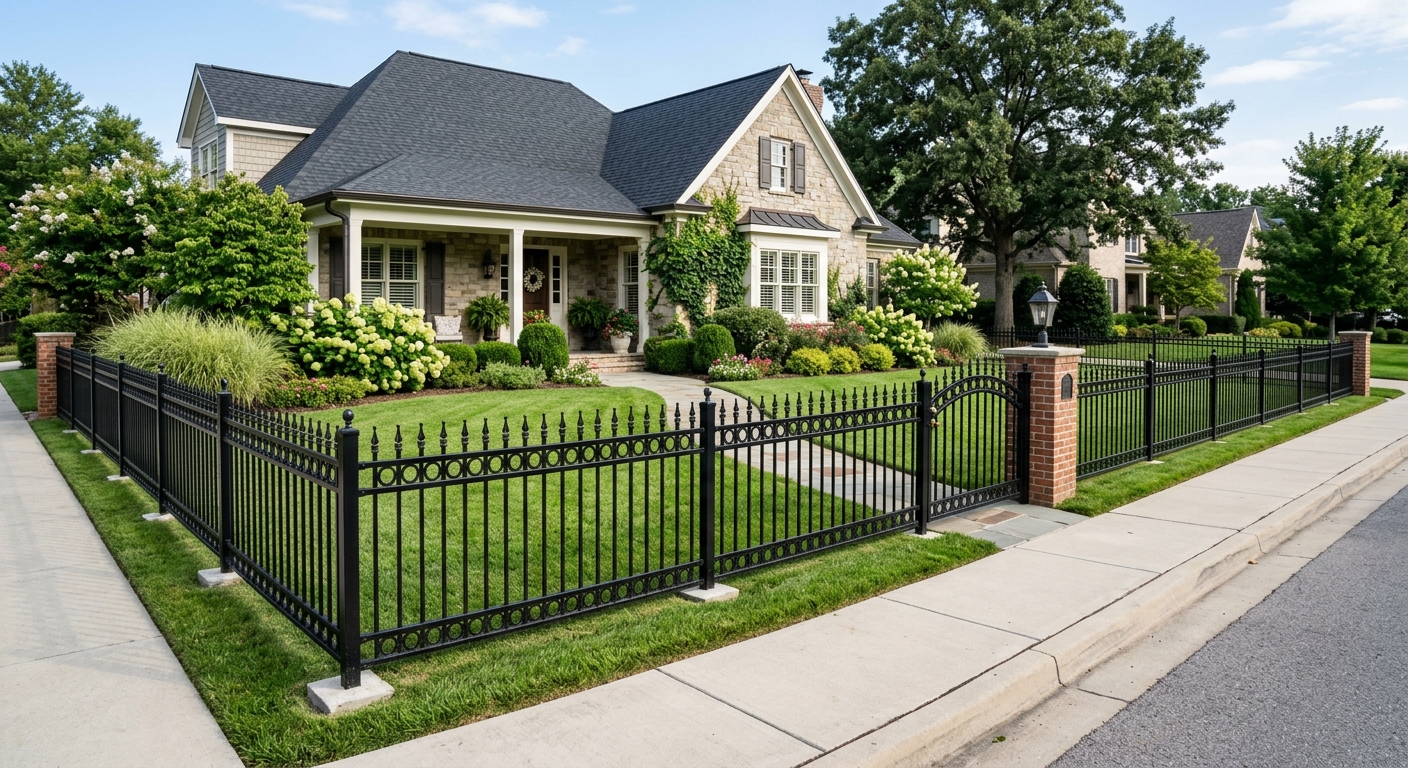
Fencing options and costs in Broadmoor
Broadmoor, British Columbia has plenty of backyard fencing, and the local demand is closely tied to how many detached homes are in the area—each detached property is a potential fencing customer. In 2021, the broader Broadmoor population was 23,050 (Statistics Canada, 2021 Census), which helps explain why contractors are consistently busy—especially around the busier neighbourhood pocket near 64 Avenue and the adjacent residential streets where lots tend to have clear property boundaries and regular fence replacement cycles.
For Lower Mainland–Southwest jobs, pricing usually reflects mild but not trivial frost and wind conditions. Even when we don’t see the deep freeze of colder provinces, posts still need to be set below the design frost depth to limit heaving; wetter Fraser Valley soils also mean deeper holes, more concrete for stability, and more crew time than a dry, sandy install. That combination is one reason quotes can come in higher than what homeowners expect from “mild BC weather.” Labour availability can also swing slightly during peak construction months, affecting scheduling and whether crews allocate extra helpers for hauling materials, dealing with soft ground, or working around mature landscaping.
If you’re comparing options, the practical difference in Broadmoor is usually less about the fence style you want and more about how it’s built: post depth, panel rigidity, and whether the design needs reinforcement for wind-exposed corners. Next, use the table below to benchmark typical lifespans, upkeep, privacy performance, and installed pricing ranges for common materials.
| Material |
Lifespan |
Maintenance |
Privacy Rating |
Price per Linear Foot |
| Pressure-treated pine (standard wood) |
10–15 years |
Stain or seal every 2–3 years |
High (solid board or close picket) |
$55 – $95 |
| Cedar (natural rot resistance) |
15–25 years |
Light staining every 2–4 years |
High (solid board) |
$65 – $105 |
| Vinyl / PVC (no-maintenance) |
20–30 years |
Rinse as needed; inspect for impacts |
High (solid privacy panels) |
$75 – $130 |
| Chain-link (galvanized steel) |
15–25 years |
Occasional tightening or re-tensioning |
Low to Medium (privacy slats optional) |
$30 – $55 |
| Aluminum ornamental |
25–40 years |
Rinse annually; repaint rarely |
Low (ornamental pickets) |
$90 – $170 |
| Composite / recycled material |
20–30 years |
Wash yearly; no staining |
High (solid and board-style profiles) |
$85 – $150 |
Prices are estimates only and vary by project scope, site access and material selection.
What affects the price of fencing in Broadmoor
In Broadmoor and across the Lower Mainland–Southwest, two quotes for the “same length and height” fence can differ by 30–50% because the real driver isn’t just material—it’s what the crew has to do on the ground. Soil conditions in the Fraser Valley can be wetter and less compact than drier inland sites, so postholes may take longer to excavate and backfill. Lower Mainland labour and trucking costs also influence installed totals, and contractors may build more robust post depth and bracing to handle wind load in exposed stretches.
Frost and heave protection is a big reason post excavation and concrete setting can add cost. Frost line depth dictates how far down posts must be set; even guidance that suggests about 3 feet of embedment “in much of Canada” often becomes deeper in practice to limit movement. In cold Ontario and Alberta, you’ll commonly see posts set around 1.5–2.0 m with concrete and longer lumber, which pushes material and labour up significantly. In coastal BC the frost is shallower, but contractors still frequently embed deeper than the bare minimum and use concrete for corner posts, privacy panels, and gate posts—meaning the install is not automatically cheap just because the climate feels mild.
Here are examples of how Broadmoor conditions shift costs: (1) soft, wet soil increases time for digging clean, plumb holes and may require more concrete to lock posts; (2) wind-exposed yards at the end of a cul-de-sac can lead crews to tighten post spacing or upgrade hardware for a vinyl/PVC privacy run; (3) older lots with mature landscaping often add time for careful tree/plant protection, edging removal, and disposal.
If you’re budgeting, it helps to compare within the regional bands: chain-link can land around $30 – $55 per linear foot installed, while vinyl/PVC privacy often runs $75 – $130 per linear foot, mainly due to heavier framing requirements and more posts braced for wind.
| Price Factor |
Why It Matters |
Cost Impact |
| Fence length in linear feet |
The labour and number of posts grow directly with length |
Often the single biggest swing item |
| Post depth required |
Frost protection drives hole depth and often longer posts |
Can add significant excavation and material cost |
| Post setting method |
Concrete vs. gravel pack changes material, labour, and cure time |
Concrete setting typically increases cost |
| Material choice |
Vinyl and composite require specific hardware and framing strength |
Shifts you between chain-link and vinyl/metal bands |
| Gate count and type |
Drive-through double gates need heavier posts and stronger latches |
Gates commonly add the most per opening |
| Grade and terrain |
Slopes require stepped designs or raked panels |
More layout time and cut labour; more hardware |
| Old fence removal and disposal |
Demo, hauling, and dump fees can be substantial |
May add a noticeable lump even for short runs |
| Permit fees and survey / property line locate |
Some projects need paperwork before digging |
Usually modest, but can delay scheduling and add admin |
Permits & regulations in British Columbia
In British Columbia, fence permits can be required when a fence exceeds certain height thresholds—typically about 2.0 m (6.5 ft) at the rear and roughly 1.0–1.2 m (3–4 ft) at the front or corners, depending on how your municipality defines “frontage” and specific site conditions. Even when a permit isn’t required, every fence must still respect property lines and municipal setback/bylaw requirements, which is where surveys and locate services become essential.
Before you dig any postholes, call for utility locates using BC 1 Call (or the appropriate provincial utility locate process). A contractor will often ask you to confirm utilities are marked so they can excavate safely and without delays. Also, obtain a survey or locate your property pins before installation—this helps avoid encroachment disputes, particularly on older Broadmoor lots where line markers may have shifted or been obscured by landscaping.
Shared fence ownership and line-fence responsibilities are governed by provincial line-fences legislation, so it’s worth confirming who maintains which side where applicable (especially for boundary-adjacent fencing).
What typically DOES require a permit: installing or modifying a fence above the municipal height thresholds, or placing fences in areas that trigger zoning/design review (for example, certain corner visibility situations). What typically does NOT: replacing like-for-like fencing that stays under threshold heights, provided it remains within setbacks and property lines—your municipality will still have the final say.
To verify a British Columbia contractor, ask for: (1) their licence details from the appropriate online registry for their trade category; (2) a current certificate of insurance showing general liability and—when relevant—work coverage; and (3) confirmation of coverage clearance where applicable (for example, proof that they are registered for worker coverage if they employ workers). Request these documents up front, and match the names on the insurance certificate to the contractor doing the work.
Choosing the right fence material for Broadmoor
Choosing the right fence in Broadmoor comes down to matching your priorities—privacy, low maintenance, budget, and expected lifespan—to a material that performs in a mild but wet climate. Pressure-treated pine is usually the most budget-friendly look, but it needs staining or sealing every 2–3 years to prevent grey weathering and to slow surface wear. Cedar has natural rot resistance and generally holds up well around moisture pockets, and it tends to look better longer, though it still benefits from routine staining every few years.
Vinyl/PVC is popular in the Lower Mainland because it’s low maintenance—usually no staining—and it can provide excellent privacy with solid panels. The caution is structural and impact performance: extreme cold snaps are less common in Broadmoor than on inland sites, but vinyl can still crack if hit hard, and panels may require stronger framing in wind-exposed areas. Chain-link is typically the lowest cost and longest-life option when you want security more than privacy, but it doesn’t block views without slats or a different screen approach. Aluminum ornamental won’t rust and looks clean for decades, but it’s inherently low privacy.
Post depth matters regardless of material. In the Lower Mainland–Southwest, frost is milder than in the Prairies, but crews still often set posts deeper than a “minimum” and frequently use concrete for corner posts, gate posts, and privacy runs to limit movement in wetter Fraser Valley soils. Wind and snow load considerations also push many installs toward tighter post spacing and more robust bracing, particularly for solid wood boards and vinyl privacy systems.
If you’re trying to justify the price jump: a typical installed chain-link budget around $30 – $55 per linear foot may work for pets or boundary definition, but if privacy is the goal, vinyl often lands nearer $75 – $130 per linear foot—worth it when you’re blocking views and reducing backyard noise, not just adding a boundary.
| Material |
Cold Tolerance |
Lifespan |
Annual Maintenance |
Best For |
Price Band |
| Pressure-treated pine |
Good (but surface weathering varies) |
10–15 years |
Seal/stain every 2–3 years |
Budget privacy with periodic upkeep |
$55 – $95 |
| Cedar |
Very good |
15–25 years |
Stain/condition every 2–4 years |
Natural look, rot resistance |
$65 – $105 |
| Vinyl / PVC |
Good (avoid impact damage) |
20–30 years |
Rinse as needed; inspect annually |
Low-maintenance privacy |
$75 – $130 |
| Chain-link |
Good |
15–25 years |
Occasional tightening/re-tensioning |
Security and boundary definition |
$30 – $55 |
| Aluminum ornamental |
Excellent |
25–40 years |
Rinse annually |
Attractive boundary with minimal upkeep |
$90 – $170 |
| Composite / recycled |
Good |
20–30 years |
Wash yearly; check fasteners |
Low maintenance with solid-panel look |
$85 – $150 |
How to choose a fencing contractor in Broadmoor
When you hire a fencing contractor in Broadmoor, verification first protects you later. In British Columbia, ask for their trade licence details for the type of work they do (and confirm the licence is active), plus proof of liability insurance. If they employ workers, request documentation showing worker coverage status (the idea is to confirm they have proper worker coverage rather than leaving you exposed if someone is injured on your property). Look for consistent business names across the proposal, the insurance certificate, and any clearance/certificate documents you’re given. For licence verification, check the appropriate provincial online registry. For insurance, review the certificate of insurance: it should clearly list the insured party, have valid dates, and include general liability coverage appropriate to residential contracting.
Next, get 2–3 itemised written quotes. “Itemised” means labour and materials separated, including post type, gate hardware, fasteners, concrete setting method, and disposal. Be specific: ask whether permit pull is included (if required), whether old fence removal and dump fees are in scope, and whether topsoil/grass reinstatement is included after postholes. A transparent quote also spells out finish grade and how they’ll handle line breaks or sloped yards.
Warranty matters: confirm workmanship warranty length, product/manufacturer warranty coverage, and whether warranty is transferable if you sell your home. For payment scheduling, never pay more than 10–15% upfront, and request a holdback until the job is complete and cleaned up. Finally, ask for a start date and an estimated completion timeline in writing—fence installs can stretch when excavation is delayed by wet soil or when materials arrive in different batches.
- Verify BC licence status (and that it matches the company on the quote).
- Request a current certificate of liability insurance and check dates/insured name.
- Confirm worker coverage status if they have employees.
- Ask for itemised labour vs. materials (not one lump sum).
- Confirm post depth plan (especially for wet soil and frost movement control).
- Ask whether corner posts and gate posts are concrete-set.
- Check who supplies and disposes of excavated material and old fencing.
- Ensure the scope states whether grading/landscaping reinstatement is included.
- Confirm gate hardware type (hinges, latches, latch height) and whether they’re upgraded.
- Ask how they’ll handle slopes: stepped vs. raked sections and who confirms levels.
- Get warranty terms in writing (workmanship + product coverage) and check transferability.
- Agree on payment schedule with a holdback until completion and final walkthrough.
In my Broadmoor experience, red flags often include: quotes that omit post depth and setting method; “installed” pricing that doesn’t mention whether concrete is included for corners/gates; vague scope language like “dispose of materials” without dump/disposal details; warranties offered verbally but not in writing; and payment requests that exceed 10–15% upfront with no clear milestones.
Frequently asked questions — fencing in Broadmoor
Should fence posts be set in concrete here?
In Broadmoor and the Lower Mainland–Southwest, many fence builds benefit from concrete-set posts at the structural points: corners, line-end posts, and especially gates. Even though coastal BC frost is milder than colder provinces, wetter soils and freeze-thaw movement can still cause heaving if posts aren’t embedded deep and anchored properly. That’s why contractors often dig below the design frost depth and then lock posts with concrete for stability. For straight runs on stable ground, some builders use gravel pack or mixed approaches, but the quote should specify the method by post type—don’t accept a one-size “maybe” without details. If you’re installing privacy panels, concrete setting is commonly part of the reason vinyl/PVC installs typically sit around the higher $75 – $130 range.
What's the best fence for privacy?
For privacy in Broadmoor, solid-board wood (cedar or pressure-treated pine) and vinyl/PVC privacy panels are usually the best matches. Cedar gives a natural look and strong rot resistance, while vinyl offers low maintenance—less staining work in our mild but damp conditions. Chain-link can be made more private with privacy slats or mesh screening, but it won’t match a true solid privacy panel for view-blocking. The “best” choice often comes down to how much upkeep you want: wood privacy commonly requires staining every 2–3 years, while vinyl generally needs only rinsing and occasional inspection. Pricing-wise, you’ll typically see wood and vinyl land within the mid-to-higher installed bands—wood around $55 – $95 and vinyl/PVC often near $75 – $130—especially if corner bracing, gate upgrades, and concrete setting are included.
How do I compare fencing quotes?
Compare quotes like-for-like, starting with how each one defines the scope. Ask each contractor to itemise: post depth and embedment depth, post setting method (concrete vs. gravel pack), panel spacing and bracing, gate hardware, and whether disposal and site clean-up are included. Pricing that looks close on paper can hide differences—one fence may use better framing for wind, heavier gate posts, or stronger corner bracing. Also check whether the quote assumes flat yard vs. slope/stepped sections, and whether a survey/property pin locate is included or excluded. Finally, look for compliance items: utility locate responsibility, any permit assumptions, and warranty terms for workmanship. If one quote is dramatically lower than the others, it’s often because something important is missing rather than the market being “that much cheaper” in Broadmoor.
How long does fence installation take in Broadmoor?
For an ordinary residential fence run, many installs are completed in roughly 1 to 3 days once the materials arrive and the site is ready. Timing depends on linear footage, how many gates are involved, and how complicated the terrain is (stepped/raked sections on slopes can add layout and fitting time). In wetter Fraser Valley soils, excavation can slow down because holes stay soft longer and require more careful backfill and setting. Concrete setting also affects the schedule—crews may need time for posts to be stable before tensioning or finishing panels. A full fence replacement with demolition and disposal can take longer, particularly if trees, edging, or landscaping must be protected. Ask your contractor to provide a start date and completion estimate in writing, plus how weather or utility locate delays will be handled.
Can I install a fence on a slope in Broadmoor?
Yes, you can install a fence on a slope in Broadmoor, and most contractors deal with it using either stepped panels or raked sections. The key is planning the line and confirming finished grade so the fence stays level where required and doesn’t create gaps at the bottom that reduce privacy. Stepped designs look more “blocky” but often accommodate slopes well with predictable panel heights. Raked designs follow the slope continuously, but they require careful measurement and may be more sensitive to uneven ground—especially for solid privacy boards and vinyl panels. Your quote should describe how they’ll handle the slope and what measurements they’ll take on site. If the yard has significant grade changes, expect more layout labour and potentially additional materials—this can influence installed totals even if your linear footage is similar to a flat property.
What is the most weather-resistant fence for Broadmoor's climate?
For Broadmoor’s mild but damp coastal conditions, cedar and vinyl/PVC are often top picks for weather performance. Cedar’s natural rot resistance helps it handle moisture better than standard pressure-treated pine without the same level of surface deterioration. Vinyl/PVC doesn’t rot and typically resists warping from moisture the way wood can, though it still needs proper framing and careful installation to prevent impacts from causing cracking. Chain-link is also long-lasting and corrosion-resistant when galvanized, but it won’t provide privacy and can allow more wind penetration. Aluminum ornamental is very durable and won’t rust, but it’s not designed for privacy. Pricing usually tracks materials and build complexity: a strong cedar or vinyl install typically falls in the mid-to-higher bands (for example, wood around $55 – $95 and vinyl/PVC around $75 – $130), especially when post depth, concrete-set corners/gates, and wind-ready bracing are included.