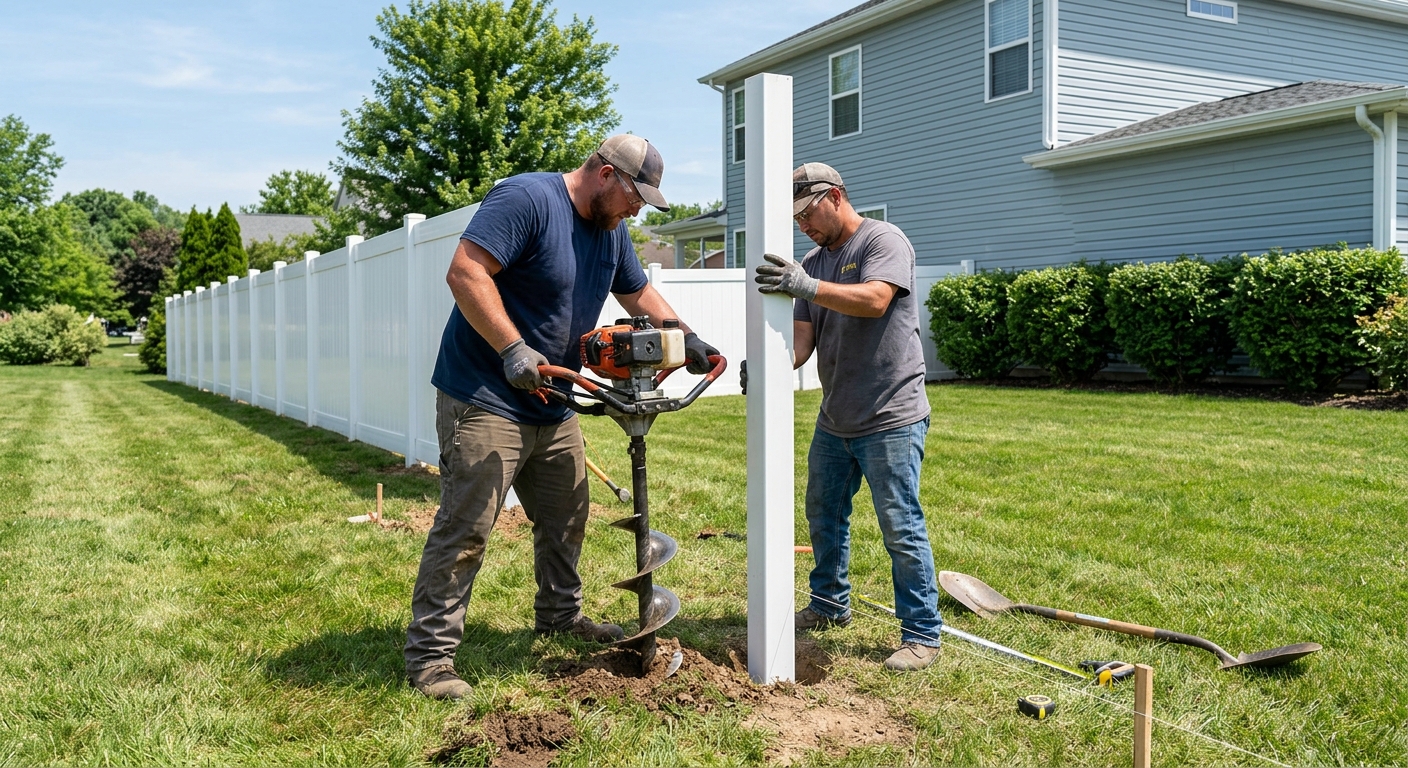
Fencing options and costs in Port Hardy
Port Hardy is one of those places where a fence has to work hard: coastal wind is frequent, rain is common, and the soil stays damp enough to challenge post stability. With about 3,902 residents (Statistics Canada, 2021 Census) and a homeowner base of roughly 67.4% of households (Statistics Canada, 2021 Census), demand is steady for backyards, dog runs, and boundary upgrades—especially around areas like Dufferin Street and the Harbour Road corridor where older housing and lot lines often need tidying. On Vancouver Island and the Coast, frost depth is relatively shallow (around 45–60 cm), but posts are still typically set below frost to prevent heaving and long-term leaning. That means deeper holes than you might expect, and often concrete-set posts where soil is disturbed, wet, or clay-rich, which pushes labour time up.
Material choice also changes the economics. Solid privacy fences catch more wind, so they may require closer post spacing or sturdier rails, while open styles like chain-link or aluminum tolerate exposure with standard spacing. Coastal salinity and wet winters also matter—hardware and panels that aren’t properly galvanized or protected can fail sooner, even if they look fine at install.
Below are realistic cost ranges for common fence types you’ll see quoted in Port Hardy, so you can compare options before you call for an itemised estimate.
| Material |
Lifespan |
Maintenance |
Privacy Rating |
Price per Linear Foot |
| Pressure-treated pine (standard wood) |
10–15 years |
Stain/seal every 2–3 years; inspect posts |
Medium–High (solid boards) |
$55 – $85 |
| Cedar (natural rot resistance) |
15–25 years |
Stain/finish as needed (often every 2–4 years) |
High (solid boards) |
$70 – $110 |
| Vinyl / PVC (no-maintenance) |
20–30 years |
Minimal (rinse; check for impact damage) |
High (solid and lattice options) |
$70 – $110 |
| Chain-link (galvanized steel) |
20–35 years |
Low (inspect tension; occasional coating touch-ups) |
Low–Medium (no privacy unless screened) |
$35 – $60 |
| Aluminum ornamental |
25–40 years |
Low (wash and occasional hardware checks) |
Low–Medium (open pickets) |
$80 – $140 |
| Composite / recycled material |
20–30 years |
Low (wash; avoid harsh impacts) |
High (solid panels) |
$85 – $130 |
Prices are estimates only and vary by project scope, site access and material selection.
What affects the price of fencing in Port Hardy
In Port Hardy and across Vancouver Island and the Coast, it’s common to see fencing quotes for a similar look vary by 30–50% once you price in site conditions and installation details. The reasons are practical: labour time changes with access, digging conditions, and how closely panels must be engineered for wind, while materials swing based on corrosion resistance and the thickness of posts and rails. Even within British Columbia, crews can price differently depending on whether they expect difficult post-hole excavation (rock pockets, wet soil, or clay) or straightforward trenching.
Frost line depth is a key driver. Coastal BC frost is shallower than many inland regions, roughly 45–60 cm, but posts still need to be set about 4–6 inches below the design frost depth. In practice, that typically means burying posts around 75–90 cm and using concrete-set footings where the ground is disturbed, saturated, or clay-rich. That added digging and disposal time can narrow the “low-cost” gap between wood and vinyl because your installation costs rise even if the materials are cheaper.
Wind exposure also shifts engineering choices. Solid privacy panels can behave like sails in frequent coastal gusts, pushing contractors toward closer post spacing and heavier rails. Compare that to chain-link: it often stays in the lower bands (about $35–$60 per linear foot), because it’s lighter and generally tolerates standard spacing better. Meanwhile, vinyl/pvc commonly sits in the $70–$110 per linear foot range and may require careful post anchoring if you’re building a taller, more solid layout.
In Port Hardy specifically, two common examples that move cost up are: (1) sloped yards in the Harbour Road and hillside-adjacent lots where fences must be stepped, adding labour for raked panels and custom alignment; and (2) removal of an old fence with embedded posts—cutting out, hauling, and disposing can add hours and dump fees. Cost can also go down if you have clear access for a post-hole auger, simple straight runs, and a design that keeps post spacing standard. Given that 71.3% of homes were built before 1981 (Statistics Canada, 2021 Census), it’s also common to see older boundary markers or rougher lot grading, which can increase the time spent confirming the line.
| Price Factor |
Why It Matters |
Cost Impact |
| Fence length in linear feet |
Every additional foot adds materials, posts, rails and labour. |
High (primary driver) |
| Post depth required |
Frost considerations control hole depth and often post length. |
Medium–High |
| Post setting method |
Concrete vs gravel pack vs driven posts affects stability and time. |
High when concrete is required |
| Material choice |
Vinyl, cedar, chain-link and aluminium have different hardware and rail needs. |
Medium–High |
| Gate count and type |
Drive-through gates require stronger frames and often more hardware. |
Medium–High |
| Grade and terrain |
Slopes need stepping or raking; uneven ground increases setting/line time. |
Medium |
| Old fence removal and disposal |
Embedded posts and hauling/dump charges add labour and fees. |
Medium–High |
| Permit fees and survey / property line locate |
Locates prevent rework and disputes; permit work adds administration time. |
Low–Medium (varies by site) |
Permits & regulations in British Columbia
In British Columbia, fence height rules are generally tied to where the fence sits on your property and how tall it is—so a permit may be required once you exceed typical thresholds. As a practical guideline in many BC municipalities, fences above about 2.0 m (6.5 ft) at the rear and about 1.0–1.2 m (3–4 ft) at the front or corner often need a building permit. Regardless of permit requirements, you must keep your fence within your property lines and follow any municipal setback bylaws that apply to your lot.
Before any post-hole digging, make sure utilities are marked. In BC, you should call BC 1 Call (and similar provincial utility-locate services where applicable). If your lot lines are unclear—especially on older Port Hardy properties—consider obtaining a survey or at least a professional property-pin locate before installation. This helps avoid the common “rebuild” scenario when a contractor has installed along an incorrect line and the neighbour disputes it.
When it comes to disputes, shared boundary rules are governed by provincial line-fences legislation, so keep records: photos, measurements, the contractor’s plan, and any written agreements.
To verify a contractor in Port Hardy: ask for (1) a clearance letter or confirmation of their licence status through the appropriate online registry used in BC for trades; (2) proof of liability insurance (request the COI showing your address as the job site if possible); and (3) confirmation of coverage for their workers under WSIB/WCB (or equivalent coverage confirmation). Don’t rely on verbal assurances—ask to see the current documents before work starts.
Choosing the right fence material for Port Hardy
Choosing a fence in Port Hardy is less about “best looking” and more about matching material to wet winters, wind, and how much maintenance you’re willing to do. Pressure-treated pine can be the budget-friendly option, but it typically needs staining or sealing every 2–3 years to reduce grey weathering and slow moisture uptake. Cedar is naturally more rot-resistant and generally looks better as it ages, but it still performs best with periodic finishing, especially where wind-driven rain hits end-grain. Vinyl/PVC offers true low maintenance, but in extreme cold it can be more prone to impact cracking—so you’ll want good post alignment and sturdy rails if you’re building a tall, solid layout. Chain-link is usually the lowest-cost, longest-life option, but it offers low privacy unless you add screening or slats. Aluminum ornamental is rust-resistant and attractive; it sits in a mid-range cost tier and suits homeowners who want an open look and long service life.
On Vancouver Island and the Coast, frost is relatively shallow (about 45–60 cm), yet posts still must be set below frost depth to prevent heaving. That’s why concrete-set posts are commonly recommended when soils are wet or clay-rich, or where fences are taller and carry higher wind loads. For solid privacy styles, wind and snow splash mean stronger framing and closer post spacing can be worth the cost; for open styles, standard spacing often holds up better.
A real-world way to judge value: if you’re comparing pressure-treated pine (often around $55–$85 per linear foot) to vinyl/pvc (commonly $70–$110 per linear foot), the extra upfront can be justified if you don’t want repeat staining and you expect 15–20 years of service. If you’re likely to replace the fence sooner, or budget is tight, pine can still be a sensible choice—just plan for regular maintenance.
| Material |
Cold Tolerance |
Lifespan |
Annual Maintenance |
Best For |
Price Band |
| Pressure-treated pine |
Good (with proper end sealing and finishing) |
10–15 years |
Light check; plan to stain/seal every 2–3 years |
Lower budget privacy with willingness to maintain |
$55 – $85 |
| Cedar |
Good |
15–25 years |
Light sealing/staining as needed (often every 2–4 years) |
Natural look, better rot resistance, solid privacy |
$70 – $110 |
| Vinyl / PVC |
Very good (avoids rot; avoid impact damage) |
20–30 years |
Low (rinse/clean; inspect after storms) |
Low-maintenance privacy in coastal conditions |
$70 – $110 |
| Chain-link |
Excellent |
20–35 years |
Low (tension checks; rinse salt residue) |
Security and longevity with minimal upkeep |
$35 – $60 |
| Aluminum ornamental |
Excellent |
25–40 years |
Low (wash; check hardware) |
Attractive, rust-resistant fencing with openness |
$80 – $140 |
| Composite / recycled |
Good |
20–30 years |
Low (periodic wash; inspect for impact) |
Modern solid privacy with reduced maintenance |
$85 – $130 |
How to choose a fencing contractor in Port Hardy
Choosing the right fencing contractor in Port Hardy starts with verification—BC construction work should be backed by current licensing/credentials and proper coverage. For liability, ask for a certificate of insurance (COI) that matches the company doing the work and lists the coverage limits; if they can’t provide a COI, that’s a major warning sign. For worker coverage, request proof of WSIB/WCB coverage (or equivalent confirmation) for their crews before signing anything. Then verify licence status by checking the relevant BC online registry (and ensure the details match the contractor you’re hiring).
Next, get 2–3 itemised written quotes. The best quotes show labour and materials as separate line items, including posts, rails, pickets/panels, hardware, excavation and concrete (if used), and any gate framing. Avoid “lump sum” quotes that don’t explain what’s included—fences can look similar on paper while labour requirements differ wildly once digging starts. Confirm whether permit pulling is included (if applicable), whether old fence removal is included, and whether disposal/dump fees are covered or billed separately.
Warranty matters too. Ask for the workmanship warranty length and whether it covers alignment, post setting, and fastening failures—not just “product defects.” Also confirm manufacturer warranty terms and whether they’re transferable if you sell your home.
For payment, never pay more than 10–15% upfront. Use a holdback until the fence is complete and passes a final check. Finally, request a start date and completion estimate in writing so you can plan for wind/wet-weather delays on Vancouver Island’s coast.
- Request COI with job-site details and confirm the policy is active.
- Confirm WSIB/WCB coverage (or equivalent) for the workers who will be on-site.
- Check licence/clearance status via the current BC online registry before work starts.
- Ask for 2–3 itemised quotes: labour vs materials breakdown, not a single total.
- Ensure excavation depth, post setting method, and concrete quantity are clearly stated.
- Confirm gate type and hardware are specified (hinges, latch, frame reinforcement).
- Verify whether old fence removal and disposal are included.
- Confirm utility locate responsibility and whether they schedule BC 1 Call marks.
- Ask how they handle slopes: stepped vs raked panels and how line height is measured.
- Check warranty paperwork in writing: workmanship term and product/manufacturer term.
- Agree on a payment schedule with a holdback until final completion.
- Get the timeline in writing, including a realistic weather buffer for coastal rain/wind.
In Port Hardy, four or five red flags I watch for are: vague quotes that don’t specify post depth or setting method; refusing to provide a COI/coverage proof; offering unusually low pricing without a detailed scope; skipping utility-locate steps; and pushing for large upfront payments (over 10–15%).
Frequently asked questions — fencing in Port Hardy
What is the most weather-resistant fence for Port Hardy's climate?
For Port Hardy and the surrounding Vancouver Island and Coast conditions, the most consistently weather-resistant options are typically chain-link (with properly galvanized components) and vinyl/PVC for solid privacy. Chain-link excels in wet, windy coastal weather because corrosion-resistance hardware and tensioning handle salt-laden moisture better than untreated steel or poorly coated fasteners. Vinyl/PVC also resists rot and doesn’t absorb water like wood, which helps in a climate where rain and damp soil are normal. If you want solid privacy and long service life, cedar is strong, but it still benefits from periodic finishing in coastal wind-driven rain. In pricing terms, chain-link often lands around $35 – $60 per linear foot, while vinyl/PVC commonly sits around $70 – $110 per linear foot.
How do I prevent wood fence rot in Port Hardy?
Rot prevention in British Columbia’s coastal conditions is mostly about water management and correct post installation. First, ensure posts are set below frost and are properly anchored—heaving and repeated wetting accelerates failure at the base. On Vancouver Island and the Coast, we commonly use concrete footings where soil is clay-rich or saturated, because it stabilizes the post and reduces water pooling. Second, choose pressure-treated lumber rated for ground contact and make sure cut ends are treated before installation. Third, build to reduce trapped moisture: keep bottoms of boards off wet soil where possible and ensure good drainage around the fence line. Finally, plan maintenance: even cedar and pressure-treated wood should be checked at least once a year for loose hardware and early soft spots, with staining/sealing typically every 2–3 years for pine.
What is the cost per linear foot for fencing in Port Hardy?
In Port Hardy, your installed fence cost per linear foot depends on material, height, gate count, and how much excavation and concrete-setting is required. As a quick local planning range, pressure-treated wood is often quoted around $55 – $85 per linear foot, vinyl/PVC is commonly about $70 – $110, and aluminum ornamental can run roughly $80 – $140. Chain-link is typically the lowest-cost option at about $35 – $60 per linear foot. Don’t compare only the per-foot numbers—ask your contractor to explain post depth, post setting method, and whether removal/disposal and permits are included. Those factors are where coastal digging and wind-engineering can swing the total price significantly.
Should I repair or replace my old fence in Port Hardy?
A good rule in Port Hardy is to repair when the framing is mostly sound and only surface boards or a few hardware components have failed. Replace when you see widespread rot around posts, leaning sections, repeated loosening of rails, or if the bottom rails are consistently failing from moisture exposure and wind-driven rain. Because many local homes are older (Statistics Canada, 2021 Census), it’s common to find posts that were installed with insufficient base support or without concrete where coastal soils are now more saturated or disturbed. Get a contractor to inspect: if post holes are compromised or the fence line needs re-alignment for property-line accuracy, replacement usually costs less long-term than repeated patch repairs. Ask for an itemised repair scope first, then compare it against a full replacement quote.
How do I handle a fence dispute with neighbour in British Columbia?
Fence disputes in British Columbia usually come down to property lines, shared responsibility, and whether the fence meets municipal and provincial requirements. Start by gathering evidence: old photos, measurements from your property pins (or a professional locate), and the contractor’s original layout plan. If you don’t have a clear survey, commission a locate before anyone rebuilds—installing along the wrong line is the most expensive mistake. Review the fence ownership and line-fence responsibilities under provincial line-fences legislation, since shared boundary rules can affect who pays for what. Keep all communication written (email/text) and propose a practical solution like a joint inspection or a shared fence upgrade plan. If you’re installing a fence that could trigger permit requirements based on height, confirm compliance before proceeding.
What fence style offers the best wind resistance in Port Hardy?
In Port Hardy’s coastal wind conditions, the “best” wind resistance depends on whether you want privacy or openness. Solid privacy fences can catch a lot of wind like a sail, so they often need engineered spacing, sturdier rails, and tighter post spacing. If you want high wind performance with a simpler structure, open styles like chain-link (especially when correctly tensioned) and aluminum ornamental generally handle gusts better because wind passes through the fence rather than pushing against a solid surface. For solid privacy, consider designs that reduce wind load—such as vented panel layouts or choosing materials and framing that can flex safely without loosening hardware. If your quote is being compared, make sure it specifies post depth and the post setting method (often concrete-set where soils are saturated), since that’s what prevents long-term leaning during repeated wind and wet seasons.