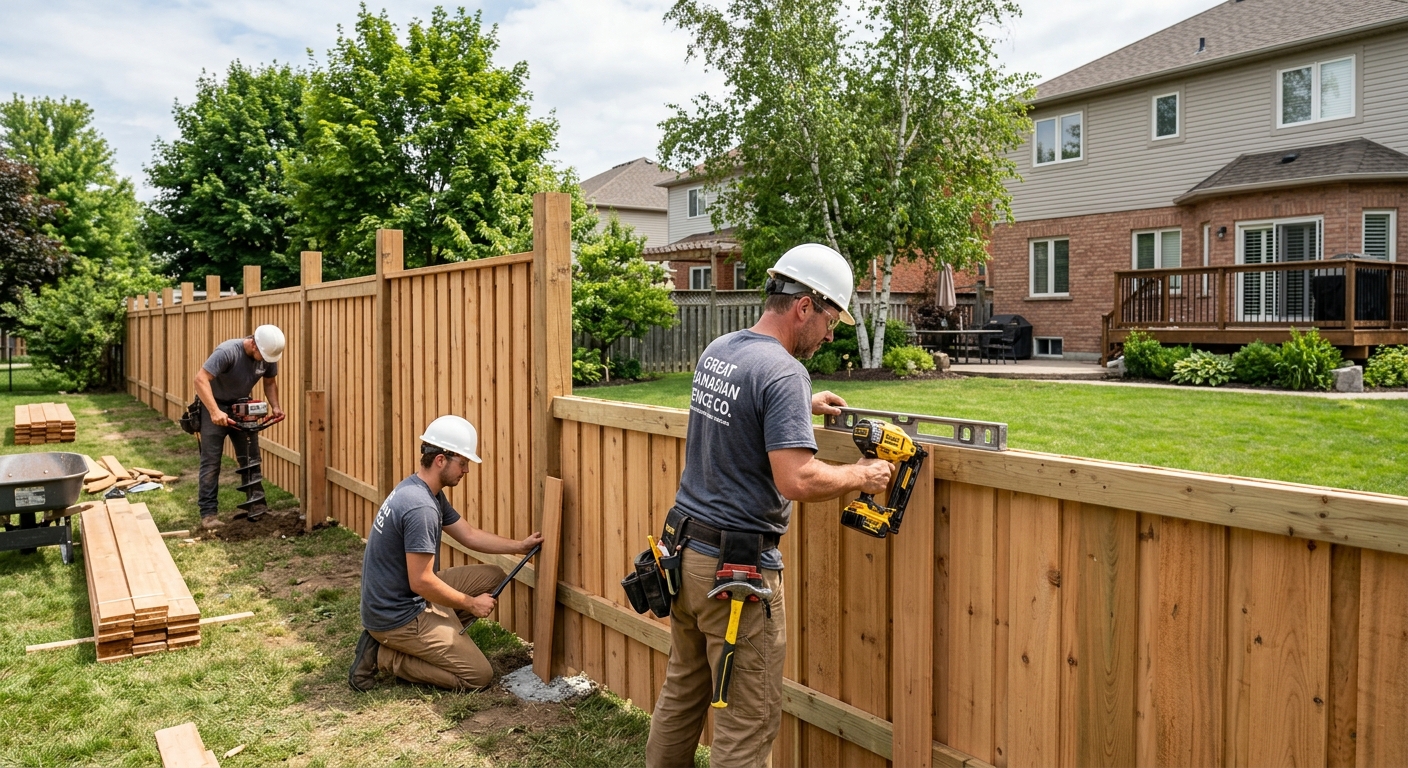
Fencing options and costs in North Vancouver
In North Vancouver, fencing choices usually start with what you want to protect—kids and pets, privacy on a deck, or curb appeal along Lonsdale and the Capilano corridor. With 58,120 residents and 14,535 homeowner households (53.3% of households own) in the wider census profile, demand is steady year-round because detached homes and family lots are common, and every new landscaping phase tends to include some boundary work. That matters for pricing because more jobs means more scheduling options for contractors, but it also means crews price accurately for access challenges on hillside lots.
Lower Mainland–Southwest conditions shape the “nuts and bolts” cost: even with a milder coastal climate than inland Canada, you still need to set posts below frost-affected ground to reduce heaving. In wetter soils near the Fraser Valley, contractors often dig deeper and use more concrete for corner posts, gate posts and privacy panel lines, which increases labour and material. Wind exposure along open stretches of the North Shore can also push you toward tighter post spacing and more rigid panel systems—especially for solid wood and vinyl privacy fences.
In neighbourhoods like Lynn Valley (and similarly on the Capilano Highlands side), we see frequent requests for privacy upgrades because backyards are often overlooked and elevated from the street. With that in mind, the table below gives typical installed price bands so you can compare options side-by-side before you book site measurements.
| Material |
Lifespan |
Maintenance |
Privacy Rating |
Price per Linear Foot |
| Pressure-treated pine (standard wood) |
10–15 years |
Stain/seal every 2–3 years; inspect fasteners |
Medium–High (solid/close boards) |
$55–$95 |
| Cedar (natural rot resistance) |
15–25 years |
Light staining every 2–4 years (or allow natural weathering) |
High (solid/close boards) |
$65–$105 |
| Vinyl / PVC (no-maintenance) |
20–30 years |
Rinse as needed; occasional panel alignment checks |
High (privacy styles) |
$75–$130 |
| Chain-link (galvanized steel) |
20–35 years |
Rinse and inspect tension; replace damaged sections |
Low (security only) |
$30–$55 |
| Aluminum ornamental |
25–40 years |
Occasional wash; touch-ups if needed |
Low–Medium (open design) |
$90–$170 |
| Composite / recycled material |
20–30 years |
Low; clean with mild soap; inspect for warping |
Medium–High (solid styles) |
$85–$145 |
Prices are estimates only and vary by project scope, site access and material selection.
What affects the price of fencing in North Vancouver
Fencing quotes in North Vancouver can differ by roughly 30–50% for the same “style” of fence because Lower Mainland–Southwest work isn’t a standard flat-rate job: crews price for access (driveway width, backyard access, lane entry), soil conditions, and how much concrete-setting is required for long-term stability. BC coastal and near-coastal soils are often wetter and can be more variable than a dry-site install, which pushes labour time upward and increases the amount of concrete used around corners and gate lines. Meanwhile, demand cycles and schedule availability across the Lower Mainland can also shift pricing within the range you see between wood and vinyl.
Post depth is the biggest technical lever. Contractors set posts about 4–6 inches below the design frost depth in many Canadian contexts to limit heaving. In colder Ontario and Alberta regions, that can translate to 1.5–2.0 m embedment and heavier concrete work, but in coastal BC the frost is typically shallower—still, contractors often go deeper than the bare minimum to match local ground conditions. That’s why you may see price movement within the $55–$95 wood range and the $75–$130 vinyl range when installers are accounting for deeper holes, longer posts and extra bracing.
Concrete examples from North Vancouver projects: (1) steep lots in Westview and Canyon Heights often require stepped or raked fence layouts, which means more rails, more measuring time and more cut waste; (2) yards with compacted, wet clay can force extra digging and concrete volume to achieve stable corner posts; (3) wind-exposed rear elevations may require stronger posts and tighter spacing, especially for solid vinyl privacy panels that behave like a sail.
| Price Factor |
Why It Matters |
Cost Impact |
| Fence length in linear feet |
Most costs scale directly with footage (materials + labour hours) |
Highest impact; can swing total by thousands |
| Post depth required |
Frost-affected ground dictates hole depth and post length |
More depth = more concrete and longer lumber |
| Post setting method |
Concrete-set posts vs gravel pack vs driven posts |
Concrete-setting typically increases cost |
| Material choice |
Vinyl and aluminum require structural hardware and fabrication |
Shifts you between wood ($55–$95) and vinyl ($75–$130) bands |
| Gate count and type |
Drive-through gates are heavier and need extra bracing |
Can add significant labour and hardware |
| Grade and terrain |
Slopes require stepped panels or raked rails |
More labour and more waste from custom cuts |
| Old fence removal and disposal |
Demo, haul-away and dump fees |
Often adds a separate line item |
| Permit fees and survey / property line locate |
Some projects need documentation before digging |
Varies; can add days and administrative costs |
Permits & regulations in British Columbia
In British Columbia, fences can require a building permit depending on height, location and how the municipality interprets the fence in the context of the lot. As a practical rule of thumb in many BC municipalities, fences above about 2.0 m (6.5 ft) along the rear and above about 1.0–1.2 m (3–4 ft) near the front or corner often trigger a permit requirement, and setbacks still apply. In North Vancouver, you must also respect property lines and any municipal setback bylaws to avoid encroachment disputes with neighbours.
Before any post holes are dug, call for utility locates (BC 1 Call) and confirm where services run. Next, obtain a survey or at least verify property pins/markers so the fence is set correctly. Where fences are shared, maintenance and ownership responsibilities follow the provincial framework for line fences—so it’s smart to document who pays for what and how the new fence will be maintained.
Licence and insurance checks should be part of your homeowner due diligence: verify the contractor has a valid British Columbia licence/registration (where applicable), request a current certificate of insurance showing liability coverage, and confirm workers’ compensation coverage (WSIB/WCB) before work starts. Where contractors cannot provide documentation, assume you’re taking on the risk.
Choosing the right fence material for North Vancouver
Choosing a fence material in North Vancouver is mostly about matching your priorities to how the North Shore climate treats the materials. Pressure-treated pine is typically the budget-friendly route, but it benefits from regular staining or sealing (often every 2–3 years) to reduce grey weathering and protect fasteners in our damp marine environment. Cedar looks great and naturally resists rot better than pine, but it still likes periodic maintenance for best appearance and long-term performance.
Vinyl/PVC is the low-maintenance option many homeowners want: you typically rinse it and move on, which can be a strong value over 10–15+ years. The trade-off is that vinyl can crack if exposed to repeated extreme cold impacts or if panels aren’t installed with proper alignment and bracing. Chain-link is usually the lowest upfront cost and can last a long time, but it offers security without privacy—so many families add screening or use it as a boundary plus landscaping solution. Aluminum ornamental is excellent for corrosion resistance and curb appeal, but it’s usually less private due to its open design and higher material/fabrication costs.
For embedment, Lower Mainland–Southwest frost conditions are milder than many inland parts of Canada, but you still should plan for frost-affected soil. In practice, that means setting posts below the heave zone and often using concrete for corner and gate posts to keep the fence straight through wet seasons and wind gusts.
Concrete dollar example: if a pressure-treated wood privacy fence lands in the $55–$95 per linear foot range and a vinyl privacy fence comes in around $75–$130 per linear foot, the price gap is usually justified when you want to eliminate staining labour and accept the higher upfront material cost. If your main goal is security with visibility, chain-link often provides the best cost-per-year, while keeping privacy solutions in landscaping or trellis form.
| Material |
Cold Tolerance |
Lifespan |
Annual Maintenance |
Best For |
Price Band |
| Pressure-treated pine |
Good; protect surface finish |
10–15 years |
Inspect and touch-up; stain/seal every 2–3 years |
Budget privacy with scheduled upkeep |
$55–$95 |
| Cedar |
Good; handles damp well |
15–25 years |
Light cleaning; stain/seal every 2–4 years |
Attractive privacy that resists rot |
$65–$105 |
| Vinyl / PVC |
Very good; avoid impact on cold snaps |
20–30 years |
Rinse; occasional hardware checks |
Low-maintenance privacy |
$75–$130 |
| Chain-link |
Good |
20–35 years |
Rinse and inspect tension |
Security and pet containment |
$30–$55 |
| Aluminum ornamental |
Very good |
25–40 years |
Rinse; minor repairs if damaged |
Curb appeal with light boundaries |
$90–$170 |
| Composite / recycled |
Good; stable in damp conditions |
20–30 years |
Low; periodic wash |
Modern privacy with minimal upkeep |
$85–$145 |
How to choose a fencing contractor in North Vancouver
When you’re hiring a fencing contractor in North Vancouver, start with documentation and accountability. In British Columbia, confirm liability insurance before any work begins: ask for a certificate of insurance that matches the scope (fencing installation and any hauling/demolition). Next, verify workers’ compensation coverage (WSIB/WCB) so you’re not exposed if someone is injured on-site. Also confirm the contractor’s British Columbia licence/registration status (where applicable for their trade category) and ask how they handle permit responsibilities if your fence triggers a permit threshold.
Then get 2–3 itemised written quotes. The best quotes break out labour and materials separately, including post installation method, concrete volumes (where relevant), hardware quality, rail count, and how gates are built and braced. Make sure the scope is explicit: what’s included or excluded for permit pulls, property line locating, old fence removal, and disposal/haul-away.
Warranty should be clear and in writing. Ask for (1) workmanship warranty length and what it covers, (2) product/manufacturer warranty terms, and (3) whether warranties transfer if you sell your home. For payment scheduling, avoid large upfront deposits—keep it around 10–15% max, and use a holdback until the job is substantially complete. Finally, insist on a start date and estimated completion timeline in writing.
- Request a COI (certificate of insurance) showing liability coverage and effective dates.
- Ask for proof of workers’ compensation coverage (WSIB/WCB) before work starts.
- Confirm BC licence/registration status relevant to fencing installation.
- Get 2–3 itemised quotes (labour + materials), not one lump-sum only.
- Check the quote includes post depth and post setting method (concrete vs other).
- Confirm how gates are engineered (hinge type, latch type, bracing).
- Verify old fence removal and disposal are included or called out separately.
- Ask whether permit pulls are included if height/setbacks require approval.
- Ensure the contractor lists the exact materials (grade of wood, vinyl line, hardware).
- Ask for warranty details: workmanship length and manufacturer warranty terms.
- Use a payment schedule with 10–15% maximum upfront; hold back until completion.
- Require a written schedule: start date, milestones, and completion estimate.
Red flags we commonly see in North Vancouver: vague quotes that don’t explain post embedment or gate bracing; no willingness to provide insurance/coverage documents; deposits that exceed 10–15% without a contract milestone plan; “finished price” promises that exclude removal/disposal and then add charges later; and crews who can’t provide a written scope, warranty terms, or a realistic start/completion timeline.
Frequently asked questions — fencing in North Vancouver
How deep should fence posts be for North Vancouver's frost?
For North Vancouver and the Lower Mainland–Southwest, frost is typically shallower than inland Canada, but you should still set posts below the frost-affected zone to reduce heaving. Contractors commonly plan hole depth so posts sit roughly 4–6 inches below the design frost depth in many Canadian approaches, and they often go deeper than the absolute minimum when soils are wet or variable. In practice, that can mean deeper holes and more concrete in corners and gate lines to keep the fence rigid through freeze-thaw cycles and rainy seasons.
Wood vs vinyl vs aluminum fence — which is best?
“Best” depends on what you value most. Wood (pressure-treated pine or cedar) is usually mid-range: for typical installed pricing in this region, wood often lands around the $55–$95 per linear foot band, with cedar running higher but looking better over time. Vinyl/PVC is the low-maintenance choice and often sits in the $75–$130 band; it’s great for privacy and damp coastal conditions, but it needs proper spacing and bracing to avoid stress in cold weather. Aluminum ornamental is usually the highest tier due to fabrication and hardware and often lands around $90–$170, but it provides rust-resistant curb appeal and a long service life.
Do I need a permit to build a fence in British Columbia?
In British Columbia, permits can be required when fence height exceeds common thresholds—often about 2.0 m (6.5 ft) at the rear and around 1.0–1.2 m (3–4 ft) at the front or corner, depending on the site. Even when a permit isn’t required, you must still follow municipal setback bylaws and property line rules. For North Vancouver homeowners, the safest route is to ask your contractor to confirm whether your planned height and location trigger a permit before you schedule digging.
How long does a wood fence last in North Vancouver?
With correct installation—good post embedment, proper drainage, and appropriate finishes—wood fencing in North Vancouver often lasts about 10–15 years for pressure-treated pine and roughly 15–25 years for cedar. Maintenance matters: stained pressure-treated pine usually needs attention every 2–3 years to slow weathering, while cedar tends to hold up well to damp conditions but still benefits from periodic cleaning and light re-staining if you want consistent colour. Wet coastal weather and any sheltered-but-shaded sections can accelerate greying and fastener corrosion if the finish system isn’t maintained.
Who owns and maintains a shared fence?
Shared fence responsibilities in British Columbia follow the provincial line-fences framework. In plain terms, the side(s) involved in the shared boundary can share costs and maintenance obligations depending on how the fence is treated as a boundary fence and what arrangement exists. For North Vancouver homeowners, the key is to document expectations with your neighbour: agree in writing on replacement responsibility, standards of repair, and who performs ongoing maintenance (or how costs are split). If you’re replacing an older shared fence, ask your contractor to note the fence line location and confirm you’re staying on your side of the boundary.
How do I find my property line before fencing?
Before digging post holes in North Vancouver, don’t rely on guesswork. Use a survey (best option) or locate your property pins/markers to confirm the boundary alignment, then mark the fence line with stakes and string before you hire final materials. Your contractor should also account for any survey notes so the fence respects setbacks and avoids encroachment. If you’re unsure, get a property line locate or survey update before construction—this is especially important in older neighbourhoods where fences may have been shifted historically. Also arrange utility locates (BC 1 Call) before any digging so you can plan around services safely.