Fencing options and costs in Vancouver
Vancouver homeowners can choose from several fencing materials, but the “best” option depends on privacy, maintenance tolerance, and how your yard handles Vancouver’s mild yet wet conditions. In Vancouver, owner households are a major driver of fence demand: 45.5% of households own their homes, and the city’s housing stock includes a meaningful share of single-detached properties (14.7% of dwellings). That matters because detached properties typically need longer perimeter runs for back and side yards, plus gates for driveways and gardens.
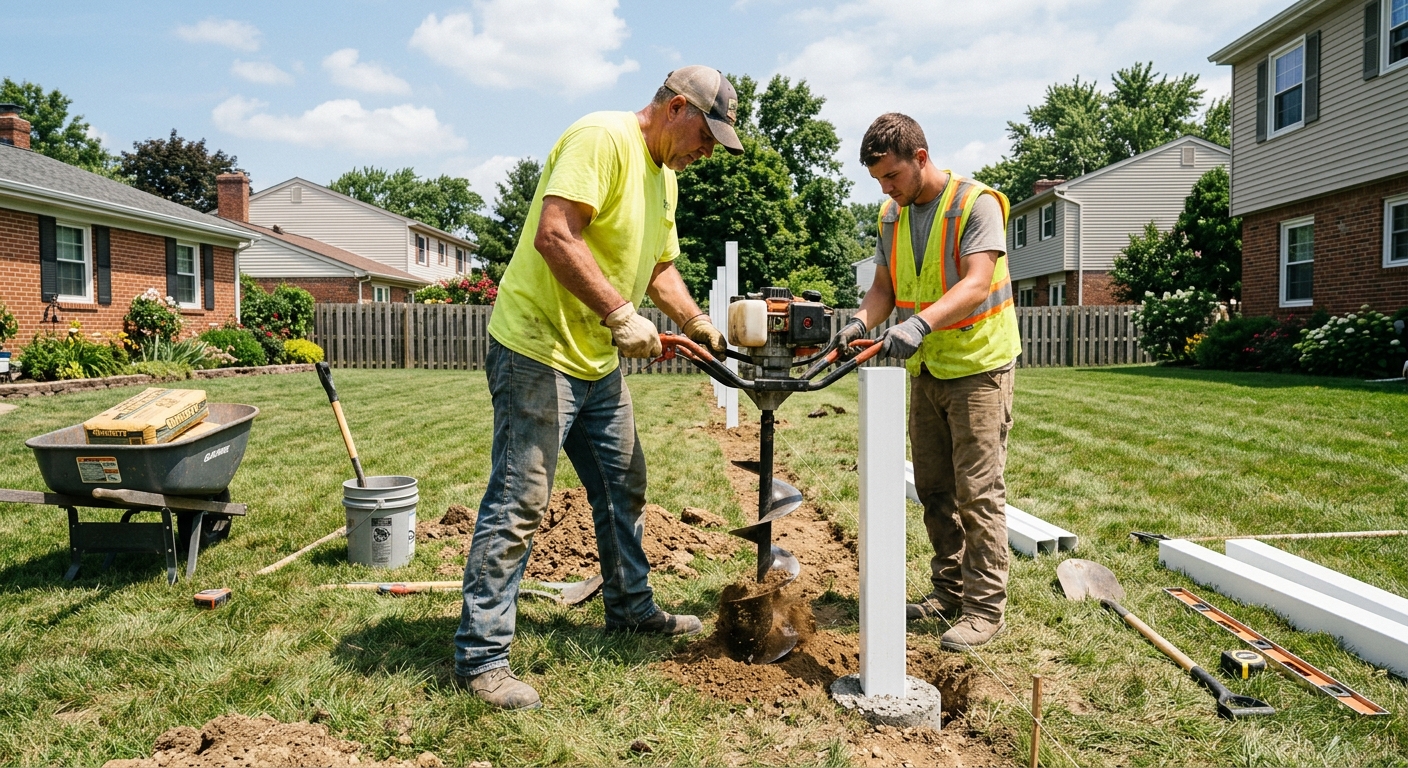
In the Lower Mainland–Southwest, pricing isn’t driven by deep, Prairie-style freeze alone. Instead, crews plan for mild but not trivial frost and frequent wind exposure, and they still set posts deep enough to reduce heaving in wetter soils. Fraser Valley–type soil conditions around the region often mean deeper holes, more concrete for corner posts and gate posts, and extra labour for careful alignment—especially on sloped lots common in areas like West Vancouver and parts of the North Shore. Contractor availability also plays a role: when multiple neighbourhood projects overlap (new infill builds plus upgrades to older fences), labour scheduling can push rates toward the top end of the typical bands.
For neighbourhood demand, many fencing contractors see consistent work in East Vancouver, where older housing and garden-heavy lots often need repairs, replacement pickets, or privacy upgrades. With that in mind, here’s a side-by-side look at common materials and realistic installed cost ranges in Vancouver—so you can compare apples to apples before you call for quotes.
| Material |
Lifespan |
Maintenance |
Privacy Rating |
Price per Linear Foot |
| Pressure-treated pine (standard wood) |
10–15 years |
Stain/seal every 2–3 years; inspect for loose rails |
7/10 (solid panels); 4/10 (open/board-on-board styles) |
$55–$95 |
| Cedar (natural rot resistance) |
15–25 years |
Seal/stain every 2–4 years; occasional board replacement |
8/10 (solid boards); 5/10 (semi-open pickets) |
$65–$110 |
| Vinyl / PVC (no-maintenance) |
20–30 years |
Rinse annually; check fittings after freeze-thaw extremes |
9/10 (privacy styles); 6/10 (semi-privacy) |
$75–$130 |
| Chain-link (galvanized steel) |
25–35 years |
Minimal; tighten hardware and replace damaged sections |
2/10 (privacy only with slats/mesh) |
$30–$55 |
| Aluminum ornamental |
25–40 years |
Wash periodically; tighten as needed |
4/10 (decorative—light visibility) |
$90–$170 |
| Composite / recycled material |
20–30 years |
Low; occasional cleaning; inspect posts and fasteners |
8/10 (solid or lattice privacy designs) |
$80–$140 |
Prices are estimates only and vary by project scope, site access and material selection.
What affects the price of fencing in Vancouver
In Vancouver and across the Lower Mainland–Southwest, two quotes for the “same” length of fence can still differ by 30–50% because the invisible factors change labour time and material intensity. Slope, soil moisture, how accessible the work area is (back lane vs. side yard), how many gates you need, and whether the crew must remove and dispose of an old fence all shift the final number. Even the type of finish—solid privacy boards versus open pickets—can drive structural requirements because wind stresses the panel differently.
Post depth is one of the biggest cost levers. In British Columbia, frost is typically less punishing than in Ontario or Alberta, but published Canadian guidance still lands around 4–6 inches below design frost depth in many regions. In practice, Vancouver-area installs often require deeper holes than a homeowner expects to prevent heaving, especially in wetter soil. Concrete setting for corner posts and gate posts is common because it reduces movement over time; deeper holes mean more labour and more concrete, which pushes wood and vinyl toward the top end of their regional bands (for example, vinyl/PVC often lands in the $75–$130 range when posts and gates are structurally reinforced).
Local wind and weather exposure also matter. While the Prairies push for tighter spacing and heavier framing, coastal BC’s wet cycle accelerates wood rot when treatment and drainage details aren’t right—so cedar and pressure-treated pine may require better post protection and more careful sealing, which can narrow the price gap. On jobs with sloped yards, crews may use stepped or raked rails; that adds labour and sometimes extra materials. For older homes (many built before 1981), retrofits can be messier: existing hardware, uneven footing, and buried remnants can add a few hours of preparation, which is where you see quotes drift upward by tens of percent. Median household income in the area is about $82,000 (Statistics Canada, 2021 Census), and that typically shows up as homeowners choosing either a budget wood upgrade or a longer-life vinyl/cedar replacement depending on how long they plan to stay.
| Price Factor |
Why It Matters |
Cost Impact |
| Fence length in linear feet — the primary cost driver |
More perimeter means more posts, rails, and fasteners |
High (often the largest swing) |
| Post depth required — frost line determines post length and hole depth |
Heaving risk increases if holes are too shallow |
Medium to high in wet soils |
| Post setting method — concrete vs. gravel pack vs. driven posts |
Concrete costs more but improves stability for gates/corners |
Medium (can add material + labour) |
| Material choice — vinyl vs. cedar vs. chain-link |
Material prices and structural demands differ |
High (drives overall band) |
| Gate count and type — walk-through vs. drive-through (double) |
Gates require heavier posts, hinges, and precise alignment |
Medium to high |
| Grade and terrain — sloped yards require stepped or raked panels |
Extra cutting and custom rail profiles add labour |
Medium |
| Old fence removal and disposal |
Haul-away, labour, and disposal fees increase time |
Medium (can be substantial) |
| Permit fees and survey / property line locate |
Some builds need permits; accurate line work prevents disputes |
Low to medium depending on complexity |
Permits & regulations in British Columbia
In British Columbia, fence approvals are typically tied to height and location, and Vancouver homeowners should assume that higher fences may need a building permit. As a practical guideline, fences above about 2.0 m (6.5 ft) at the rear and around 1.0–1.2 m (3–4 ft) at the front or corners often trigger permit requirements in many municipal contexts. You still must follow property-line rules and any municipal setback bylaws that apply to your address.
Before digging any post holes, call for utility locates so you don’t hit buried services. In BC, use BC 1 Call (utility locating) and confirm marking on the day you dig. Also, obtain a survey or property line locate if you’re unsure of your pins. This is especially important in older neighbourhoods where fences may have been built “by eye” and may not match the actual boundary.
Shared fence responsibilities are handled under provincial line-fences legislation: neighbouring owners may have obligations depending on how the shared boundary fence was built and who benefits from it, so it’s smart to confirm expectations in writing before work begins.
Contractor verification for Vancouver: ask to see the contractor’s relevant BC business licence (where applicable), liability insurance certificate, and evidence of workers’ compensation coverage (WSIB/WCB clearance letter or equivalent proof). You can also review credentials through online business registries and request an up-to-date clearance letter so your project is covered if an on-site incident occurs.
Choosing the right fence material for Vancouver
Choosing a fence material in Vancouver is really about matching your priorities to the city’s wet, coastal conditions and how the Lower Mainland–Southwest labour market builds for wind and moisture. Pressure-treated pine is the budget-friendly option, but it needs staining or sealing every 2–3 years to limit grey weathering and cracking at cut ends. Cedar looks great and resists rot better, but it still benefits from maintenance—especially where water pools at the base of posts. Vinyl/PVC is popular for low maintenance: it won’t need staining, and in Vancouver’s mild climate it can last 20–30 years, though installers still recommend correct post spacing and reinforcement so it doesn’t rack or crack during freeze-thaw extremes. Chain-link is usually the lowest initial cost, but it offers little privacy unless you add slats, lattice, or a privacy mesh system. Aluminum ornamental is rust-resistant and clean-looking, but it’s typically not a privacy-first choice.
Post depth matters across materials. With Vancouver’s frost pattern and wetter soils, crews often set posts deeper than the bare minimum to reduce heaving risk, and corner and gate posts are commonly concrete-set even when other posts use less concrete. That affects both wood and vinyl pricing. On wind-exposed runs, solid privacy panels require tighter bracing, which can be one reason vinyl/PVC and cedar can climb toward the upper part of their bands.
A quick example of value: if a chain-link run is around $30–$55 per linear foot, upgrading to vinyl privacy at roughly $75–$130 per linear foot can be justified when you want real backyard screening and reduced ongoing work. If you plan to stay many years, paying the premium often costs less than repeated staining/board replacements on wood in consistently damp sections.
| Material |
Cold Tolerance |
Lifespan |
Annual Maintenance |
Best For |
Price Band |
| Pressure-treated pine |
Good (with proper sealing at ends) |
10–15 years |
Light inspection; re-stain as needed every 2–3 years |
Budget privacy where you’ll maintain the finish |
$55–$95 |
| Cedar |
Good (natural rot resistance) |
15–25 years |
Clean and seal every 2–4 years |
Natural look with better rot resistance |
$65–$110 |
| Vinyl / PVC |
Very good (durable in coastal moisture) |
20–30 years |
Rinse and check fittings; minimal repairs |
Low-maintenance privacy and consistent appearance |
$75–$130 |
| Chain-link |
Good (galvanized steel) |
25–35 years |
Tighten hardware; occasional repairs |
Security with minimal cost (pair with slats for privacy) |
$30–$55 |
| Aluminum ornamental |
Very good (no rust) |
25–40 years |
Wash periodically; inspect brackets |
Decorative borders and long-term durability |
$90–$170 |
| Composite / recycled |
Very good (stability with moisture) |
20–30 years |
Low; clean and inspect fasteners |
Privacy with less maintenance than wood |
$80–$140 |
How to choose a fencing contractor in Vancouver
When hiring a fencing contractor in Vancouver, verify three things upfront: licensing/registration where applicable, liability insurance, and workers’ compensation coverage. Ask for a current certificate of insurance and confirm the policy covers your job location. For workers’ compensation, request proof such as a WSIB/WCB clearance letter (or equivalent documentation) so you’re not exposed if a worker is injured on site. You can cross-check business details using provincial online registries and, for insurance, confirm the certificate is valid for the current project dates.
Next, get 2–3 itemised written quotes instead of lump-sum estimates. A solid quote breaks down labour and materials (posts, rails, fasteners, concrete, gates, and any fencing brackets or hardware), and it should state how posts are set and the expected hole depth. Pay attention to what’s excluded: many quotes don’t include permit pulling, property line locate/survey, disposal of your old fence, or any tree/root work that affects post installation.
Warranty should be clear. Look for a workmanship warranty (often for the installation system) and a separate product/manufacturer warranty for materials. Ask whether warranties are transferable if you sell the home. Payment matters too: avoid paying more than about 10–15% upfront, then hold back a portion until the job is complete and cleaned up. Finally, request a start date and completion estimate in writing—fence projects can be delayed by weather and municipal scheduling, so clarity helps.
- Ask for insurance certificate showing coverage for your address and job dates.
- Confirm workers’ compensation clearance/coverage documentation before the first day on site.
- Get quotes that list labour hours and material quantities (posts, rails, pickets, fasteners, concrete).
- Require a written scope of work: fence type, height, style, and rail/panel layout.
- Confirm post depth and setting method (concrete-set for corners/gates; embedment expectations).
- Make sure gate hardware is specified (hinge type, latch, and finish) and included in the quote.
- Ask whether permit pulling is included or if you’re responsible.
- Clarify disposal: removal of the old fence, haul-away, and any landfill fees.
- Check for site protection and cleanup details (work area, nail/screw sweep, sawdust handling).
- Review warranty terms in writing: workmanship duration and what triggers warranty service.
- Verify payment schedule and holdback expectations before signing.
- Ensure the quote states an estimated start date and completion window.
In Vancouver, red flags I’ve seen include contractors who won’t provide an itemised breakdown, quotes that omit how deep posts are set, “cash only” arrangements with no insurance proof, vague warranty language, and crews that start without confirming property lines and utility locates. If any of those show up, pause and ask for clarification in writing.
Frequently asked questions — fencing in Vancouver
Who owns and maintains a shared fence?
In Vancouver and across British Columbia, shared boundary fences are handled under provincial line-fences legislation, but the details can depend on how the fence was originally built and who benefits from it. If the fence is truly on (or evenly servicing) the boundary, neighbours often share responsibilities for maintenance or replacement, yet disputes can arise when one party built or upgraded the fence without agreement. Before you sign off on changes, confirm whether your fence sits exactly on the property line or slightly on one side, and whether there’s an existing agreement (sometimes in writing between neighbours). In practice, I recommend having a simple written note or agreement covering maintenance responsibilities, expected replacement timelines, and who pays for upgrades.
How do I find my property line before fencing?
To find your property line in Vancouver, start with your property pins via a survey or a property line locate. Many older Vancouver fences were built decades ago and may not align with current boundary definitions. If you don’t have a recent survey, hire a surveyor for a locate so you can mark the exact line before posts are set. You should also verify where your current fence sits by comparing to survey markers—not by measuring from your house only. Separately, before any digging for posts, call for utility locates in BC (BC 1 Call) so marked services don’t get disturbed. Getting the line right first helps you avoid costly rework, especially when contractors price by linear footage and the redesign can add posts, rails, and disposal.
What's the most low-maintenance fence?
For most Vancouver homeowners, vinyl/PVC is typically the most low-maintenance option because it doesn’t require staining and resists the coastal moisture cycle that stresses wood finishes. A good vinyl privacy fence usually falls in the $75–$130 per linear foot range in this region, and while it costs more upfront than pressure-treated pine, you can save on repeated maintenance coats and board-by-board repairs. Chain-link is also low-maintenance mechanically, but it’s not private unless you add slats or mesh, so many people still choose vinyl if privacy is the goal. If you’re comparing quotes, ask whether the installer plans concrete-setting for corners/gates; the long-term stability often matters as much as the surface material in wet Vancouver conditions.
How tall can my fence be in Vancouver?
Fence height rules can vary by where the fence sits (front yard, corner side yard, or rear yard) and by municipal bylaws, but a commonly used planning guideline in BC is that fences above about 2.0 m (6.5 ft) at the rear and around 1.0–1.2 m (3–4 ft) at the front or corners often require a building permit. Because neighbourhood-specific bylaws and the exact location relative to streets can differ, you should confirm with your municipality and have your contractor check before ordering materials. If your goal is privacy, many homeowners target heights below the permit trigger or apply for the permit for a true privacy fence—especially in Vancouver where property lines and setbacks matter. When you request quotes, ask whether permit pulling is included or if you’ll need to budget for it.
Should fence posts be set in concrete here?
In Vancouver and the Lower Mainland–Southwest, concrete setting is commonly used for corner posts and gate posts because those points take the most stress and benefit from added stability. For embedment generally, contractors still set posts deep enough to reduce heaving risk from seasonal frost, and in wetter soils that often means digging deeper holes than some homeowners expect. Whether every post must be concrete-set depends on your soil, the fence design, and the local conditions, but “no concrete at all” can be a risk in mucky or saturated areas. A good contractor will explain embedment depth, hole size, and the chosen post-setting approach in the written quote. That’s also where you’ll see pricing align with the local bands—wood and vinyl can move toward the higher end when concrete is used strategically.
What's the best fence for privacy?
The best privacy fence for Vancouver is usually a solid-panel design with closely spaced boards or a vinyl privacy style that blocks sightlines. Cedar and pressure-treated pine can deliver excellent privacy, but they need maintenance to handle Vancouver’s wet conditions—expect staining/sealing schedules and periodic inspections for warping or loose rails. Vinyl/PVC privacy fences are often the most popular “set it and forget it” choice, typically priced around $75–$130 per linear foot in this region, with longer-life expectations around 20–30 years when installed properly. If you’re on a windy or sloped run, ask how the contractor handles bracing and step/rake transitions; a privacy fence that lacks structural reinforcement can fail early even if the material is good.