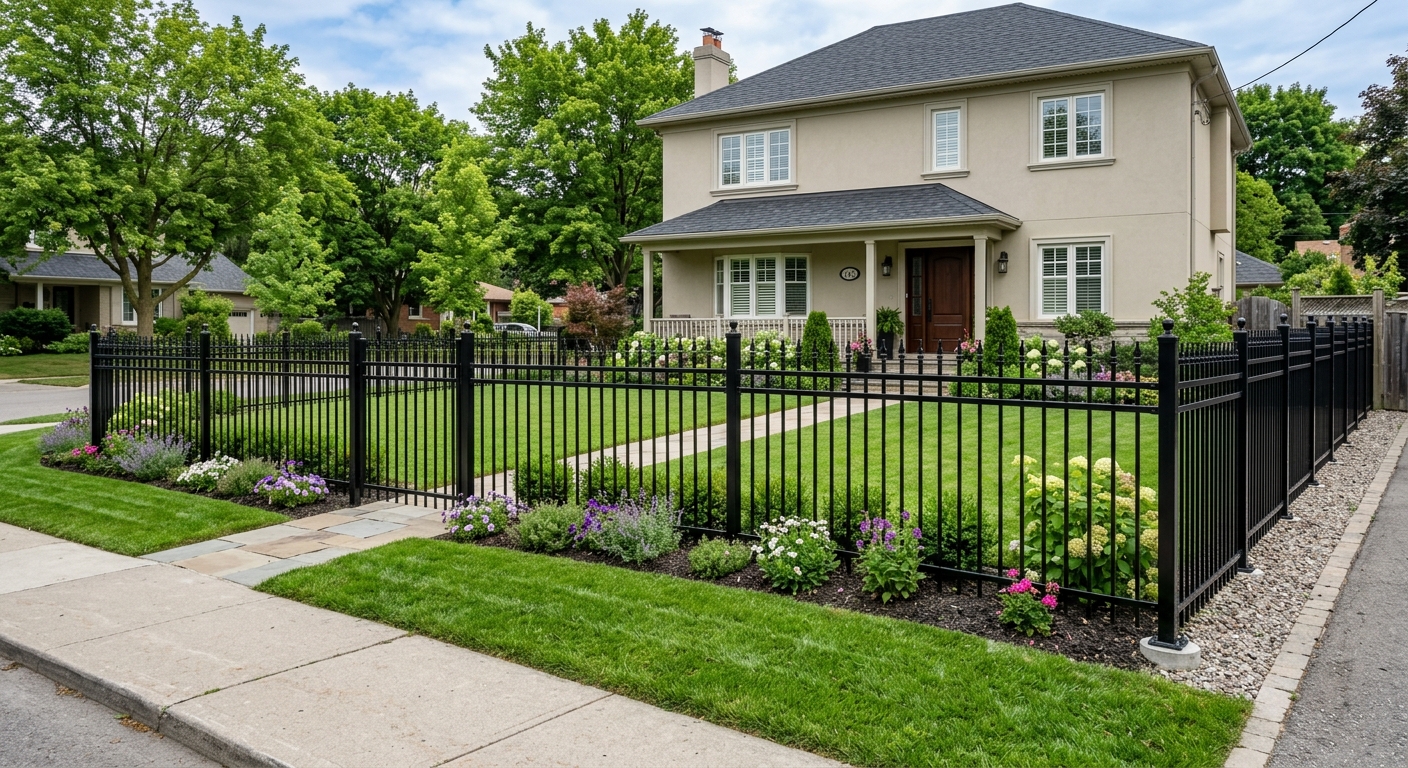
Fencing options and costs in Kimberley
In Kimberley, choosing a fence starts with matching the material to the climate—and to the kind of homes that dominate local demand. With single-detached houses making up 76.6% of dwellings and homeowner households at 78.2% of all households (Statistics Canada, 2021 Census), most fencing projects are driven by private yards, back lanes, and side-yard privacy upgrades rather than multi-unit boundaries. That ownership mix is why you’ll see steady installer availability for both perimeter fences and taller privacy lines, especially around neighbourhoods with more frequent yard refreshes such as Marysville.
Cost in the Kootenays is shaped heavily by freeze–thaw cycles. Unlike milder regions where 2 ft post holes are common, here contractors typically set posts close to or below design frost conditions to reduce frost heave. That means deeper augering, more excavation time, and more concrete per post for privacy fences, corners, and gate points. In exposed stretches—common in parts of Kimberley with wind-swept yards—contractors also lean toward tighter post spacing and sturdier panels to resist racking during winter storms. These site realities can push a “basic” fence toward the higher end of the local price bands, particularly when you combine tall panels with more frequent post placement.
Use the comparison below to sanity-check quotes before you book measurements and a site-specific post-depth plan.
| Material |
Lifespan |
Maintenance |
Privacy Rating |
Price per Linear Foot |
| Pressure-treated pine (standard wood) |
10–15 years |
Stain/seal every 2–3 years; fastener checks |
Good (solid boards); up to ~6 ft |
$45–$75 |
| Cedar (natural rot resistance) |
15–25 years |
Light staining/oil as needed (typically every 3–4 years) |
Good to excellent (board spacing matters) |
$60–$95 |
| Vinyl / PVC (no-maintenance) |
20–30 years |
Rinse/wash occasionally; occasional joint inspections |
Excellent (solid privacy styles) |
$70–$110 |
| Chain-link (galvanized steel) |
25–40 years |
Minimal (tension checks; occasional coating touch-ups) |
Low (privacy inserts or slats needed) |
$30–$55 |
| Aluminum ornamental |
25–35 years |
Wash; inspect hinges/clamps if fitted |
Low to moderate (ornamental pickets) |
$80–$140 |
| Composite / recycled material |
20–30 years |
Wash periodically; check for warping near gates |
Good (solid infill styles) |
$85–$125 |
Prices are estimates only and vary by project scope, site access and material selection.
What affects the price of fencing in Kimberley
Fence pricing in Kimberley can vary by roughly 30–50% for the same “style” of fence when contractors account for site conditions and the Kootenay frost environment. Two properties can end up with very different post depths, excavation difficulty, and concrete volumes, even if the total linear feet looks identical on paper. Add in labour availability during peak season and the cost of hauling materials up hilly access roads, and it’s easy to see why one contractor’s quote may land near the low end of the $30–$55 chain-link band while another lands closer to the $70–$110 vinyl band.
In cold regions, the frost line depth controls how deep posts must be set. A common approach is to set posts about 4–6 inches below the design frost depth to help prevent frost heave. In practical terms for Kootenay builds, that often means deeper augers and more concrete-set work compared to “shallow set” methods. If you’re comparing Toronto-style assumptions to the Kootenays, the difference becomes concrete and labour: deeper holes generally require longer posts, more excavation time, and higher material consumption. Wind and snow load also matter; even though Kimberley isn’t open Prairie, exposed yards and taller panels still create extra lateral pressure, which pushes installers toward tighter post spacing and more rigid framing.
Concrete examples from Kimberley jobs: (1) A privacy fence with two gate locations usually costs more than a simple perimeter run because gate posts get oversized concrete footings and extra bracing. (2) Sloped sites—common on acreage edges and hillside lots—often require stepped or raked panels, which increases both layout time and panel waste. (3) Older fences scheduled for removal can add hauling/disposal costs; if boards are rotten or posts are deeply set, demolition labour rises quickly. When homeowners compare options, it’s common to see a vinyl fence quote around $70–$110 per linear foot, while a chain-link alternative may land near $30–$55, but only if you don’t add privacy inserts, thicker gauge top rail, and deeper tension posts.
| Price Factor |
Why It Matters |
Cost Impact |
| Fence length in linear feet |
The majority of labour and materials scale directly with total run length. |
Largest driver; can swing 30–60% on long vs short runs. |
| Post depth required |
Freeze–thaw demands deeper setting to reduce frost heave and lateral movement. |
More excavation + longer posts = higher concrete and labour. |
| Post setting method |
Concrete-set posts resist uplift and lateral pressure better than loose backfill. |
Concrete installation often increases cost vs gravel pack or tamped backfill. |
| Material choice |
Different systems have different gauges, rails, and component costs. |
Vinyl and metal typically cost more than treated wood; chain-link is lowest band. |
| Gate count and type |
Gates require heavy posts, hardware, and bracing to prevent sagging. |
Each gate can add significant labour; double drive-through gates cost more than walk gates. |
| Grade and terrain |
Slopes require stepped construction, racking solutions, and extra layout time. |
Can increase material waste and instal time on uneven lots. |
| Old fence removal and disposal |
Demolition, cutting, and hauling add time, equipment use, and disposal fees. |
Often adds a meaningful add-on beyond supply-and-install. |
| Permit fees and survey / property line locate |
Locates and paperwork prevent boundary disputes and ensure compliance with height/setback rules. |
May be a small line item, but can prevent costly rework. |
Permits & regulations in British Columbia
In British Columbia, fence permit requirements depend on your fence height and location. As a practical rule of thumb used by many municipalities in BC, fences above about 2.0 m (6.5 ft) at the rear and roughly 1.0–1.2 m (3–4 ft) at the front or corner often trigger a building permit requirement. Regardless of permit status, you still need to respect property lines and any municipal setback rules that apply to your lot.
Before any digging, call for utility locates. In British Columbia, use the BC 1 Call process (or the applicable provincial one-call system). Also arrange a survey or locate your pins before installing so you don’t end up with a fence that encroaches on a neighbour’s property or an easement.
Shared fence ownership and maintenance are typically governed by provincial line-fences legislation. If you’re planning on modifying or replacing a shared boundary fence, clarify ownership expectations and who pays for materials and labour in writing before work starts.
Licence and coverage verification (homeowner checklist): Ask your contractor for (1) their BC business registration/licence details (verify through the applicable provincial registry or the contractor’s official profile listing), (2) proof of liability insurance with the project address listed (review the certificate for limits and effective dates), and (3) proof of coverage for workplace safety—commonly demonstrated through the contractor’s account clearance or coverage status letter where applicable. Don’t accept a verbal “we’re covered”; request the certificates before scheduling post digging.
Choosing the right fence material for Kimberley
In Kimberley, the “best” fence material depends on whether you prioritise privacy, low maintenance, or the lowest upfront cost—while still surviving Kootenay winters. Pressure-treated pine is the budget option, but it typically needs staining or sealing every 2–3 years to slow grey weathering and protect fasteners from moisture cycling. Cedar generally holds its appearance better and has natural rot resistance, but it still benefits from periodic oil/stain to keep it looking sharp and to reduce surface checking in freeze–thaw.
Vinyl/PVC offers the lowest routine maintenance (wash and inspections only), and it’s a strong choice for solid privacy styles. The trade-off is higher upfront cost, and in extreme cold you want quality profiles and proper installation—especially around corners and gate posts where stresses concentrate. Chain-link is often the lowest upfront option and very long-lived, but it provides limited privacy unless you add slats or privacy mesh. Aluminum ornamental fences look great and won’t rust, yet they usually suit front or boundary aesthetics more than full privacy due to open pickets. Composite/recycled boards can be a good middle ground for privacy, but they still require solid framing and correct post depth for winter movement control.
Post depth matters across all materials in the Kootenays. When deeper setting is required to reduce frost heave, concrete-set posts and longer posts can be the deciding factor in long-term stability, particularly for privacy fences and anything over ~1.8 m tall. A fence that’s well-built on proper footing will often be cheaper over time than one that’s “saved” on post depth.
Dollar example: if your quote for a wood privacy fence comes in around the low-to-mid wood band (about $45–$75 per linear foot), you might compare that to vinyl privacy closer to $70–$110. The price difference is easiest to justify when you want to avoid repeated staining and you’re building a long run where maintenance labour adds up every season.
| Material |
Cold Tolerance |
Lifespan |
Annual Maintenance |
Best For |
Price Band |
| Pressure-treated pine |
Good (with proper stain and correct fastening) |
10–15 years |
1–2 hours spot checks; stain planning every 2–3 years |
Budget privacy and value-focused perimeter runs |
$45–$75 |
| Cedar |
Good (naturally resistant to rot) |
15–25 years |
Light inspection; stain/oil typically every 3–4 years |
Appearance-focused privacy with better natural durability |
$60–$95 |
| Vinyl / PVC |
Good (quality profiles install correctly in cold) |
20–30 years |
Wash/rinse as needed; occasional hardware checks |
Low-maintenance privacy |
$70–$110 |
| Chain-link |
Excellent (steel components tolerate cold) |
25–40 years |
Minimal; tension and top-rail checks |
Security perimeter and pet containment |
$30–$55 |
| Aluminum ornamental |
Excellent (no rust) |
25–35 years |
Wash and visual inspection |
Front yard aesthetics and defined boundaries |
$80–$140 |
| Composite / recycled |
Good (depends on frame quality and installation) |
20–30 years |
Wash periodically; check for gate stress points |
Privacy with reduced upkeep vs wood |
$85–$125 |
How to choose a fencing contractor in Kimberley
Choosing the right fencing contractor in Kimberley comes down to verification and clarity. In British Columbia, you should ask for proof of liability insurance and confirm the contractor’s workplace safety coverage status—then check dates and limits. Request a certificate of insurance showing the project address (or at least the insured operations and effective period). For workplace coverage, ask for a clearance letter or coverage confirmation tied to the contractor’s account; if they can’t provide documentation, treat that as a serious red flag.
Next, get 2–3 itemised written quotes—not lump sums. You want labour and materials broken out (posts, rails, panels/pickets, hardware, concrete, and gate components). Confirm what’s included and what’s excluded: permit pull support (if applicable), garbage/disposal, utility locate costs, survey/property line locate costs, and any extra excavation if you hit rock or unstable soil. A solid quote should also include post-depth assumptions or a site-based plan that acknowledges frost considerations in the Kootenays.
Warranty matters. Ask for the workmanship warranty length (how long they stand behind installation) and the product/manufacturer warranty (what fails in the material). Also ask whether the warranty is transferable to future owners. For payment, never accept more than 10–15% upfront; hold back the balance until the gate swings, alignment, and final grading are complete. Finally, get start and completion dates in writing so you can align deliveries and landscaping.
- Provide a written quote with post depths or footing approach (frost-aware setting).
- Itemised breakdown: concrete, posts, rails, panels, hardware, gates, and disposal.
- Proof of liability insurance (certificate with correct dates and job details).
- Workplace safety coverage documentation or clearance letter on request.
- Confirm whether utility locates are included or billed separately.
- Ask how they handle sloped yards (stepped vs raked panels) and show examples.
- Verify fence line layout method (string lines/laser) and property pin process.
- Clarify who permits/permits support applies to your height and location.
- Check warranty terms: workmanship period + manufacturer material warranty.
- Payment schedule in writing; keep a holdback until gates and alignment are finished.
- Project timeline with a stated start date and completion estimate.
- Ask for photos of similar local installs in Kimberley or the Kootenays.
Common Kimberley-specific red flags include: quotes that assume shallow, “two-foot” post holes without frost discussion; no line-item for concrete or excavation; vague wording like “materials included” without specifying gauges, profiles, or gate hardware; refusal to share insurance or coverage documentation before work starts; and missing disposal/haul-away language when old fencing or damaged posts must be removed.
Frequently asked questions — fencing in Kimberley
Do I need a permit to build a fence in British Columbia?
In British Columbia, permit requirements typically depend on your fence height and where it sits on the property (front/corner vs rear). A common guideline used by municipalities is that fences above about 2.0 m (6.5 ft) at the rear and around 1.0–1.2 m (3–4 ft) at the front or corner may require a building permit. Regardless of height, your fence still needs to respect property lines and any municipal setback rules. Before you dig post holes in Kimberley, call for utility locates through the provincial one-call system and make sure you have your property pins identified—this prevents boundary encroachment disputes. Your contractor should be able to tell you what applies to your exact location and height and include permit support if needed.
How long does a wood fence last in Kimberley?
Wood lifespan in Kimberley depends on species, maintenance habits, and—most importantly—how the posts are set for freeze–thaw movement. Pressure-treated pine commonly lasts about 10–15 years when fasteners are corrosion-resistant and you plan staining or sealing every 2–3 years to slow weathering. Cedar often runs longer, roughly 15–25 years, thanks to natural rot resistance, but it still needs periodic treatment to prevent surface cracking and premature wear around wet areas. Poor post depth or using a shallow backfill approach can shorten service life because frost heave increases loosening and rack over winter cycles. For budget planning, wood fence installs usually fall around $45–$75 per linear foot, while cedar and better protection measures typically push toward the higher end.
Who owns and maintains a shared fence?
For shared boundary fences in British Columbia, ownership and maintenance are governed by provincial line-fences legislation, but the practical outcome depends on how your boundary is defined and what both neighbours agree to in writing. In many cases, neighbours share responsibilities for upkeep because the fence serves both properties. If you’re replacing a shared fence in Kimberley, don’t assume cost splitting—confirm who owns the fence elements, who pays for materials, and who performs labour. A good approach is to have a written agreement before demolition so expectations are clear (replacement style, height, material, and who handles disposal). If one side wants an upgrade, they may still need to meet boundary and height rules, and the funding arrangement can vary depending on the existing fence condition.
How do I find my property line before fencing?
Before any fence work in Kimberley, you should verify property lines through a survey or by locating your property pins. Start by checking any survey plan you have from when the home was purchased, then have the pins found on-site if they’re present and visible. Because buried utilities run where you least expect them, call for utility locates before post-hole digging. The fence installer should mark the intended fence line using string lines or a laser and document the layout. If you skip this step, it can lead to disputes—especially if a previous fence was installed slightly off-line or if the yard has changed grading over the years. Even when the fence “looks right,” proper pin verification protects you from costly adjustments after the fact.
What's the most low-maintenance fence?
For low maintenance in British Columbia (including Kimberley), vinyl/PVC is usually the easiest option: it typically needs only periodic washing and basic inspections of posts and gate hardware. That “rinse and go” lifestyle is why vinyl often appeals to homeowners with busy schedules and properties where winter access limits repeated maintenance trips. Vinyl privacy styles generally sit in the $70–$110 per linear foot range depending on height, panel design, and gate complexity. Chain-link can also be very low maintenance because it doesn’t require staining, but it offers minimal privacy unless you add inserts, which changes both the look and the budget. If you want the lowest upkeep with privacy, vinyl is often the most practical match; cedar and pressure-treated wood can be lower cost but require a maintenance cycle.
How tall can my fence be in Kimberley?
Fence height limits can vary by location on the lot (front/corner vs rear) and by municipal rules in British Columbia, so the most accurate answer comes from confirming the bylaw applicable to your address. A widely used guideline is that rear fences may be allowed up to around 2.0 m (6.5 ft) without the same permit triggers as taller front/corner sections, which are often limited to roughly 1.0–1.2 m (3–4 ft). Regardless of height, you still must respect setbacks and property lines. In Kimberley’s winter climate, taller privacy fences also require stronger construction (post depth, concrete setting, and adequate bracing) to handle snow and wind loads, particularly during freeze–thaw cycles that can stress poorly anchored posts. If you tell me the fence location (front, side, rear), approximate length, and desired height, I can help you interpret what to expect in a quote.