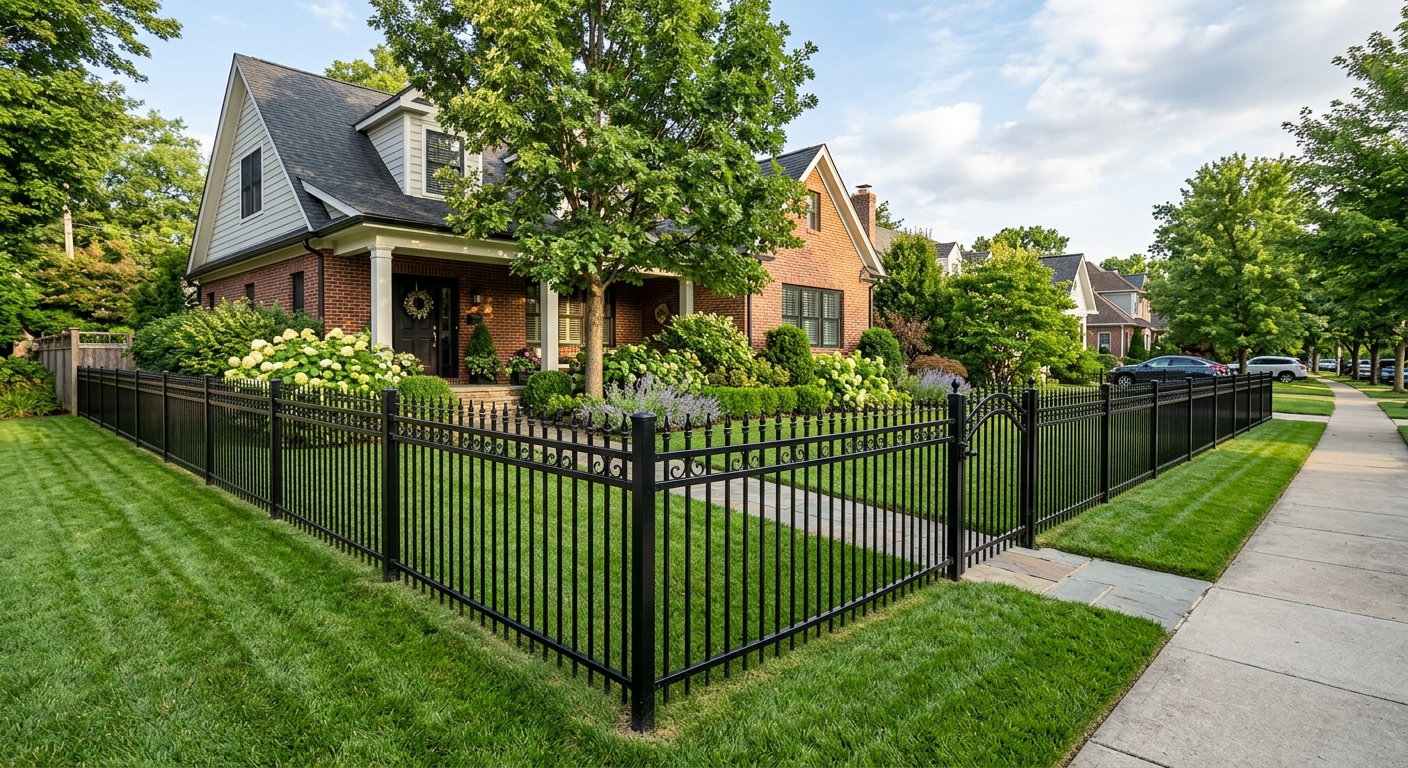
Fencing options and costs in Langley
Langley has a strong, year-round demand for fencing because so many homes here are single-detached properties—about 21.3% of local dwellings—where homeowners commonly upgrade yards for privacy, pets, and kids’ safety. With homeowner households at 62.9% (Statistics Canada, 2021 Census), many of those upgrades are planned around long service life rather than lowest first cost. In the Lower Mainland–Southwest, mild but not trivial frost and frequent wind mean fence posts still have to be set below frost heave risk. At the same time, Fraser Valley soils can be wetter than many homeowners expect, which typically means deeper holes, more concrete at key posts, and extra labour to keep lines straight and level.
Contractor availability is also influenced by the region’s workload: crews may be building fences in neighbouring Langley areas such as Brookswood-Fernridge and Walnut Grove, so scheduling can tighten during the spring installation window. For typical residential lots, chain-link is usually the quickest, lowest-cost route, while wood and cedar sit in the mid-range. Vinyl/PVC costs more up front because of material price and structural requirements, especially for privacy styles that need stronger posts and hardware. Aluminum ornamental is often chosen for curb appeal and durability, and composite/recycled is a premium “set it and forget it” alternative when homeowners want a cleaner look than wood.
Below is a practical cost-and-performance snapshot to help you compare options before we get into what drives quotes up or down.
| Material |
Lifespan |
Maintenance |
Privacy Rating |
Price per Linear Foot |
Price Range |
| Pressure-treated pine (standard wood) |
10–15 years |
Stain/seal every 2–3 years; fastener checks |
Medium–High (solid pickets common) |
$55–$95 |
$55–$95 |
| Cedar (natural rot resistance) |
15–25 years |
Seal/stain every 2–4 years; occasional replacement boards |
High (solid privacy styles) |
$70–$120 |
$70–$120 |
| Vinyl / PVC (no-maintenance) |
20–30 years |
Rinse as needed; no painting/staining |
High (privacy panels available) |
$75–$130 |
$75–$130 |
| Chain-link (galvanized steel) |
20–35 years |
Occasional tension/repairs; clean debris |
Low (privacy slats optional) |
$30–$55 |
$30–$55 |
| Aluminum ornamental |
25–40 years |
Occasional wash; tightening hardware |
Low–Medium (open styles) |
$90–$170 |
$90–$170 |
| Composite / recycled material |
25–35 years |
Minimal; wash down 1–2 times per year |
Medium–High (depending on slat style) |
$100–$160 |
$100–$160 |
Prices are estimates only and vary by project scope, site access and material selection.
What affects the price of fencing in Langley
In Langley and across the Lower Mainland–Southwest, it’s common to see fence quotes for “the same size fence” swing by 30–50% from one contractor to the next. The reason isn’t just material—it’s how the crew manages frost risk, wet soil, and wind exposure while staying square, level, and properly braced. In other parts of British Columbia, contractors may face different supply costs and labour availability, but the biggest driver remains labour intensity: deeper post holes, more concrete, and extra framing when the yard is sloped or when access is tight for skid steers and material staging.
For frost protection, post embedment matters. Local installations often treat design frost risk by setting posts about 4–6 inches below the design frost depth, and in practice that usually translates to setting deeper than homeowners expect in the Fraser Valley. Where posts must go deeper, you’re buying longer posts and more concrete, and your hole digging time increases. In colder Ontario and Alberta regions, embedment often lands around 1.5–2.0 m with more extensive concrete setting—Langley can be shallower than those extremes, but wet soil still makes deeper holes slower.
Wind also shapes cost. While the Prairies are the classic high-wind region, the Lower Mainland–Southwest still sees enough wind to demand sturdier posts and tighter spacing for solid wood and privacy panels. Here’s how local conditions change pricing in Langley: (1) wetter ground means more excavation and concrete for corner, end, and gate posts; (2) yards built on older lots can have buried debris or uneven subgrade that increases labour; (3) slope and drainage can require stepped rails or raked pickets, adding carpentry time. If you’re comparing options, chain-link budget installs can align with the $30–$55 band, while vinyl/PVC privacy styles typically land in the $75–$130 range because they need stronger structural components and more detailed layout work.
| Price Factor |
Why It Matters |
Cost Impact |
| Fence length in linear feet |
Materials and labour scale directly with total run length. |
Largest driver (often the biggest share of the quote) |
| Post depth required |
Frost heave risk and local soil conditions dictate hole depth and post length. |
Deeper holes increase concrete, excavation time and material |
| Post setting method |
Concrete sets are more stable in wet soils; gravel packs can reduce concrete but need good drainage. |
Concrete vs gravel can change cost meaningfully |
| Material choice |
Vinyl, cedar, and chain-link each have different material pricing and framing needs. |
Can shift a project into a different cost band entirely |
| Gate count and type |
Drive-through (double) and heavy gates require stronger posts and hardware. |
More gates usually equals more reinforcement and labour |
| Grade and terrain |
Slope requires stepped or raked panels; uneven ground needs extra layout time. |
Adds carpentry time and may increase waste |
| Old fence removal and disposal |
Demolition, hauling, and proper disposal add labour and equipment time. |
Often adds a noticeable line item to the total |
| Permit fees and survey / property line locate |
Some fence heights and corner situations require paperwork; locates prevent boundary disputes. |
Variable, but can add fixed administrative costs |
Permits & regulations in British Columbia
In British Columbia, fences above a height threshold typically require a building permit—commonly around 2.0 m (6.5 ft) for rear yards and 1.0–1.2 m (3–4 ft) for front or corner areas. Exact thresholds can vary by municipal rules and the fence’s location (front yard vs. side/rear), so the safe approach is to confirm before you buy materials. Regardless of height, all fences must respect property lines and any applicable municipal setback bylaws. This is especially important on older Langley lots where original layouts and vegetation lines may no longer be clear.
Before any post holes are dug, homeowners should arrange utility locates. In BC, call the appropriate utility locate service (e.g., BC 1 Call) so crews can mark buried services. Also consider obtaining a survey or property pin locate before installation—this reduces the risk of encroachment disputes when neighbours disagree on where the line fence should sit.
Shared fence ownership is generally handled under provincial line-fences principles, but the practical takeaway is to clarify responsibilities with your neighbour before work begins.
Licence and coverage checks (Langley, BC): Ask your contractor for (1) a valid BC licence/registration for the trade they claim to operate under (confirm via the appropriate online provincial registry), (2) a certificate of liability insurance showing adequate limits, and (3) workers’ compensation clearance coverage documentation (the “clearance letter” or proof consistent with BC workers’ compensation requirements). Don’t proceed until you’ve received documents—particularly if subcontractors are involved.
Choosing the right fence material for Langley
Choosing the right fence in Langley is about matching material to how you’ll live with it: privacy needs, how much maintenance you’re willing to do, and your target lifespan in a wet, wind-influenced Lower Mainland–Southwest climate. Pressure-treated pine is often the budget-friendly entry point, but it typically needs staining or sealing every 2–3 years to slow down greying and surface wear. Cedar looks warmer and naturally resists rot better than many other woods, yet it still benefits from periodic sealing to maintain appearance and reduce moisture checking.
Vinyl/PVC is popular for “no-maintenance” ownership because you usually won’t need to stain it. In deep cold snaps, some vinyl can become more brittle, and privacy systems require solid structural support—so post spacing and rail sizing matter. Chain-link is the longest-lasting low-cost option and tends to handle moisture well, but it offers low privacy unless you add slats or plant cover. Aluminum ornamental offers clean curb appeal and corrosion resistance, though it won’t give the same privacy as a solid wood or PVC privacy fence.
On frost: even in the Lower Mainland–Southwest, crews usually set posts deeper than a bare-minimum surface approach to reduce heaving risk—often by targeting embedment below frost heave depth and using concrete especially for corner posts and gate hardware. Sloped yards common in parts of Langley can also push the design toward stepped or raked panels, which affects labour.
As a dollar example, if you’re comparing wood vs. vinyl: a pressure-treated privacy-style install might align with the $55–$95 range, while vinyl/PVC privacy often lands in the $75–$130 range. That premium is usually justified when you want low upkeep and a consistent look for 20+ years, rather than planning regular staining.
| Material |
Cold Tolerance |
Lifespan |
Annual Maintenance |
Best For |
Price Band |
| Pressure-treated pine |
Good when properly set and maintained; sealing helps |
10–15 years |
$0–$150 (minor repairs/staining supplies) |
Lower upfront cost with acceptable upkeep |
$55–$95 |
| Cedar |
Good; handles moisture better than many softwoods |
15–25 years |
$50–$300 (sealing/staining and inspections) |
Natural appearance and stronger rot resistance |
$70–$120 |
| Vinyl / PVC |
Very good overall; can be more sensitive in extreme cold |
20–30 years |
$0–$80 (wash down/inspection) |
Low maintenance privacy and clean lines |
$75–$130 |
| Chain-link |
Excellent; galvanized steel tolerates cycles well |
20–35 years |
$0–$100 (cleaning and occasional tension checks) |
Security with maximum budget control |
$30–$55 |
| Aluminum ornamental |
Excellent; resists corrosion in coastal-wet conditions |
25–40 years |
$0–$120 (occasional rinse/hardware check) |
Curb appeal with durable, rust-free performance |
$90–$170 |
| Composite / recycled |
Very good; designed for moisture cycling |
25–35 years |
$0–$150 (wash and hardware checks) |
“Wood-like” look with minimal upkeep |
$100–$160 |
How to choose a fencing contractor in Langley
Choosing the right contractor in Langley starts with verification. First, confirm their British Columbia licence/registration for the work they perform by checking the appropriate online provincial registry or the business listings they provide. Next, ask for a certificate of liability insurance—make sure the COI lists the correct legal name of the company you’re hiring, and that limits are appropriate for residential work. Finally, request proof of workers’ compensation coverage (a clearance letter or documentation consistent with BC workers’ compensation requirements). If a contractor can’t show current paperwork, treat it as a stop sign.
When you request quotes, get 2–3 itemised written estimates that break down labour and materials (posts, rails, pickets/panels, gates, hardware, concrete/aggregate, and removal/disposal). A detailed quote makes it easier to compare apples-to-apples. Read the scope carefully for exclusions such as permit applications (where required), locates, survey or property line markers, and debris hauling. Also confirm warranty details: workmanship warranty length, product/manufacturer warranty coverage, and whether warranties transfer to the next homeowner.
Payment should follow a sensible schedule. Avoid large deposits: never pay more than 10–15% upfront. Use a small payment early for mobilisation if needed, then hold back until key milestones are complete (post inspection/straightness check, then final gate alignment and cleanup). Timing matters too—get a start date window and a completion estimate in writing, including weather contingency for wet-soil excavation.
- Verify business name, address, and licence/registration before signing.
- Request certificate of liability insurance and review the effective dates.
- Ask for workers’ compensation clearance documentation for the company and any subcontractors.
- Confirm whether utility locates are arranged or if you must call for them.
- Ensure the quote includes post embedment approach and concrete use at corners/gates.
- Require an itemised list for materials and labour (not just “lump sum”).
- Check if old fence removal and disposal are included in price.
- Ask about permit responsibility if your fence height triggers a building permit.
- Confirm whether survey/property line locate costs are included or separate.
- Make sure gate hardware, hinges, latches, and latch height are listed.
- Get warranty length in writing for workmanship and products.
- Confirm payment milestones and keep a holdback until final walkthrough.
Red flags I often see in Langley: contractors who refuse to provide COIs or workers’ compensation proof, quotes that omit post depth/setting method, “permit included” claims without stating who pulls it, vague warranties (or warranty only “on materials” with no workmanship coverage), and instalment schedules that request large upfront payments.
Frequently asked questions — fencing in Langley
What fence style offers the best wind resistance in Langley?
In British Columbia’s Lower Mainland–Southwest, wind resistance comes down to structure and panel type. For many Langley yards, a properly braced wood privacy fence with solid-but-framed panels can perform well when the installer uses deeper-set corner and gate posts, correct rail sizes, and tight alignment. If you’re in a more exposed area (open views or near property edges with strong airflow), semi-privacy styles with reduced wind load can also help because wind can pass through partially, lowering pressure on the panels. Chain-link with tensioned runs is engineered for wind movement, but it won’t provide privacy. Regardless of style, good wind performance depends on post spacing, post embedment below frost heave risk, and correct gate reinforcement—not just the fence material.
How much does a fence cost in Langley?
For most ordinary residential fence installs in Langley, pricing generally fits into the common BC bands. Chain-link is usually the lowest cost, commonly around $30–$55 per linear foot installed, while wood often falls around $55–$95 depending on height, complexity, and finish. Vinyl/PVC privacy fencing commonly lands in the $75–$130 range because it needs stronger structural framing and more hardware, especially at corners and gates. Your final total can be higher if you have slope that requires raked/stepped sections, wet soil that demands deeper holes or more concrete, or if old fence removal and disposal are included. Always compare itemised quotes so you know exactly what’s driving your final number.
How deep should fence posts be for Langley’s frost?
Langley frost risk is manageable but not “zero,” so posts still need to be set to reduce heaving. In Lower Mainland conditions, a common practical approach is to set posts about 4–6 inches below the design frost heave depth used for your local risk, which often results in deeper holes than homeowners imagine. Wet Fraser Valley soils can also affect stability, so many crews will use concrete at corners, end posts, and gate posts to lock the structure in place. The exact depth should be based on the local frost/heave guidance and your soil conditions—good contractors will explain their embedment approach and show how they’ll keep lines plumb after the concrete sets.
Wood vs vinyl vs aluminum fence — which is best?
“Best” depends on your priorities. Wood (pressure-treated pine or cedar) is often the best balance for appearance and mid-range pricing, typically around $55–$95 for installed wood systems, but it usually needs staining/sealing every couple of years to prevent greying and weathering in BC’s damp conditions. Vinyl/PVC is best if you want low maintenance and a consistent look—often $75–$130 installed—but it relies on solid structure for privacy panels. Aluminum is excellent for durability and curb appeal in British Columbia weather, usually priced higher (commonly $90–$170 installed) and is often used for decorative/open security rather than maximum privacy. If you tell me your priority—privacy, upkeep, or budget—I can help you shortlist the best fit.
Do I need a permit to build a fence in British Columbia?
Often, yes—if your fence is above the typical height thresholds. In British Columbia, fences above about 2.0 m (rear yard) or 1.0–1.2 m (front or corner areas) commonly require a building permit, though exact requirements can vary based on location and municipal rules. Regardless of permit need, fences must respect property lines and any municipal setback bylaws. Before digging, you should arrange utility locates so underground services are marked. Also consider a survey/locate to confirm pin positions if there’s any uncertainty. A reputable Langley contractor should tell you whether a permit is likely triggered and clarify who pulls it if it’s required—before work starts.
How long does a wood fence last in Langley?
A well-built wood fence in Langley typically lasts about 10–15 years for pressure-treated pine and 15–25 years for cedar, assuming proper installation and basic maintenance. The Lower Mainland–Southwest climate is wet enough that untreated or neglected wood can grey and degrade faster, so staining/sealing schedules matter. Post setting also affects lifespan: deeper embedment below frost heave risk and solid corner/gate support reduce movement and board fatigue. If your fence is in a shaded, consistently damp area, maintenance should be more frequent. Many homeowners find that consistent upkeep (2–3 years for pine, typically every 2–4 years for cedar) is what keeps their fence looking good and functioning well through repeated freeze-thaw cycles.