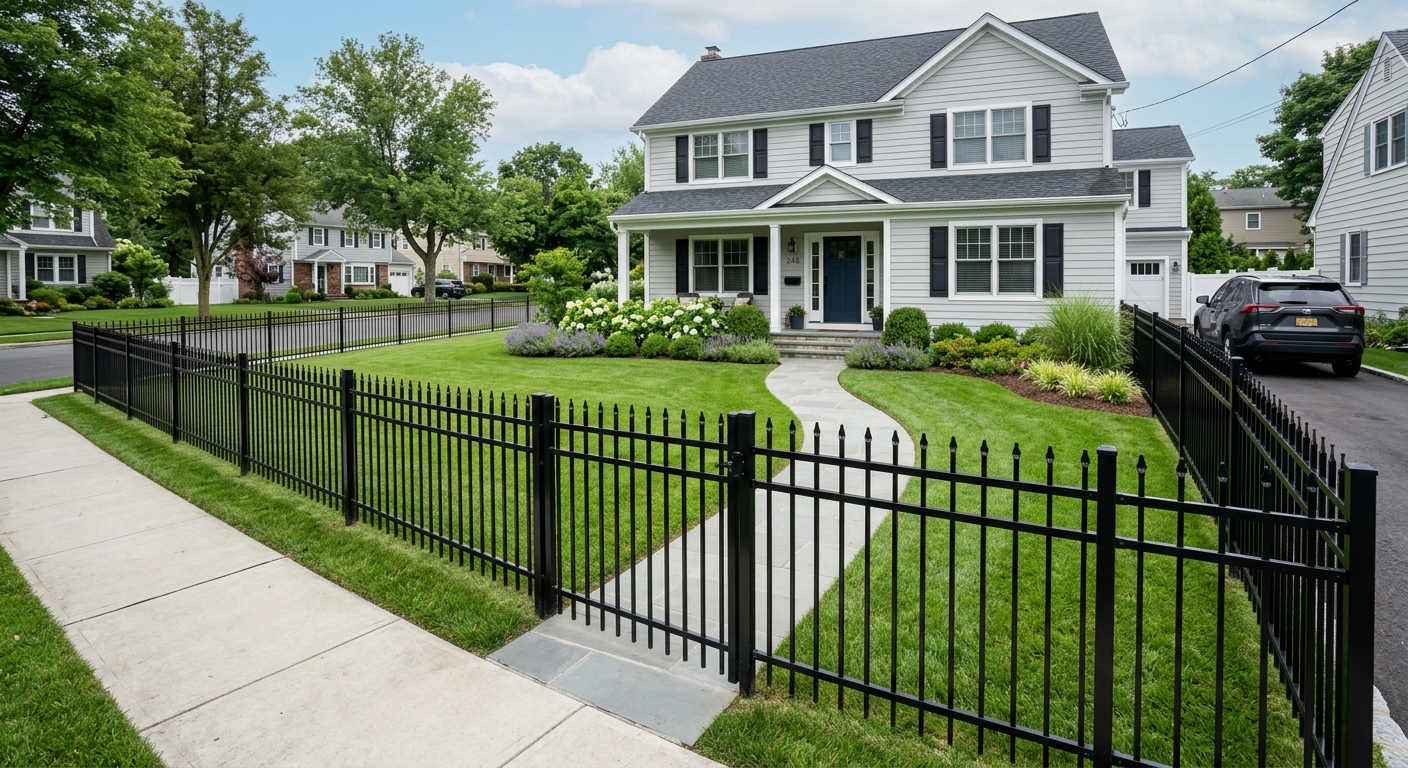
Fencing options and costs in Osoyoos
In Osoyoos, fencing is a practical upgrade for privacy, pets, and boundary clarity—especially with the area’s high share of owner-occupied homes (80.9% of households own, Statistics Canada, 2021 Census). With 58.7% of local dwellings being single-detached houses, many projects are long perimeter runs around detached lots, which is why installers often stay booked through spring and early fall. You’ll also notice more older housing stock (33.8% built before 1981, Statistics Canada, 2021 Census), where fences may have been installed with shallower post holes or smaller sections that don’t tolerate Thompson–Okanagan freeze–thaw movement as well as newer standards.
Costs here are shaped by interior frost depth and wind exposure across valley benches. In the Thompson–Okanagan region, it’s common to set posts below the regional frost line (often 75–90 cm or more below grade in interior valleys) to reduce heaving. Where soils are clay-heavy or poorly drained, concrete-set posts and deeper footings add auger time, concrete, and labour—pushing quotes toward the higher end of the city’s price bands. Wind can also change the build: exposed lots may need closer spacing, stronger rails, and sometimes open-style panels to reduce wind load. Trade demand is especially strong around the Osoyoos Desert Centre / mid-town corridor and along busy frontage areas where access for delivery vehicles is critical and crews are scheduling around traffic and driveway locations.
Below is a practical comparison to help you budget, then we’ll break down the specific factors that swing pricing in Section 2.
| Material |
Lifespan |
Maintenance |
Privacy Rating |
Price per Linear Foot |
| Pressure-treated pine (standard wood) |
10–15 years |
Stain/paint every 2–3 years; inspect posts after freeze–thaw |
High (solid/close board) |
$55–$85 |
| Cedar (natural rot resistance) |
15–25 years |
Seal/stain every 2–4 years; occasional fastener checks |
High (solid/close board) |
$70–$105 |
| Vinyl / PVC (no-maintenance) |
25–35 years |
Minimal (wash down; replace occasional impact panels) |
High (solid picket/board style) |
$75–$115 |
| Chain-link (galvanized steel) |
20–30 years |
Occasional tension/repair; rinse dust/sand |
Low–medium (privacy slats optional) |
$35–$60 |
| Aluminum ornamental |
25–40 years |
Occasional cleaning; inspect rails after storms |
Low (visual screening) |
$90–$150 |
| Composite / recycled material |
20–35 years |
Low (wash; avoid harsh cleaners; check hardware) |
Medium–high (board styles) |
$95–$145 |
Prices are estimates only and vary by project scope, site access and material selection.
What affects the price of fencing in Osoyoos
In Osoyoos, two homeowners can receive quotes for the “same” fence and still see a 30–50% difference—mainly due to how local contractors must design for frost movement, wind load, and site conditions. That range is common across Thompson–Okanagan and British Columbia because the interior valley climate can demand deeper posts (and more concrete) than mild coastal microclimates, while remote access and labour availability influence crew efficiency. In interior building practice, frost depth governs how far below grade posts must be set; a common rule is setting posts 4–6 inches below the design frost depth so freeze–thaw heaving doesn’t lift the fence line. While coastal BC can often get away with shallower installation, interior valleys often require 75–90 cm or more, and that turns into longer posts and more auger time.
Wind is another big driver in the Thompson–Okanagan: exposed lots typically need tighter post spacing, heavier rails, and stronger bracing to prevent “oil-canning” and gradual sagging. In practice, this is why a solid wood fence quote might land closer to the higher end of the wood band (for example, near the $55–$85 range), while a chain-link job with higher wind reinforcement can be closer to the $35–$60 band rather than the lower end. Conversely, sheltered backyards can reduce material requirements and labour time.
Concrete-set posts also change the arithmetic. Example one: a clay-heavy lot with poor drainage often requires concrete-setting for stability, pushing a wood or cedar install toward the upper band because of concrete, larger-diameter holes, and longer cure/crew timing. Example two: a well-drained, sandy yard on level ground can sometimes use a properly sized gravel pack or hybrid post method for chain-link or lighter panels, reducing cost. If your fence line runs long—single-detached lots are common here—length alone can magnify even small unit-cost differences. For budgeting, many homeowners compare vinyl/PVC (often $75–$115 per linear foot) against pressure-treated pine ($55–$85 per linear foot) and decide whether the maintenance reduction justifies the higher upfront spend.
| Price Factor |
Why It Matters |
Cost Impact |
| Fence length in linear feet |
The most direct driver of labour, posts, rails and materials. |
Major—every extra 10 ft adds materials and crew time. |
| Post depth required |
Frost line depth determines how deep holes must be to stop heaving. |
Major—deeper holes typically mean higher labour and more concrete. |
| Post setting method |
Concrete vs gravel pack vs driven posts affects stability and installation time. |
Moderate to major—concrete adds auger time and materials. |
| Material choice |
Vinyl, cedar, and chain-link have different rail/post sizing and hardware needs. |
Major—vinyl/PVC and aluminum usually cost more than chain-link. |
| Gate count and type |
Drive-through gates and double gates require stronger frames and bracing. |
Moderate—gates add labour, hardware and potential reinforcement. |
| Grade and terrain |
Slopes require stepped frames or raked panels, increasing layout complexity. |
Moderate—more cuts, more labour and more waste. |
| Old fence removal and disposal |
Demolition adds time, hauling and disposal fees. |
Moderate—often increases total quote even when new materials are similar. |
| Permit fees and survey / property line locate |
Locates reduce boundary disputes; permits may apply based on height. |
Low to moderate—varies by scope, but avoids expensive rework. |
Permits & regulations in British Columbia
In British Columbia, fence rules are typically enforced through municipal bylaws, and permits may apply depending on fence height and location. As a general guideline used in many BC communities, fences above a common height threshold—often around 2.0 m (6.5 ft) at the rear and roughly 1.0–1.2 m (3–4 ft) at the front or corner—can require a building permit. The key point for Osoyoos homeowners is that height limits and setback requirements vary by location and lot context, so you should confirm with the City before ordering materials or scheduling excavation.
What DOES require a permit commonly includes: installing a fence that exceeds the applicable height threshold, building a fence with an engineered or special structure (for example, where required by local bylaw), and any work that alters the boundary compliance status after measurements. What typically does NOT require a permit is: standard-height fences that remain within the local maximum height and setbacks, minor repairs to existing fence sections, and like-for-like replacement that does not increase height.
Before digging, call for utility locates. In BC, homeowners and contractors use BC 1 Call so buried utilities are marked prior to post-hole digging. Also obtain a survey or confirm your property pins/limits to avoid encroachment disputes—this is especially important on older subdivisions where fences may have been set “by eye.” Shared fence ownership is a boundary question governed by provincial line-fences legislation, so keep documentation of what you built and where.
To verify contractor credentials in BC, ask for: (1) a licence registration/clearance information for the contractor through the appropriate online registry where applicable, (2) a Certificate of Insurance showing liability coverage for the work (ask for an active policy, not just a one-page certificate without expiry dates), and (3) proof of clearance coverage for workplace safety—where required for their employees and subcontractors. Step-by-step: request the documents before work starts, confirm they’re current (expiry dates), and ensure the insurance has you or the work site identified in the certificate details if your contractor is the type that provides additional insured wording.
Choosing the right fence material for Osoyoos
The best fence for Osoyoos comes down to what you value most—privacy, low maintenance, or the lowest upfront cost—then matching that to interior-valley climate realities. Pressure-treated pine is the budget-friendly option, but it typically needs staining or sealing every 2–3 years to slow grey weathering and protect the wood against moisture cycling. Cedar offers a naturally better look and rot resistance, yet it still benefits from periodic sealing to maintain appearance and reduce surface checking. Vinyl/PVC is popular because it’s essentially no-maintenance: you wash it and move on, but in extreme cold it can become more brittle and can crack under impact, so hardware fit and post stability matter.
Chain-link is usually the lowest-cost and long-lasting choice, but it doesn’t provide privacy unless you add privacy slats, which can change wind behaviour. Aluminum ornamental fencing gives a clean, rust-resistant look and suits decorative boundaries; it’s mid- to higher-priced and provides visual screening more than privacy.
For Thompson–Okanagan frost movement, your post-depth and setting method often matter as much as the material. Even if you choose chain-link or aluminum, posts must be installed below frost influence—commonly requiring deeper set posts and, in clay or poorly drained soil, concrete-set posts for stability. Wind in Osoyoos can also affect panel performance: exposed sections may need stronger rails, tighter spacing, or bracing to keep the fence straight during gusty seasons.
Concrete example: if you compare pressure-treated pine at about $55–$85 per linear foot to vinyl/PVC at about $75–$115, the added $20–$30 per foot (depending on height and site access) can be justified when you want to avoid repainting/staining every few years and you have a long perimeter run. For short runs or budget-constrained projects, pine or cedar can be the better value—provided your contractor sets posts correctly for the frost depth and uses proper hardware for freeze–thaw.
| Material |
Cold Tolerance |
Lifespan |
Annual Maintenance |
Best For |
Price Band |
| Pressure-treated pine |
Good when posts are set below frost and hardware is corrosion-rated |
10–15 years |
Low annual prep; stain/seal every 2–3 years |
Budget-first privacy fencing |
$55–$85 |
| Cedar |
Good with proper sealing and well-set posts |
15–25 years |
Light inspection; seal/stain every 2–4 years |
Natural look with better rot resistance |
$70–$105 |
| Vinyl / PVC |
Good, but avoid impact damage in cold snaps; stable posts are key |
25–35 years |
Minimal—wash as needed; spot-check hardware |
Low-maintenance, long-term privacy |
$75–$115 |
| Chain-link |
Excellent; galvanized steel handles freeze–thaw well |
20–30 years |
Low—tension check after heavy storms |
Security, pet containment, budget fencing |
$35–$60 |
| Aluminum ornamental |
Very good; resists corrosion from moisture cycling |
25–40 years |
Low—occasional cleaning and hardware check |
Decorative boundaries and curb appeal |
$90–$150 |
| Composite / recycled |
Good; needs proper fastening to avoid stress cracking |
20–35 years |
Low—wash down; inspect fasteners |
Durable privacy with reduced upkeep |
$95–$145 |
How to choose a fencing contractor in Osoyoos
Choosing a fencing contractor in Osoyoos is mostly about verifying credentials and controlling scope. In British Columbia, you should confirm licensing/registration where applicable, plus liability insurance and workplace coverage for workers. Here’s how: first, ask for their documentation before the quote is finalized. For liability, request a current Certificate of Insurance showing active coverage amounts; verify expiry dates and that it covers the specific fencing work being performed. For workplace coverage (commonly reflected as WCB clearance where required for insured workers), ask for proof of clearance—then double-check it’s current at the time of signing and again close to the start date.
Next, get 2–3 itemised written quotes. You want a breakdown separating labour, materials, post depth/setting method (concrete-set vs gravel pack), gates/hardware, and any demolition/disposal. Avoid lump sums without explanation because deeper frost-compliant holes, corner bracing, and gate reinforcement can swing the final price. Scope details matter: is the permit pull included (if required), are utility locates included, and is disposal of your removed fence included in the price? Also ask how they’ll protect landscaping and driveways during augering and delivery.
Warranty should be clear and separated into workmanship vs product warranty. Confirm workmanship warranty length, whether it covers post movement/heaving in the first season, and whether the manufacturer warranty is transferable if you sell the home. Payment schedule matters too: never pay more than 10–15% upfront, and use a holdback until the job is substantially complete. Finally, insist on a timeline in writing—start date and completion estimate—so crews can plan around frost-safe installation windows.
- Ask for a written quote that lists fence height, material type, and rail/post configuration.
- Confirm post depth and setting method in writing (frost-compliant depth; concrete-set where needed).
- Require an itemised labour/material breakdown (not a one-line total).
- Check insurance expiry dates on the Certificate of Insurance before signing.
- Request workplace coverage/clearance proof for their crews and any subcontractors.
- Clarify whether BC 1 Call utility locates are included or handled by the contractor.
- Confirm permit responsibility if fence height thresholds are exceeded.
- Ask who disposes of old fence materials and whether hauling fees are included.
- Ensure the quote specifies gate type (single vs double), hinge style, and latch hardware.
- Verify warranty terms separately: workmanship vs product/manufacturer warranty.
- Use progress payments: small deposit, then payments tied to milestones; holdback at completion.
- Confirm site protection plan for lawns, irrigation lines, and driveway surfaces.
Red flags I see in Osoyoos: vague quotes that don’t state post depth or setting method; refusal to provide insurance/clearance documentation; “cash-only” payment pressure with no contract; quotes that skip utility locates and property line confirmation; and a warranty that only covers materials, not installation or post stability.
Frequently asked questions — fencing in Osoyoos
What is the most weather-resistant fence for Osoyoos's climate?
For most Osoyoos homeowners dealing with freeze–thaw movement and wind, a galvanized chain-link fence (and similar metal systems) is often the most weather-resistant because the materials handle moisture cycling well. That said, weather resistance depends heavily on how the posts are installed: in Thompson–Okanagan conditions, posts must be set below frost influence, and in clay or poorly drained soil, concrete-set posts are commonly the safest approach to reduce heaving. If you want privacy too, you can pair chain-link with privacy slats, though wind load should be considered. In cost terms, chain-link is usually the budget-friendly range (about $35–$60 per linear foot), while privacy-oriented vinyl/PVC typically runs higher (about $75–$115), but with far less upkeep.
How do I prevent wood fence rot in Osoyoos?
Wood rot in British Columbia is usually about trapped moisture and early post failure—so the prevention plan should start underground. In Osoyoos, ensure posts are set below the regional frost influence so the fence doesn’t lift and re-set each winter. That stabilizes gaps at the bottom and reduces water wicking into loose joints. Use pressure-treated lumber rated for ground contact (or cedar with proper grade), and choose a fence design that sheds water rather than holding it in end-grain. Fasteners should be corrosion-resistant, and staining/sealing needs to be scheduled rather than “once and done”—many homeowners recoat every 2–3 years to slow grey weathering and moisture cycling. If rot has already started near the base, replacing posts and the bottom rails often costs less than full panel replacement.
What is the cost per linear foot for fencing in Osoyoos?
In Osoyoos, common installed pricing bands generally line up with the Thompson–Okanagan market. For example, pressure-treated pine fencing typically lands around $55–$85 per linear foot depending on height, post spacing, and whether concrete-set posts are required. Cedar is commonly higher (often roughly $70–$105 per linear foot), while vinyl/PVC usually sits in the $75–$115 range for privacy styles. If budget is the priority, chain-link is often about $35–$60 per linear foot. Your final number can swing with frost-depth post depth, wind reinforcement/bracing, gate count, and whether old fence removal/disposal is included.
Should I repair or replace my old fence in Osoyoos?
If your old fence is only failing in a few sections, repair is often the smarter move—especially when posts are still stable and only rails or panels need replacement. But in Osoyoos and the wider Thompson–Okanagan region, rot and heaving tend to show up at post bases first, so repairs may be short-lived if the underlying post stability is already compromised. A good contractor will assess post movement, check for soft/rotted bottoms, and confirm whether the existing posts were set deep enough for frost movement. If multiple posts are failing or the fence line is noticeably out of plumb, replacement is usually more cost-effective long term. If you’re budgeting, compare the repair scope against new install bands—wood privacy often sits around $55–$85 per linear foot, while vinyl/PVC starts higher at about $75–$115.
How do I handle a fence dispute with a neighbour in British Columbia?
Fence disputes in British Columbia are usually boundary-and-maintenance questions, so start with documentation. First, identify the actual property line using your survey or confirmed property pins rather than measurements from the existing fence. If you don’t have a current survey, get a locate before any major work. Next, request a clear written description from your neighbour on what they believe the fence should be (height, placement, and who maintains it). Provincial line-fences rules commonly guide shared boundary ownership/maintenance, but municipal bylaws still affect fence height/setbacks. To reduce risk, communicate in writing, take photos from multiple angles, and keep copies of contractor quotes showing where the fence will be built. If needed, consult the local bylaw office for height/setback guidance and consider mediation rather than starting construction immediately.
What fence style offers the best wind resistance in Osoyoos?
Wind resistance is less about “pretty style” and more about how the fence manages pressure. In Osoyoos, exposed lots can benefit from more rigid framing (stronger rails and bracing) and designs that avoid large sail-like solid areas. That often means better performance with a well-built close-picket/solid privacy fence that is engineered for wind with correct post spacing and diagonal bracing, or a semi-open style that reduces wind load. Chain-link can also perform well because air passes through, but it must be properly tensioned with strong end/corner posts to prevent sagging. For homeowners choosing materials, remember that cost changes with reinforcement needs: a simple chain-link may start around $35–$60 per linear foot, but wind-upgraded builds can move toward the higher end. The right answer for your lot depends on orientation and exposure, so your contractor should ask where prevailing winds hit your yard and design accordingly.