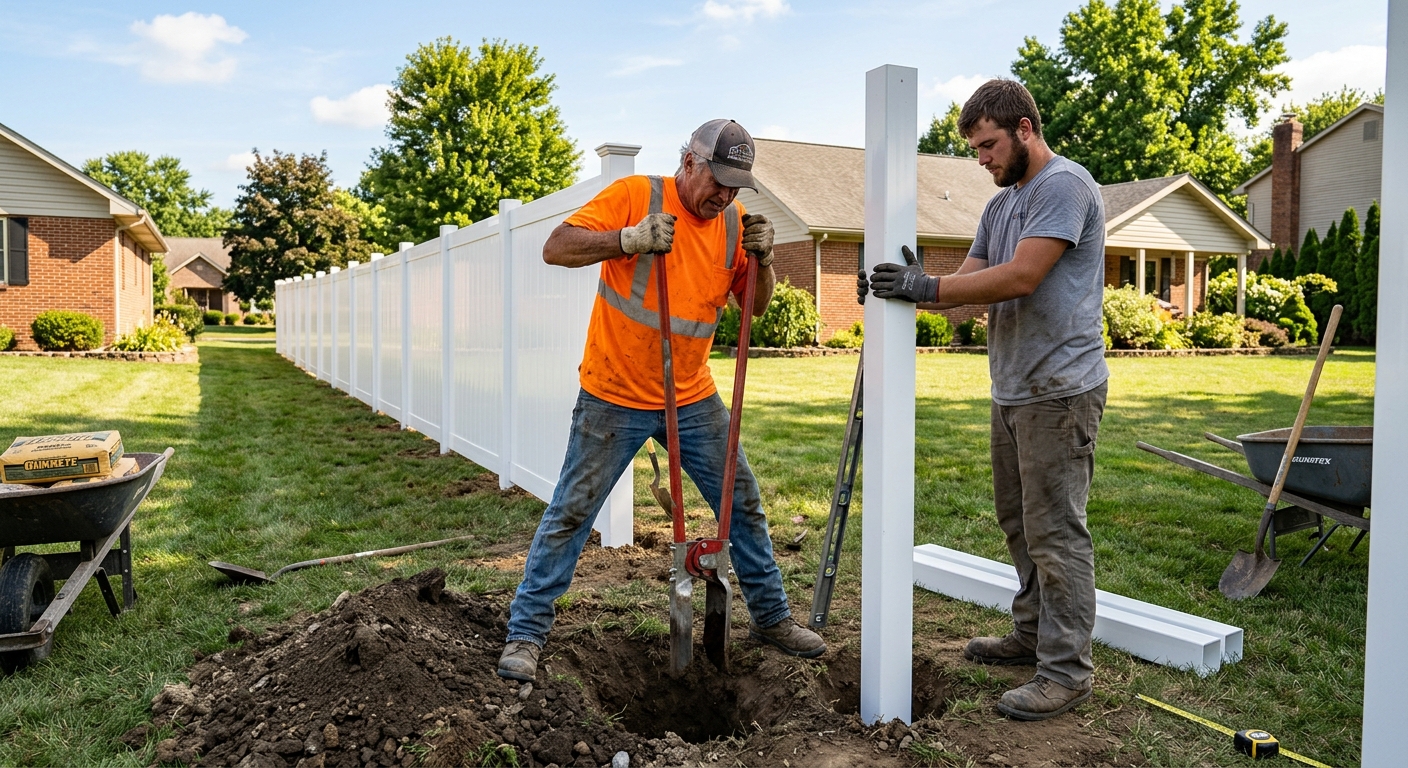
Fencing options and costs in Cumberland
Fencing in Cumberland is mostly about matching the right material to your yard, your expectations, and the reality that the community’s housing stock is older and coastal. Cumberland has 4,447 residents and about 1,325 homeowner households (72.0% of households own), so a lot of properties are stable, long-term “fence customers”—especially where back yards border creeks, greenbelts, or busier access roads. Just as importantly, 39.1% of homes were built before 1981, which often means mature landscaping, established property lines, and occasional buried services that can slow down digging. That’s a key reason you’ll see some local quote variation even for similar fence lengths.
On Vancouver Island and the Coast, contractors design around moderate coastal frost (roughly 45–60 cm) and frequent wind exposure from the Strait of Georgia and Juan de Fuca Strait. Posts still need to be set below frost to prevent heaving and long-term leaning, which typically means burying around 75–90 cm for residential runs, and using concrete footings when soils are wet, clay-rich, or disturbed. Salinity also favours galvanized or powder-coated hardware and quality vinyl, helping reduce corrosion that can shorten the life of cheaper installs.
In Cumberland, demand is especially noticeable around the Cumberland Village area, where many lots have fencing that needs to balance privacy with wind-loading. Next, compare typical material options and pricing in the table below.
| Material |
Lifespan |
Maintenance |
Privacy Rating |
Price per Linear Foot |
| Pressure-treated pine (standard wood) |
10–15 years |
Stain or seal every 2–3 years to limit grey weathering |
High (solid panels) |
$55–$85 |
| Cedar (natural rot resistance) |
15–25 years |
Light staining or sealing every 2–4 years |
High (solid panels) |
$70–$105 |
| Vinyl / PVC (no-maintenance) |
25–30 years |
Rinse annually; no painting/staining |
High (solid or board-and-batten) |
$70–$110 |
| Chain-link (galvanized steel) |
25–35 years |
Minimal; occasional tightening/re-grease hinges |
Low (open mesh) |
$35–$60 |
| Aluminum ornamental |
30+ years |
Occasional wash; check for loose fasteners |
Medium (lattice/spacings vary) |
$80–$140 |
| Composite / recycled material |
20–30 years |
Rinse annually; no staining |
High (board or slat styles) |
$90–$140 |
Prices are estimates only and vary by project scope, site access and material selection.
What affects the price of fencing in Cumberland
In Cumberland, you can see fencing quotes that differ by 30–50% for what looks like a similar project because the big cost drivers aren’t always visible in photos. A fence quote is typically a calculation of how long the run is, how difficult it is to excavate and align, how deep the posts must be for frost stability, and how much bracing is required to resist wind and wet-season soil conditions. Even when the material brand is the same, a contractor may price differently based on post spacing, concrete requirements, gate hardware, and whether disposal and locates are included.
Frost line depth is a major driver. On Vancouver Island and the Coast, the design frost is generally shallow compared to inland provinces, but posts still need to be set below it—often 4–6 inches beneath design frost—to prevent heaving. In practice, that means typical residential post embedment ends up around 75–90 cm, and taller heavier fences may require deeper or more concrete set posts. That adds labour, longer posts, and sometimes concrete disposal or haul-off in wet or clay-rich areas. Contrast this with colder Ontario and Alberta regions where posts are often set 1.5–2.0 m into the ground, which is why pricing there can look higher even before materials are considered.
Local examples in Cumberland include: (1) clay or saturated soils after winter rains, where concrete footings or larger holes reduce future leaning but increase material and labour; (2) yards with buried landscaping features or tree roots, where extra digging time and alignment work is required; and (3) sloped lots near the Village, where stepped or raked panels raise framing and measuring time. On price bands, a basic pressure-treated wood privacy fence often lands in the $55–$85 range per linear foot, while vinyl tends to follow the $70–$110 band once you include heavier posts and proper venting to handle coastal wind.
| Price Factor |
Why It Matters |
Cost Impact |
| Fence length in linear feet |
Most labour and hardware scale with linear footage |
High |
| Post depth required |
Frost stability determines embedment depth and post length |
Medium to high |
| Post setting method |
Concrete vs. gravel pack vs. driven posts changes labour and materials |
High (concrete) |
| Material choice |
Vinyl/cedar/aluminum have different components, framing, and hardware |
High |
| Gate count and type |
Gates require reinforced framing, latches, hinges, and alignment |
Medium to high |
| Grade and terrain |
Slopes require stepped/raked sections, extra layout and labour |
Medium |
| Old fence removal and disposal |
Haul-off, disposal fees, and additional demo time add up quickly |
Medium |
| Permit fees and survey / property line locate |
Not all projects need permits, but boundary verification can prevent rework |
Low to medium |
Permits & regulations in British Columbia
In British Columbia, fences above a height threshold often require a building permit, and the exact requirements can depend on location (rear vs. front/corner) and how the fence relates to your property. As a practical rule of thumb, many homeowners deal with permit needs when the fence is about 2.0 m (6.5 ft) at the rear, or roughly 1.0–1.2 m (3–4 ft) along the front or corner. Regardless of height, fences must respect property lines and any municipal setback bylaws that apply in your area, including the Cumberland area.
Before you dig any post holes, call for utility locates—this is essential in BC (BC 1 Call) before excavation. Also, don’t guess on boundaries: obtain a survey or locate your property pins before installing so you avoid encroachment disputes, especially on older lots where fences may not be square to the original pins.
Step-by-step for homeowners hiring and verifying a BC contractor: (1) ask for their business licence details if applicable locally; (2) request a current certificate of liability insurance showing adequate coverage; (3) confirm their workplace coverage for workers (commonly WCB/WorkSafeBC) and ask for documentation; and (4) verify licence and standing using the relevant online registry linked to the contractor’s credentials. If they cannot provide proof on request, treat it as a red flag and move to another installer. For shared fences, shared ownership and line-fence expectations are governed by provincial line-fences legislation, so it’s worth discussing responsibility boundaries early.
Choosing the right fence material for Cumberland
Choosing a fence material in Cumberland is easier when you start with your priorities: privacy, low maintenance, budget, and expected lifespan. Coastal Vancouver Island and the Coast bring frequent rain and wind, so the details matter as much as the material. Pressure-treated pine is usually the lowest upfront wood option, but it needs staining every 2–3 years to slow grey weathering and keep the surface stable. Cedar offers a naturally rot-resistant look and often lasts longer in wet conditions, but it still benefits from maintenance to keep it attractive.
Vinyl/PVC is a strong fit if you want “set it and forget it.” In Cumberland’s mild coastal winters, vinyl generally performs well, but it’s not immune to extreme cold snaps—so installers should use proper post spacing and correct hardware alignment to reduce stress cracking. Chain-link is the best budget option for security without maintenance, and it tolerates wind well because it’s open, but it won’t deliver privacy unless you add slats or screening. Aluminum ornamental is rust-resistant and mid-range in cost, typically offering curb appeal more than full privacy. Composite or recycled materials can deliver privacy and low maintenance, but pricing depends on the board system and hardware.
On post depth: coastal frost is relatively shallow, but posts still need to be buried below frost to prevent heaving and leaning over time. In many Cumberland projects, that means around 75–90 cm embedment, with concrete-set posts when soils are saturated, clay-rich, or when gates add extra leverage. Wind off the Strait also influences design choices—solid privacy fences may require closer spacing or sturdier framing, while chain-link or aluminum can often use standard spacing.
For a realistic dollar comparison: if you’re planning a privacy fence run in the typical wood band ($55–$85 per linear foot) but expect to repaint/stain frequently, cedar or vinyl can be justified. For example, moving from pressure-treated wood to vinyl often shifts you into the $70–$110 range per linear foot; if you value low maintenance and longer service life, that premium can pay back over several years.
| Material |
Cold Tolerance |
Lifespan |
Annual Maintenance |
Best For |
Price Band |
| Pressure-treated pine |
Good with proper embedment and sealing |
10–15 years |
Seal/stain every 2–3 years |
Budget privacy where you’re okay with upkeep |
$55–$85 |
| Cedar |
Good in wet coastal climates |
15–25 years |
Light stain/seal every 2–4 years |
Natural look with better rot resistance |
$70–$105 |
| Vinyl / PVC |
Very good; ensure correct installation for cold |
25–30 years |
Rinse annually |
Low maintenance privacy and corrosion resistance |
$70–$110 |
| Chain-link |
Excellent for coastal freeze/thaw stability |
25–35 years |
Minimal; occasional hardware checks |
Security and airflow in high wind areas |
$35–$60 |
| Aluminum ornamental |
Excellent; non-rusting |
30+ years |
Wash and check fasteners |
Low rust risk and curb appeal |
$80–$140 |
| Composite / recycled |
Good; performs steadily in wet coastal conditions |
20–30 years |
Rinse annually |
Privacy with low maintenance |
$90–$140 |
How to choose a fencing contractor in Cumberland
When you hire a fencing contractor in Cumberland, verification matters because fencing is heavy, excavation-based work, and mistakes can become expensive fast (leaning posts, boundary disputes, or safety issues). In British Columbia, ask for proof of liability insurance and verify that they have workplace coverage for their workers (WorkSafeBC). Also confirm their contractor credentials through the appropriate online registry tied to their trade/business details—don’t just accept a verbal claim.
Then request 2–3 itemised written quotes. You want a labour and materials breakdown, including post depth/embedment method, concrete vs. gravel pack, gate hardware, railings/bracing details, and what’s included for disposal. Look for clarity on exclusions: is removal of the old fence included? Is utility locating included or billed separately? If permits are needed, who pulls the permit and who pays the fee? A proper quote should also specify workmanship warranty length and the manufacturer’s product warranty, and whether any warranty is transferable to the next owner.
Finally, protect your cash flow. Never pay more than 10–15% upfront; hold back a portion until the job is complete and you’ve confirmed line, level, and gate function. Get the start date and estimated completion timeline in writing so you can plan around weather and curing time for concrete footings—especially important on wet-season days.
- Ask for a current certificate of liability insurance and verify it matches the company name on the quote.
- Confirm workplace coverage (WorkSafeBC) and request documentation before work begins.
- Verify their business/trade status in the applicable online registry.
- Require itemised quotes (labour + materials) rather than a single lump-sum figure.
- Confirm post depth and setting method (concrete vs. gravel pack) in writing.
- Check whether utility locates are included; ensure BC 1 Call is addressed.
- Confirm disposal: hauling away old fencing and dumping fees included or not.
- Ask how they handle slopes (stepped vs. raked panels) and provide a plan for your grade.
- Confirm gate type, frame reinforcement, and whether hardware is included and brand-rated.
- Ask for the workmanship warranty length and what actions void it.
- Review the payment schedule and insist on a 10–15% maximum upfront deposit.
- Get a start date and completion estimate in the written contract.
Red flags I commonly see in fencing jobs around Cumberland include: contractors who won’t provide proof of insurance or coverage, quotes that don’t specify post depth/setting method, missing details on disposal and utility locates, refusing to put the warranty in writing, and asking for large upfront payments (more than 10–15%) before any materials are on site.
Frequently asked questions — fencing in Cumberland
How tall can my fence be in Cumberland?
In Cumberland (and across British Columbia municipalities), fence height limits commonly differ by location—front/corner versus rear—and may trigger permit requirements at certain thresholds (often around 2.0 m at the rear and roughly 1.0–1.2 m in front or corner areas). Because setbacks and height rules can vary by bylaws and exact placement, the safest approach is to confirm the requirements with your municipal office before ordering materials. If you’re replacing an existing fence, still verify height: older fences can be grandfathered, but a full rebuild or meaningful change can require compliance with current rules. When you request a quote, ask the contractor whether a permit is expected and who is responsible for pulling it.
Should fence posts be set in concrete here?
In Cumberland, concrete-set posts are often recommended even though the coastal frost line is shallow (about 45–60 cm design frost). The reason is simple: posts must sit below design frost to reduce heaving, and wet or clay-rich soils on Vancouver Island and the Coast can worsen leaning without proper setting. For many standard residential runs, contractors commonly bury posts roughly 75–90 cm, with concrete footings used where soils are disturbed, saturated, or where the fence includes heavier privacy panels and gates. A concrete method can slightly raise your cost compared with gravel pack, but it often prevents long-term issues. If you’re comparing bids and one lands at the lower end of the wood band ($55–$85 per linear foot) without specifying concrete where needed, clarify the post setting method before deciding.
What's the best fence for privacy?
For privacy in Cumberland, solid panel styles (board-on-board wood, vinyl privacy, or solid composite) are usually the best fit. Your choice depends on how much upkeep you want. Pressure-treated pine privacy fences are typically the budget path, but they require staining every 2–3 years to slow weathering; cedar offers a more natural look with better rot resistance but still needs periodic maintenance. Vinyl privacy tends to hold up well in coastal moisture and resists corrosion, and it commonly sits in the $70–$110 per linear foot band once posts, braces, and wind-friendly framing are included. Chain-link can’t deliver true privacy without add-ons, and aluminum ornamental is mostly aesthetic rather than privacy-focused. Also consider wind: solid fences can catch more wind, so ask about post spacing and reinforcement.
How do I compare fencing quotes?
Start by comparing apples to apples. Ask for itemised quotes with a labour and materials breakdown, including post embedment depth, post spacing, and the setting method (concrete vs gravel pack). Confirm what’s included for gate hardware and whether disposal of the old fence is included or extra. Make sure utility locates and property line verification are addressed—utility locates should be arranged before digging in BC (BC 1 Call). Look for scope exclusions: permit pull included or separate, and whether the quote includes post caps, rails, and any slope-stepping. If one quote shows a total price but only estimates the fence length, you may be comparing different quantities. A well-written quote should explain why its price lands in a particular band (for example, $80–$140 for ornamental aluminum) based on materials and install complexity.
How long does fence installation take in Cumberland?
Installation time depends on fence length, access, and how much digging and layout work is required. In Cumberland and the wider Vancouver Island and Coast region, wet ground and weather windows can slow excavation, and slopes or mature landscaping can add time for careful alignment. For a typical residential run, you might expect a crew to complete work over 1–3 days, with longer timelines for multiple gates, removal of an existing fence, or complex terrain where sections must be stepped or raked. If concrete footings are used, crews can usually set the fence quickly, but it’s wise to plan around curing time before heavy gate use. When you get your quote, ask for a written start date and completion estimate, not just a general “a few days.”
Can I install a fence on a slope in Cumberland?
Yes, you can install a fence on a slope in Cumberland, and it’s common on Vancouver Island. The correct approach is usually stepped or raked panel design, where the top rail follows grade in a controlled way or panels step up/down to keep post loads stable. A proper layout prevents gaps that ruin privacy and avoids twisting the frame, which is especially important in coastal wind exposure. Sloped yards can also require extra measurement time, additional materials for transition sections, and sometimes reinforced posts at changes in elevation. When comparing quotes, confirm how each contractor intends to handle your grade—don’t accept “we’ll figure it out on site.” A good estimator will describe the method and show how it affects fencing length and material quantities.