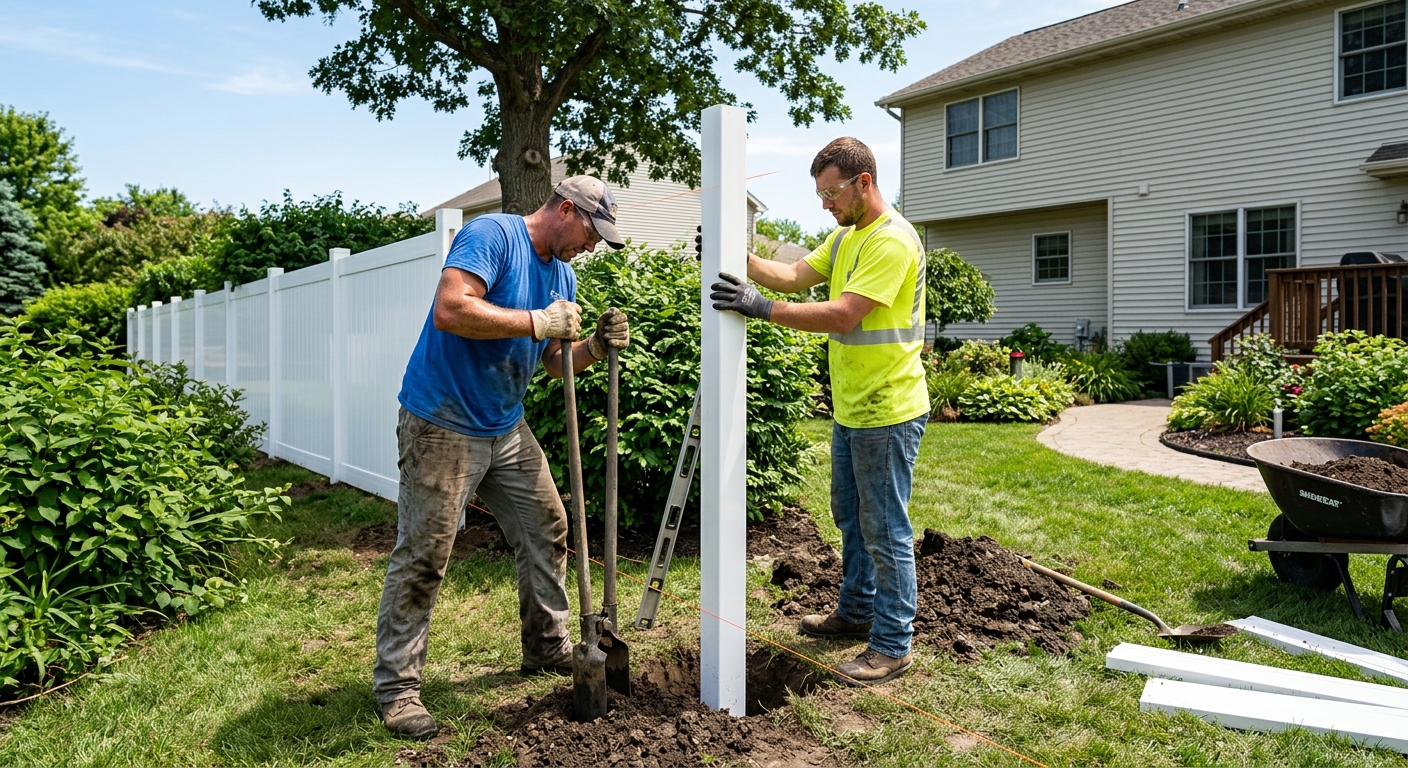
Fencing options and costs in Coquitlam
Coquitlam homeowners typically shop for fencing with two priorities: practical privacy and a finish that holds up to Lower Mainland–Southwest conditions. With 148,625 residents in the city (Statistics Canada, 2021 Census) and about 69.3% of households owning their home, fencing demand stays steady because detached and older properties tend to need repairs, replacements, and boundary upgrades. Single-detached homes make up 35.2% of dwellings, so many lots can support longer runs and gates—both of which affect total labour time. Also, with 29.6% of homes built before 1981 (Statistics Canada, 2021 Census), you’ll often see older timber fences removed and rebuilt, which adds disposal and sometimes more accurate line-setting after years of fence drift.
In the Lower Mainland–Southwest, costs are usually shaped by mild but wet winters: posts still must be set below the local frost heave zone to prevent movement in freeze-thaw cycles, and in Fraser Valley–type soils that can mean deeper holes and more concrete for key posts. Wind exposure around some open pockets of the city influences spacing and panel strength, especially for solid wood and vinyl privacy fences. Because crews must work around driveways, landscaping, and slope, pricing can shift with access and grading.
Trade activity is especially strong in areas like Burke Mountain, where many properties are upgrading backyards for privacy and pets. Once you know what material you want, the next step is comparing typical installed options by lifespan, maintenance and budget.
| Material |
Lifespan |
Maintenance |
Privacy Rating |
Price per Linear Foot |
| Pressure-treated pine (standard wood) |
10–15 years |
Stain/seal every 2–3 years |
High (solid panels) |
$55–$95 |
| Cedar (natural rot resistance) |
15–25 years |
Light stain/seal every 2–4 years |
High (solid boards) |
$65–$110 |
| Vinyl / PVC (no-maintenance) |
20–30 years |
Minimal: rinse and inspect |
High (solid privacy styles) |
$75–$130 |
| Chain-link (galvanized steel) |
25–40 years |
Occasional tension check |
Low (semi-visual) |
$30–$55 |
| Aluminum ornamental |
25–40 years |
Wash as needed |
Low–Medium |
$90–$170 |
| Composite / recycled material |
20–30 years |
Low: rinse; occasional hardware checks |
Medium–High (depends on design) |
$95–$155 |
Prices are estimates only and vary by project scope, site access and material selection.
What affects the price of fencing in Coquitlam
In Coquitlam and across the Lower Mainland–Southwest, it’s common to see quotes for a “similar” fence come in 30–50% apart. The big reasons are access, soil conditions, how many concrete-set posts are required, and what the contractor includes (disposal, hauling, permit support, and whether rails are replaced). Those differences get amplified regionally because labour productivity, material logistics, and the handling of wet-site excavation vary across British Columbia.
Lower Mainland–Southwest frost movement is usually milder than interior provinces, but frost depth still matters for structural stability. A practical rule crews follow is setting many posts about 4–6 inches below the design frost depth (and often deeper than the minimum) to limit heaving. Where local soils hold more moisture, that usually means deeper holes and more concrete, which raises total cost compared with a drier install. In colder, drier parts of Canada, contractors often need much deeper embeds—often 1.5–2.0 m—and that’s one reason quotes elsewhere can swing upward; the Coquitlam job is typically less extreme than Ontario/Alberta, but it still isn’t “shallow” when the ground is wet.
Wind exposure also affects design choices. While Prairies sites push tighter spacing and heavier posts, coastal BC’s wet climate pushes rot-resistance and proper treatment: without quality posts, caps, and drainage details, wood systems can fail early. Two realistic Coquitlam examples: (1) privacy panels on wet, clayey backyards frequently require more concrete under corner and gate posts because post movement shows up quickly; (2) fences behind mature trees often involve extra excavation time for roots, and that can add labour even when length is the same.
Material choice interacts with these conditions. A wood privacy fence that’s in the $55–$95 band may stay reasonable if soil access is easy; a vinyl privacy fence in the $75–$130 range often justifies the jump where we expect higher maintenance effort. For older homes—where 29.6% were built before 1981 (Statistics Canada, 2021 Census)—it’s also common to remove a previous fence and replace posts that no longer align cleanly with the property.
| Price Factor |
Why It Matters |
Cost Impact |
| Fence length in linear feet |
Most labour and material quantities scale directly with footage. |
Highest impact; typically the main driver of total cost. |
| Post depth required |
Frost movement risk determines how deep holes must be excavated. |
Deeper holes increase labour, post length and sometimes concrete. |
| Post setting method |
Concrete vs. gravel pack vs. driven posts affects stability in wet soils. |
Concrete setting usually costs more but reduces wobble and heave. |
| Material choice |
Vinyl, cedar and chain-link all have different costs and structural needs. |
Shifts you between mid-range wood and higher vinyl/aluminum budgets. |
| Gate count and type |
Gates need heavier posts, braces, and more precise hardware alignment. |
Adds cost; double-drive gates can be a significant increase. |
| Grade and terrain |
Slope may require stepping panels or raked rails to stay level and plumb. |
Increases layout time and materials for rails/bracing. |
| Old fence removal and disposal |
Demolition, hauling and recycling/disposal take time and equipment. |
Can add a noticeable amount, especially for reinforced wood and concrete. |
| Permit fees and survey / property line locate |
Some fencing heights trigger permitting; boundary clarification prevents rework. |
Usually a smaller line item, but missing details can cause delays. |
Permits & regulations in British Columbia
In British Columbia, fencing is usually straightforward, but permits can be required when fences exceed typical height thresholds. As a practical guideline used by many homeowners and contractors, fences above about 2.0 m (6.5 ft) at the rear and about 1.0–1.2 m (3–4 ft) at the front or corner often trigger a building permit requirement, depending on location and municipal rules. Even when a permit isn’t required, all fences must respect the property line and applicable setback bylaws.
Before digging post holes, utility locates are non-negotiable. In BC, call BC 1 Call so underground services can be marked before excavation. It’s also wise to obtain a survey or locate property pins before installing—fence encroachment disputes are one of the most common issues that lead to costly rework and removal.
Step-by-step for Coquitlam homeowners: (1) confirm your fence height and placement on your lot plan; (2) check whether a permit is required for that specific location/height; (3) request utility locates before any digging; (4) verify boundaries via survey pins; and (5) confirm shared fence arrangements if applicable.
For shared fence ownership and maintenance, provincial line-fences rules generally govern responsibility where boundaries are shared. Finally, to verify a contractor in BC, ask for: (a) a copy of their business/contractor details and licence information from the appropriate provincial registry sources, (b) proof of liability insurance (certificate of insurance showing coverage limits and your property/project named where applicable), and (c) proof of workers’ compensation coverage (or a clearance letter where required). A reputable fencing contractor should provide these quickly—before work begins.
Choosing the right fence material for Coquitlam
Choosing the right fence material in Coquitlam is mostly about matching your priorities—privacy, low maintenance, budget and lifespan—to what Lower Mainland–Southwest weather actually does. We get mild temperatures, but we also get frequent moisture. Pressure-treated pine is the budget-friendly choice, but it typically needs staining or sealing every 2–3 years to slow grey weathering and reduce moisture penetration. Cedar looks great and resists rot better, yet it still benefits from periodic maintenance to keep the surface sealed and reduce cupping and staining.
Vinyl/PVC is the lowest “effort” option long-term: it doesn’t require staining and usually handles the damp climate well. The trade-off is upfront cost and the need for proper installation details—posts still must be set securely below frost movement zones, and materials can become brittle in extreme cold if they weren’t specified or installed correctly. Chain-link is usually the cheapest installed option and can last decades, but it offers low privacy unless you add slats, screening, or plant coverage. Aluminum ornamental fencing provides a clean, rust-resistant look and good durability, but like chain-link it’s typically not a privacy fence.
On post depth, Lower Mainland–Southwest installs commonly go deeper than the bare minimum because we want to prevent post heave in freeze-thaw cycles and minimize movement in wet soils. Concrete-set posts are especially common for corner posts, gate posts and privacy fences where we need stiffness and long-term alignment—rather than relying purely on gravel pack for stability.
For wind and snow, we focus on stronger framing and bracing for solid privacy styles, and we ensure panels are level to avoid wind catching. If you’re comparing budgets: upgrading from chain-link in the $30–$55 band to a vinyl privacy fence in the $75–$130 band can make sense when you want real day-to-day privacy (not just containment). On the other hand, if you only need pet containment and airflow, paying vinyl pricing may not be justified.
| Material |
Cold Tolerance |
Lifespan |
Annual Maintenance |
Best For |
Price Band |
| Pressure-treated pine |
Good (with correct staining and hardware) |
10–15 years |
Check annually; stain/seal every 2–3 years |
Budget privacy, traditional look |
$55–$95 |
| Cedar |
Good (naturally rot resistant) |
15–25 years |
Inspect annually; stain/seal every 2–4 years |
Premium wood appearance |
$65–$110 |
| Vinyl / PVC |
Good (best with proper install in cold snaps) |
20–30 years |
Minimal: rinse and inspect |
Low maintenance privacy |
$75–$130 |
| Chain-link |
Excellent (steel is strong and stable) |
25–40 years |
Occasional: tension/hardware check |
Containment, budget fencing |
$30–$55 |
| Aluminum ornamental |
Excellent (powder-coated finish) |
25–40 years |
Wash as needed |
Decorative boundaries |
$90–$170 |
| Composite / recycled |
Good (varies by brand and mix) |
20–30 years |
Low: inspect hardware; rinse |
Maintenance-conscious privacy |
$95–$155 |
How to choose a fencing contractor in Coquitlam
When you’re hiring a fencing contractor in Coquitlam, start by confirming they’re properly covered and accountable. In British Columbia, you should request (and verify) proof of liability insurance (certificate of insurance), and proof of workers’ compensation coverage. Ask for the contractor’s clearance letter or coverage documentation as applicable, because it protects you if a worker is injured on-site. For licensing, rely on the contractor’s public business information and any applicable registry details they provide—then match that information to their insurance certificate and quote documents so there are no mismatches.
Next, get 2–3 itemised written quotes, ideally showing a labour + materials breakdown (not just one lump sum). A good quote will list post size, fence system type, rail/bracing details, gate hardware, and how they’ll handle slope and drainage. Read the scope carefully: confirm what’s excluded (e.g., removing old concrete footings, tree cutting, rock excavation, or permit fees). Disposal should be explicit—who hauls away debris and what’s included in the haul-off. Ask whether permit pulling is included or if you’re responsible for permit forms.
Warranty matters. Look for a clear workmanship warranty length and separate product/manufacturer warranty details. Ask whether the warranty is transferable to a future owner (important if you sell). For payment scheduling, a safe rule is to never pay more than about 10–15% upfront and keep a holdback until the job is complete and the fence is aligned and tensioned.
Finally, demand timing in writing: a start date and realistic completion estimate, plus how weather delays will be handled in wet Lower Mainland conditions.
- Request certificate of liability insurance and confirm project coverage dates.
- Ask for workers’ compensation clearance or proof of coverage for BC.
- Get an itemised quote: posts, rails, panels/mesh, hardware and gates listed separately.
- Confirm whether concrete setting is included for corner, end and gate posts.
- Verify post-depth approach for frost heave prevention in wet soils.
- Check whether fence is “racked/stepped” for slope or requires panel modifications.
- Confirm disposal/hauling is included for old fence materials.
- Ask who locates utilities (you should call BC 1 Call; contractor should acknowledge markings).
- Ask if they handle property line locating/survey review or if you must provide it.
- Ensure the scope includes permit work if your height triggers it.
- Get the warranty in writing: workmanship term and manufacturer coverage.
- Require a payment schedule: keep a holdback until final walk-through.
Red flags in Coquitlam: contractors who won’t provide insurance/coverage documents, only offer a vague lump-sum without an itemised scope, refuse to put post setting method and disposal in writing, promise “permit-free” work without checking fence height/location, or ask for large upfront payments (well above 10–15%).
Frequently asked questions — fencing in Coquitlam
Who owns and maintains a shared fence?
In Coquitlam and across British Columbia, shared fence situations are usually handled under provincial line-fences rules. Practically, that means the boundary fence is typically treated as a shared asset, with responsibilities for maintenance split based on who benefits and what the agreement or common practice is for your specific boundary. If a fence is shared, the safest approach is to confirm (in writing) who pays for repairs, whether the whole fence is replaced or only certain damaged sections, and how costs are handled for major upgrades like switching from chain-link to a privacy fence. If you’re upgrading for real privacy, be sure the shared sections are agreed to before installation, since changes can affect sightlines and perceived boundary intent (Statistics Canada, 2021 Census).
How do I find my property line before fencing?
Before you install any fence in Coquitlam, you should verify the property line rather than rely on old fence locations. Start by locating your survey documents (or requesting one if you don’t have it) and identifying your property pins, then compare that to your lot plan. If you can’t confidently find pins, hire a surveyor for a proper locate. Separately, before digging, call BC 1 Call for utility locates so marked lines are on-site—this prevents dangerous surprises and costly rework. Many disputes happen because a fence was rebuilt at the old “assumed” line. Once you know the true line and your fence height, you can also confirm whether permits are likely needed for your location.
What's the most low-maintenance fence?
For most homeowners in Coquitlam, vinyl/PVC is the most low-maintenance option. It doesn’t require staining and typically needs only an occasional rinse and inspection of rails, posts and gate hardware. Compared with pressure-treated pine (often requiring staining every 2–3 years), vinyl can save time and hassle over the fence’s life. In the Lower Mainland–Southwest, wet weather is the reason we emphasize “maintenance-light” materials: wood can weather, fade and develop surface checks if not sealed regularly. Vinyl privacy fencing also tends to be installed with concrete-set corner and gate posts for stability. If you want a realistic budget, installed vinyl pricing is commonly in the $75–$130 range, depending on height and site access.
How tall can my fence be in Coquitlam?
Height rules depend on where the fence sits on your property (front/corner vs rear) and the municipal interpretation, so you should confirm specifics with your permit/approval process. As a general BC guideline, fences over about 2.0 m (6.5 ft) at the rear and about 1.0–1.2 m (3–4 ft) at the front or corner often require a building permit. Even if a permit isn’t triggered, you still must respect property lines and any setback requirements. If you’re planning a taller privacy fence, involve your contractor early so they can help verify placement before you buy materials—because redesign due to setback issues costs money. In older Coquitlam lots (many built before 1981), fence lines and drainage patterns can be irregular, which can complicate height and alignment.
Should fence posts be set in concrete here?
In Coquitlam and the Lower Mainland–Southwest, concrete is commonly used for corner posts, end posts, and gate posts because these points carry higher loads and must resist movement in wet soils and freeze-thaw cycles. While some fencing systems can use gravel packs or driven posts on very stable, dry sites, many residential privacy projects benefit from concrete setting to reduce long-term wobble and alignment drift. The main reason is heave prevention: posts still need to be set below the design frost movement zone to limit uplift. Concrete also helps in areas with moisture-holding soils, where excavation remains wet longer. If your quote is mid-range wood, you may be in the $55–$95 band, but asking for concrete-set structural posts can slightly increase that depending on how many posts are treated.
What's the best fence for privacy?
For true day-to-day privacy in Coquitlam, you’re generally choosing between a solid wood privacy fence, cedar, or vinyl/PVC privacy panels. Chain-link is usually not “privacy” on its own, and aluminum ornamental tends to be more decorative. Vinyl/PVC privacy fences often perform well in our damp climate because they don’t need staining, and the solid panel designs block sightlines effectively. Wood also works great, but pressure-treated pine typically needs staining every 2–3 years, and cedar benefits from periodic maintenance. Post setting still matters: on wet sites, properly embedded posts and stronger framing help panels stay plumb so privacy doesn’t degrade over time. If you want a budget anchor, vinyl privacy commonly lands in the $75–$130 range, while many pressure-treated wood privacy installs fall in the $55–$95 band depending on height, gate count and access.