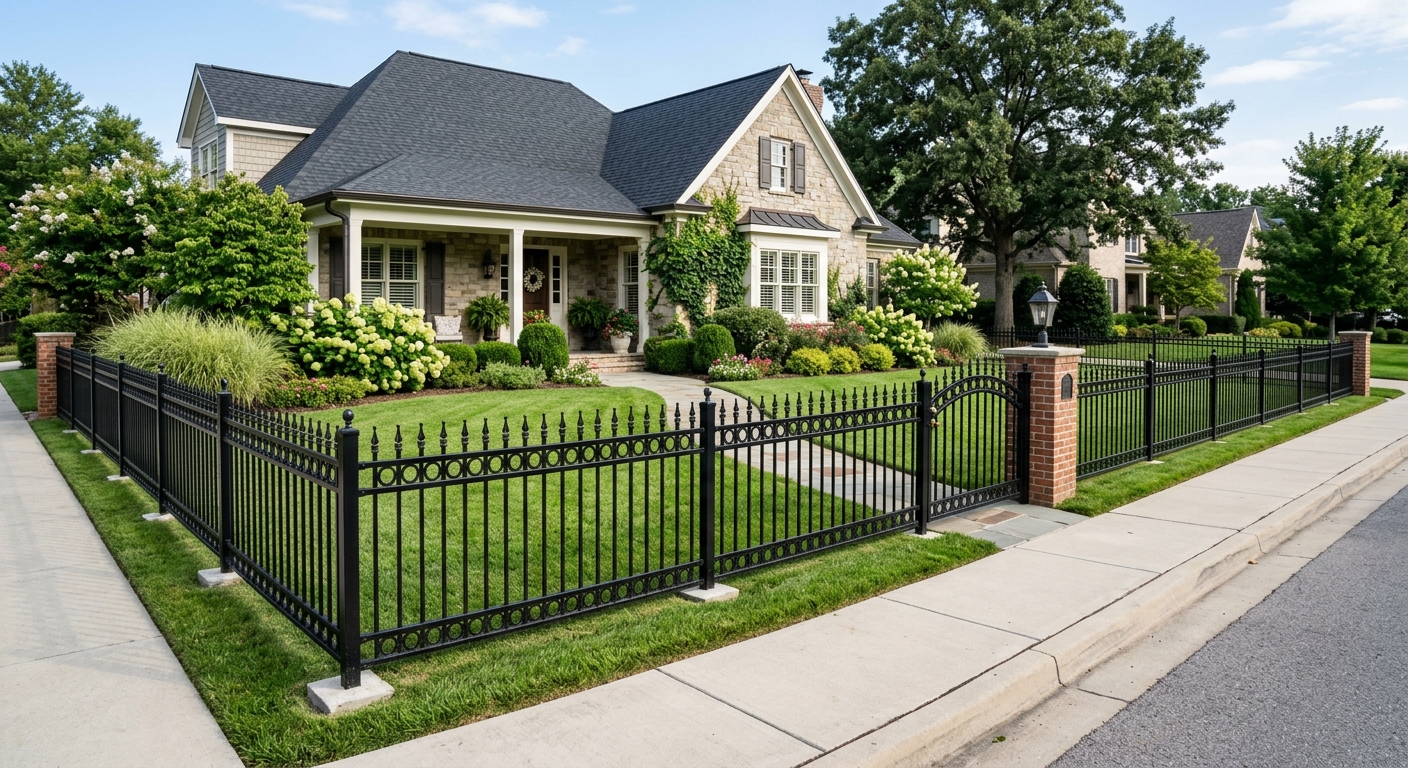
Fencing options and costs in Shaughnessy
In Shaughnessy, homeowners often want a fence that matches the neighbourhood’s look while still holding up through Lower Mainland–Southwest wet weather. With a population of 8,430 (Statistics Canada, 2021 Census), the area is small but dense with detached and semi-detached properties—every property boundary is a potential fencing project, and that local demand shows up in faster scheduling during peak season. For this part of the Lower Mainland–Southwest, mild but not trivial frost and wind conditions matter: crews still need to set posts below the local design frost depth to limit heaving, and Fraser Valley–type soils frequently mean deeper holes, more concrete, and more labour than a dry-site install. That’s one reason quotes can come in higher than homeowners expect when they compare to “flat price” estimates from other regions.
Material choice also drives availability and structure. Privacy fences (solid wood or vinyl/PVC) usually cost more because they need stronger posts, tighter bracing, and better fastening systems for moisture and wind exposure. Chain-link is typically the lowest-cost option and installs quickly, while aluminum ornamental is higher due to fabricated sections and labour-heavy alignment. In Shaughnessy, installs around the broader Kingsway corridor area and the side streets near major retail routes tend to be especially active because schedules align with landscaping season and fence replacement planning.
Below is a practical comparison of common fencing materials you’ll see around Shaughnessy, with budget guidance that aligns with typical Lower Mainland–Southwest installed pricing. Use this table as a starting point before you review itemised quotes.
| Material |
Lifespan |
Maintenance |
Privacy Rating |
Price per Linear Foot |
Price Range |
| Pressure-treated pine (standard wood) |
10–20 years |
Stain/paint every 2–3 years; inspect posts annually |
High (solid privacy panels) |
$55–$95 |
$55 – $95 |
| Cedar (natural rot resistance) |
15–25 years |
Stain/finish every 2–4 years; periodic fastener checks |
High (solid privacy) |
$70–$110 |
$70 – $110 |
| Vinyl / PVC (no-maintenance) |
20–30 years |
Rinse and occasional inspection; no staining |
Medium to High (panel-dependent) |
$75–$130 |
$75 – $130 |
| Chain-link (galvanized steel) |
20–35 years |
Occasional cleaning; straighten posts if needed |
Low (visibility) |
$30–$55 |
$30 – $55 |
| Aluminum ornamental |
25–40 years |
Wash seasonally; inspect gate hardware |
Low to Medium (open pickets) |
$90–$170 |
$90 – $170 |
| Composite / recycled material |
25–35 years |
Low; rinse and spot-check fasteners |
High (solid privacy styles) |
$85–$150 |
$85 – $150 |
Prices are estimates only and vary by project scope, site access and material selection.
What affects the price of fencing in Shaughnessy
In the Lower Mainland–Southwest, it’s very common to see the same general fence type priced 30–50% apart across British Columbia once you compare site conditions and scope. The biggest reasons are post installation depth, wind-loading decisions, and how wet the ground is where the posts go. In Shaughnessy, mild winter temperatures still include frost that can heave poorly set posts, and that means installers often plan for deeper holes and concrete setting where needed. That alone can lift labour time and material (longer posts, more concrete, more backfill).
As a practical baseline, many Canadian guidance documents land near “minimum” embedment around 3 ft in much of the country, but contractors in coastal BC frequently go deeper than that minimum because soils near the Fraser Valley can stay wetter and more variable. That means the frost line assumption becomes “how deep do we need to be below it?”—not just a standard template. Where contractors need deeper embedment, you pay for longer posts, additional labour per hole, and often concrete for corner posts, privacy panels, and gate posts.
Wind exposure also changes design. While the Prairies are the extreme reference point, open lots and corridor winds in the Lower Mainland–Southwest still lead crews to tighten post spacing and choose reinforced framing for solid wood and vinyl/PVC. In wet coastal conditions, untreated or poorly maintained wood is at higher risk of accelerated weathering and rot, which pushes homeowners toward cedar or properly maintained pressure-treated pine. On a $55–$95 wood fence band, you might spend an extra $15–$30 per linear foot on cedar or pay for vinyl/PVC if you want to reduce maintenance—often the difference is justified on long privacy runs.
| Price Factor |
Why It Matters |
Cost Impact |
| Fence length in linear feet |
Most materials and labour scale directly with run length. |
Major—typically 60%+ of total cost drivers. |
| Post depth required |
Below-frost embedment reduces heaving in freeze/thaw cycles. |
Major—deeper holes increase labour + concrete + post length. |
| Post setting method |
Concrete vs. gravel pack vs. driven posts changes stability and longevity. |
Moderate to major—concrete increases material and time. |
| Material choice |
Vinyl/PVC and cedar require different framing and structural parts. |
Major—chain-link cheapest; aluminum highest. |
| Gate count and type |
Gates require heavy hardware and reinforced posts. |
Moderate—each gate can add 10%–25% depending on size. |
| Grade and terrain |
Slopes need stepped sections or raked panels for alignment. |
Moderate—extra labour for layout and custom cuts. |
| Old fence removal and disposal |
Hauling and demolition add labour and dump fees. |
Moderate—often 5%–20% on replacement jobs. |
| Permit fees and survey / property line locate |
Boundary verification avoids disputes and encroachments. |
Low to moderate—can be a small add-on or a major delay cost if missed. |
Permits & regulations in British Columbia
In British Columbia, fences above height thresholds typically require a building permit—commonly cited as about 2.0 m (6.5 ft) for rear yards and around 1.0–1.2 m (3–4 ft) for front yards or corner-side areas. The exact requirement can vary by location and how the fence relates to the property and street, but the best habit for a Shaughnessy homeowner is to assume permits may apply for taller privacy fences, particularly where sightlines are involved. All fences must respect property lines and municipal setback rules.
Before you dig any post holes, call for utility locates (BC 1 Call). Also, consider obtaining a survey or having your property pins located so fence posts don’t drift onto a neighbour’s land. Shared fence ownership is handled through provincial line-fences legislation: where a fence is shared or forms a boundary, responsibilities can be shared, and disputes are typically about location and maintenance rather than “who built it first.”
What usually DOES require a permit: building a new fence over the height thresholds (or replacing an existing tall fence) and any work that materially changes size/footprint. What typically does NOT require a permit: short, low fences within permitted heights, routine repairs, or like-for-like replacement that doesn’t change height or location. For a contractor, ask for written confirmation of whether a permit will be pulled.
To verify a contractor in Shaughnessy: check their licensing status using the appropriate online registry information for the trade they perform, review their certificate of liability insurance (and ensure it lists your address/project as applicable where required), and confirm they carry required workers’ compensation coverage (WSIB is Ontario; in BC you want the equivalent coverage under BC’s system). Request clearance/coverage proof and keep it with your contract.
Choosing the right fence material for Shaughnessy
Choosing the right fence material in Shaughnessy comes down to matching your priorities—privacy, low maintenance, budget, and lifespan—to Lower Mainland–Southwest realities: wet soils, regular rainfall, coastal wind, and freeze/thaw cycles that can stress poorly installed posts. Pressure-treated pine is usually the budget-friendly route, but it needs staining or sealing roughly every 2–3 years to limit grey weathering and keep the wood performing. Cedar offers better natural rot resistance and a cleaner look over time, yet it still benefits from periodic finishing. Vinyl/PVC is the low-effort option: it doesn’t need staining, but extreme cold snaps can make it more brittle than wood if the system wasn’t built with proper reinforcement and appropriate components. Chain-link gives excellent long service life and security value for the money, but it won’t provide the privacy most Shaughnessy homeowners want unless you add privacy slats or plantings.
Post depth is where coastal climate meets construction practice. Even in mild BC winters, crews still plan embedment below the design frost depth and often go deeper than a bare “minimum,” especially if the soil is wet. Concrete-set posts are most important for corner posts, gate posts, and privacy fences where structural load matters. Wind and snow load considerations aren’t as severe as parts of Canada that get heavy snow, but wind-driven rain does push you to choose corrosion-resistant hardware and correct spacing.
For example, if you’re comparing wood to vinyl: moving from a typical wood fence band ($55–$95 installed) to vinyl/PVC ($75–$130 installed) can be worth it on a long backyard run where you want to skip staining costs and avoid repeating labour-driven maintenance over a decade. If your priority is immediate privacy without constant upkeep, the vinyl/PVC premium often makes sense; if your priority is lowest upfront cost and you’re comfortable maintaining, pressure-treated pine can perform well with the right sealing plan.
| Material |
Cold Tolerance |
Lifespan |
Annual Maintenance |
Best For |
Price Band |
| Pressure-treated pine |
Good (with proper staining/sealing) |
10–20 years |
Inspect yearly; plan stain/coat every 2–3 years |
Budget privacy with willingness to maintain |
$55–$95 |
| Cedar |
Good (naturally rot-resistant) |
15–25 years |
Inspect yearly; finish every 2–4 years |
Appearance + natural durability |
$70–$110 |
| Vinyl / PVC |
Fair to good (avoid weak installs in cold) |
20–30 years |
Minimal—rinse and fastener checks |
Low-maintenance privacy |
$75–$130 |
| Chain-link |
Excellent |
20–35 years |
Minimal—clean and inspect hardware |
Security on budget, visibility acceptance |
$30–$55 |
| Aluminum ornamental |
Excellent |
25–40 years |
Minimal—wash seasonally |
Curbed look with long life |
$90–$170 |
| Composite / recycled |
Good |
25–35 years |
Low—rinse and check fasteners |
High-end privacy with low maintenance |
$85–$150 |
How to choose a fencing contractor in Shaughnessy
Choosing a contractor in Shaughnessy is mostly about verification and transparency. In British Columbia, start by confirming they perform the work with appropriate provincial registration where applicable for their trade, and then check proof of liability insurance. Ask for their certificate of insurance and ensure it’s current; it should be issued for the contractor’s legal name and include coverage appropriate for construction work. For worker protection, verify they carry the required workers’ compensation coverage in BC (your contract should include proof of coverage). Don’t accept vague assurances—request documents and confirm they cover fencing installation and gate hardware work.
Next, get 2–3 itemised written quotes. You want a breakdown that separates labour, materials, and line items like post setting, gate framing, and hardware. Avoid quotes that only provide a lump sum without explaining whether disposal, permit pulling, and property line locating are included.
Read the scope carefully: what’s excluded (old fence removal, dump fees, hauling, repairs to nearby landscaping, re-grading)? Will the contractor pull any needed permit(s), or is that your responsibility? Ask about warranty details: workmanship warranty length (how long they stand behind installation), product/manufacturer warranty (what’s covered by the supplier), and whether warranties are transferable if you sell your home.
On payment, never pay more than 10–15% upfront. For the rest, use milestones and holdback—release final payment only after completion and cleanup. Also require a start date and completion estimate in writing; fencing schedules can shift due to weather and post-hole conditions.
- Provide proof of liability insurance (current certificate) and confirm coverage limits.
- Confirm workers’ compensation coverage in BC with proof before work starts.
- Ask for a written contract with scope: materials, height, layout, and panel style.
- Require itemised quotes (labour vs. materials vs. post setting vs. gates).
- Verify who handles permit pulling if height thresholds trigger permits.
- Confirm utility locates are booked before digging post holes (BC 1 Call).
- Ask how posts are set (concrete vs. gravel pack) and whether corner/gate posts are concrete set.
- Request details on disposal/haul-away for old fence removal.
- Check warranty terms in writing for both workmanship and materials.
- Agree on a payment schedule: max 10–15% deposit; holdback until completion.
- Get a confirmed start date and an estimated completion window in writing.
- Confirm how the contractor handles slopes (stepped vs. raked fence sections).
In Shaughnessy, red flags I’ve seen include: contractors who won’t provide insurance or workers’ coverage proof, quotes that omit post-depth/embedment details and only say “standard installation,” refusal to specify whether concrete is used for corners/gates on privacy fences, vague warranties that don’t separate workmanship from product coverage, and change orders that arrive without a written revised scope.
Frequently asked questions — fencing in Shaughnessy
How much does a fence cost in Shaughnessy?
In Shaughnessy, fencing cost usually lands within the broad British Columbia installed price bands because the Lower Mainland–Southwest soil and frost/wind conditions influence how posts are set. For a typical residential job, chain-link commonly comes in around $30 – $55 per linear foot installed, while wood tends to sit near $55 – $95. Vinyl/PVC privacy runs are often higher, frequently around $75 – $130, and aluminum ornamental can range into the higher band because sections and hardware are more fabrication-heavy. Your final number depends on linear feet, number/size of gates, grade (slopes), fence height, and whether the crew must remove and dispose of an old fence. The best way to confirm pricing is to ask for itemised quotes that separate labour, materials, and post setting (including concrete at corners and gates).
How deep should fence posts be for Shaughnessy's frost?
Even though Shaughnessy is on the milder British Columbia coast, contractors still set posts below the local design frost depth to reduce heaving during freeze/thaw cycles. In practice, that means many crews embed posts deeper than a simplistic “one size fits all” minimum. A common Canadian baseline reference is about 3 ft embedment, but in coastal BC the frost depth is shallower than inland regions—so the needed depth is often less than Ontario/Alberta, yet still deeper than a shallow hole. You’ll typically see post holes planned around frost considerations plus extra depth where soil stays wetter, and concrete setting is commonly used for corner posts, privacy fence end posts, and gate posts. The right depth is best confirmed by the contractor’s embedment standard for the Lower Mainland–Southwest and your site conditions (soil type, drainage, and slope).
Wood vs vinyl vs aluminum fence — which is best?
“Best” depends on what you value most in Shaughnessy. Wood (pressure-treated pine or cedar) gives classic looks and a mid-range price, with typical installed pricing around $55 – $95 for wood depending on height and style. Wood does require maintenance—staining/sealing is usually needed every few years to prevent weathering and to protect in our wet cycle. Vinyl/PVC is often the best choice if you want low maintenance privacy; it typically comes in around $75 – $130 and you can rinse it seasonally instead of restaining. Aluminum ornamental is the long-life option for curb appeal and visibility control, but it’s usually priced higher (often moving toward the $90 – $170 band). If you want privacy (not just security), vinyl/PVC or solid-rail cedar are usually the better fit; if you want open frontage and maximum rust resistance, aluminum works well.
Do I need a permit to build a fence in British Columbia?
In British Columbia, permits are commonly triggered when fences exceed certain height thresholds—often cited around 2.0 m (6.5 ft) for rear yards and about 1.0–1.2 m (3–4 ft) for front yards or corner areas. Your exact requirement can depend on where the fence sits and local bylaws, so don’t assume based purely on “typical neighbourhood fences.” For Shaughnessy homeowners, the safe approach is to ask your contractor to confirm whether a permit is required before construction, especially for tall privacy fences. Regardless of permit needs, you must respect property lines and municipal setback rules. Before any digging, call for utility locates (BC 1 Call). Also consider having a survey or pin locate completed so fence posts don’t encroach.
How long does a wood fence last in Shaughnessy?
A wood fence in Shaughnessy often lasts roughly 10–20 years for pressure-treated pine and about 15–25 years for cedar, assuming it’s built with correct post depth, good fastening, and appropriate protection. Our Lower Mainland–Southwest climate is mild but wet, so wood performance depends heavily on how the posts are set (concrete at key structural points like corners and gates), whether the fence is properly sealed/finished, and how fasteners are rated for corrosion resistance. If you stay on top of staining/finishing every 2–3 years for pine (and periodically for cedar), you typically slow down grey weathering and moisture-related wear. If you neglect maintenance, you can see earlier issues like rotting at ground contact or loose boards after wind exposure. The surest path to longevity is matching material to your maintenance willingness and ensuring the install method is designed for freeze/thaw movement.
Who owns and maintains a shared fence?
In Shaughnessy and across British Columbia, shared fence ownership and responsibilities are governed by provincial line-fences legislation. Practically, ownership and maintenance can depend on where the fence is located relative to the property boundary and how it was historically built. If the fence is truly a boundary/shared structure, both sides may have responsibilities for maintenance and cost—often with disputes focused on whether the fence encroaches, whether it’s in repair, and what “reasonable upkeep” means. Before replacing or repairing a shared fence, confirm the property line location (survey or pin locate) and document the condition with photos. If you’re coordinating with a neighbour, agree in writing on scope (repairs vs. replacement), materials, height, and responsibility for disposal and permit requirements where applicable.