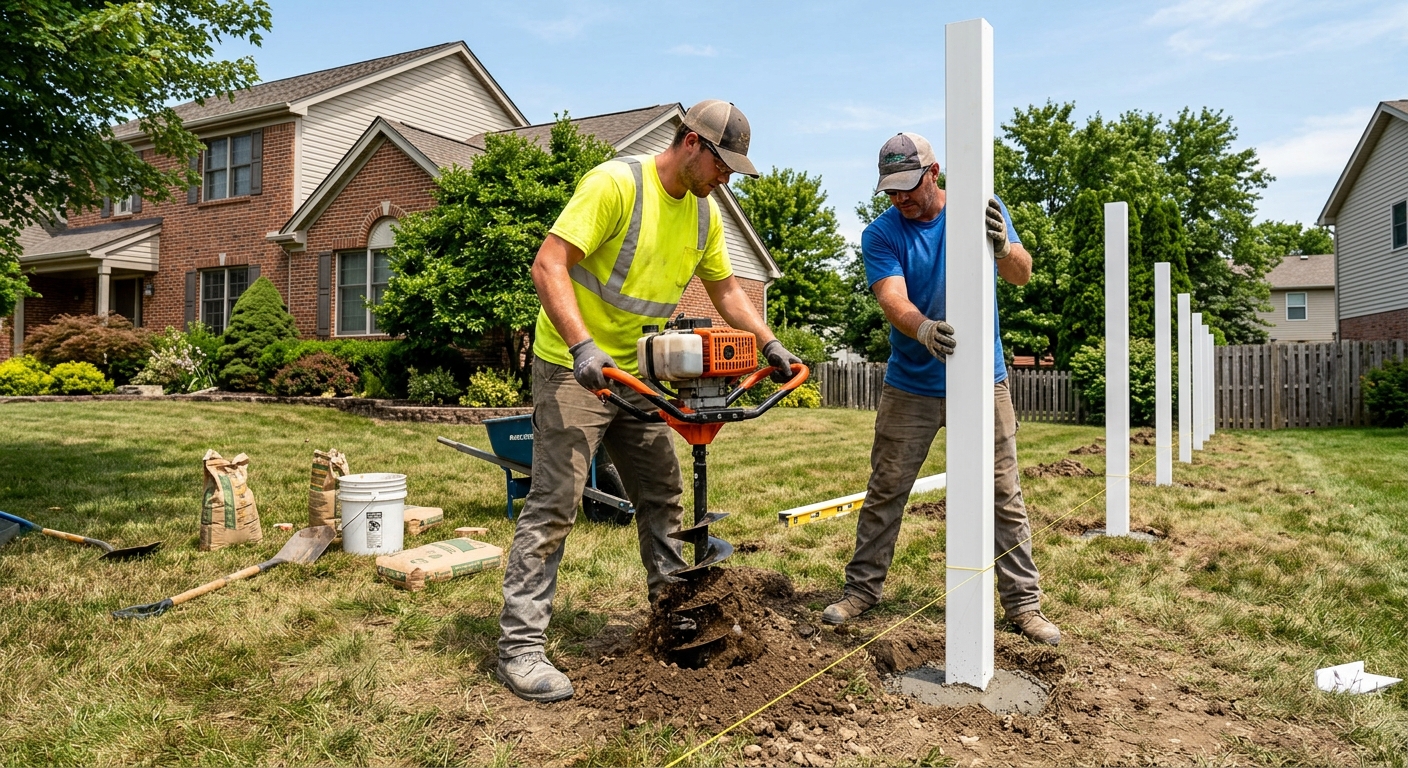
Fencing options and costs in New Westminster
New Westminster homeowners typically have a few proven fence paths to choose from—most often wood, cedar, vinyl/PVC, chain-link, or aluminum—because the city’s housing mix creates steady demand for boundary upgrades. With 19,740 homeowner households in the city (Statistics Canada, 2021 Census), and about 13.8% of dwellings being single-detached homes (Statistics Canada, 2021 Census), many properties can support backyard privacy, dog runs, and front yard definition. Add to that the reality that 41.0% of homes were built before 1981 (Statistics Canada, 2021 Census), and you’ll see lots of older fences coming due for replacement as posts loosen and rail lines start to bow.
In the Lower Mainland–Southwest, pricing is influenced by mild but not trivial frost and persistent wet conditions. While frost depth is generally shallower than in the Prairies, crews still need posts set below the design frost depth (often reinforced by deeper holes and concrete at key points) to reduce heaving and keep gates plumb. Wetter Fraser Valley–type soils around New Westminster can also mean more excavation time, more concrete consumption, and heavier cleanup than a dry-site install.
In terms of where the trade is especially busy, installations are common in heritage-heavy and established residential pockets such as Sapperton, where yards often require careful line matching and removal of older fencing. With that context, the table below compares typical options by lifespan, maintenance, privacy performance, and installed price range for New Westminster.
| Material |
Lifespan |
Maintenance |
Privacy Rating |
Price per Linear Foot |
| Pressure-treated pine (standard wood) |
10–15 years |
Stain or seal every 2–3 years; fasten checks seasonally |
Medium–High |
$55–$95 |
| Cedar (natural rot resistance) |
15–25 years |
Seal/stain as needed (typically every 2–3 years); inspect rails |
High |
$70–$110 |
| Vinyl / PVC (no-maintenance) |
20–30 years |
Occasional wash; replace rare cracked boards |
High |
$75–$130 |
| Chain-link (galvanized steel) |
25–40 years |
Minimal; rinse off debris and check tension |
Low |
$30–$55 |
| Aluminum ornamental |
25–40 years |
Minimal; rinse and tighten hardware |
Low–Medium |
$90–$170 |
| Composite / recycled material |
20–30 years |
Low; clean and inspect for warping at posts |
High |
$100–$155 |
Prices are estimates only and vary by project scope, site access and material selection.
What affects the price of fencing in New Westminster
Fence quotes in New Westminster can swing by 30–50% even when you’re comparing the “same” basic fence height. The difference usually isn’t the height—it’s the hidden scope: how much digging is required in local soils, how many corners and gate openings you have, and whether the crew needs to upsize posts or use heavier panel construction for wind. In a dense city like New Westminster, access (parking, lane work, driveways, and walk-through routes) also impacts labour time. Meanwhile, contractors across the Lower Mainland–Southwest compete for the same winter-limited schedule, so timing and crew availability can affect unit pricing for materials and installation.
Frost line depth is one of the most important drivers. Typical guidance places minimum embedment around 3 feet in much of Canada, but in Canadian cold zones posts often need to go about 4–6 inches below the design frost depth to limit heaving. In much colder Ontario and Alberta contexts, that can translate to roughly 1.5–2.0 m of ground embedment, higher post cost, longer posts, and concrete-setting time—so labour and materials rise. Coastal BC is milder than those regions, but New Westminster’s wet, reactive ground still tends to push crews toward deeper holes and concrete-set corner posts, privacy posts, and gate posts.
Local soil and moisture can also raise cost. For example: (1) damp clay in low spots slows excavation and increases concrete consumption to keep posts firm; (2) a sloped front yard often means stepped sections that require more layout time; and (3) removing an old fence with buried rails and post remnants can add disposal labour. If you’re deciding between chain-link and wood, the Lower Mainland price bands often make it clear: chain-link generally lands near the $30–$55 range, while wood is commonly more like $55–$95 depending on style and height.
| Price Factor |
Why It Matters |
Cost Impact |
| Fence length in linear feet |
The longer the run, the more posts, rails, fasteners, and labour hours are required. |
High |
| Post depth required |
Frost and soil conditions determine hole depth and post length to reduce heaving. |
Medium–High |
| Post setting method |
Concrete vs. gravel pack vs. driven posts changes material cost and labour time. |
Medium–High |
| Material choice |
Different materials require different framing, structural fasteners, and panel stiffness. |
High |
| Gate count and type |
Gates require heavier posts, hinges, latches, and often diagonal bracing. |
Medium–High |
| Grade and terrain |
Slope requires stepped/raked panels and extra layout and cutting. |
Medium |
| Old fence removal and disposal |
Demolition, haul-away, and disposal fees add labour and truck time. |
Medium |
| Permit fees and survey / property line locate |
Some installs require permits and most require confirming pin locations. |
Low–Medium |
Permits & regulations in British Columbia
In British Columbia, fence permitting typically depends on height and location. As a homeowner planning around New Westminster, be prepared for the possibility that fences above a local height threshold—often around 2.0 m at the rear and roughly 1.0–1.2 m at the front or corners—may require a building permit. Even when a permit is not required, all fences still must respect property lines and municipal setback requirements. Because wording varies by situation, I recommend you confirm the exact threshold that applies to your parcel before construction.
Before any post hole is dug, call for utility locates—BC 1 Call (or the relevant local utility notification system). This is not optional in practice: hitting buried services can halt your project and create serious repair costs. Also obtain a survey or locate your property pins so the fence line stays within your property and avoids disputes.
For shared fence questions, line-fences rules in British Columbia govern responsibilities between neighbouring property owners, including how disputes may be handled and how costs are addressed.
Licensing and coverage checks are straightforward. First, verify the contractor’s British Columbia licence (and any applicable registration) through the appropriate provincial online registry. Second, request a certificate of insurance showing liability coverage and ensure the policy is active for the project dates. For work-related coverage, confirm WSIB/WCB status through the contractor’s documentation (commonly provided as a clearance letter or equivalent proof). Only move forward once you have both the insurance proof and licensing documentation in writing.
Choosing the right fence material for New Westminster
The best fence material for New Westminster comes down to what you want most: privacy, low maintenance, budget control, or long-term appearance. With New Westminster’s coastal BC conditions—mild temperatures but persistent moisture—pressure-treated pine can work as the budget option, but it generally needs sealing or staining every 2–3 years to prevent premature greying and surface breakdown. Cedar offers a better natural look and rot resistance; however, it still isn’t “install and forget,” because finishes and fastener checks matter over time.
Vinyl/PVC is popular with busy homeowners because it’s close to no-maintenance: wash it occasionally and inspect for rare cracking in extreme cold snaps. The material cost is higher up front, but for many yards the total ownership cost stays competitive. Chain-link is the lowest cost and longest-lived option, yet it doesn’t provide privacy unless you add slats or plantings. Aluminum ornamental fencing gives a clean, rust-resistant look and generally holds up well to coastal moisture, but it’s typically a mid-to-high priced choice and offers limited privacy without infill.
On post requirements: even though Lower Mainland–Southwest frost is milder, crews still typically set posts deeper than a bare-minimum approach and use concrete for key structural points—corner posts, fence-line ends, and gate posts—especially in wetter soils. Wind and snow loads can still matter during winter storms; that’s why heavier construction around gates and tighter framing can prevent racking.
For a dollar example: if chain-link comes in around $30–$55 per linear foot and a wood privacy fence lands around $55–$95, the extra cost is justified when you actually need privacy—especially for backyard use. If you want views and boundary definition only, chain-link is often the better value.
| Material |
Cold Tolerance |
Lifespan |
Annual Maintenance |
Best For |
Price Band |
| Pressure-treated pine |
Good |
10–15 years |
Low–Moderate (seal/stain every 2–3 years) |
Budget privacy with willingness to maintain |
$55–$95 |
| Cedar |
Good |
15–25 years |
Moderate (stain/seal 2–3 years) |
Appearance + rot resistance |
$70–$110 |
| Vinyl / PVC |
Very good (handle extreme cold carefully) |
20–30 years |
Low (wash + hardware checks) |
Low-maintenance privacy |
$75–$130 |
| Chain-link |
Excellent |
25–40 years |
Very low (periodic tension check) |
Security and pets with minimal wind sail effect |
$30–$55 |
| Aluminum ornamental |
Excellent |
25–40 years |
Very low (rinse and tighten) |
Durable curb appeal |
$90–$170 |
| Composite / recycled |
Very good |
20–30 years |
Low (cleaning; inspect for post transitions) |
Privacy with reduced upkeep |
$100–$155 |
How to choose a fencing contractor in New Westminster
Choosing the right fencing contractor in New Westminster starts with confirming the basics: licensing (where applicable), liability insurance, and workplace coverage. In British Columbia, ask for proof of licensing through the provincial online registry, then request a certificate of insurance that clearly shows liability coverage and the project address or policy period. For workplace coverage, don’t accept verbal reassurance—get the clearance letter or the documented proof of WSIB/WCB coverage and confirm it’s current. If a contractor can’t provide these documents quickly, treat it as a red flag.
Next, get 2–3 itemised written quotes. You want labour and materials broken out, not a single lump sum, and you want clarity on what’s included: fence removal, disposal fees, concrete or gravel pack quantity, and whether post holes and layout are included. Ask whether permit pulls are included (or if you’re responsible) and whether a property line locate/survey is part of the scope. For warranties, ask for workmanship warranty length, the manufacturer product warranty terms, and whether the warranty is transferable to you as the homeowner.
Payment schedule matters. A safe practice is keeping upfront payments around 10–15% maximum, then paying progress milestones as work advances. Hold back remaining funds until the job is complete, gates operate smoothly, and the site is cleaned. Finally, request a written timeline with an estimated start date and completion window, including inspection or material lead times.
- Confirm BC licence details using the provincial registry.
- Check certificate of insurance (liability) and that it covers the actual project dates.
- Verify WSIB/WCB clearance or documented coverage before work starts.
- Require itemised quotes: labour, materials, posts, concrete/gravel, hardware, gates.
- Ask what’s excluded: permit fees, survey locate, disposal, landscaping restoration.
- Get confirmation of post spacing and whether privacy fences use heavier posts/gates.
- Review warranty details for both workmanship and product; ask if transferable.
- Use a payment schedule with no more than 10–15% upfront.
- Set milestone payments tied to completion of foundations/posts and then panels.
- Insist on a written start date and realistic completion estimate.
- Confirm disposal plan for old fence materials and any haul-away charges.
- Ensure the contract includes site protection and cleanup requirements.
Red flags I commonly see around New Westminster: quotes that are “too good to be true” without a site visit; missing insurance or an expired certificate of insurance; no written scope for gate hardware, disposal, and concrete setting; refusing to show you how posts will be set (especially on gates and corners); and contracts that don’t specify warranty duration or provide only verbal assurances.
Frequently asked questions — fencing in New Westminster
Should I repair or replace my old fence in New Westminster?
In New Westminster, the decision usually comes down to how many structural elements have failed. If the posts are still solid and the fence is mostly loose rails or missing pickets, repair can be cost-effective—especially if the fence line is straight and you don’t have multiple leaning sections. But if you see widespread post movement, rot at the base, or sagging panels near gates, replacement is typically the better long-term value because fixing one section often reveals the next weak point. A quick rule of thumb: if more than a few posts show wobble, I lean toward replacement. For budgeting, remember that chain-link often runs around $30–$55 per linear foot installed, while wood privacy fencing is usually closer to $55–$95 per linear foot depending on style and height.
How do I handle a fence dispute with a neighbour in British Columbia?
Fence disputes in British Columbia are common in older neighbourhoods, and New Westminster’s housing stock means boundaries may be defined by fences built decades ago. Start by documenting everything: photos of the fence line, any written history, and when the fence was installed or repaired. Then compare your actual location to your property line using pins/survey (or a professional property line locate). Discuss the issue calmly and propose a solution—often, the most workable outcome is shared correction to the compliant fence line. BC’s line-fences legislation can guide how shared boundary responsibilities and costs are handled, but the exact approach depends on the situation. If agreement can’t be reached, consult the proper dispute channel for your municipality or a legal professional. It’s also wise to pause any digging until you confirm utility locates and property pins to avoid making the dispute worse.
What fence style offers the best wind resistance in New Westminster?
For New Westminster, the “best” wind resistance depends on how the wind hits your yard and whether you need privacy. Solid privacy styles—especially with little air flow—create more wind load, so they need stronger corner posts, proper bracing, and gate reinforcement. Semi-private designs (like spaced pickets or lattice with coverage that allows airflow) can perform better in gusty conditions while still offering usable privacy. Chain-link can handle wind very well because it lets air pass through, but it won’t provide privacy unless you add slats. In practice, the best results come from the right build details: correct post embedment below the frost zone, tight spacing, and heavy hardware at gates. If you’re comparing costs, privacy materials in the $55–$95 (wood) or $75–$130 (vinyl/PVC) ranges often include the structural considerations that help with wind performance.
How much does a fence cost in New Westminster?
Fence cost in New Westminster depends heavily on linear footage, number of corners, slope, and how many gates you need. Typical installed ranges in the Lower Mainland–Southwest are often guided by material type: chain-link is commonly around $30–$55 per linear foot installed, while wood privacy fences are frequently in the $55–$95 per linear foot range. Vinyl/PVC tends to be higher, often around $75–$130 per linear foot installed. Final pricing also reflects labour factors unique to your lot—soil moisture, deeper post holes and concrete at gate/corner points, and access constraints in a dense city. If you want a more precise budget, ask for an itemised quote with labour and materials broken out and confirm whether old fence removal/disposal is included.
How deep should fence posts be for New Westminster's frost?
For New Westminster and the wider Lower Mainland–Southwest, contractors still set posts below the design frost zone to reduce heaving risk. While BC’s coastal conditions can be shallower than colder interior regions, typical practice is deeper than a simple “top-of-post only” approach—often meaning posts set roughly 4–6 inches below the design frost depth, and deeper where soils are wet or reactive. In many Canadian contexts, published guidance lands around 3 feet as a common minimum embedment, but local crews frequently exceed the bare minimum by using longer posts and concrete at critical points like corners and gates. That’s why two quotes for the same fence can differ: the one that includes deeper holes and concrete-set gate posts will cost more but usually performs better over time.
Wood vs vinyl vs aluminum fence — which is best?
“Best” in New Westminster depends on your priorities. Wood (pressure-treated pine or cedar) is usually mid-range on cost and gives a classic look, but you should plan for staining/sealing and periodic hardware checks—often every 2–3 years for finishing. Vinyl/PVC is often the best low-maintenance choice; it typically resists rot well in wet coastal conditions and usually needs only occasional washing, though extreme cold snaps can be a factor for cracking if panels aren’t installed correctly. Aluminum ornamental is durable and rust-resistant with very low maintenance, but it generally offers less privacy unless you add infill. If you’re balancing budget and performance, wood privacy often sits around $55–$95 per linear foot, while vinyl/PVC privacy is commonly $75–$130 per linear foot. Aluminum is often higher, frequently $90–$170 per linear foot. For wind and gate strength, the best “material” is the one installed with the right post embedment and gate hardware.