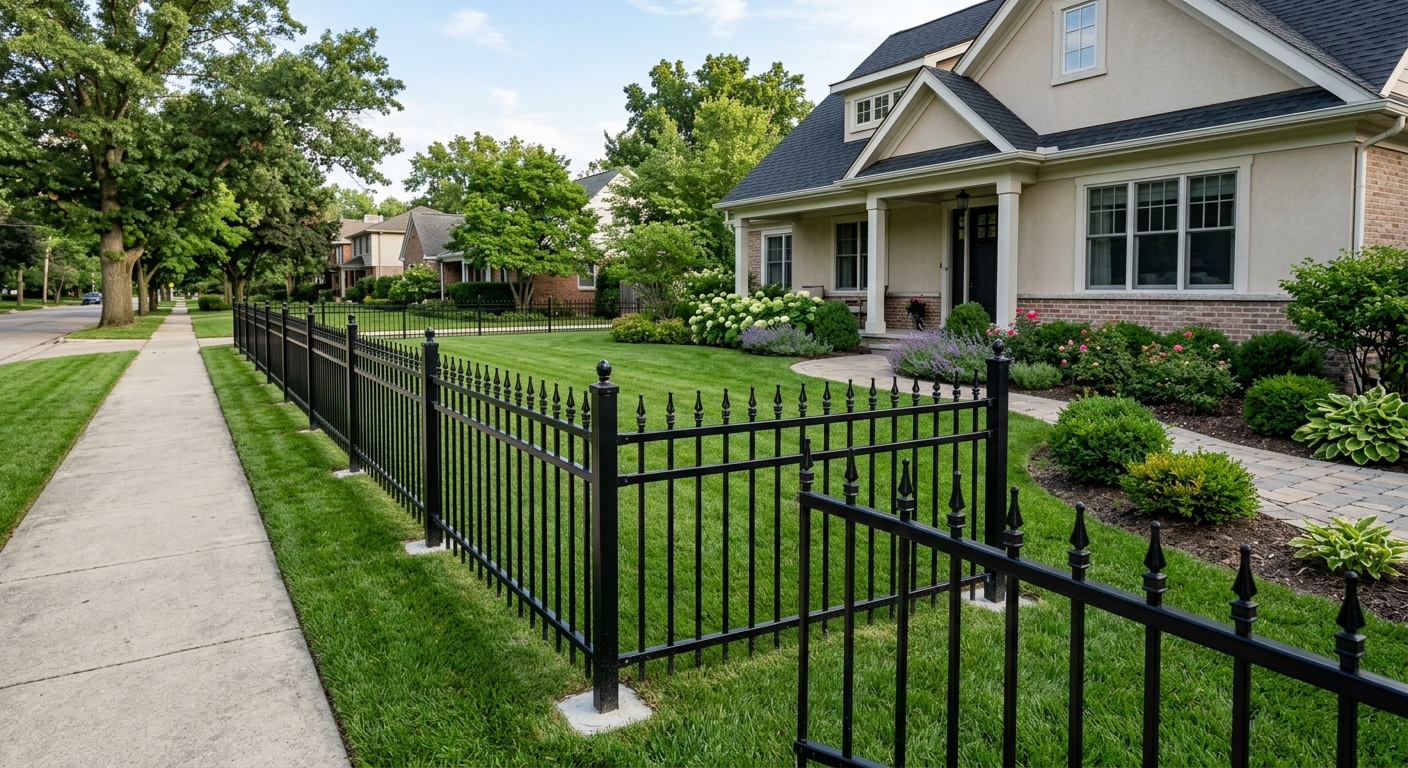
Fencing options and costs in Lynn Canyon
Lynn Canyon is a great example of why fencing demand follows housing type—there are 2,155 residents locally (Statistics Canada, 2021 Census), and in neighbourhoods around the North Shore many properties are well-suited to perimeter upgrades for privacy, pets and yard access. Even when lots are similar in size, the final price changes because Lower Mainland–Southwest installs are shaped by mild but not trivial frost and wind, plus wetter soils that can require deeper post holes and more concrete for stability. That mix affects labour time, materials and the way crews stage work, especially in areas with mature landscaping or narrow driveways.
In the Lower Mainland–Southwest market, chain-link typically comes in as the lowest-cost option, while wood lands mid-range and vinyl/PVC costs more due to structural requirements and components. Aluminum/metal is often the highest-priced because of fabrication and hardware. Local contractor availability is strongest for common residential styles near Lynn Valley and the surrounding Lynn Canyon corridor, where property owners frequently refresh older boundaries before spring and summer weather.
Below is a practical comparison of common materials, what homeowners usually get for lifespan and privacy, and the typical installed pricing you should expect in this tier. Use it as a baseline before you ask for an itemised quote that reflects your gate count, grade, and post-setting method.
| Material |
Lifespan |
Maintenance |
Privacy Rating |
Price per Linear Foot |
| Pressure-treated pine (standard wood) |
10–15 years |
Stain/seal every 2–3 years |
Medium–High (solid panels) |
$55 – $95 |
| Cedar (natural rot resistance) |
15–25 years |
Stain/oil every 2–4 years |
High (solid or close-board) |
$65 – $110 |
| Vinyl / PVC (no-maintenance) |
20–30 years |
Occasional wash (no staining) |
High (privacy styles) |
$75 – $130 |
| Chain-link (galvanized steel) |
25–40 years |
Minimal (rinse, occasional tension check) |
Low–Medium (visual barrier only) |
$30 – $55 |
| Aluminum ornamental |
25–40 years |
Wash yearly; no rusting |
Low–Medium (decorative) |
$90 – $170 |
| Composite / recycled material |
25–35 years |
Low; cleanings as needed |
Medium–High (solid boards) |
$85 – $140 |
Prices are estimates only and vary by project scope, site access and material selection.
What affects the price of fencing in Lynn Canyon
In Lynn Canyon and across the Lower Mainland–Southwest, two quotes for what seems like the “same” fence can differ by 30–50% because the biggest cost drivers—post depth, soil conditions, wind-loading choices, and how much labour is needed to prep the site—aren’t visible until the installer measures. Lower Mainland–Southwest also has a wetter cycle than many inland areas, so treatment standards and post-setting decisions matter. Even if frost is milder than Ontario or Alberta, you still have to install below the design frost depth to reduce heaving, which means deeper holes, longer posts, and more concrete on many jobs.
Frost line depth sets post embedment requirements. A common planning approach is to set posts roughly 4–6 inches below the design frost depth, which often translates to deeper holes and longer lumber than homeowners expect. In colder Canadian regions, crews may need 1.5–2.0 m embedment, and the added concrete and hardware can be the reason wood jobs rise into the top half of the $55 – $95 range. Here, you may not need the same extreme embedment, but wetter Fraser Valley–type soils (common across parts of the Lower Mainland) often push contractors toward deeper holes and concrete for corner posts, privacy panels, and gates.
Concrete examples from Lynn Canyon installs: (1) a cedar privacy fence on clay-silty soil typically needs more concrete under corner posts to prevent wobble; that increases material and labour time. (2) a chain-link boundary in drier, harder ground can sometimes use less concrete or a gravel pack approach, keeping it nearer the $30 – $55 band. (3) sloped yards near Lynn Valley Road often require stepped sections, adding layout work and extra hardware.
| Price Factor |
Why It Matters |
Cost Impact |
| Fence length in linear feet |
Every component scales with total run length: posts, rails, panels and fasteners |
Major (primary driver) |
| Post depth required |
Frost and soil conditions determine embedment to prevent heaving and shifting |
High (longer posts, deeper holes) |
| Post setting method |
Concrete vs. gravel pack vs. driven posts changes labour and materials significantly |
Medium–High |
| Material choice |
Vinyl/PVC and aluminum have higher material costs and structural requirements than wood/chain-link |
High (often the biggest difference between options) |
| Gate count and type |
Gates require heavier framing, stronger hinges/latches and often extra set posts |
Medium–High |
| Grade and terrain |
Slopes require stepped/raked panels and extra layout time |
Medium |
| Old fence removal and disposal |
Hauling, tipping fees and labour for disassembly affect schedule and cost |
Medium |
| Permit fees and survey / property line locate |
Locates reduce the risk of encroachment and rework; permits can add administrative time |
Low–Medium (job dependent) |
Permits & regulations in British Columbia
In British Columbia, fences above a height threshold often require a building permit—commonly around 2.0 m (6.5 ft) for rear yards and roughly 1.0–1.2 m (3–4 ft) for front or corner locations, depending on the circumstances. Regardless of permit requirements, your fence must respect property lines and municipal setback bylaws. Because fence enforcement can be strict when lines are unclear, the safest plan is to verify your boundary before you dig.
Before any post hole digging in Lynn Canyon, call for utility locates using the regional “one-call” process (BC 1 Call) so you don’t strike buried services. Next, obtain a survey or locate your property pins and confirm the fence line. Shared fence ownership and line-fence matters are handled under provincial line-fences rules, so if a boundary fence is involved, you may need to coordinate responsibilities with your neighbour.
What typically needs a permit: new fences that exceed the usual height thresholds, and any project your municipality flags for review. What typically doesn’t: low fences within ordinary height limits where bylaws allow, or like-for-like replacements that don’t exceed thresholds. Because local bylaws can vary, your contractor should confirm whether your specific height and location triggers a permit before they quote.
To verify a contractor in British Columbia, check: (1) their licence status through the appropriate provincial online registry; (2) liability insurance—ask for an active certificate of insurance naming you as an additional insured where applicable; and (3) WSIB/WCB coverage—ask for clearance letters or proof from their workers’ compensation account. A reputable fence contractor should provide these documents up front, before scheduling.
Choosing the right fence material for Lynn Canyon
Choosing the right fence in Lynn Canyon comes down to your top priorities—privacy, low maintenance, budget and lifespan—while matching the material to our Lower Mainland–Southwest climate: mild winters, frequent wet periods, and wind exposure that can stress panels. Pressure-treated pine is the budget-friendly route, but it needs staining or sealing every 2–3 years to prevent heavy grey weathering and maintain a solid surface. Cedar looks warmer and has better natural resistance to rot, yet it still benefits from periodic staining/oiling to keep it looking good and to reduce cupping on wet cycles.
Vinyl/PVC is a common “set-and-forget” choice for homeowners who want minimal upkeep; however, it can become brittle if extreme cold snaps occur, and the installation quality (especially post alignment and panel support) strongly affects longevity. Chain-link is the lowest-cost approach and tends to last a long time, but it won’t provide much privacy unless you add slats or plant screens. Aluminum ornamental is rust-resistant and visually tidy, making it a good fit for front yards where you want definition without a solid barrier.
For post depth: even with milder frost than inland Canada, crews in this region still often set posts deeper than a bare minimum to limit heaving. Concrete-set posts are most common for corner posts, gate posts, and privacy sections where stiffness is critical—especially in wetter soils—so you should expect concrete in many wood, cedar and vinyl privacy installs.
As a dollar example, if you’re comparing a pressure-treated privacy run near the $55 – $95 band to vinyl/PVC closer to the $75 – $130 band, spending the extra upfront can be justified when you expect to stay in the home long-term and you don’t want recurring staining work during wet seasons.
| Material |
Cold Tolerance |
Lifespan |
Annual Maintenance |
Best For |
Price Band |
| Pressure-treated pine |
Good (when properly sealed) |
10–15 years |
Light upkeep; stain/seal every 2–3 years |
Budget-focused privacy |
$55 – $95 |
| Cedar |
Good (weather-treated/maintained) |
15–25 years |
Low–moderate; oil/stain every 2–4 years |
Better appearance with rot resistance |
$65 – $110 |
| Vinyl / PVC |
Very good (depends on quality/cold rating) |
20–30 years |
Minimal; rinse as needed |
Low-maintenance privacy |
$75 – $130 |
| Chain-link |
Excellent |
25–40 years |
Minimal; occasional tension/coat check |
Security and pet containment |
$30 – $55 |
| Aluminum ornamental |
Excellent |
25–40 years |
Minimal; wash yearly |
Decorative front-yard definition |
$90 – $170 |
| Composite / recycled |
Very good |
25–35 years |
Low; cleanings as needed |
Long-life, solid-looking boundaries |
$85 – $140 |
How to choose a fencing contractor in Lynn Canyon
Start by verifying British Columbia licensing and coverage before you sign. Ask the contractor for their business licence/contractor credentials (check the appropriate online registry), and request a certificate of liability insurance for the correct coverage term. For workers’ compensation, they should provide proof of WSIB/WCB coverage and/or clearance letters—don’t rely on verbal assurances. In practice, a Lynn Canyon homeowner can also confirm the paperwork matches the company name and address on the estimate.
Next, request 2–3 itemised written quotes that break out labour and materials (posts, rails, panels, hardware, concrete, gate hardware, and any removal/disposal). A lump-sum quote is harder to compare and makes disputes more likely if scope changes. Read the scope line-by-line: is the permit pull included if needed? Is excavation in wet soil included? Is haul-away/disposal included for an old fence? Will the contractor re-stake the line and confirm offsets to property pins?
Warranty should be clear and separate: workmanship warranty length (for rails, posts, alignment and panel installation) and any product/manufacturer warranty (for boards, vinyl components, gates). Confirm whether warranty is transferable if you sell your home.
For payment schedule, never pay more than 10–15% upfront. Hold back the balance until the job is complete and you’ve received documentation (warranty information, material lists, and any permit paperwork if applicable). Finally, get the start date and estimated completion in writing—weather can affect post-hole work, but a professional crew still provides a realistic schedule.
- Verify contractor credentials through the BC online registry before scheduling.
- Request current certificate of liability insurance (and additional insured where applicable).
- Ask for WSIB/WCB proof or clearance letter for the crew installing your fence.
- Insist on itemised labour vs materials pricing, not a single lump sum.
- Confirm post-setting plan: concrete where required (gates/corners/privacy) and embedment depth rationale.
- Check whether permit pull is included for fence height and location thresholds.
- Confirm survey/property pin locate support or who supplies the locate.
- Verify disposal/haul-away is included if removing an existing fence.
- Review gate hardware specs (hinges, latch type, and whether gate posts are reinforced).
- Ask how they handle slope: stepped panels vs raked panels and how it affects height.
- Request workmanship and material warranty terms in writing before deposit.
- Confirm payment milestones (10–15% maximum upfront) and a final completion holdback.
Red flags in Lynn Canyon: (1) a contractor who won’t show insurance or WSIB/WCB proof; (2) no itemised quote and no willingness to explain post depth and post setting; (3) claiming “no permit ever” without checking height/location; (4) asking for a large upfront payment beyond 10–15%; and (5) vague timelines like “a few days” without a start date and completion estimate.
Frequently asked questions — fencing in Lynn Canyon
How tall can my fence be in Lynn Canyon?
In British Columbia, the height you can build without headaches depends on whether you’re in a front/corner area or the rear yard. A common rule of thumb used for planning is about 2.0 m (6.5 ft) at the rear and roughly 1.0–1.2 m (3–4 ft) in the front or corner, and fences above those thresholds often trigger a building permit process. Your municipality’s bylaws and the exact location on your lot matter, especially on corner properties where visibility requirements apply. Before you buy material, share your proposed height and line location with your contractor and ask them to confirm whether a permit is required for your specific fence layout.
Should fence posts be set in concrete here?
Often, yes—especially in Lynn Canyon where soils can hold moisture and where frost movement can cause problems if posts aren’t set properly. Contractors in the Lower Mainland–Southwest commonly set posts below the design frost depth (often planned at roughly 4–6 inches below it) to limit heaving. Concrete setting is frequently used for privacy panels, corner posts and gate posts because stiffness and alignment matter most there. That doesn’t mean every single post always needs a full concrete pour in every circumstance, but if you’re building a solid wood or vinyl privacy fence, expect concrete in the most stressed locations. This is one reason “similar” fences can vary by tens of dollars per linear foot across quotes.
What's the best fence for privacy?
For privacy in Lynn Canyon, solid panels with close spacing are usually the best-performing solution, regardless of whether you choose wood, cedar or vinyl/PVC. Vinyl/PVC privacy fencing is popular because it’s low-maintenance and typically lands in the $75 – $130 installed band for residential projects, particularly when you include reinforced posts and proper gate hardware. Cedar can deliver excellent visual screening while looking natural, generally falling in the mid-to-upper range, while pressure-treated pine can be the budget option closer to $55 – $95. If your yard is exposed to wind or you have a wet slope, ask your contractor to explain how they’ll brace and post-set for stiffness so the fence doesn’t rack over time.
How do I compare fencing quotes?
Start by comparing apples to apples. Ask each contractor for an itemised estimate separating labour and materials, including post setting method (concrete vs gravel pack), panel style, rail count, and the gate hardware details. Make sure the quotes specify embedment depth assumptions for frost conditions and the way they’ll handle your grade (stepped/raked). Check whether disposal and removal of an old fence are included, and whether the contractor includes permit pull help if your height/location needs it. If one quote is significantly cheaper, it’s commonly because of lighter posts, different embedment or less robust gate framing—not because it’s “the same fence.”
How long does fence installation take in Lynn Canyon?
Timelines vary with length, access, and whether there’s an existing fence to remove, but many typical residential jobs in Lynn Canyon move quickly once the crew is on site. Weather can affect excavation and concrete curing during wet stretches, so ask for a start date and completion estimate in writing. As a rule of thumb, a straightforward run with standard gates can often be completed within a few working days, while longer privacy fences with multiple gates, sloped yard steps, and old fence removal can extend the schedule. The best way to estimate your timeline is to provide your lot dimensions, confirm slope/grade details, and ensure the quote states the scope clearly (including disposal and any permit steps).
Can I install a fence on a slope in Lynn Canyon?
Yes, you can install fencing on a slope in Lynn Canyon, but the method affects both appearance and cost. Most contractors handle slopes by using stepped panels (each section changes height in increments) or raked panels (following the slope more continuously). Stepped construction often looks cleaner for privacy fences and can keep the maximum fence height closer to what you’re permitted for, but it requires more layout and more hardware planning. Raked sections can be efficient in some cases but may require careful measurement to ensure the fence doesn’t exceed height limits at the low/high points. Expect added labour on sloped properties near busier local roadways and wooded edges where access and layout are more complex, which is another reason quotes can differ meaningfully even when the linear footage is similar.