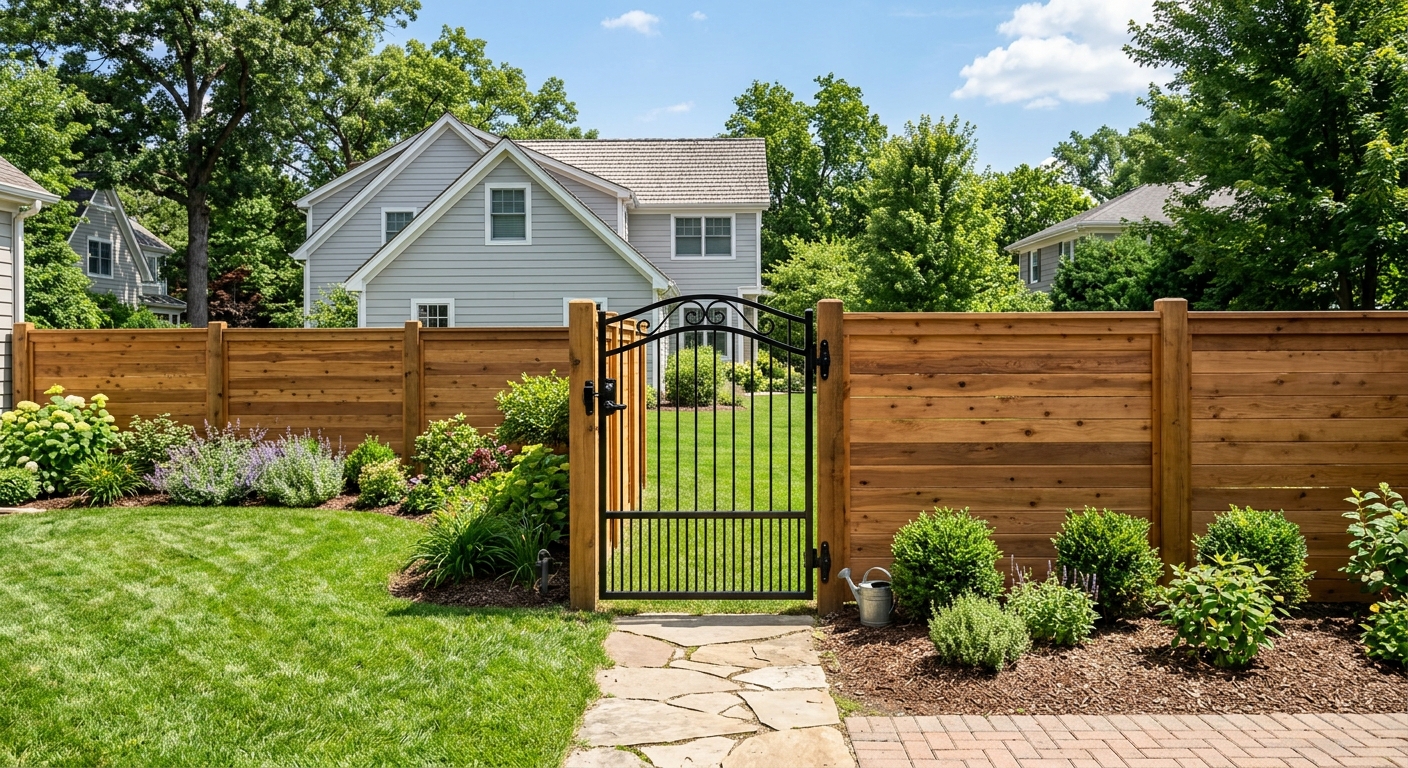
Fencing options and costs in Grand Forks
Grand Forks is a small community where a fence isn’t just a boundary—it’s a practical upgrade for privacy, pets, and yard security. With 75.9% of local dwellings being single-detached homes (Statistics Canada, 2021 Census), there’s a steady baseline of homeowners looking to line properties, define backyards, and manage wind-driven snow on exposed lots. The homeowner share (74.1% of households own) also means many projects are planned and budgeted like long-term home improvements (Statistics Canada, 2021 Census).
In the Kootenays, pricing is heavily influenced by how deep posts must go because of the regional frost line and freeze–thaw cycles. In winter, soils can heave when posts are set too shallow, so contractors typically drill deeper holes, use longer posts, and often set corners and gate posts on concrete footings below frost depth. That adds labour and material, even when the fence material itself is “simple.” In colder valley-bottom areas and more exposed rural edges around Grand Forks, you’ll also see stronger panel builds and tighter post spacing to resist racking during windy snow events.
Trade demand is especially common in the residential pockets of downtown Grand Forks and the older surrounding neighbourhoods where many homes were built before 1981, meaning yard boundaries and existing fencing often need replacement rather than minor repairs. From there, it’s easier to compare options side-by-side—so the table below summarizes typical lifespan, maintenance expectations, privacy performance, and installed price ranges.
| Material |
Lifespan |
Maintenance |
Privacy Rating |
Price per Linear Foot |
| Pressure-treated pine (standard wood) |
10–15 years |
Stain/seal every 2–3 years; inspect posts after freeze–thaw |
High (solid boards) |
$45 – $75 |
| Cedar (natural rot resistance) |
15–25 years |
Light staining/maintenance every 3–5 years (varies by exposure) |
High (solid boards) |
$55 – $85 |
| Vinyl / PVC (no-maintenance) |
20–30 years (if installed with correct post setting and clearances) |
Occasional wash; check for posts shifted by frost |
High (solid privacy styles) |
$70 – $110 |
| Chain-link (galvanized steel) |
20–40 years |
Minimal; rinse and repair small bends |
Low (security only unless privacy slats added) |
$30 – $55 |
| Aluminum ornamental |
25–40 years |
Wash annually; touch up hardware if needed |
Medium (open pickets) |
$80 – $140 |
| Composite / recycled material |
20–30 years |
Occasional cleaning; inspect for fastener movement |
High (solid or semi-solid designs) |
$65 – $120 |
Prices are estimates only and vary by project scope, site access and material selection.
What affects the price of fencing in Grand Forks
In Grand Forks, it’s common to see fence quotes for what looks like the same job vary by 30–50% across Kootenay communities and the broader British Columbia market. The biggest swing isn’t usually the style of fence—it’s how contractors design for our cold winters, soil movement, and how many hours of excavation they need to do to set posts correctly.
First, the frost line depth sets how deep posts must be set. In Kootenay conditions, a practical rule of thumb is that post holes often end up about 4–6 inches below the design frost depth to prevent heaving, which typically means deeper augering, longer posts, and more concrete. Even compared with milder regions, this pushes costs up because you’re paying for heavier excavation and more base materials. Second, wind and snow loads matter: while we don’t get Prairie-level gusts all the time, exposed properties and ridge edges in the Kootenays can rack panels during winter storms, so tighter post spacing or stronger framing may be recommended.
Two concrete examples of how local conditions change the number: (1) A privacy fence on a slight slope often needs stepped panels, extra labour, and additional post layout time; (2) corner and gate posts frequently require more robust concrete footings below frost depth, not just tamped backfill, because they experience the highest lateral loads. For perspective, many standard wood projects land around the $45 – $75 per linear foot band, but when frost-safe concrete setting increases the post build and excavation scope, prices can move closer to the upper end—similar to how vinyl jobs often sit in the $70 – $110 range even when the linear footage is modest.
Lastly, housing-stock and yard complexity play a role. With many homes built before 1981 in the area (Statistics Canada, 2021 Census), older property layouts can mean uneven boundary markers, thicker vegetation, and more frequent removal of older rails and hardware—each adds time and disposal costs.
| Price Factor |
Why It Matters |
Cost Impact |
| Fence length in linear feet — the primary cost driver |
More rails, more posts, more hardware, more hours of labour |
Directly scales the total; longer runs can add mobilization costs |
| Post depth required — frost line determines post length and hole depth |
Deeper holes reduce frost heave risk |
Can add concrete and excavation time; often a major quote difference |
| Post setting method — concrete vs. gravel pack vs. driven posts |
Concrete footings improve stability in freeze–thaw soils |
Concrete-set is usually higher cost but reduces early failures |
| Material choice — vinyl vs. cedar vs. chain-link |
Material unit costs and panel weight affect labour and bracing |
Shifts you between wood, vinyl, and chain-link price bands |
| Gate count and type — walk-through vs. drive-through (double) |
Gates need stronger hinges, hardware, and often deeper posts |
Commonly adds the equivalent of several extra post bays |
| Grade and terrain — sloped yards require stepped or raked panels |
Layout time increases and framing must match the slope |
Can add labour and material; affects panel selection and alignment |
| Old fence removal and disposal |
Demolition time, hauling, and disposal fees |
Often increases total cost by a noticeable percentage |
| Permit fees and survey / property line locate |
Locates prevent encroachment and rework |
Varies, but missing info can cause delays and redesign costs |
Permits & regulations in British Columbia
In British Columbia, a fence height can trigger a building permit requirement. While exact thresholds can vary by municipality, fences above commonly referenced limits—often around 2.0 m (6.5 ft) at the rear and roughly 1.0–1.2 m (3–4 ft) at the front or corner—may require a permit. Regardless of permit needs, your fence must respect property lines and any municipal setback bylaws, and it must be installed in a way that doesn’t interfere with utility corridors or safe access points.
Before anyone digs post holes in Grand Forks or anywhere in BC, homeowners should arrange utility locates (using the appropriate call system such as BC 1 Call). If you’re unsure where your property pins are, get a survey or at least a property line locate before installation. This protects you from costly rework if a fence is inadvertently placed on or too close to a neighbour’s land. Shared fence arrangements are also handled under provincial line-fences principles, but practice still varies by circumstance—so put any shared ownership expectations in writing.
What typically DOES require a permit: fences that exceed common height thresholds, larger fence structures, or projects where the local authority flags it due to placement/impact.
What typically does NOT: routine replacement of a fence that stays within permitted heights and setbacks, and minor repairs—provided you’re not changing the height, footprint, or location.
To verify a contractor in BC, check: (1) their licence/registry status online for relevant categories, (2) their liability insurance certificate (you should see active coverage and appropriate limits), and (3) WSIB/WCB coverage proof—ask for the clearance letter or current status and keep a copy with your contract.
Choosing the right fence material for Grand Forks
The right fence material in Grand Forks comes down to how you balance privacy, low maintenance, and budget—especially because freeze–thaw and regional frost depth affect how posts and frames survive winter. Pressure-treated pine can be the budget-friendly pick, but it typically needs staining or sealing every 2–3 years to reduce grey weathering and slow surface cracking. Cedar offers a nicer look and naturally resists rot better, which helps in moist winter periods, but it still generally benefits from periodic maintenance to keep colour and reduce drying stress.
Vinyl/PVC is attractive for “set it and forget it” ownership. The key is installation quality: the fence must be set with frost-safe post depth and proper bracing so panels don’t shift and cause stress cracking in extreme cold snaps. Chain-link is usually the lowest cost and longest-lasting for security-only boundaries, but it won’t give you privacy unless you add privacy slats or choose a privacy-specific fabric system. Aluminum ornamental is rust-resistant and mid-range in cost, but it’s best when you want an attractive, open look rather than solid privacy.
In Kootenay jobs, I still strongly recommend concrete-set posts for corner and gate locations, and often for all posts when you’re on heavier, frost-prone soils or a site with persistent freeze–thaw. Where posts are set too shallow, you can see early lean or sagging—turning a “cheaper now” fence into a more expensive fix later.
For a practical price comparison: if you’re choosing between a solid wood fence around $45 – $75 per linear foot and vinyl around $70 – $110, the extra upfront cost can be justified when you want minimal maintenance and longer-term appearances. If you’re comfortable with periodic staining and want to keep the budget tight, pressure-treated pine usually wins; if you want to reduce upkeep, vinyl often pays off over the life of the fence.
| Material |
Cold Tolerance |
Lifespan |
Annual Maintenance |
Best For |
Price Band |
| Pressure-treated pine |
Good (depends on post depth and sealing) |
10–15 years |
Light cleaning; stain/seal every 2–3 years |
Budget-conscious solid privacy |
$45 – $75 |
| Cedar |
Very good (natural rot resistance) |
15–25 years |
Clean as needed; stain/finish every 3–5 years |
Appearance with solid privacy |
$55 – $85 |
| Vinyl / PVC |
Good (best with frost-safe installation) |
20–30 years |
Wash periodically; check posts after heavy winters |
Low-maintenance privacy |
$70 – $110 |
| Chain-link |
Excellent (galvanized steel) |
20–40 years |
Minimal; rinse and repair minor bends |
Security and boundary definition |
$30 – $55 |
| Aluminum ornamental |
Very good (no rust) |
25–40 years |
Wash annually; inspect hardware |
Curb appeal with moderate privacy |
$80 – $140 |
| Composite / recycled material |
Good (material depends on system) |
20–30 years |
Clean occasionally; inspect fasteners |
Solid privacy with reduced rot risk |
$65 – $120 |
How to choose a fencing contractor in Grand Forks
Choosing a contractor is where you protect yourself from the two biggest fencing risks in Grand Forks: poor post depth and poor paperwork. In British Columbia, confirm the contractor’s licensing status for the work they’re doing and verify liability insurance—ask for a certificate of insurance with active dates and adequate coverage. For worker protection, request proof of WSIB/WCB status (the clearance letter or current coverage information) before work begins. Don’t accept “it’s in progress” as a substitute.
Get 2–3 written, itemised quotes—not just a lump sum. You want a labour line for excavation/post setting, a materials line that matches the product (rails, pickets, brackets, hardware, concrete, etc.), and clarity on what’s included. Scope matters: is permit pulling included (when required), is old fence removal and disposal included, and how will they handle access, gates, and property line confirmation? A contractor who can’t describe the post-setting method clearly is a contractor you should pause on.
Warranty also needs to be specific. Ask for (1) a workmanship warranty length, (2) the manufacturer/product warranty details, and (3) whether the warranty is transferable to you as the homeowner. Payment should be staged conservatively: never pay more than about 10–15% upfront, and hold back the remainder until completion and cleanup are done. Finally, get a start date and estimated completion timeline in writing.
- Confirm BC licensing status for the fence work they’re performing (ask for the reference number).
- Request liability insurance certificate; verify it’s current before they order materials.
- Provide WSIB/WCB clearance or proof of coverage for workers.
- Insist on itemised pricing (labour, materials, concrete, disposal, permits/locates).
- Ask how deep posts will be set relative to frost and whether corners/gates get reinforced footings.
- Confirm post setting method (concrete vs. gravel pack vs. driven) in the contract.
- Clarify panel spacing and bracing plan for wind/racking in exposed yard sections.
- Ensure the quote states who locates property pins and who is responsible if lines are wrong.
- Get a written warranty for workmanship and a separate manufacturer warranty for materials.
- Set payment schedule: max 10–15% deposit; holdback until the fence is complete.
- Verify disposal/haul-away is included for old fence and debris (or explicitly excluded).
- Ask for the expected start date, completion date range, and how weather delays are handled.
Red flags I see around Grand Forks include: (1) quotes that use a shallow “tamp and go” post method without discussing freeze–thaw, (2) no written warranty or only verbal assurances, (3) insurance/licence documents not provided until after you sign, (4) refusal to itemise labour vs. materials, and (5) a payment request for a large deposit (well beyond 10–15%) before any work starts.
Frequently asked questions — fencing in Grand Forks
How much does a fence cost in Grand Forks?
Fence costs in Grand Forks usually come down to linear footage, post depth, and how much excavation/concrete is needed for frost-safe installation. For budgeting, many wood projects typically land around the $45 – $75 per linear foot band, while vinyl/PVC privacy fences commonly fall around $70 – $110. Chain-link tends to be the lowest at roughly $30 – $55, and aluminum ornamentals are often higher, roughly $80 – $140. In the Kootenays, costs can climb when you have multiple gates, sloped grade that needs stepped panels, or when corners/gate posts require reinforced concrete footings below the frost depth to resist uplift and lateral pressure.
How deep should fence posts be for Grand Forks's frost?
Grand Forks sits in a cold-freeze–thaw environment, so posts can’t be set at the “mild region” shallow depth you sometimes hear about. The practical approach contractors use is to set post holes about 4–6 inches below the design frost depth, which typically means deeper augering and often concrete setting to reduce frost heave. In practice, the exact depth varies with soil conditions and how the fence is engineered, but it’s common for fence posts in the Kootenays to be set in the range that keeps them below frost movement rather than simply a quick tamped gravel backfill. Corners and gate posts usually need extra reinforcement due to higher loads.
Wood vs vinyl vs aluminum fence — which is best?
“Best” depends on your priorities. Wood (pressure-treated pine or cedar) is usually the easiest way to control upfront cost, and it provides strong privacy with solid boards, but it needs periodic maintenance—staining/sealing every 2–3 years for pine is common, and cedar typically benefits from finishing every few years depending on exposure. Vinyl/PVC is a strong choice when you want low maintenance and clean look, but it must be installed with correct frost-safe post depth and bracing to prevent stress cracking in extreme cold. Aluminum offers long life and rust resistance with an ornamental look; it’s often best when you want curb appeal and moderate privacy rather than a fully blocked view. In Grand Forks, all three can perform well when the post setting and spacing are designed for winter conditions.
Do I need a permit to build a fence in British Columbia?
In British Columbia, permits can be required for fences that exceed common height thresholds—for example, fences above about 2.0 m (6.5 ft) at the rear and roughly 1.0–1.2 m (3–4 ft) at the front or corner are often the kinds of cases that trigger permitting. Even when a fence is under the threshold, you still must follow property line rules and municipal setback bylaws. In Grand Forks, the safest path is to ask the contractor to confirm the local permit requirement before digging and to ensure utility locates are completed before any post holes are dug. Also consider a survey/locate if you aren’t certain where pins are.
How long does a wood fence last in Grand Forks?
A wood fence’s lifespan in Grand Forks depends heavily on post setting, exposure, and maintenance. Pressure-treated pine often performs around 10–15 years when posts are set frost-safely and the fence is stained/sealed periodically; without that maintenance, grey weathering and surface checks can shorten the useful life. Cedar generally lasts longer—often 15–25 years—because of natural rot resistance, but it still benefits from periodic finishing. Freeze–thaw cycles are a key factor; if posts are set too shallow, frost heave can cause leaning or gaps that accelerate replacement. If your home has fencing that dates back decades (common in older housing stock), repairs may be possible, but a full replacement is often cheaper long-term than repeated post fixes.
Who owns and maintains a shared fence?
In British Columbia, shared fence ownership and maintenance typically follow provincial line-fences principles, but the details depend on how the boundary fence is treated between neighbours. Practically, many disputes come from unclear expectations—so the best protection is an agreement in writing (who pays for what, who repairs after storm damage, and who handles replacement). When the fence is on or near the boundary, maintenance responsibilities can be shared, but you should avoid assuming without confirmation. For Grand Forks homeowners, I recommend confirming property line location (survey/locate) before spending money, because a “shared” fence that’s actually off the boundary can become a costly rework situation.