Fencing options and costs in Revelstoke
Revelstoke is a mountain community where homeowners increasingly treat fencing as part of property safety, pets-in/trespass-out, and weather protection. With 74.9% of households owning their homes in 2021 (Statistics Canada, 2021 Census), there’s consistent demand from detached property owners—especially since single-detached houses make up 75.7% of local dwellings. Every detached home is effectively a potential yard perimeter project, so contractors stay busy, and that can influence scheduling and quote turnaround.
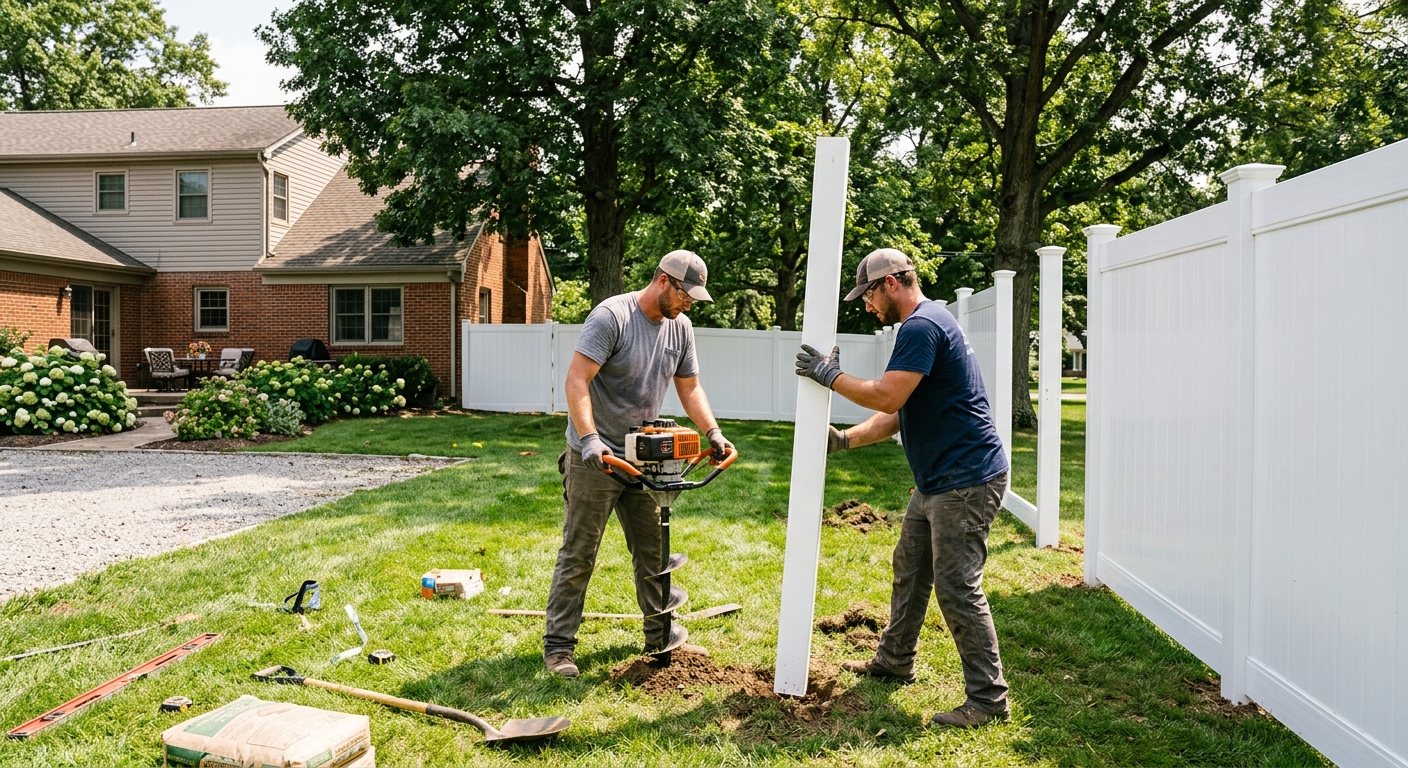
In Thompson–Okanagan, your fence cost is shaped by frost depth, soil conditions, and wind exposure. While coastal BC often has milder freeze–thaw impacts, interior valleys and elevation-related cold pockets require posts set below the regional frost line to limit heaving and spring “lift.” That typically means longer posts and, in many Revelstoke lots, concrete-set footings. At the same time, winter wet and thaw cycles accelerate wood weathering if the material and detailing aren’t right—so the cheapest option can cost more over time.
We also see surging interest around neighbourhoods such as Revelstoke Mountain / Scenic Drive, where lots tend to be more exposed and yard boundaries are longer. If your property backs onto busier corridors or open views, wind load is a real factor: tighter post spacing and sturdier hardware cost more, but they help keep panels plumb through snow seasons.
Below is a practical comparison of common materials and typical price ranges you’ll see from local crews, which we’ll refer to throughout this guide.
| Material |
Lifespan |
Maintenance |
Privacy Rating |
Price per Linear Foot |
| Pressure-treated pine (standard wood) |
10–15 years |
Stain/seal every 2–3 years; check bottom rails |
High (solid privacy) |
$55–$85 |
| Cedar (natural rot resistance) |
15–25 years |
Light staining every 3–4 years; inspect yearly |
High (solid privacy) |
$75–$115 |
| Vinyl / PVC (no-maintenance) |
20–30 years |
Rinse annually; occasional panel tightening |
Medium to high (depends on picket style) |
$75–$115 |
| Chain-link (galvanized steel) |
25–40 years |
Minimal; remove vegetation |
Low (security only) |
$35–$60 |
| Aluminum ornamental |
25–40 years |
Rinse; occasional hardware checks |
Low to medium (open design) |
$90–$150 |
| Composite / recycled material |
20–30 years |
Low; wash as needed |
Medium to high (solid designs) |
$85–$140 |
Prices are estimates only and vary by project scope, site access and material selection.
What affects the price of fencing in Revelstoke
Even when two contractors look at the same lot, fence quotes across Thompson–Okanagan and broader British Columbia can vary by 30–50% for reasons that don’t show up in the headline material choice. The biggest drivers are how far below grade posts must sit to stay under frost, what your soil does (clay vs. gravel), and whether the job includes extra work such as excavation, concrete, removal, or locating property lines. Labour availability can also swing in peak seasons, but in Revelstoke it’s usually the ground conditions—more than the material—that separate a budget install from a long-lasting one.
Frost line depth determines how deep posts must be set; as a practical rule, crews often set post bases roughly 4–6 inches below the local design frost depth to reduce lift during freeze–thaw cycles. In colder interior regions, that can translate into deeper holes and longer posts, plus concrete-set footings. Concrete-setting adds auger time, materials, and curing considerations—so you’ll typically see wood work climb into the $55–$85 range when footing conditions are straightforward, and higher when you need upgraded posts and more concrete.
Wind exposure matters too. While the Prairies are the classic “wind-cost” benchmark, Revelstoke’s exposed benches can still require closer post spacing and sturdier rails. That’s why chain-link at $35–$60 often stays affordable (it’s lighter), while privacy panels (wood or vinyl) can cost more when reinforced.
Here are concrete examples we frequently see locally: (1) clay-heavy soil that holds water can increase footing labour, making a “simple” wood fence effectively a concrete-and-bracing job; (2) rocky ground can slow augering and add reset time for posts; (3) yards with a lot of fallen snow drift in behind fences—so we may recommend higher, tighter framing, which raises material and labour.
Housing age also plays a part. With 66.4% of homes built before 1981 (Statistics Canada, 2021 Census), many boundaries were fenced earlier with shorter posts and older rails; replacing those sections usually includes removal, re-leveling, and more thorough footing work that pushes costs upward.
| Price Factor |
Why It Matters |
Cost Impact |
| Fence length in linear feet |
More lineal metres = more posts, rails, and labour time |
High; primary driver |
| Post depth required |
Frost depth sets hole depth so posts don’t heave |
High; changes excavation and post material length |
| Post setting method |
Concrete vs. gravel pack vs. driven posts affects stability |
Medium to high; concrete adds materials and time |
| Material choice |
Vinyl/cedar/wood/chain-link each have different framing and longevity |
Medium; can shift you between bands |
| Gate count and type |
Gates need heavier posts, hinges, latches and sometimes diagonal bracing |
Medium to high; doubles hardware effort in many cases |
| Grade and terrain |
Slopes require raked panels/stepped rails for proper top alignment |
Medium; more layout and trimming labour |
| Old fence removal and disposal |
Hauling and concrete chunks add time and dump fees |
Medium; can be a large add-on on older homes |
| Permit fees and survey / property line locate |
Locates avoid encroachment disputes; permits add administrative steps |
Low to medium; important for complex boundaries |
Permits & regulations in British Columbia
In British Columbia, permit requirements can depend on your municipality and fence height, but in general, fences above a height threshold—often around 2.0 m (6.5 ft) for rear yards and 1.0–1.2 m (3–4 ft) for front yards or corners—may require a building permit. Regardless of height, your fence must respect property lines and any municipal setback bylaws. Before digging post holes, you should also arrange utility locates through the appropriate provincial service (for example, BC 1 Call). If you’re unclear on your boundary, get a survey or a property pin locate before installation so you don’t end up building on (or too close to) a neighbour’s land.
Shared fence responsibilities typically follow provincial line-fences legislation, so if you’re tying into an existing shared boundary, confirm who owns what section and what “shared” means for repairs or replacement.
How to verify a contractor’s BC status in practice: first, ask for their business information and check licensing through the relevant provincial online registry where applicable for their trade category; next, request a current certificate of liability insurance and confirm the policy is active for the job dates and includes sufficient coverage; and finally, verify their WSIB/WCB coverage documentation (the specific system varies by trade and employer structure). A solid contractor will hand these documents over without hesitation.
As for what typically does not require a permit: most straightforward replacement-in-kind fences that stay under the applicable height thresholds and stay entirely within setbacks usually won’t trigger a permit. But because rules vary by municipality and exact height/location, confirm with Revelstoke’s local requirements before you sign.
Choosing the right fence material for Revelstoke
Choosing the right fence material in Revelstoke comes down to matching your priorities—privacy, low maintenance, budget, and lifespan—to a climate that still punishes poor post installation. Pressure-treated pine is typically the lowest upfront option, but it’s not “set-and-forget.” To keep it from greying and weather-checking, plan on staining or sealing about every 2–3 years. Cedar looks better longer and resists rot naturally, but it still benefits from periodic maintenance to keep colour and reduce splitting. Vinyl/PVC offers the lowest day-to-day work, yet in extreme cold it can become brittle if the system is poorly fastened or if panels flex; quality framing and proper expansion detailing matter.
Chain-link is the budget-friendliest and tends to last for decades, but it won’t give privacy unless you add slats or screening. Aluminum ornamental is rust-resistant and maintains a neat look, but it’s usually a medium-security, low-privacy option due to its open design. In Thompson–Okanagan conditions, post-depth is a deciding factor regardless of material: to resist freeze–thaw heaving, posts need to be set below the regional frost line, and many Revelstoke lots end up with concrete-set posts when soils are clay-heavy or waterlogged. That’s why vinyl and composite can feel “surprisingly close” in price to cedar: you pay more for materials, but the footing work is often the same.
Wind and snow load also matter. More exposed yards can push installers toward tighter spacing, heavier rails, and bracing—especially for solid privacy panels.
Example: if a pressure-treated pine privacy fence comes in around the $55–$85 band, moving to cedar might add roughly $20–$35 per linear foot depending on height and footing method, often pushing the project toward the $75–$115 band. That upgrade is justified when you want a longer service life and better appearance without having to replace sections as early—particularly on neighbourhood-facing boundaries like those near Scenic Drive where the fence takes more weather exposure.
| Material |
Cold Tolerance |
Lifespan |
Annual Maintenance |
Best For |
Price Band |
| Pressure-treated pine |
Good if properly sealed and securely fastened |
10–15 years |
Minor checks; stain/seal every 2–3 years |
Lower upfront cost with acceptable maintenance |
$55–$85 |
| Cedar |
Excellent natural rot resistance in wet–dry cycles |
15–25 years |
Light stain/seal every 3–4 years |
Appearance + longer life for exposed lots |
$75–$115 |
| Vinyl / PVC |
Good; depends on installation quality in extreme cold |
20–30 years |
Rinse annually; check post caps/hardware |
Low maintenance and clean modern look |
$75–$115 |
| Chain-link |
Very good; weather and freeze–thaw tolerant |
25–40 years |
Low; remove vegetation and spot-check tension |
Security on a tight budget |
$35–$60 |
| Aluminum ornamental |
Excellent; no rust with proper coating |
25–40 years |
Rinse; hardware inspections |
Durable curbside fencing with light privacy |
$90–$150 |
| Composite / recycled |
Good with correct fastening and system design |
20–30 years |
Wash as needed; inspect framing |
Privacy panels with lower upkeep than wood |
$85–$140 |
How to choose a fencing contractor in Revelstoke
For Revelstoke homeowners, the quickest way to avoid expensive problems is to vet your fencing contractor before you pick materials. In British Columbia, ask for proof of general liability insurance, then confirm their WSIB/WCB coverage (depending on the employer and trade setup) so you’re not exposed if a worker is injured on your property. For licensing, don’t rely on verbal assurance—request their relevant business information and check their credentials through the appropriate online registry where applicable for their trade category. If a contractor hesitates or can’t provide documents on the spot, that’s usually a sign you’ll pay later through change orders.
Next, get 2–3 itemised written quotes. A good quote separates labour and materials (posts, rails, pickets/panels, gates, hardware) and should include how posts will be set. Watch for vague scope language like “fence installed as required” without stating post depth, spacing, and whether concrete is included. Ask whether permit pulls (when needed), utility locates, and property line locating are part of the price or billed separately. Also clarify removal/disposal: older fence tear-outs are common in pre-1981 areas of town, and dump fees can be a real cost.
Warranty matters in this climate. Look for a clear workmanship warranty (often covering post installation and attachment issues) and a separate product/manufacturer warranty. Ask if warranties are transferable if you sell your home. On payment schedule, never pay more than 10–15% upfront—hold back remaining funds until the fence is complete and any adjustments are done. Finally, insist on a written start date and completion estimate; winter conditions and ground frost can shift timelines, but timelines should be planned, not guessed.
- Ask for proof of active liability insurance and verify the certificate dates match your project.
- Confirm WSIB/WCB coverage documentation for their workers.
- Check licensing/registration for their specific trade category using BC’s online resources.
- Get itemised quotes showing labour vs. materials (not one lump-sum number).
- Require written post depth, post spacing, and whether concrete is included.
- Confirm if they include gate hardware, hinges, latches, and any diagonal bracing.
- Ask whether they handle BC utility locates/marking and when that happens.
- Clarify property line responsibility: survey/locate included or homeowner-provided?
- Confirm disposal and dump fees for old fence removal.
- Make sure the quote specifies height, panel type, and top cap style.
- Request workmanship and product warranty terms in writing.
- Use a staged payment plan with a holdback until final walkthrough acceptance.
Concrete red flags I’ve seen around Revelstoke: “too-good-to-be-true” pricing that doesn’t mention post depth or footing; refusing to put scope details in writing (especially gate type and concrete vs. gravel pack); pressuring you for large upfront payments; giving a vague warranty like “it’s good” without duration and coverage; and not producing insurance/coverage documents during quote time.
Frequently asked questions — fencing in Revelstoke
How long does fence installation take in Revelstoke?
Timing in Revelstoke depends mostly on frost and how the posts are set. If the ground is workable and the site access is straightforward, many small-to-mid projects (for example, replacing a backyard privacy run with 1 gate) are completed in 1–3 days. Longer perimeter fences can take about 3–7 days depending on total linear feet, gate count, and how many sections need concrete-set posts for stable footing.
Because Thompson–Okanagan freeze–thaw cycles matter, contractors may schedule around frozen ground so they can reach the correct post depth without unsafe conditions. If you’re in a more exposed area of town, expect extra layout time for bracing and keeping top rails consistent through snow season.
Can I install a fence on a slope in Revelstoke?
Yes, you can install fencing on a slope in Revelstoke, and good installers plan for it at layout time. For sloped yards, you typically use either stepped panels/rails (stair-step layout) or raked panels so the fence top stays aligned and the posts stay at consistent footing depth. The key is how the contractor handles post depth: even with a raked look, posts still need to sit below frost to prevent heaving during freeze–thaw cycles.
On steeper grades, material waste goes up because rails and panel sections need trimming, and additional layout time is required. That’s why two “same-length” quotes can differ by 30–50%—the slope changes labour more than many homeowners expect.
What is the most weather-resistant fence for Revelstoke's climate?
In Revelstoke, weather resistance usually comes from two things: correct post installation and the right material system. For many homeowners wanting maximum longevity with minimal fuss, vinyl/PVC or cedar are strong options, provided the posts are set correctly for frost and the framing is properly fastened. Vinyl is popular for low maintenance, while cedar offers natural rot resistance and a premium look—but either way, the footing is what prevents movement that leads to early failure.
If your priority is the longest lifespan with security, chain-link is also highly durable, often priced within the $35–$60 per linear foot band, but it won’t provide privacy unless you add screening.
How do I prevent wood fence rot in Revelstoke?
To prevent rot in Revelstoke, focus on water management and installation details—not just the type of wood. First, use pressure-treated components properly rated for ground contact, and keep the bottom rail and pickets from staying wet against soil. Second, ensure posts are set at the correct depth below frost and use a post-setting method that drains appropriately; poor drainage and shallow holes accelerate rot and loosening.
Third, seal and stain on a schedule. Pressure-treated pine commonly needs staining every 2–3 years, while cedar benefits from maintenance every 3–4 years. Finally, inspect annually for fastener corrosion and loose rails, especially after heavy snow or freeze–thaw cycles. Many rot issues start as small failures at the bottom.
What is the cost per linear foot for fencing in Revelstoke?
For Revelstoke, typical installed price bands vary by material and site conditions. Wood fences generally land around $55–$85 per linear foot, while vinyl/PVC commonly runs about $75–$115 per linear foot depending on height and panel style. Chain-link is often the lowest-cost option at roughly $35–$60 per linear foot, and aluminum ornamental tends to be higher, commonly around $90–$150 per linear foot.
Real quotes can move within those ranges when you add concrete-set posts, gate hardware, sloped yard layout, and old fence removal. That’s why itemised quotes matter more than a single “starting at” number.
Should I repair or replace my old fence in Revelstoke?
Repairing can make sense if the posts are solid and the fence is only showing surface wear, like faded boards or minor rail issues. But in Revelstoke, replacement is often the better call when you see leaning sections, repeated loosening, or signs of rot at the bottom rails and post bases—those usually mean the moisture and movement problems are already baked in. Because 66.4% of homes were built before 1981 (Statistics Canada, 2021 Census), older fences are common, and older installations often used shorter posts or less robust hardware.
A practical approach is to ask a contractor to assess at least the corner posts and gate posts. If they recommend replacing those, it’s often efficient to replace the whole run for alignment and footing consistency.