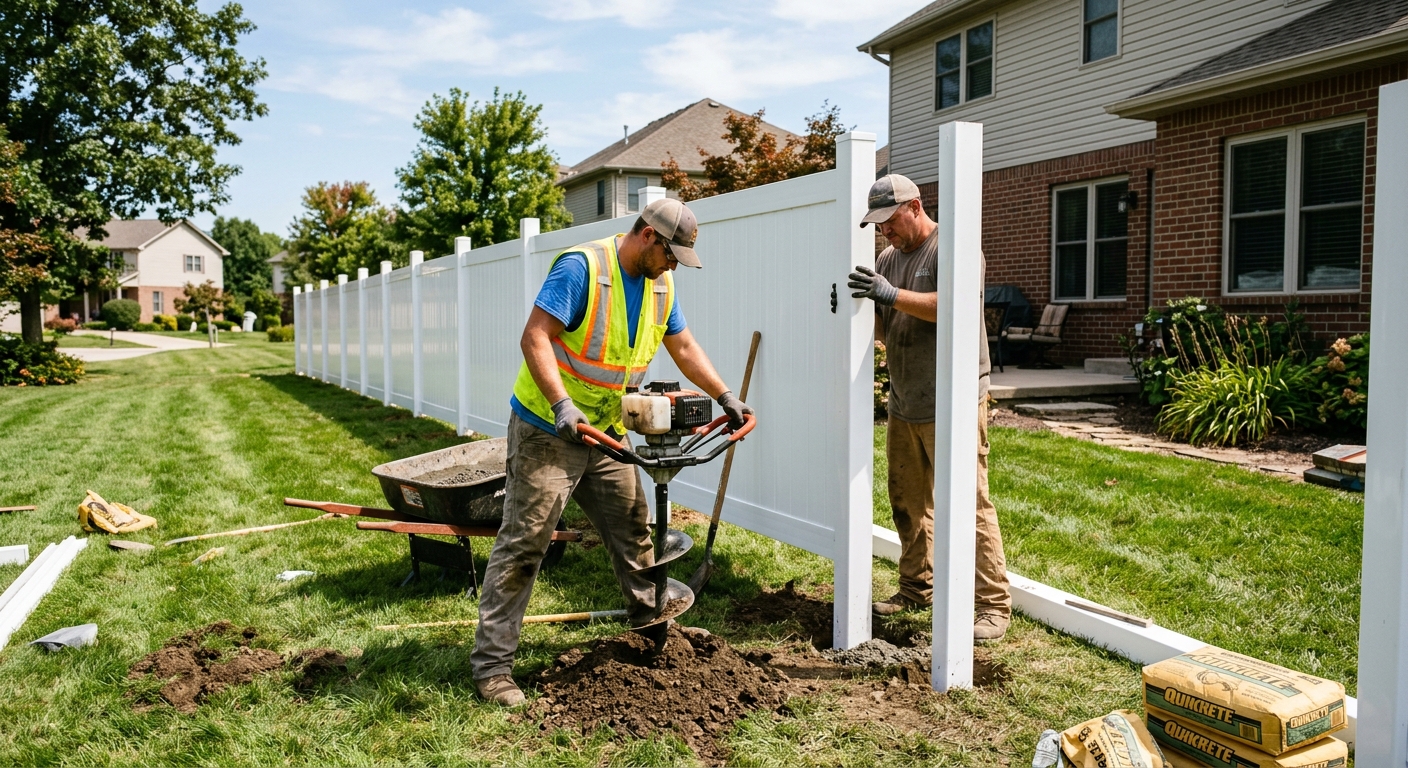
Fencing options and costs in Windsor Park
In Windsor Park, British Columbia, homeowners typically start by choosing between wood, vinyl/PVC, chain-link, and metal—then fine-tune the height, finish, and gate setup. With a population of 1,729 (Statistics Canada, 2021 Census), demand is smaller than in the big Lower Mainland centres, but every detached home can create a steady stream of fence work—especially in family neighbourhoods where yards and pets are a daily reality. Windsor Park also sits in the Lower Mainland–Southwest economic region, where the climate is mild but not “easy”: you still get freeze-thaw cycles, winter wind events, and frequent moisture in the soil. Those conditions affect both labour time and materials because post holes often need deeper setting than the bare minimum, and contractors frequently use concrete at privacy panels, corner posts, and gates to reduce future movement.
Crews are busiest around older residential pockets where fences are due for replacement and where accessibility is tighter—think lanes and narrower side yards. In Windsor Park, availability can vary slightly by season, but the bigger driver is whether your property has sloped grade or wetter soils, since that increases hole excavation, concrete volume, and re-leveling time. If your current fence is failing or leaning, the scope can shift quickly.
Below is a practical comparison of common options, including realistic lifespan and budget bands, to help you translate “curb appeal” into an installed price.
| Material |
Lifespan |
Maintenance |
Privacy Rating |
Price per Linear Foot |
Price Range |
| Pressure-treated pine (standard wood) |
10–15 years |
Stain/seal every 2–3 years |
Good (solid picket/board) |
$55–$95 |
$3,200–$6,500 |
| Cedar (natural rot resistance) |
15–25 years |
Seal/stain as needed (often every 3–5 years) |
Very good (solid styles) |
$65–$115 |
$3,900–$7,800 |
| Vinyl / PVC (no-maintenance) |
20–30 years |
Rinse/wash occasionally; no staining |
Good to very good (solid panels) |
$75–$130 |
$4,600–$8,900 |
| Chain-link (galvanized steel) |
25–40 years |
Occasional repair; keep tensioned |
Low (semi-visible) |
$30–$55 |
$1,900–$4,200 |
| Aluminum ornamental |
25–40 years |
Rinse; tighten hardware as needed |
Low to moderate (open pickets) |
$90–$170 |
$5,200–$10,500 |
| Composite / recycled material |
20–30 years |
Minimal cleaning; no paint/stain |
Good (solid boards) |
$85–$145 |
$5,000–$9,900 |
Prices are estimates only and vary by project scope, site access and material selection.
What affects the price of fencing in Windsor Park
In Windsor Park and across the Lower Mainland–Southwest, fence quotes for the “same” length can swing by 30–50% because the work isn’t just materials—it’s ground conditions, how posts must be set, and how many corners/gates your layout includes. British Columbia pricing also reflects transportation of materials to local jobsites and the amount of skilled labour needed to maintain straight lines on uneven or wet ground. For example, one yard may be dry and hard-packed near the house, while another side yard has saturated soil after rain, which increases hole excavation time and changes how much concrete is needed.
Post depth is a major driver because frost heave risk still exists: even with mild BC winters, crews often set posts about 4–6 inches below the design frost depth to limit movement. Contractors then use longer posts and more concrete for privacy panels, corners, and gates. In Ontario and Alberta you’d often hear the longer embedment requirement (commonly around 1.5–2.0 m), and while BC coastal conditions are usually shallower, the Lower Mainland–Southwest still tends to justify deeper holes than a “minimum” approach for long-term stability. Wind exposure also matters: the windy Fraser Valley and coastal-influenced weather can push crews toward tighter post spacing and stronger panel builds, especially for solid wood and vinyl privacy fencing.
Concrete examples in Windsor Park: (1) a sloped backyard may require stepped panel heights—more rails and labour—pushing a wood install toward the upper end of $55–$95 per linear foot; (2) removing an old fence tied into a gate run can add disposal and rework, pushing total budgets from chain-link territory (often $30–$55) closer to mid-range wood/vinyl. If your home is older and your current fence posts are “sleeved” by past repairs, the crew may end up digging deeper and re-setting rather than patching.
| Price Factor |
Why It Matters |
Cost Impact |
| Fence length in linear feet |
Most materials (posts, rails, panels, mesh) scale directly with length. |
Largest driver (can change total by thousands). |
| Post depth required |
Frost/heave risk dictates embedment and post length. |
Higher post cost and more excavation/concrete. |
| Post setting method |
Concrete setting adds volume but improves stability. |
Concrete vs gravel pack can noticeably raise labour/materials. |
| Material choice |
Vinyl/PVC needs different mounting and structural components than wood. |
Vinyl typically higher than chain-link/wood; cedar higher than PT pine. |
| Gate count and type |
Gates require heavier hardware and properly braced framing. |
Extra gates can add substantial cost compared to straight runs. |
| Grade and terrain |
Slopes require stepping, raked frames, and more measuring time. |
More labour and sometimes additional rails/panels. |
| Old fence removal and disposal |
Hauling and disposal add labour, dump fees, and time. |
Can add meaningful cost if many sections are deteriorated. |
| Permit fees and survey / property line locate |
Boundary accuracy affects layout and prevents rework. |
May add a few hundred to over a thousand depending on complexity. |
Permits & regulations in British Columbia
In British Columbia, fences above a height threshold—often around 2.0 m (6.5 ft) for the rear and about 1.0–1.2 m (3–4 ft) for the front or corner—commonly trigger a building permit requirement. Exact thresholds can vary by municipality and fence location (front vs side/rear), so in Windsor Park you should confirm with your local bylaws before ordering materials. All fences must be built within property lines and respect any municipal setback rules.
Before you dig any post holes, arrange utility locates (BC 1 Call). It’s also wise to get a survey or at least a property-pin locate so you don’t build on your neighbour’s land and end up with costly corrections. Shared fence ownership and boundary maintenance are typically handled under provincial line-fences legislation—meaning responsibilities can be shared depending on the circumstances.
What usually requires a permit: a fence that exceeds the typical height limits, fences in regulated positions (front/corners), and projects that may affect setbacks or require review due to size. What typically does not require a permit: small backyard repairs that don’t increase height beyond the threshold, like replacing a few damaged boards in an existing fence line.
To verify a contractor in BC, ask for: (1) their contractor licence number (check online through the provincial registry), (2) proof of liability insurance (certificate of insurance naming the property owner if your contract requires it), and (3) evidence of coverage for workers (look for WSBC/WCB clearance on request, or documentation your contractor provides). A reputable fencing company will hand these over quickly before work starts.
Choosing the right fence material for Windsor Park
Choosing the right fence for Windsor Park is mostly about matching material to your priorities: privacy, low maintenance, lifespan, and your budget. Lower Mainland–Southwest conditions are mild but wet enough that untreated wood can grey and degrade faster than many people expect. Pressure-treated pine can be your budget-friendly path, but it typically needs staining or sealing every 2–3 years to slow weathering and avoid a tired, uneven colour. Cedar has better natural rot resistance and generally looks warmer from day one; it often stretches maintenance intervals (often every 3–5 years), but it still benefits from periodic sealing to stay looking consistent.
Vinyl/PVC offers real convenience—no staining and minimal upkeep. It also holds up well in the damp climate, but installation quality matters: posts, rails, and fastening must be correct, and extreme cold snaps (less common than interior BC but still possible) can stress materials if details aren’t right. Chain-link is usually the lowest-cost and very durable, but it won’t provide privacy by itself; homeowners often pair it with screening plantings or privacy slats. Aluminum ornamental is rust-resistant and long-lived with a clean look, but it’s typically open, so it’s best when you want visibility and curb appeal rather than full privacy.
For frost and stability, contractors commonly set posts deeper than a minimum approach; in Windsor Park the difference between “short and easy” vs “properly set” shows up in later sagging. Many crews use concrete setting for corners, gate posts, and privacy panels to reduce movement in wetter soils. If wind and snow load swing your area, tighter spacing and sturdier rail builds help reduce racking.
As a dollar example: if you’re choosing between a basic wood run at roughly $55–$95 per linear foot and vinyl at $75–$130, the extra upfront cost is often justified when you want privacy with minimal annual effort—especially if you’d otherwise spend time staining or repairing boards every few years.
| Material |
Cold Tolerance |
Lifespan |
Annual Maintenance |
Best For |
Price Band |
| Pressure-treated pine |
Good with proper sealing |
10–15 years |
Minor wash + reseal/stain every 2–3 years |
Budget privacy with DIY-friendly upkeep |
$55–$95 |
| Cedar |
Good with periodic sealing |
15–25 years |
Light inspection; seal/stain every 3–5 years |
Attractive natural look and better rot resistance |
$65–$115 |
| Vinyl / PVC |
Good when installed to spec |
20–30 years |
Occasional rinse; check gate hardware |
Low-maintenance privacy |
$75–$130 |
| Chain-link |
Very good |
25–40 years |
Occasional tensioning/repairs as needed |
Security and durability on a tighter budget |
$30–$55 |
| Aluminum ornamental |
Very good |
25–40 years |
Rinse and tighten hardware |
Curb appeal with an open look |
$90–$170 |
| Composite / recycled |
Good |
20–30 years |
Minimal cleaning; inspect fasteners |
Privacy with “no paint” expectations |
$85–$145 |
How to choose a fencing contractor in Windsor Park
Start by verifying credentials and coverage, not just price. In British Columbia, ask for: (1) their licence information (and check it via the provincial registry using the company name or licence number), (2) liability insurance certificate (confirm it covers general liability and includes the worksite scope), and (3) confirmation of workers’ compensation coverage (WSBC/WCB). If you can, request the clearance letter or documentation they commonly provide for active projects; a contractor who can’t supply proof often signals scheduling or coverage gaps.
Next, get 2–3 itemised written quotes. You want a breakdown for labour (posts, rails, installation), materials (fencing panels/mesh, hardware, gates), and site work (digging, concrete, disposal). Compare like-for-like: ask whether permit pulling is included if your fence height/position triggers it, and whether old fence removal and hauling are covered or billed separately.
Warranty matters. Look for a workmanship warranty (often covering post alignment, panel installation, and hardware set-up), plus the manufacturer warranty for materials. Confirm whether warranties are transferable if you sell your home.
For payment, a safe schedule is typically keeping upfront around 10–15% maximum, then paying the remainder in milestones. Hold back the final payment until the job is complete and cleanup is done. Get a start date and completion estimate in writing, and make sure it includes a weather contingency plan for wet ground and freeze-thaw periods.
- Check the contractor’s BC licence info using their registry details, not just a phone number.
- Request a current certificate of liability insurance before signing.
- Ask for WSBC/WCB coverage confirmation or clearance documentation.
- Get itemised quotes: labour, materials, gates, posts, concrete/setting method, and hauling.
- Confirm whether permit work (if required) is included or an extra line item.
- Clarify disposal: dump fees and hauling of old fence materials.
- Verify who locates utilities and who manages BC 1 Call.
- Ask how they handle property line uncertainty (survey vs pin locate).
- Confirm post depth and setting method for your soil conditions and fence height.
- Ensure gate hardware is specified (latch type, hinges, bracing) and included in the quote.
- Look for a written warranty duration for workmanship and product components.
- Agree on payment milestones, keeping upfront to about 10–15% and holding a final completion payment.
Red flags to watch for in Windsor Park: quotes that don’t specify post depth or setting method; refusing to provide insurance/WSBC/WCB documentation; a “lump sum” price with no breakdown for gates or removal; no written warranty terms; and insisting on large upfront payments (beyond about 10–15%) without a clear schedule.
Frequently asked questions — fencing in Windsor Park
How long does a wood fence last in Windsor Park?
In Windsor Park and the broader Lower Mainland–Southwest, a properly installed wood fence commonly lasts about 10–15 years for standard pressure-treated pine and closer to 15–25 years for cedar, depending on style, post depth, and maintenance. The damp climate accelerates grey weathering and surface checks if boards aren’t sealed or stained. If your fence is built with shallow posts in wetter soils, you can see lean/sag earlier after freeze-thaw movement. A good contractor will set posts deep enough to resist heaving and use solid bracing at corners and gates, which directly affects lifespan. If you’re budgeting, many homeowners spend in the wood range of roughly $55–$95 per linear foot, but the cheaper install often shows up later in more frequent board replacement and re-staining.
Who owns and maintains a shared fence?
Shared fence ownership and maintenance in British Columbia is generally handled through provincial line-fences legislation rather than an “automatic” rule that always applies the same way. In practice in Windsor Park, the responsibility often depends on how the fence relates to your boundary, whether it was originally built as a shared structure, and the agreement you and your neighbour have (or are required to follow) regarding costs and upkeep. When disputes happen, the most common issue is unclear boundary location or misunderstanding what counts as “maintenance” versus replacement. If you suspect your fence sits on the property line, start with a proper locate/survey and document the condition of each section. A fencing company can also help you confirm the proposed alignment before any material is ordered.
How do I find my property line before fencing?
Before fencing in Windsor Park, don’t rely on “eyeballing” the boundary. The best approach is to locate your property pins and verify the line with either a survey or a formal property-pin locate that matches the plan for your lot. This matters because fence placement must respect property lines and any municipal setbacks, and rework is expensive once posts are set. Also, before digging, ensure utility locates are completed through BC 1 Call so you don’t damage buried services. If your fence is near a sidewalk, lane, or corner, the stakes are higher because the fence height rules and setback expectations are commonly stricter at front/corner locations. If you’re unsure whether a permit will apply (often for taller fences), confirm before installation.
What's the most low-maintenance fence?
For low maintenance in Windsor Park, vinyl/PVC and metal options are usually the easiest to live with. Vinyl/PVC typically requires little more than rinsing and occasional hardware checks, with a common lifespan of around 20–30 years. Aluminum ornamental is also low-maintenance because it doesn’t rust, though it’s often more open for privacy. Composite/recycled materials can be similarly low maintenance, but availability and price vary by style. Chain-link is maintenance-light but not private without additions (like slats or planting), so many homeowners pair it with screening. In terms of budget, vinyl often sits around the $75–$130 per linear foot band, while chain-link can be closer to $30–$55—so the “least work” choice usually costs more upfront.
How tall can my fence be in Windsor Park?
Fence height limits in British Columbia depend on where the fence is located (front vs side vs rear/corner) and local bylaws. A common benchmark is that fences above about 2.0 m (6.5 ft) at the rear and around 1.0–1.2 m (3–4 ft) at the front or corner often require a building permit, but the exact application can vary by municipality and fence position. In Windsor Park, confirm the height and location classification before you commit to a material order, especially for solid privacy panels. If you’re trying to match a neighbour’s fence height, still verify—permissions can differ even on the same street. When a permit is required, a contractor should clearly state whether permit pulling is included in the quote and provide the documentation you’ll need.
Should fence posts be set in concrete here?
In Windsor Park, many contractors set posts in concrete for key points—especially corner posts, gate posts, and sections that need maximum stability—because wetter soils and frost movement can cause loosening or shifting over time. That said, whether you use concrete everywhere depends on your fence type, fence height, and your site’s drainage and soil conditions. The goal is consistent post stability: proper embedment below frost influence (commonly achieved by digging deeper than “minimum”) and correct installation. A contractor may recommend concrete setting for privacy panels while using a different method for lower-stress runs, but you should ask for the recommended approach in writing. If your quote is in the vinyl/wood ranges (for example, wood often roughly $55–$95 per linear foot), ask how much of that includes the chosen post setting method, because it directly affects long-term performance.